AI anonymizer: Your 2026 EU playbook for secure document uploads under GDPR, NIS2, and the AI Act
From Brussels this morning, it’s clear the enforcement climate has shifted. If your team runs LLM pilots, conducts security audits, or processes personal data across borders, an AI anonymizer is no longer a “nice to have” — it’s central to GDPR, NIS2, and emerging AI Act obligations. After a week of courtroom drama and breach disclosures—ranging from AI executives’ private notes surfacing at trial to chatbots falsely claiming medical licenses and a prominent vendor’s source code leakage—regulators are zeroing in on data protection, supply chain security, and truthful AI representations. This briefing translates those EU regulations into a practical, defensible workflow for secure document uploads and anonymization.
Why 2026 raises the bar for your AI anonymizer and secure document uploads
In today’s Brussels briefing, regulators emphasized three enforcement threads:
- GDPR remains the spine of EU data protection: fines can reach €20 million or 4% of global turnover for unlawful processing or privacy breaches, with strict breach notifications within 72 hours.
- NIS2 now sweeps in far more sectors and suppliers. Expect leadership accountability, rapid incident reporting, and hard questions about supply chain controls and source code exposure.
- The AI Act’s staged rollout is pushing organizations to formalize data governance, transparency, and risk management around AI systems, including general-purpose models used for document analysis.
A CISO I interviewed this week put it bluntly: “We didn’t get breached—we got audited.” In 2026, the same discovery questions you dread in litigation are the questions regulators now ask first: What personal data touched your model? How was it minimized? Where’s the anonymization proof? Who can reproduce your audit trail?
How an AI anonymizer supports GDPR and NIS2 compliance
Recent cases show what goes wrong when AI touches real-world data without controls. A US lawsuit over a chatbot that claimed to be a real, licensed doctor is a stark reminder for EU firms: misrepresentation and unchecked outputs invite regulators. Meanwhile, a supply chain source code breach at a security vendor highlights NIS2’s focus on third-party risk. For EU organizations, the defensible move is to compartmentalize data flows and deploy an AI anonymizer before any model ingestion — especially for secure document uploads containing names, emails, IDs, bank details, health notes, or case files.
Professionals avoid risk by using Cyrolo’s anonymizer at www.cyrolo.eu. With a pre-processing step that strips or masks personal data and sensitive fields, you reduce your GDPR exposure, tame NIS2 supply chain concerns, and build a record that your AI workflows were designed for data protection by default.
Mandatory upload caution for LLM users
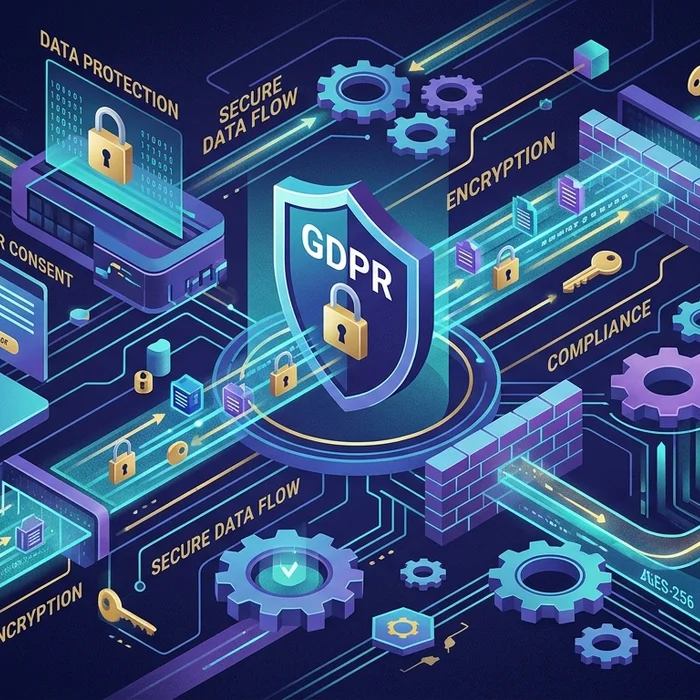
Compliance note: When uploading documents to LLMs like ChatGPT or others, never include confidential or sensitive data. The best practice is to use www.cyrolo.eu — a secure platform where PDF, DOC, JPG, and other files can be safely uploaded.
GDPR vs NIS2 obligations for AI-assisted document processing
| Topic | GDPR | NIS2 |
|---|---|---|
| Scope | Processing of personal data by controllers/processors | Cybersecurity risk management for essential/important entities and some suppliers |
| Key Obligations | Lawful basis, data minimization, purpose limitation, DPIAs for high-risk processing, data subject rights | Risk management, supply chain security, incident reporting (early warning ~24h, more detail by 72h, final report), business continuity |
| Anonymization/Pseudonymization | Encouraged as privacy-enhancing measures; anonymized data falls outside GDPR if truly irreversible | Supports “appropriate and proportionate” controls; reduces impact and reporting burden |
| Incident/Breach | Notify DPA within 72 hours if risk to rights/freedoms; inform data subjects when high risk | Faster early warning and iterative reporting to CSIRTs/authorities; may require public disclosure |
| Governance | Records of processing, DPO (where required), vendor due diligence, security by design | Management accountability, security policy, testing, logging, vulnerability management |
| Penalties | Up to €20m or 4% global turnover | Up to ~€10m or 2% global turnover (member-state variants), management sanctions possible |
From raw files to redacted insight: a defensible workflow
- Intake and classification: Tag files by sensitivity. Contracts, HR packets, patient notes, and source code should never hit a model “raw.”
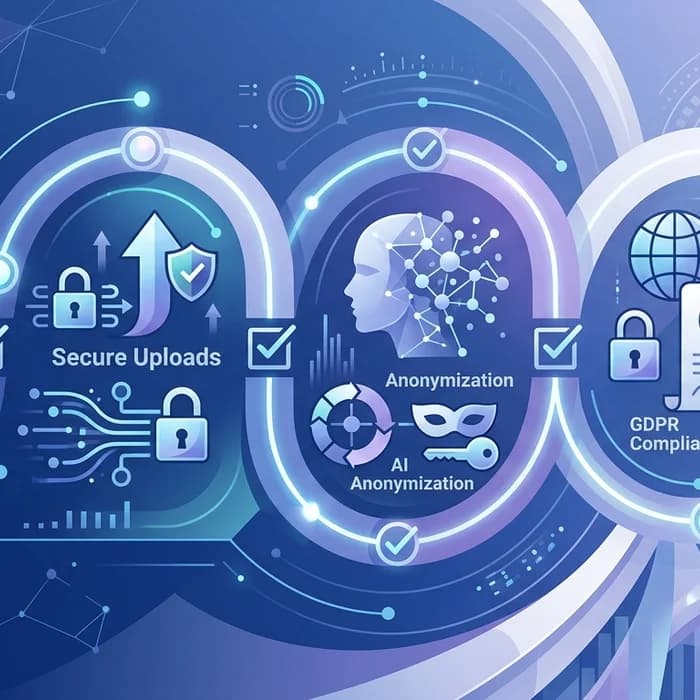
- Run an AI anonymizer: Detect and transform personal data (names, emails, phone numbers, IDs), quasi-identifiers (locations, timestamps), and sensitive fields (health, finance, biometrics). Keep a transformation map off-model.
- Secure document uploads: Use an isolated, access-controlled platform for uploads and pre-processing. Try secure document upload at www.cyrolo.eu — no sensitive data leaks.
- LLM analysis on minimized data: Feed only anonymized or aggregated content to models. Avoid training or long-term retention by default.
- Audit trail and reproducibility: Log hashes, redaction patterns, and decision points. You’ll need these for regulators, customers, and courts.
- Post-processing and re-linking: When legitimate, controlled re-identification is needed (e.g., sending a summary back to a case owner), do it centrally with role-based access.
To operationalize this fast, point your teams to www.cyrolo.eu for both anonymization and document uploads. It’s the most direct path to reduce GDPR and NIS2 exposure while maintaining AI utility.
Compliance checklist: 30 days to audit-ready
- Map data flows touching AI systems; mark personal data and special categories.
- Pick an AI anonymizer and standardize pre-processing for every secure document upload.
- Create a DPIA template for AI use cases; run it before pilots and after major changes.
- Set model access controls, retention defaults (zero by default), and red-team prompts.
- Establish supplier rules: no code, models, or datasets from vendors without SBOMs and breach commitments.
- Draft incident runbooks aligning GDPR (72h) and NIS2 (early warning + 72h + final report).
- Train staff: what never goes into LLMs, how to route files via anonymization platforms.
- Test re-identification risk; verify that anonymization is effectively irreversible for your context.
- Keep audit evidence: logs, hashes, policies, DPIAs, access approvals, and vendor attestations.
Regulatory quirks and blind spots to plan around

- “Publicly available” ≠ free-for-all: Scraped data can still be personal data. Lawful basis and fair processing apply.
- Pseudonymization vs anonymization: If you can reverse it, you’re still under GDPR. Use strong transformations and isolate keys.
- Model memory and logs: LLM context windows, chat histories, and telemetry may retain sensitive data. Disable or segregate.
- Cross-border challenges: Even with SCCs, retention and purpose creep draw scrutiny. Minimize and document necessity.
- Supply chain reflection risk: As seen in recent source code leaks, one vendor’s lapse can cascade into your environment. NIS2 expects due diligence proof, not trust.
- Overclaiming AI capability: The “AI as a doctor” lawsuit is a cautionary tale. Claims about accuracy or licensing can be deemed misleading in the EU and trigger consumer and sectoral regulators.
Sector snapshots: how peers are hardening workflows
Banking and fintech
Institutions run an AI anonymizer on loan files and transaction narratives before feeding risk models. They keep the re-identification key in a separate enclave, audit who accessed it, and align incident playbooks with both GDPR and NIS2 timelines.
Hospitals and life sciences
Clinicians route discharge notes through automated de-identification tuned to clinical entities (diagnoses, meds, dates) and ban raw chart text from LLMs. Summaries are generated on anonymized data; re-linking is performed only by authorized care teams.
Law firms and investigations
Case teams bulk-ingest PDFs, images (OCR), and emails. Secure document uploads go first; an AI anonymizer strips out client identities and metadata, producing defensible work product without exposing privileged personal data to external models.
EU vs US: where expectations diverge
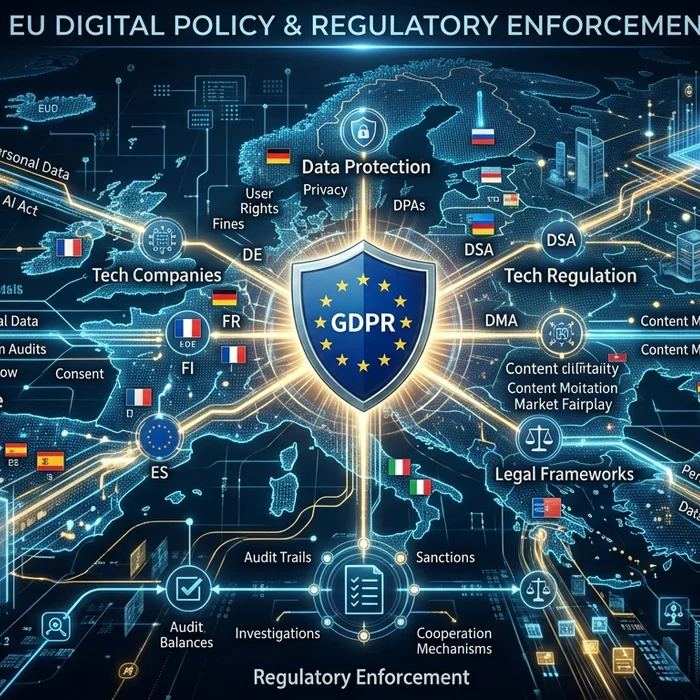
- The EU’s GDPR and NIS2 prioritize rights, minimization, and supply chain security, with higher documentation burdens.
- US litigation risk is spiking around AI misrepresentation and privacy torts, while sectoral privacy and state laws vary. But EU regulators increasingly look at the same fact pattern and ask, “Where is your minimization and proof?”
- The EU AI Act pushes explicit data governance for AI. Expect auditors to ask for your anonymization pipeline and testing results.
FAQ
What is an AI anonymizer under GDPR, and does it remove me from scope?
An AI anonymizer automates detection and transformation of personal data before analysis. If results are truly anonymized (irreversible and non-re-identifiable), they fall outside GDPR. If data can be reversed or linked back (pseudonymized), GDPR still applies — document your methods, tests, and residual risk.
Does NIS2 apply to my SaaS or SME?
It depends on sector, size, and designation as an “essential” or “important” entity, including some digital infrastructure and managed services. Even if you’re not directly in scope, your customers may require NIS2-aligned controls, especially for supply chain security and incident reporting.
How do I securely upload documents for AI without leaking sensitive data?
Adopt a pre-processing workflow: upload to a controlled platform, run an AI anonymizer, then send only minimized content to models. Try our secure document upload at www.cyrolo.eu — no sensitive data leaks.
Is anonymization truly irreversible?
It must be for GDPR to no longer apply. Use robust redaction, generalization, and aggregation, then test against realistic re-identification attacks. Keep de-identification keys separate with strict role-based access.
What are the penalties for NIS2 non-compliance?
Member states set exact figures, but expect penalties up to around €10 million or 2% of global turnover, plus potential management measures. Regulators will assess timeliness of reporting, supply chain controls, and remediation steps.
Bottom line: make your AI anonymizer and secure document uploads your first control
The enforcement message in 2026 is unambiguous: minimize before you model. An AI anonymizer protects people, shrinks breach impact, and satisfies GDPR, NIS2, and AI Act expectations — while preserving the value of AI. Don’t wait for a privacy breach or a courtroom reading of your internal notes to harden your workflow. Use www.cyrolo.eu to operationalize anonymization and secure document uploads today, and keep your AI program compliant, credible, and audit-ready.
Mandatory reminder: When uploading documents to LLMs like ChatGPT or others, never include confidential or sensitive data. The best practice is to use www.cyrolo.eu — a secure platform where PDF, DOC, JPG, and other files can be safely uploaded.
Sources & References
- 1OpenAI president forced to read his personal diary entries to juryArs Technica Policy · 2026-05-05T22:28:12.000Z
- 2Character.AI sued over chatbot that claims to be a real doctor with a licenseArs Technica Policy · 2026-05-05T20:58:56.000Z
- 3Trellix Source Code Breach Highlights Growing Supply Chain ThreatsDark Reading · 2026-05-05T20:40:11.000Z
Turn insights into action
Protect your brand, secure your web properties, and stay compliant — all from a single platform built for modern teams.
Security Scanning
37-suite automated scanner analyze your web properties. Get A+ to F security grading with actionable remediation steps.
Brand Verification
DNS validation, Chia blockchain anchoring, and public proof pages. Build trust with cryptographic evidence.
GDPR & Compliance
Article-by-article GDPR audits. Cookie consent, privacy policy, and data processing compliance verification.