NIS2 compliance after the Ivanti and Fortinet zero-days: a 2026 playbook for EU cyber leaders
In today’s Brussels briefing, several regulators repeated a simple message: NIS2 compliance is not a paper exercise. The warning lands just as Dutch authorities confirmed that an Ivanti zero‑day was exploited to expose employee contact data, and Fortinet rushed a critical SQL injection patch that could enable unauthenticated code execution. For essential and important entities across the EU, these incidents compress timelines, elevate reporting duties, and test whether boards have truly resourced cybersecurity risk management.
Quick reality check: NIS2 compliance obligations now in force
By 2026, all Member States have transposed the NIS2 Directive (EU) 2022/2555, expanding coverage well beyond traditional critical infrastructure. If you operate in sectors such as healthcare, finance, energy, transport, digital infrastructure, managed services, or public administration, you are likely in scope.
- Scope expansion: “Essential” and “Important” entities must implement risk management, incident handling, supply‑chain security, and business continuity controls.
- Incident reporting: Early warning within 24 hours, a more detailed notification within 72 hours, and a final report within one month; intermediate updates may be required.
- Enforcement and fines: Up to €10 million or 2% of global turnover for essential entities (lower ceilings for important entities), alongside supervisory measures and audits.
- Board accountability: Directors must approve and oversee cybersecurity risk management and can be required to undergo training.
- Coordination: National CSIRTs, single points of contact, and cross‑border cooperation mechanisms increase scrutiny and speed of information sharing.
What this week’s Ivanti and Fortinet flaws reveal about systemic risk
Two realities stood out in conversations I had with CISOs across banking and healthcare this week:
- Perimeter fragility endures: The Ivanti zero‑day shows how remote access and device management layers remain high‑value targets. In the Dutch case, employee personal data (contact details) was impacted—invoking both GDPR and incident reporting under NIS2.
- Unauthenticated code paths are still everywhere: Fortinet’s rapid fix for a critical SQLi underscores how one missed input validation can cascade into unauthenticated code execution and potential lateral movement.
- Supply‑chain blast radius: Third‑party appliances and managed services create compliance dependencies. Under NIS2, you must be able to evidence supplier risk management and timely patch orchestration—no more “we’re waiting on the vendor” as a blanket defense.
- Evidence handling becomes sensitive data handling: Ticketing exports, logs, and crash dumps often contain personal data and system secrets. Moving them between teams, processors, and tools introduces GDPR exposure right when NIS2 clocks are ticking.
A CISO I interviewed put it bluntly: “You have 24 hours to warn regulators, 72 hours to say something meaningful, and the worst possible datasets in your hands on day one. If your evidence handling leaks, you’re facing double jeopardy under NIS2 and GDPR.”
NIS2 compliance vs GDPR: the practical differences
Security teams often ask whether NIS2 just “is GDPR for security.” The short answer: they overlap, but they’re not interchangeable.
| Topic | GDPR | NIS2 |
|---|---|---|
| Primary focus | Personal data protection and data subject rights | Cybersecurity risk management and resilience of services |
| Who is in scope | Controllers and processors handling personal data | Essential and Important entities across designated sectors (incl. key digital services and managed providers) |
| Incident trigger | Personal data breach likely to risk individuals’ rights and freedoms | Any significant incident affecting service provision, security, or with substantial operational/societal impact |
| Reporting timelines | Notify authority within 72 hours of becoming aware (if applicable) | Early warning within 24 hours; detailed notification within 72 hours; final report within 1 month |
| Maximum fines | Up to €20 million or 4% of global turnover | Up to €10 million or 2% (essential entities); lower tiers for important entities |
| Governance | DPO where required; DPIAs for high‑risk processing | Board oversight, risk management measures, policies, security audits, supplier due diligence |
| Data handling | Lawful bases, minimization, retention, security of processing | Operational resilience, technical and organizational measures, incident handling, coordinated disclosure |
Your 30‑60‑90 day NIS2 compliance checklist
Use this pragmatic sequence to move from reactive firefighting to auditable readiness:
Day 0–30: Rapid hardening and visibility
- Map in‑scope services and critical dependencies (identity, remote access, vendor appliances, managed SOC/MSSP).
- Patch and configuration sprint: prioritize internet‑facing appliances; implement virtual patching/WAF rules where necessary.
- Centralize telemetry: retain and tag logs for regulator‑ready evidence; protect with role‑based access and encryption.
- Prepare incident classification aligned to NIS2 thresholds; define 24/72‑hour notification templates.
Day 31–60: Governance and supplier resilience
- Board‑approved cybersecurity risk management policy with named accountability and budgeted measures.
- Supplier risk review: SBOMs where available, patch SLAs, coordinated vulnerability disclosure, and contract clauses enabling audits.
- Tabletop exercises covering early‑warning scenarios and cross‑border notifications; include regulators’ likely questions.
- Data protection alignment: ensure breach playbooks consider GDPR and privacy breaches alongside service continuity.
Day 61–90: Evidence handling and secure collaboration
- Standardize redaction and anonymization of tickets, logs, and screenshots before sharing with vendors or LLMs.
- Adopt a secure channel for document uploads and regulated disclosures; enforce data minimization by default.
- Maintain an audit trail: who accessed what evidence, when, and why; rehearse compiling the one‑month final report.
Safe handling of logs and incident evidence with AI: anonymize first, always
Security teams increasingly lean on AI assistants to summarize timelines, correlate IOCs, and draft notifications. That speed is useful—but only if you protect personal data and secrets before anything leaves your environment.
- Strip identifiers: employee names, emails, IPs tied to individuals, session tokens, API keys, customer references.
- Sanitize screenshots and chat transcripts pulled from SOC tools and ticketing systems.
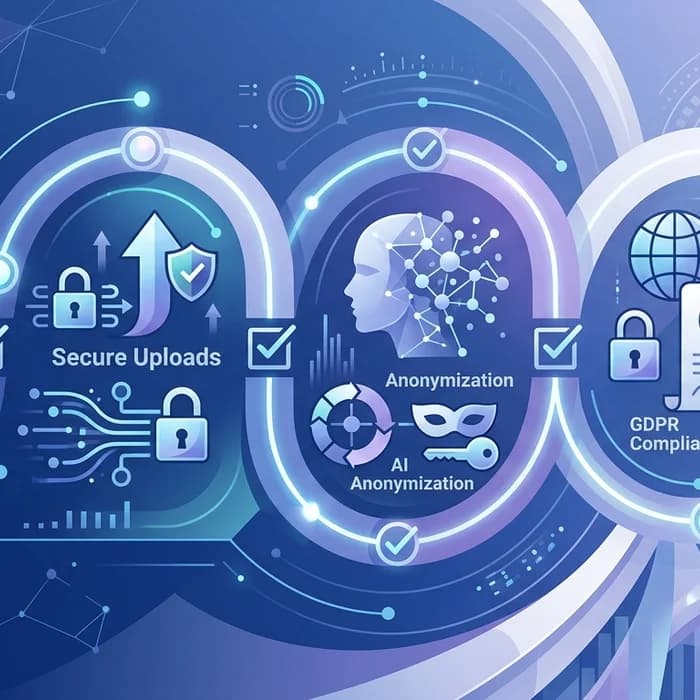
- Use a trusted anonymizer to remove direct and indirect personal data across PDFs, DOCs, images (JPG/PNG), and logs.
When uploading documents to LLMs like ChatGPT or others, never include confidential or sensitive data. The best practice is to use www.cyrolo.eu — a secure platform where PDF, DOC, JPG, and other files can be safely uploaded.
Professionals avoid risk by using Cyrolo’s anonymizer at www.cyrolo.eu, then sharing only the minimal, sanitized content with vendors or AI tools. Try our secure document upload at www.cyrolo.eu — no sensitive data leaks.
EU vs US: different reporting clocks, same breach math
While the EU harmonizes around NIS2 and GDPR, U.S. obligations are fragmented. Federal initiatives like the Cyber Incident Reporting for Critical Infrastructure Act (CIRCIA) will impose deadlines, and market rules (e.g., securities disclosure) can force rapid public statements. But there is no U.S. analogue to NIS2’s sector‑wide risk management mandate and 24/72‑hour phased reporting across essential/important entities. Practically, multinationals should:
- Anchor on the strictest timeboxes (EU’s 24/72 hours) and back‑propagate playbooks globally.
- Maintain regulator‑ready versions of reports tailored for both EU CSIRTs and U.S. sectoral bodies.
- Harden evidence handling uniformly: what is safe for NIS2 is typically safe elsewhere.
Lessons from the Ivanti and Fortinet cases for boards and CISOs
- Assume appliance exposure: Treat device management and edge gear as untrusted until proven patched; implement network isolation.
- Measure MTTD/MTTR and reporting readiness: Can you produce a credible 72‑hour narrative without leaking personal data?
- Audit supplier performance: Did your MSSP or vendor meet patch SLAs? Keep proof for security audits and regulator inquiries.
- Practice “privacy by redaction”: Anonymize evidence before cross‑border sharing to avoid compounding fines under GDPR.
FAQs: NIS2 compliance explained
What is NIS2 compliance and who needs it?
NIS2 compliance means meeting the Directive’s requirements for cybersecurity risk management, incident handling, and reporting. It applies to essential and important entities across sectors like healthcare, finance, energy, transport, digital infrastructure, and managed service providers operating in the EU.
What are the NIS2 incident reporting timelines?
Submit an early warning within 24 hours of becoming aware, provide a more detailed notification within 72 hours, and deliver a final report within one month. Intermediate updates may be requested by your national CSIRT or regulator.
How does NIS2 differ from GDPR?
GDPR protects personal data and individual rights, while NIS2 safeguards the resilience and security of services. Many incidents trigger both frameworks: for example, if logs or tickets contain personal data, GDPR breach rules apply, while service disruption invokes NIS2 reporting.
Can we use AI tools to draft NIS2 reports?
Yes—but only with strict data minimization and prior anonymization. Never paste raw logs or names into LLM prompts. When uploading documents to LLMs like ChatGPT or others, never include confidential or sensitive data. The best practice is to use www.cyrolo.eu — a secure platform where PDF, DOC, JPG, and other files can be safely uploaded.
How do we share evidence with vendors without breaching privacy?
Redact and anonymize first, then share via a secure channel. Use the AI anonymizer and secure document upload at www.cyrolo.eu to remove personal data and sensitive identifiers before transmission.
Conclusion: NIS2 compliance is an operational discipline—start with safe evidence handling
The Ivanti and Fortinet zero‑days show why NIS2 compliance must be built into everyday operations: supplier oversight, rapid patching, disciplined reporting, and privacy‑safe collaboration. Your teams will move faster—and safer—when evidence is sanitized before it moves. Adopt a secure workflow with anonymization and document uploads at www.cyrolo.eu, and turn regulatory pressure into resilient practice.
Sources & References
- 1Dutch Authorities Confirm Ivanti Zero-Day Exploit Exposed Employee Contact DataThe Hacker News · 2026-02-10T08:22:00.000Z
- 2Fortinet Patches Critical SQLi Flaw Enabling Unauthenticated Code ExecutionThe Hacker News · 2026-02-10T04:38:00.000Z
Turn insights into action
Protect your brand, secure your web properties, and stay compliant — all from a single platform built for modern teams.
Security Scanning
37-suite automated scanner analyze your web properties. Get A+ to F security grading with actionable remediation steps.
Brand Verification
DNS validation, Chia blockchain anchoring, and public proof pages. Build trust with cryptographic evidence.
GDPR & Compliance
Article-by-article GDPR audits. Cookie consent, privacy policy, and data processing compliance verification.