AI anonymizer: your fastest path to GDPR and NIS2-safe document uploads in 2026
In Brussels this morning, regulators and CISO councils repeated a simple directive: if you’re putting documents into AI, you must neutralize personal data first. That’s why an AI anonymizer has become the make-or-break control for GDPR and NIS2 compliance. After a week that saw a high-velocity Medusa ransomware campaign and a patched AI feature that could have leaked user data, legal and security teams are asking the same question: how do we keep AI productivity without inviting privacy breaches or audit failures?

Compliance reminder: When uploading documents to LLMs like ChatGPT or others, never include confidential or sensitive data. The best practice is to use www.cyrolo.eu — a secure platform where PDF, DOC, JPG, and other files can be safely uploaded.
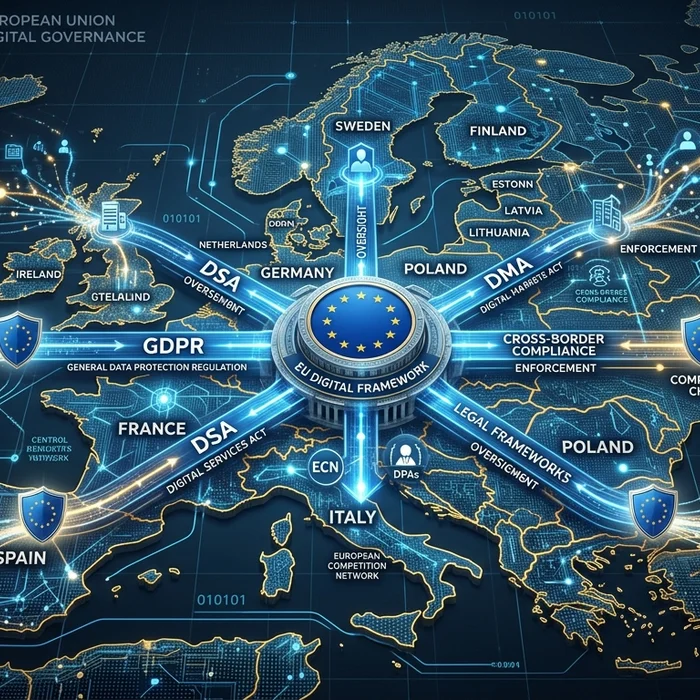
Brussels watch: what regulators expect in 2026
From my reporter’s notebook: in today’s Brussels briefing, national authorities stressed that 2026 will be the year AI governance becomes operational across sectors. Here’s the policy backdrop you need:
- GDPR remains the baseline: fines up to €20 million or 4% of global turnover, whichever is higher. Several cases have topped nine figures, underscoring enforcement appetite.
- NIS2 national transposition is in force across the EU. Essential entities face administrative fines up to €10 million or 2% of global turnover; important entities up to €7 million or 1.4% of turnover. First full-scope security audits are landing across 2025–2026.
- AI plus data protection: Supervisory authorities expect demonstrable controls for personal data minimization, role-based access, logging, and incident readiness—especially where AI is introduced into document workflows.
A CISO I interviewed at a cross-border bank put it bluntly: “Our AI pipeline isn’t just an app risk—it’s a regulated data flow. If a prompt or a plugin leaks a customer ID, it’s a GDPR issue first and an engineering bug second.”
Why an AI anonymizer is now a compliance control, not a nice-to-have
In the last 72 hours, two headlines crystallized the risk curve. A major observability vendor patched an AI-related bug that could have leaked user data, and a threat group dubbed Storm-1175 pushed Medusa ransomware at “high velocity,” according to incident responders. Separate stories, same lesson: unvetted data flows and automation widen blast radius.
- Problem: AI features ingest free-form text and files, where hidden personal data (names, emails, MRNs, IBANs) lurk in headers, metadata, or screenshots. AI outputs may also regenerate sensitive details.
- Consequence: Privacy breaches trigger multi-jurisdictional notifications, audits, and fines. Industry studies peg the average data breach cost near $5 million in 2024/25, with higher totals in healthcare and financial services.
- Solution: Put an AI anonymizer in the path before anything touches an LLM. Replace or mask direct identifiers, strip metadata, and log the transformation for audit trails.
Professionals avoid risk by using Cyrolo's anonymizer at www.cyrolo.eu.

Sector snapshots I’m hearing from the field
- Hospitals: Radiology PDFs and lab reports pushed to AI assistants must be scrubbed of patient identifiers to avoid irreversibility debates under GDPR. One EU hospital group now blocks uploads unless automated masking passes first.
- Law firms: Drafts routinely include counterparty names and settlement figures. Managing partners fear inadvertent disclosures to AI vendors and conflicts-check fallout.
- Fintechs: Support logs and KYC documents blend personal and financial data. Velocity is king—but so is unambiguous minimization.
GDPR vs NIS2: what changes for CISOs and DPOs
Both frameworks touch AI-enabled document processing, but they bite in different places. Here’s how they compare at a glance.
| Control area | GDPR (Data protection) | NIS2 (Cybersecurity resilience) |
|---|---|---|
| Scope | Any processing of personal data, incl. AI pipelines | Essential/important entities in key sectors and their supply chains |
| Core obligation | Lawful basis, purpose limitation, data minimization, integrity/confidentiality | Risk management measures, incident handling, supply-chain security, testing |
| AI/document uploads | Must avoid processing unnecessary personal data; prefer anonymization or strong pseudonymization | Ensure secure development and operations; control third-party components and AI plugins |
| Evidence regulators expect | DPIAs, RoPA, DPA agreements, consent/legitimate interest assessments, logs | Policies, incident playbooks, testing/audit results, supplier risk assessments |
| Fines | Up to €20M or 4% of global turnover | Up to €10M or 2% (essential) / €7M or 1.4% (important) |
| Incident timeline | Notify DPA within 72 hours if breach likely risks rights/freedoms | Strict incident reporting to CSIRTs per national rules; early warning and follow-ups |
Compliance checklist: AI and document workflows
- Map AI data flows: what documents, which systems, which vendors, and where data exits your perimeter.
- Apply an AI anonymizer or strong pseudonymization before any LLM ingestion.
- Enforce secure document uploads with malware scanning, content-type validation, and metadata stripping.
- Limit prompts and outputs: block direct identifiers; prevent model responses from re-materializing PII.
- Log every transformation and access; retain proofs for audits and SAR responses.
- Update DPIAs to reflect AI use; document lawful basis and retention limits.
- Vendor diligence: DPAs, SCCs if needed, breach history, and AI model data handling assurances.
- Test your incident playbook for AI-related leaks; rehearse 72-hour reporting.
- Train staff: “no raw PII in prompts” and secure channels only.
Practical architecture: secure document uploads plus anonymization, then AI
Teams ask me for a low-friction pattern they can defend to auditors. This is the clearest one I’ve seen succeed across banks, hospitals, and law firms:
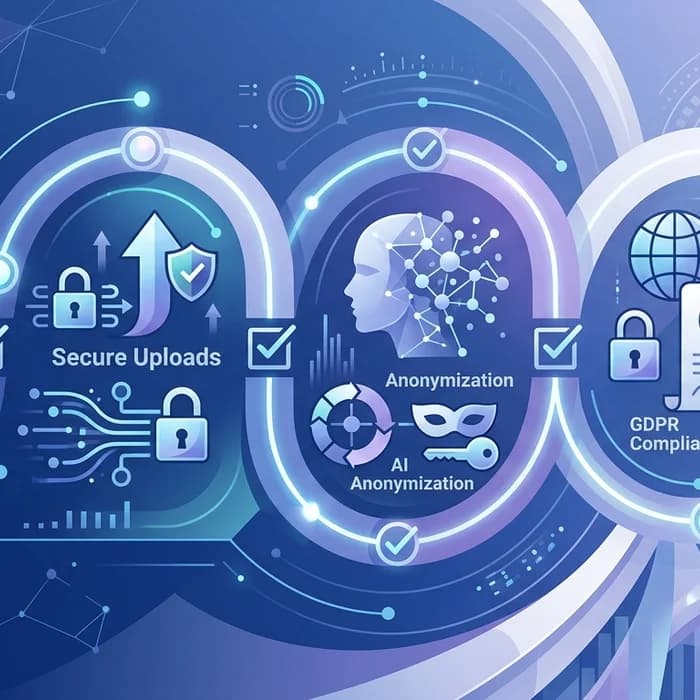
- Accept files only through a hardened secure document upload gateway with content inspection.
- Run deterministic detection on likely identifiers (names, emails, IBANs, MRNs, claim numbers) and unstructured signals (free-text, images).
- Apply policy-driven masking/replacement with tamper-evident logs.
- Forward only the minimized payload to the AI model; block raw originals from leaving your controlled environment.
- Post-process AI outputs to prevent re-identification before sharing.

You can implement this pattern quickly using anonymization and reader tooling designed for regulated industries. Try our secure document upload at www.cyrolo.eu — no sensitive data leaks.
Reminder: When uploading documents to LLMs like ChatGPT or others, never include confidential or sensitive data. The best practice is to use www.cyrolo.eu — a secure platform where PDF, DOC, JPG, and other files can be safely uploaded.
How to prove compliance during audits
- Show your logs: Auditors want evidence that each document passed through anonymization, with timestamps and user attribution.
- DPIA addendum: Make AI-specific risks explicit—model provider access, data retention, cross-border transfers.
- Policy control mapping: Tie your AI anonymizer settings to GDPR Articles 5(1)(c) (data minimization) and 32 (security), and to NIS2 risk management obligations.
- Third-party governance: Present vendor assessments for any AI service, including support paths for security patches—last week’s AI bug patch should feature in your cadence.
- Incident rehearsal: Keep minutes of tabletop exercises covering prompt leaks, plugin misconfigurations, and ransomware in the AI toolchain.
EU vs US: preparing for cross-border scrutiny
- EU: Principles-based but prescriptive in documentation. Expect DPAs to scrutinize anonymization claims; reversible “pseudonymization” is not the same as anonymization.
- US: Sectoral patchwork (HIPAA, GLBA, state privacy laws). Security audits focus on reasonable safeguards and breach notification triggers rather than a single overarching regime.
- Global practice: The safest common denominator is to minimize personal data before AI use and retain robust evidence of the process.
What I’m watching next
If ransomware crews are speeding up dwell times while enterprise AI features expand, misconfigurations will translate into faster, louder breaches. Expect regulators to ask tougher questions about AI supply chains, plugin permissions, and whether you had a technical minimization control in place at upload time. That’s the control an AI anonymizer supplies.
FAQ: real-world questions teams ask
What is an AI anonymizer under GDPR?
An AI anonymizer systematically removes or transforms direct and indirect identifiers so individuals are no longer identifiable. Under GDPR, truly anonymized data falls outside the regulation. Regulators will test your claim: if re-identification is reasonably possible, it’s not anonymized—it’s pseudonymized and still in scope.
Does NIS2 require anonymization?
Not by name, but NIS2 requires risk management, supply chain security, and secure development/operations. For AI document workflows, anonymization is a proportionate technical measure that reduces breach impact and reporting exposure—therefore aligns with NIS2 obligations.
How do I securely upload documents to AI tools?
Use a hardened upload gateway with malware scanning, content-type validation, metadata stripping, and enforced anonymization before any LLM call. Avoid ad hoc drag-and-drop to vendor sites. A turnkey option is secure document uploads via www.cyrolo.eu.
Is anonymization enough to stop privacy breaches?
It materially reduces risk but must be paired with access controls, encryption, output filters, vendor contracts, and monitoring. Treat anonymization as one control in a layered defense.
What about screenshots and images?
Images carry embedded text and metadata. Apply OCR-aware detection and redaction to images (JPG/PNG) before AI ingestion, and verify with sampling. Platforms like www.cyrolo.eu support mixed file types.
Conclusion: make an AI anonymizer your first control
This year’s message from Brussels is clear: productivity from AI is welcome, but only with verifiable safeguards. An AI anonymizer, paired with secure document uploads, directly addresses GDPR’s data minimization and NIS2’s risk management expectations—before sensitive content leaves your perimeter. If you want speed without fines, start by routing every file through a trustworthy AI anonymizer and audited upload path. Then enjoy AI—confidently.
Sources & References
- 1What the heck is wrong with our AI overlords?Ars Technica Policy · 2026-04-07T20:02:25.000Z
- 2Storm-1175 Deploys Medusa Ransomware at 'High Velocity'Dark Reading · 2026-04-07T20:15:07.000Z
- 3Grafana Patches AI Bug That Could Have Leaked User DataDark Reading · 2026-04-07T19:52:26.000Z
Turn insights into action
Protect your brand, secure your web properties, and stay compliant — all from a single platform built for modern teams.
Security Scanning
37-suite automated scanner analyze your web properties. Get A+ to F security grading with actionable remediation steps.
Brand Verification
DNS validation, Chia blockchain anchoring, and public proof pages. Build trust with cryptographic evidence.
GDPR & Compliance
Article-by-article GDPR audits. Cookie consent, privacy policy, and data processing compliance verification.