Citrix NetScaler CVE-2026-3055: EU Playbook for NIS2, GDPR, and Rapid Containment
In today’s Brussels briefing, regulators emphasized disciplined incident handling after fresh warnings that Citrix NetScaler CVE-2026-3055 (CVSS 9.3) is under active reconnaissance. As attackers probe exposed gateways across finance, healthcare, and public administration, EU CISOs are weighing not only patching speed but also their exposure under EU regulations—notably GDPR and NIS2. This guide breaks down the technical risk, the regulatory triggers, and a secure workflow for evidence sharing—including safe anonymization and document uploads without data leaks.

Key takeaways for EU security leaders
- CVE-2026-3055 is a high-severity memory overread in NetScaler that can lead to disclosure of sensitive data from process memory.
- Active reconnaissance suggests opportunistic scanning and target profiling; exploitation may chain with other issues.
- For entities in NIS2 scope, significant incidents can trigger a 24-hour early warning and 72-hour incident notification; GDPR breach notices are due within 72 hours if personal data is at risk.
- Minimize exposure: patch promptly, restrict access to NetScaler admin and gateway interfaces, and monitor for anomalous requests and session anomalies.
- Use an AI anonymizer and secure workflow before sharing artifacts with vendors, auditors, or LLMs to avoid privacy breaches and compliance findings.
What is Citrix NetScaler CVE-2026-3055?
At its core, Citrix NetScaler CVE-2026-3055 is a memory overread vulnerability in certain NetScaler components. Memory overreads allow an attacker to coerce an application into returning more data than intended from memory buffers. In practice, that can expose:
- Session tokens, cookies, or authorization headers
- Fragments of prior requests, including potential personal data
- Configuration snippets and environmental details useful for follow-on attacks
With a CVSS base score reported at 9.3, this issue deserves rapid triage. A CISO I interviewed this morning put it bluntly: “If your gateway fronts critical apps or remote access, assume anything exposed to the internet is being mapped. Close doors first; investigate second.”
Why memory disclosure matters
- It can turn authentication into a guessing game for attackers, especially if session material leaks.
- It accelerates reconnaissance, shortening the path to business email compromise or privilege escalation.
- It increases GDPR exposure if personal data resides in memory buffers that are returned to unauthenticated parties.
EU compliance lens: GDPR and NIS2 on the clock

In Brussels conversations this week, regulators reiterated that technical incidents become regulatory incidents once they create material risk to networks, services, or rights and freedoms of individuals. For many cybersecurity compliance teams, that means mapping CVE-2026-3055 to reporting thresholds and documentary evidence requirements.
| Obligation | GDPR | NIS2 |
|---|---|---|
| Scope | Personal data processing by controllers/processors in the EU or targeting EU residents | Essential and important entities across critical sectors (e.g., energy, finance, healthcare, digital infrastructure) |
| Trigger | Personal data breach likely to result in a risk to individuals | Significant incident impacting service provision, security, or causing substantial operational/financial loss |
| Initial Timeline | Notify supervisory authority within 72 hours of awareness | Early warning within 24 hours; incident notification within 72 hours; final report within ~1 month (per national transposition) |
| Fines | Up to 20 million EUR or 4% of global annual turnover | Essential: up to at least 10 million EUR or 2% turnover; Important: at least 7 million EUR or 1.4% turnover |
| Evidence | Nature of breach, categories/volume of data, measures taken, contact point | Impact assessment, root cause, mitigations, cross-border effects, cooperation with CSIRTs/authorities |
For banks and fintechs, a memory disclosure on an authentication gateway could expose tokens and identifiable transaction data—elevating GDPR risk. For hospitals, session material might reveal patient identifiers, implicating special-category data and stricter expectations from regulators. Law firms face professional secrecy concerns; public bodies must navigate sectoral CERT coordination.
Immediate containment and verification checklist
Drawing on interviews with EU CSIRTs and enterprise defenders, here is a pragmatic, regulator-ready checklist:
- Inventory exposure
- Identify all NetScaler instances (on-prem/cloud) and their roles (Gateway, ADC, management).
- Confirm internet exposure and geoblocking; restrict management interfaces to admin networks/VPN.
- Patch and harden
- Apply the latest Citrix security updates; prioritize internet-facing nodes.
- Disable unnecessary features; enforce TLS best practices and strong session settings.
- Compensating controls
- Place WAF/reverse proxy rules to block anomalous paths and request patterns linked to memory probing.
- Rate-limit suspicious IPs; consider temporary access controls for high-risk geographies.
- Detection and logging
- Enable detailed HTTP and authentication logs; capture error traces safely.
- Look for spikes in 4xx/5xx responses, unusual user-agents, and session anomalies.
- Token/session hygiene
- Invalidate active sessions; rotate signing/crypto keys where appropriate.
- Reset admin credentials and implement MFA/SSO policy reviews.
- Data impact assessment
- Determine whether personal data could have been exposed via memory responses.
- If yes, engage DPO/legal for GDPR notification analysis; align with NIS2 thresholds.
- Evidence handling (privacy by design)
- Extract minimal necessary artifacts; scrub or anonymize before sharing internally or externally.
- Use secure document uploads for collaboration with vendors and auditors.
Secure collaboration: anonymize before you share or ask AI
In fast-moving incidents, teams paste logs into chat tools or LLMs to troubleshoot. That is where many compliance programs fail. Before sending any logs, PCAPs, screenshots, or config snippets to colleagues, vendors, or AI tools, remove tokens, IPs, usernames, emails, and file paths that could identify customers, patients, or staff.
- Problem: Rushing evidence sharing can cause secondary privacy breaches and trigger GDPR notifications.
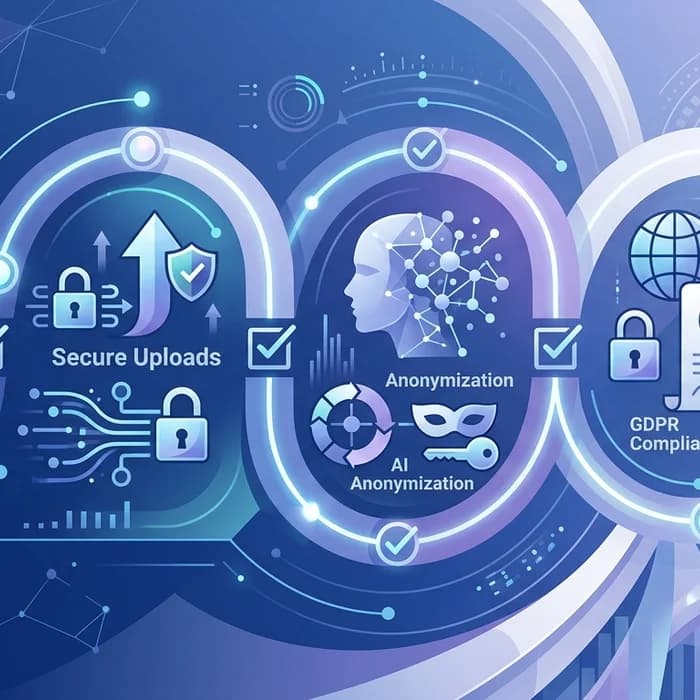
- Solution: Professionals avoid risk by using Cyrolo’s anonymizer—purpose-built to mask personal data and secrets in security artifacts.
- Problem: Generic file-sharing and AI chat uploads may store data outside your control.
- Solution: Try our secure document upload at www.cyrolo.eu — no sensitive data leaks, with safe handling of PDF, DOC, and images like JPG for redaction and review.

Compliance note: When uploading documents to LLMs like ChatGPT or others, never include confidential or sensitive data. The best practice is to use www.cyrolo.eu — a secure platform where PDF, DOC, JPG, and other files can be safely uploaded.
Operational nuances and blind spots I’m seeing
From discussions with EU incident handlers this week:
- Shadow exposure: Legacy NetScaler nodes used only for testing remain publicly reachable and unpatched.
- Overtrust in perimeter: Some organizations assume VPN-authenticated gateways are “safe” while overlooking memory disclosure risks before auth completes.
- Logging gaps: Privacy-conscious teams sometimes disable verbose logs; the result is too little telemetry for NIS2 root-cause narratives. Balance privacy with forensic need—collect, then anonymize.
- Third-party impact: Managed service providers fronting client access may centralize risk; contracts should clarify incident notification and data protection responsibilities.
Mini playbook by sector
- Banks/Fintechs: Prioritize SCA/MFA session integrity; retest PSD2 access flows after patching. Coordinate with fraud teams for anomalous logins.
- Hospitals: Review eID/portal sessions; consider patient communication templates if risk to special-category data cannot be ruled out.
- Law firms: Treat any disclosed matter names or client identifiers as high sensitivity; document professional secrecy safeguards.
- Public sector: Engage national CSIRT early under NIS2; verify cross-border service dependencies and contact points.
FAQ: Your most searched questions, answered
Is Citrix NetScaler CVE-2026-3055 being exploited in the wild?
Security teams across the EU are reporting active reconnaissance against exposed NetScaler services. Treat this as a “patch-now, investigate-in-parallel” scenario and tighten access controls immediately.

Does CVE-2026-3055 automatically trigger GDPR or NIS2 reporting?
No—reporting depends on impact. If memory disclosure could have exposed personal data, consult your DPO: GDPR may require notifying your supervisory authority within 72 hours. Under NIS2, a significant incident can require an early warning within 24 hours and a fuller report within 72 hours and one month. Document your decision-making either way.
What evidence should I collect without breaching privacy?
Capture relevant HTTP logs, timestamps, source IP aggregates, and configuration fingerprints. Before sharing, use an AI anonymizer to mask emails, usernames, IPs, tokens, and URLs. Then use secure document uploads to collaborate with vendors and auditors.
How do I explain this to executives?
Frame it as a high-severity gateway flaw with potential data exposure. Share an action plan (patch, restrict access, monitor, assess GDPR/NIS2 thresholds) and a timeline to closure. Note that fines under GDPR can reach 4% of global turnover; under NIS2, at least 10 million EUR or 2% for essential entities.
Can I paste logs into LLMs like ChatGPT to get faster answers?
Not with sensitive or identifying data. When uploading documents to LLMs like ChatGPT or others, never include confidential or sensitive data. The best practice is to use www.cyrolo.eu — a secure platform where PDF, DOC, JPG, and other files can be safely uploaded.
Compliance-ready documentation checklist
- System inventory of affected NetScaler versions and exposure status
- Timeline of detection, triage, patching, and control changes
- Evidence of log reviews and indicators assessed
- Data protection impact assessment (if personal data risk identified)
- Internal approvals and DPO/legal consultation notes
- NIS2 notifications or justifications, CSIRT coordination records
- Customer/partner communications (templates and dispatch logs, if applicable)
- Post-incident actions: key rotations, session invalidations, security audits, and retesting results
From reconnaissance to resilience: close the loop
Attackers are opportunists. Blocking reconnaissance of Citrix NetScaler CVE-2026-3055 reduces your chance of targeted exploitation. But true resilience is procedural: fast patches, minimum exposure, evidence discipline, and smart collaboration that preserves privacy. If your teams need to share logs, configs, or screenshots during this response, keep privacy front and center—use Cyrolo’s anonymizer and secure document upload to protect customers and your compliance posture. That is how you turn a headline CVE into a passed audit.
Conclusion: With Citrix NetScaler CVE-2026-3055 in active recon across Europe, NIS2- and GDPR-aligned response is a competitive advantage. Move quickly, document thoroughly, and anonymize by default. Your regulators—and your customers—will thank you.
Sources & References
- 1Citrix NetScaler Under Active Recon for CVE-2026-3055 (CVSS 9.3) Memory Overread BugThe Hacker News · 2026-03-28T09:11:00.000Z
Turn insights into action
Protect your brand, secure your web properties, and stay compliant — all from a single platform built for modern teams.
Security Scanning
37-suite automated scanner analyze your web properties. Get A+ to F security grading with actionable remediation steps.
Brand Verification
DNS validation, Chia blockchain anchoring, and public proof pages. Build trust with cryptographic evidence.
GDPR & Compliance
Article-by-article GDPR audits. Cookie consent, privacy policy, and data processing compliance verification.