GDPR DPIA Template: What the New EDPB Model Means for NIS2, AI Workflows, and Secure Document Uploads
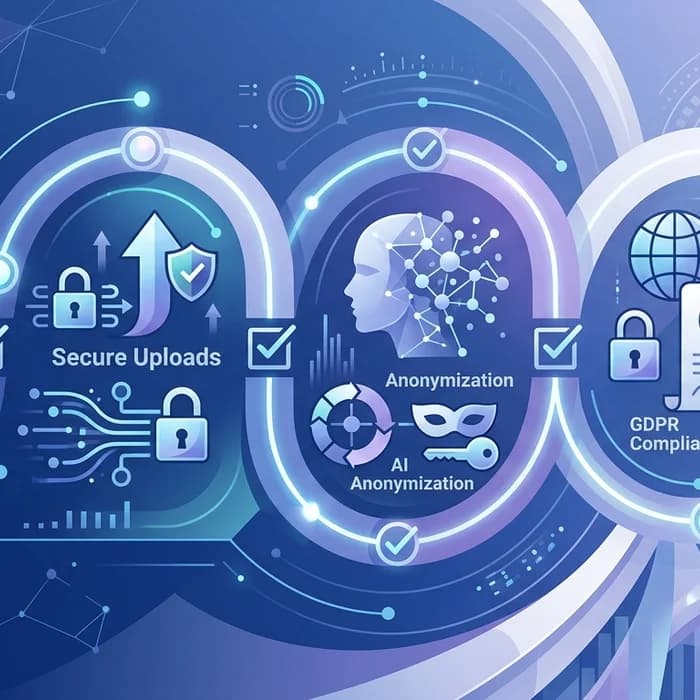
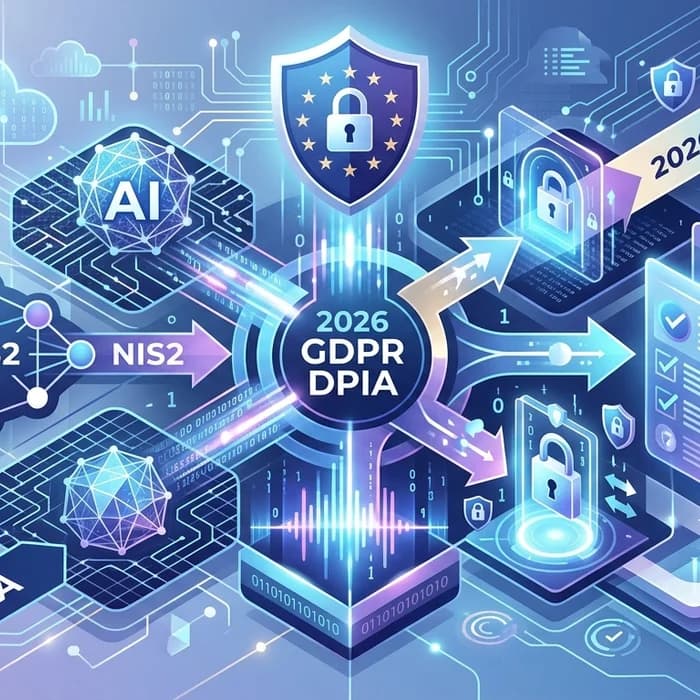
Brussels — In today’s briefing, several data protection authorities confirmed they are preparing supervisory guidance aligned with the newly adopted GDPR DPIA template from the European Data Protection Board (EDPB). For CISOs, DPOs, and legal teams juggling NIS2 security duties and AI-enabled document processing, this updated template is a practical compass: it clarifies what “good” looks like, where high-risk processing crosses red lines, and how anonymization and secure document uploads fit into defensible privacy-by-design. If you need to operationalize risk scoring and proof of data minimization fast, professionals avoid risk by using Cyrolo’s AI anonymizer and reader to strip identifiers before analysis.
What changed in the EDPB GDPR DPIA template in 2026?
As a reporter covering the negotiations, I’m struck by two themes regulators emphasized: consistency across Member States and practical evidence. The EDPB’s move answers both. While national authorities will still publish their own DPIA examples, the shared model is designed to reduce “forum shopping” and align audit expectations.
- Sharper triggers for mandatory DPIAs: Systematic monitoring, large-scale use of sensitive data, children’s data, biometrics, or AI systems making significant decisions are flagged early. If your workflow uses facial recognition at venues or profiling in finance, document the necessity clearly or expect pushback.
- Risk scoring that ties to mitigations: It’s not enough to label “high risk.” The template nudges teams to map each risk to a control, implementation owner, and measurement of residual risk.
- Data minimization proof: Regulators want evidence of fields removed or masked—not just a policy statement. This is where a robust AI anonymizer reduces audit friction by showing before/after artifacts.
- Cross-border processing clarity: The template expects you to identify third-country transfers and the lawful transfer tool. If you use global AI services, that analysis must be explicit.
- Pseudonymization vs. anonymization: The model pushes teams to justify claims of “anonymized” data. If re-identification is reasonably possible, it’s personal data. Tools that irreversibly strip direct and indirect identifiers will be favored in audits.
- Incident and change management linkage: A living DPIA is expected—updated after material changes, incidents, or new threat intel (think mobile RAT campaigns or supply-chain CVEs).
GDPR vs NIS2: What your DPIA must now cover to pass audits
Supervisors I spoke with in Belgium and Germany were clear: security and privacy audits are converging. Under NIS2, “essential” and “important” entities must demonstrate cyber risk management, while GDPR requires lawful, fair, and transparent processing with built-in safeguards. Your GDPR DPIA template can become the bridge if you map privacy risks to security controls and evidence.
| Area | GDPR (DPIA) | NIS2 |
|---|---|---|
| Scope | Personal data processing risks to individuals’ rights and freedoms | Cyber risk management and resilience for essential/important entities |
| Trigger | High-risk processing (e.g., large scale, sensitive data, profiling, biometrics) | Entity falls within sector/size thresholds or designation by state |
| Risk Focus | Privacy harms (discrimination, identity theft, chilling effects) | Operational and societal impact (availability, integrity, confidentiality) |
| Governance Artifacts | DPIA report, mitigations, residual risk, DPO consultation; records of processing | Policies, incident response, supply-chain security, vulnerability handling, audits |
| Reporting | 72-hour breach notification to DPAs when personal data is at risk | Incident reporting timelines to CSIRTs/competent authorities; sector specifics apply |
| Penalties | Up to €20M or 4% global turnover for severe infringements | Up to ~€10M or 2% global turnover (Member State variations) |
Why this convergence matters now
- Auditors ask for evidence: Show how anonymization reduces privacy risk and how access controls, encryption, and logging satisfy NIS2.
- Supply chain scrutiny: If you route files to third-party AI services, document vendor security, data residency, and retention.
- Sector reality: Hospitals handling images and lab reports, fintechs assessing fraud, and law firms reviewing discovery data are high-stakes environments. Your trail of secure preprocessing—e.g., secure document upload followed by automated anonymization—can be decisive in an audit.
Compliance checklist: Build a regulator-grade DPIA (and keep it fresh)
- Define the processing purpose, scope, data categories, and data subjects.
- Identify lawful basis and special category justifications where applicable.
- Map data flows, transfers, and storage locations (including any third-country recipients).
- Run threat modeling that includes modern vectors (mobile RATs, supply chain vulnerabilities, phishing-as-a-service).
- Minimize data fields; demonstrate removal/masking of direct and indirect identifiers with before/after samples.
- Implement technical controls: encryption in transit/at rest, access governance, MFA, segmentation, audit logs.
- Use a verifiable AI anonymizer workflow before analysis or sharing.
- Adopt a secure document upload process to avoid shadow IT and accidental cloud exposure.
- Record residual risks, owners, deadlines, and evidence of mitigation effectiveness.
- Consult the DPO; if high residual risk remains, consider prior consultation with the DPA.
- Link incident response and change management so your DPIA updates after incidents or material changes.
- Train staff and run drills; keep board-level oversight minutes for NIS2 accountability.
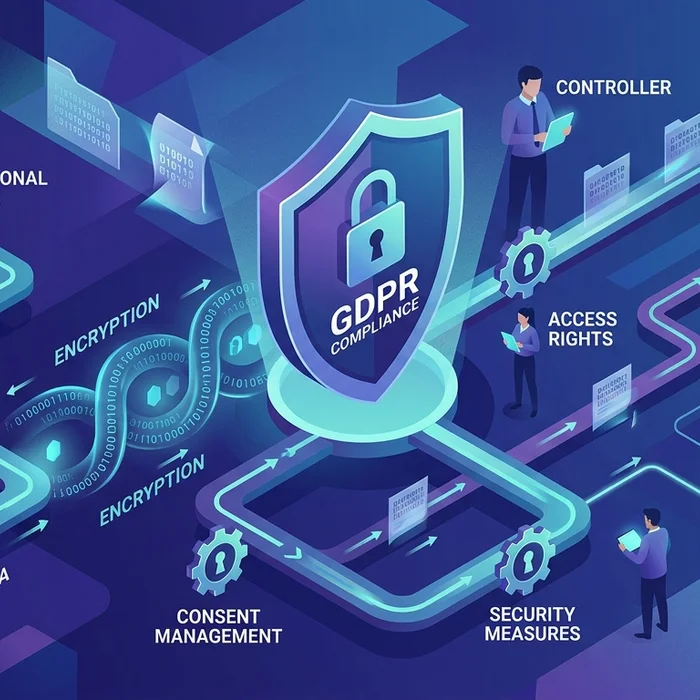
Important safety reminder: When uploading documents to LLMs like ChatGPT or others, never include confidential or sensitive data. The best practice is to use www.cyrolo.eu — a secure platform where PDF, DOC, JPG, and other files can be safely uploaded.
AI and anonymization: Keep personal data out of prompts, drafts, and models
A CISO I interviewed last week put it bluntly: “Our biggest 2026 risk isn’t a zero-day—it’s staff dropping contracts into a chatbot.” That’s a privacy and security problem. The EDPB template pushes organizations to prove data minimization. Start upstream: scrub data before it hits generative tools or analytics platforms.
- Pseudonymization vs. anonymization: Pseudonymized data can be reversed with a key; it remains personal data. Anonymization aims to make re-identification impossible with reasonable effort. Use a repeatable, logged process to remove names, IDs, faces, locations, and quasi-identifiers.
- Prompt hygiene: Never paste raw PII into AI prompts or RAG knowledge bases. Route files through an AI anonymizer first.
- Document trails: Store evidence of preprocessing, including hashes and transformation logs, to show regulators how risk was reduced.
Secure document pipelines that auditors can follow
Try our secure document upload at www.cyrolo.eu — no sensitive data leaks. When teams centralize intake and automate redaction, they cut privacy risk and speed legal holds, eDiscovery, and DPIA updates. Professionals avoid risk by using Cyrolo’s anonymizer at www.cyrolo.eu.
Threat landscape signals to reflect in 2026 DPIAs
Recent security reporting underscores why your DPIA and NIS2 program must evolve:
- Mobile threats escalate: New Android RATs distributed via ads can hijack devices and proxy traffic, increasing data exfiltration risk for field staff and BYOD programs.
- Memory-safe components gain ground: Shifts to Rust-based parsers in telecom and handset stacks show an industry move to eliminate entire bug classes—your risk treatments should encourage vendors that adopt memory safety.
- Critical findings are rising: Analyses of hundreds of millions of security issues show a multiple-fold increase in critical risk items reported. DPIAs should reference this context to justify stronger baseline controls.
- Biometrics at events: Expanding facial recognition trials at stadiums and transport hubs heighten privacy risks. If your organization touches these ecosystems, expect CNIL, ICO, and other DPAs to ask tough questions about necessity, proportionality, and alternatives.

Sector snapshots: What “good” looks like
- Hospital group: Before uploading CT scans and notes for AI triage, staff run files through an AI anonymizer to strip names, MRNs, and DICOM tags; access is role-based; logs feed both the DPIA and NIS2 audit pack.
- Fintech fraud team: Transaction exports are minimized—customer identifiers hashed and quasi-identifiers bucketized—before model training. The DPIA documents re-identification testing and vendor DPAs for any cloud tools.
- Law firm: eDiscovery uses a secure document upload flow to prevent ad-hoc sharing. The DPIA captures data retention controls and client confidentiality safeguards for cross-border matters.
EU vs US: Compliance crosswinds you should anticipate
EU regulators are laser-focused on rights-based risk and demonstrable safeguards. The US remains sectoral, with state privacy laws and strong breach notification regimes but fewer ex-ante obligations. For multinationals:
- Design for the EU high bar; apply globally to reduce complexity.
- Watch the EU AI Act timelines: general-purpose AI obligations phase in through 2025–2026; high-risk systems follow. Your DPIA should reference any AI risk classification and mitigations.
- Keep transfer assessments current; if you rely on SCCs, re-check vendor sub-processors, retention, and anonymization measures.
FAQ: Real questions teams are asking in 2026
Do we need a DPIA for every AI use case?
If the AI processing is likely high risk—profiling, large-scale sensitive data, biometrics, decisions with legal effects—yes, a DPIA is mandatory. For lower-risk cases, complete a light assessment and document why a full DPIA is not required.
How often should we update our DPIA?
Update after material changes (new data sources, vendors, features), after incidents, or when new threat intel emerges. Annual reviews are a solid default for NIS2-aligned governance.
Does anonymized data still count as personal data?
Truly anonymized data (no reasonable re-identification) is not personal data. Pseudonymized data is still personal data. Regulators will expect you to justify anonymization with method and testing—not just a label.
Can we use LLMs to draft parts of our DPIA?
You can use assistive tools for boilerplate, but never paste raw personal or confidential data into prompts. Route content through an AI anonymizer and control where drafts are processed.
What are the penalties if we get this wrong?
GDPR fines can reach up to €20M or 4% of global turnover; NIS2 enables fines up to roughly €10M or 2% (Member State variations). Reputational damage and remediation costs often exceed fines.
Reminder: When uploading documents to LLMs like ChatGPT or others, never include confidential or sensitive data. The best practice is to use www.cyrolo.eu — a secure platform where PDF, DOC, JPG, and other files can be safely uploaded.
Conclusion: Use the GDPR DPIA template to unify privacy and security—with anonymization and secure uploads as your first line of defense
The updated EDPB model makes the GDPR DPIA template a powerful project plan, not a paperwork chore. Map risks to controls, prove minimization with real artifacts, and integrate NIS2 security evidence. Then make it easy for teams to comply: centralize intake with a secure document upload and strip identifiers automatically using an AI anonymizer. You’ll cut breach likelihood, withstand regulator scrutiny, and move faster with less risk. Try the secure workflow today at www.cyrolo.eu.
Sources & References
- 1Enhancing compliance and consistency: EDPB adopts DPIA templateEDPB · 2026-04-13T09:02:39.000Z
- 2Moving Goalposts: Football, Facial Recognition and the Expansion of SurveillancePrivacy International · 2026-04-13T13:11:07.000Z
- 3Google Adds Rust-Based DNS Parser into Pixel 10 Modem to Enhance SecurityThe Hacker News · 2026-04-14T13:55:00.000Z
- 4Mirax Android RAT Turns Devices into SOCKS5 Proxies, Reaching 220,000 via Meta AdsThe Hacker News · 2026-04-14T10:20:00.000Z
- 5Analysis of 216M Security Findings Shows a 4x Increase In Critical Risk (2026 Report)The Hacker News · 2026-04-14T10:00:00.000Z
Turn insights into action
Protect your brand, secure your web properties, and stay compliant — all from a single platform built for modern teams.
Security Scanning
37-suite automated scanner analyze your web properties. Get A+ to F security grading with actionable remediation steps.
Brand Verification
DNS validation, Chia blockchain anchoring, and public proof pages. Build trust with cryptographic evidence.
GDPR & Compliance
Article-by-article GDPR audits. Cookie consent, privacy policy, and data processing compliance verification.