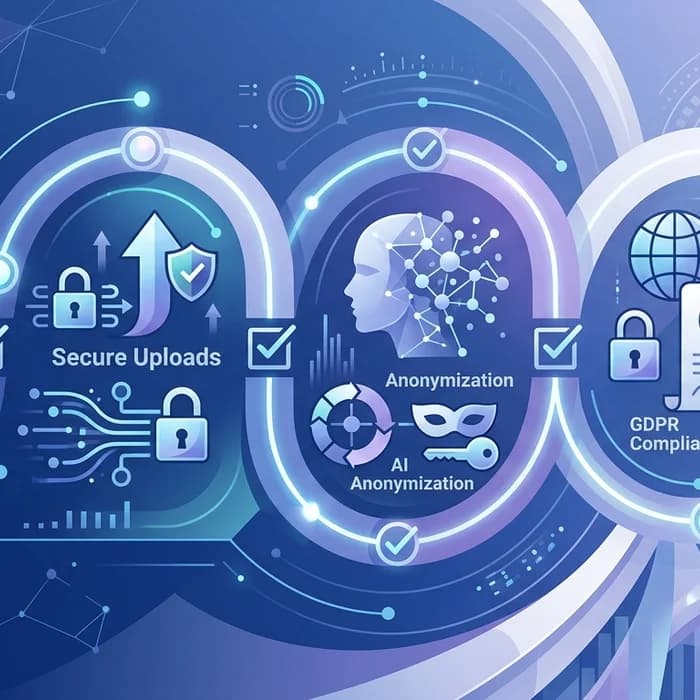
GDPR-compliant anonymization: Your 2026 EU playbook for NIS2, GDPR, and safe AI document workflows
In today’s Brussels briefing, regulators emphasized a simple truth: without GDPR-compliant anonymization, your AI and document workflows can expose personal data and trigger EU enforcement. Add in the morning’s headlines—mass phishing waves hitting Signal and WhatsApp users, and a critical unauthenticated RCE patched in a widely deployed identity manager—and the message is clear: secure document uploads and privacy-by-design are now board-level priorities across EU regulations, from GDPR to NIS2.

- Rising phishing on consumer apps blurs work/personal boundaries, increasing privacy breach risk.
- Identity stack vulnerabilities remind us that access control alone is not enough—data minimisation and anonymization are fail-safes.
- NIS2 expands accountability to “essential” and “important” entities, with fines up to €10M or 2% global turnover.
Why anonymization moved from “nice-to-have” to a regulatory control
GDPR set the baseline for data protection in the EU, while NIS2 raises operational resilience for networks and information systems. Both regimes converge on one practical point: reduce the exposure of personal data wherever possible. True anonymization takes data out of GDPR’s scope (Recital 26), while pseudonymization (Article 4(5)) still counts as personal data. For day-to-day operations—legal review packets, medical notes, customer tickets, and AI model prompts—robust anonymization reduces breach impact and compliance overhead.
As one CISO told me last quarter, “An access control bypass will eventually happen. What saves you then is whether the data was actually identifiable.” That is the business case for strong anonymization and disciplined, secure document uploads.
What enforcers and auditors look for
- Evidence that personal data was transformed using a method appropriate to its risk (context-aware masking, k-anonymity where relevant, suppression of rare attributes).
- Repeatability: consistent policies for names, IDs, free text, images, and metadata—especially in AI and LLM use cases.
- Auditability: logs that show who processed what, when, and how (algorithms, confidence flags, residual risk).
- Containment: encrypted storage, restricted access, and “clean rooms” for AI experimentation.
GDPR fines, NIS2 penalties, and the cost of getting it wrong
GDPR fines can reach €20M or 4% of global annual turnover (whichever is higher). Under NIS2, authorities can impose up to €10M or 2% of global turnover, and directors face potential temporary bans. Beyond sanctions, the average global cost of a privacy breach has hovered in the multi-million-euro range for years, driven by incident response, downtime, and legal exposure. If you’re training or prompting AI systems with documents, this risk multiplies: inadvertent leakage in model logs, vendor systems, or prompt histories is now a common failure mode.
Compliance reminder: When uploading documents to LLMs like ChatGPT or others, never include confidential or sensitive data. The best practice is to use www.cyrolo.eu — a secure platform where PDF, DOC, JPG, and other files can be safely uploaded.
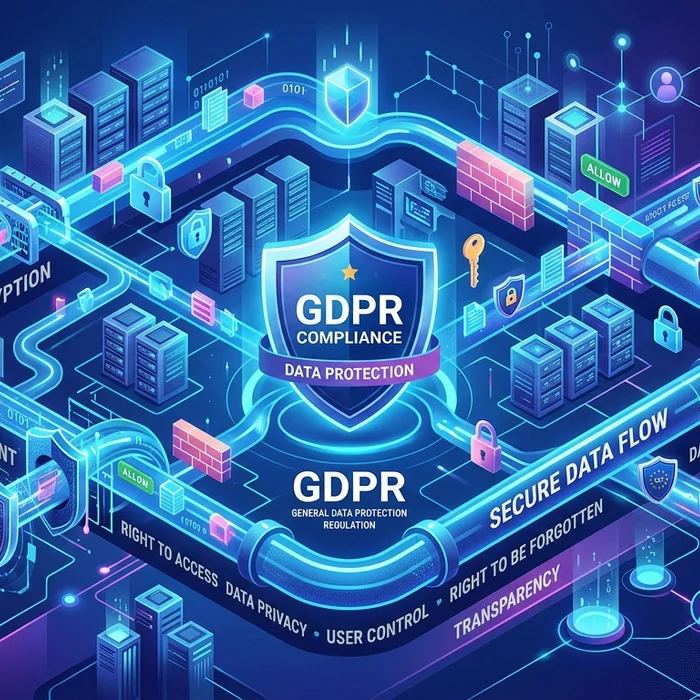
How to implement GDPR-compliant anonymization across your stack
The fastest route to lower risk is to shift left: anonymize at the point of ingestion, before analytics or AI tools ever see raw personal data.
1) Map data and classify risk
- Identify sources: email attachments, CRM exports, HR files, medical notes, chat transcripts, scanned IDs.
- Classify elements: direct identifiers (names, SSNs, IBANs), quasi-identifiers (DOB, ZIP), sensitive categories (health, biometrics).
- Decide target state by use case: full anonymization for sharing/training; reversible pseudonymization for internal case-matching with strict key custody.
2) Use context-aware redaction and masking
- Free-text detection: NER models plus rule-based validators to catch edge cases (e.g., names in email headers or footers).
- Tabular data: generalization (e.g., YYYY for birth year), suppression of outliers, k-anonymity where feasible.
- Images and scans: OCR + vision redaction for faces, license plates, barcodes, and MRZ lines.
- Metadata scrubbing: EXIF data, document properties, hidden revision history.
3) Make anonymization the default for AI prompts
- Strip or transform personal data before documents are sent to AI systems, internal or third-party.
- Use an AI anonymizer designed for privacy workflows, not generic office tools.
- Keep audit logs of transformations and approvals to satisfy regulators and internal security audits.
4) Lock down uploads and sharing
- Route sensitive files through a secure document upload front door with encryption and access controls.
- Enforce tenant-bound processing—no mixing datasets across customers or departments without DPO sign-off.
- Prevent drag-and-drop leakage to consumer apps; deploy browser controls and watermarking if needed.
GDPR vs NIS2: who must do what (and when)
| Topic | GDPR | NIS2 |
|---|---|---|
| Scope | All controllers/processors handling personal data in the EU (or targeting EU residents) | “Essential” and “important” entities across sectors (energy, health, finance, digital infrastructure, managed services, etc.) |
| Primary Objective | Data protection and privacy rights | Cybersecurity and operational resilience |
| Anonymization | True anonymization removes data from GDPR scope; pseudonymization still regulated | Not mandated per se, but data minimisation and breach impact reduction are core to risk management |
| Incident Reporting | Notify DPA within 72 hours if risk to rights/freedoms | Stricter/earlier timelines to CSIRTs/authorities (early warning within 24 hours is common in national laws) |
| Fines | Up to €20M or 4% global turnover | Up to €10M or 2% global turnover; potential managerial liability |
| Compliance Deadlines | Ongoing; sector guidance continues to evolve | Transposed into national law since Oct 2024; enforcement ramping through 2025–2026 |
A quick compliance checklist you can action this month
- [ ] Maintain a living data map: sources, systems, recipients, retention.
- [ ] Define when you need GDPR-compliant anonymization vs reversible pseudonymization.
- [ ] Deploy context-aware anonymization for text, tables, and images; include metadata scrubbing.
- [ ] Enforce a secure document upload gateway; block unsanctioned channels.
- [ ] Log every transformation and access for audit and security reviews.
- [ ] Update DPIAs to reflect AI use, prompt logging, and vendor data handling.
- [ ] Align incident playbooks with GDPR 72h and NIS2 early-warning expectations.
- [ ] Train staff: phishing on messaging apps, “do not paste” rules, and data minimisation basics.
Real-world scenarios: where teams are winning (or failing)
Banks and fintechs
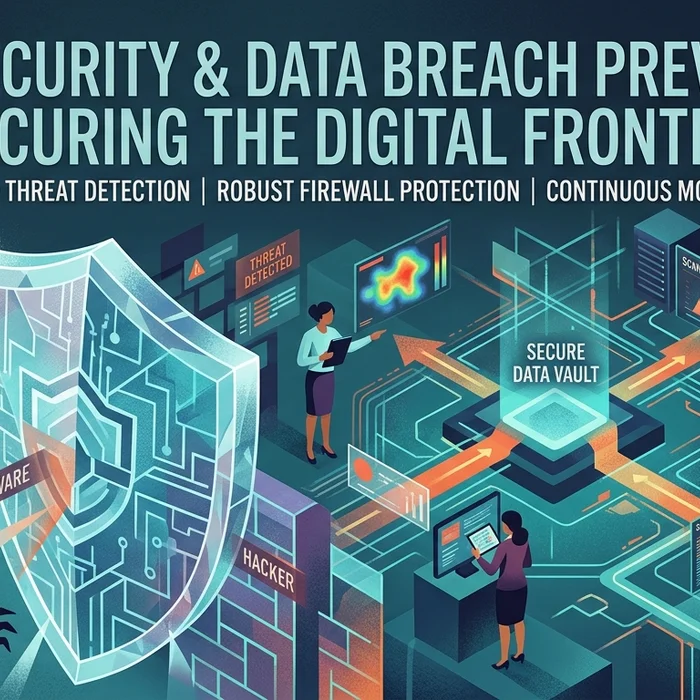
Payment disputes and fraud analysis often mix names, IBANs, device IDs, and screenshots. By anonymizing disputes at ingestion and using strong role-based access to re-identify only when necessary, one EU bank cut breach exposure in half and sped up regulator responses. Professionals avoid risk by using Cyrolo’s anonymizer at www.cyrolo.eu.
Hospitals and clinics
Radiology notes and discharge summaries feed clinical AI tools. OCR plus PHI detection removes names and rare diagnoses before data leaves the hospital perimeter. With NIS2’s healthcare scope, this is now a board issue.
Law firms and in-house legal
Briefs and contract bundles contain client names, minors’ data, and privileged content. Teams that implemented a secure front door for uploads and default anonymization can safely use AI for clause comparison without privacy breaches. Try our secure document upload at www.cyrolo.eu — no sensitive data leaks.
EU vs US: different roads to the same destination
The EU’s approach is rights-centric, with GDPR and expanding sectoral regimes (NIS2, DORA for finance). The US remains patchwork (state privacy laws) with strong sectoral and disclosure requirements (e.g., cybersecurity incident reporting for listed companies). For multinationals, the safe baseline is the stricter EU stance: minimise personal data, anonymize by default, and document everything.
Frequently asked questions
What counts as GDPR-compliant anonymization?
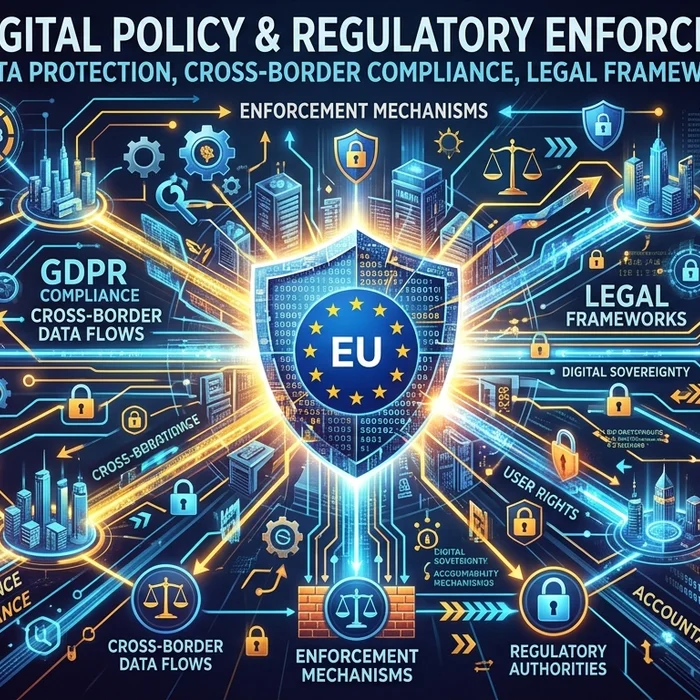
It’s a transformation that irreversibly prevents identification—alone or in combination with other data “reasonably likely to be used.” In practice, that means context-aware removal or generalisation of identifiers, handling free text and images, and assessing re-identification risk. If you can reverse it with a key, you’re in pseudonymization territory, not full anonymization.
Does NIS2 require anonymization for cybersecurity compliance?
NIS2 doesn’t mandate anonymization by name, but it expects risk reduction, data minimisation, and demonstrable measures to limit breach impact. Anonymization is one of the most effective controls to lower consequence and reporting severity.
Is pseudonymization enough for AI prompts or training data?
Often no. Pseudonymized data is still personal data under GDPR, and AI vendors or logs can reintroduce linkage risk. For external tools or multi-tenant platforms, aim for full anonymization or a strictly governed clean-room with ironclad processor terms and logging.
How can SMEs anonymize documents quickly without a data science team?
Use a turnkey platform that detects identifiers in text, tables, and images; supports policy templates; and logs actions for audits. This is precisely the gap products like the Cyrolo anonymizer and secure document uploads fill.
Can I upload client contracts or medical notes to ChatGPT safely?
Not with raw data. Strip identifiers first and ensure your contract covers retention, training usage, and logging. Better yet, route through a secure upload and anonymization layer. When uploading documents to LLMs like ChatGPT or others, never include confidential or sensitive data. The best practice is to use www.cyrolo.eu — a secure platform where PDF, DOC, JPG, and other files can be safely uploaded.
Today’s threat brief: why this matters now
Regulators I spoke with this week flagged two near-term risks. First, sophisticated phishing campaigns are now exploiting familiar messaging apps, luring staff to forward work files outside managed channels. Second, critical identity stack vulnerabilities remind us that even strong authentication can be bypassed—making data minimisation and anonymization the safety net that stops a security incident from becoming a reportable privacy breach.
Conclusion: make GDPR-compliant anonymization your default
In the EU’s 2026 landscape—tightening NIS2 supervision, assertive data protection authorities, and widespread AI adoption—GDPR-compliant anonymization is the fastest, most defensible way to reduce risk and accelerate audits. Put a secure front door on every file and redact before you process. Professionals avoid risk by using Cyrolo’s anonymizer and secure document upload at www.cyrolo.eu.
Sources & References
- 1FBI Warns Russian Hackers Target Signal, WhatsApp in Mass Phishing AttacksThe Hacker News · 2026-03-21T13:17:00.000Z
- 2Oracle Patches Critical CVE-2026-21992 Enabling Unauthenticated RCE in Identity ManagerThe Hacker News · 2026-03-21T10:24:00.000Z
- 3DOGE goes nuclear: How Trump invited Silicon Valley into America’s nuclear power regulatorArs Technica Policy · 2026-03-21T10:00:18.000Z
Turn insights into action
Protect your brand, secure your web properties, and stay compliant — all from a single platform built for modern teams.
Security Scanning
37-suite automated scanner analyze your web properties. Get A+ to F security grading with actionable remediation steps.
Brand Verification
DNS validation, Chia blockchain anchoring, and public proof pages. Build trust with cryptographic evidence.
GDPR & Compliance
Article-by-article GDPR audits. Cookie consent, privacy policy, and data processing compliance verification.