
EU AI Act compliance: what today’s Parliament deal means and how to get audit‑ready fast
In today’s Brussels briefing, lawmakers from the European Parliament’s LIBE and IMCO committees announced a political deal to streamline obligations under the AI Act and explicitly ban “nudifier” apps. For teams racing toward EU AI Act compliance, this is the clearest signal yet: prohibited applications will be shut out of the EU market, while high‑risk and general‑purpose AI (GPAI) duties tighten. Below I unpack what changed, how it intersects with GDPR and NIS2, and the concrete steps to take this quarter to protect personal data, avoid fines, and prove cybersecurity compliance.

At a glance: the deal and the path to EU AI Act compliance
- Prohibited uses clarified and expanded: lawmakers confirmed an explicit ban on “nudifier” apps that generate non‑consensual sexualized imagery, aligning with the Act’s list of unacceptable risk systems.
- Simplification measures: lighter documentation pathways for SMEs and startups deploying lower‑risk AI, plus templates for risk management and transparency statements.
- GPAI transparency: clearer model and dataset disclosure expectations (including copyright‑relevant summaries), with stronger logging and content provenance guidance.
- High‑risk focus: conformity assessment, quality management systems, human oversight, and robust data governance remain mandatory for high‑risk uses (e.g., credit scoring, recruitment, medical AI).
- Enforcement cadence: phased obligations continue to roll in over the next 6–24 months, with prohibited practices prioritized first, followed by GPAI and high‑risk controls.
- Penalties (unchanged core scale): up to €35 million or 7% of global turnover for prohibited practices; up to €15 million or 3% for other violations; proportionate caps for SMEs.
One regulator told me after the meeting, “No one should be surprised by the nudifier ban. It’s an archetype of harmful, non‑consensual content the Act was written to deter.” For compliance leaders, the practical implication is simple: get sharper on your inventory, tighten content safety and data governance, and document everything.
What changes for your risk register
Prohibited “nudifier” apps: zero tolerance, cross‑regime exposure
Non‑consensual sexualized imagery is now unmistakably out of bounds under the AI Act’s unacceptable risk category. Expect complementary enforcement via the Digital Services Act (DSA) for platforms hosting such content and via GDPR for underlying personal data misuse.
- Immediate action: purge such tools from corporate environments; update acceptable use policies; block known models and apps at the proxy.
- Content moderation: implement provenance, watermark checks, and takedown workflows, documenting time‑to‑action for audits.
- Data hygiene: retrain staff on lawful bases and special category data rules; preventive anonymization beats reactive takedowns.
GPAI transparency: logs, summaries, and downstream clarity
For providers and significant deployers of GPAI, the deal emphasizes practical, auditable steps: model cards with clear capabilities/limits, dataset summaries (especially where copyrighted content may be implicated), robust logging of inputs/outputs, and guidance for downstream users.
- What to prepare: data lineage notes, red‑team reports, safety mitigations, and usage restrictions in your terms and deployment playbooks.
- Enterprise angle: if you fine‑tune or orchestrate multiple models, expect to show how you controlled personal data exposure, consent, and retention.
High‑risk systems: documentation is your survival kit
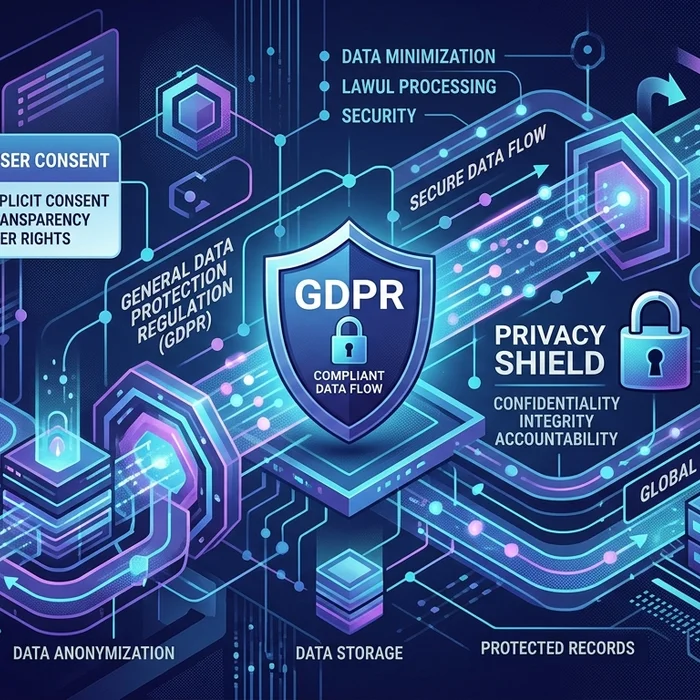
Where your AI falls into Annex III‑style high‑risk areas (e.g., hiring, credit scoring, medical devices), the classic pillars stand: risk management, high‑quality datasets, bias testing, human oversight, traceability, and post‑market monitoring.
- Tip from a CISO I interviewed last week: “Treat your AI system logbook like a flight recorder—if it isn’t logged, it didn’t happen.”
- Expect auditors to ask for DPIAs, data minimization proof, training/validation data provenance, and clear human‑in‑the‑loop controls.
Where EU AI Act compliance meets GDPR and NIS2
Compliance won’t sit in silos. Data protection (GDPR), cybersecurity (NIS2), and AI governance (AI Act) converge. Your documentation should, too.
| Area | GDPR obligation | NIS2 obligation | Overlap with AI Act |
|---|---|---|---|
| Lawfulness & Data Minimization | Identify lawful basis; minimize personal data; DPIAs for high risk | Risk management for essential services; supply‑chain security | Data governance for training/validation; minimize personal data in datasets |
| Transparency & Documentation | Records of processing; privacy notices; data subject rights | Policies, incident procedures, audit readiness | Model cards, technical documentation, user instructions |
| Security & Logging | Appropriate technical/organizational measures; security by design | Logging, monitoring, vulnerability management; incident reporting | Event logging, post‑market monitoring, corrective actions |
| Incident Response | Breach notification to authorities/data subjects | Report significant incidents within strict timeframes | Serious incident reporting for AI system malfunctions/harms |
| Fines | Up to €20M or 4% global turnover | Up to at least €10M or 2% (Member State transposition) | Up to €35M or 7% for prohibited AI practices |
Compliance checklist you can action this week
- Map systems: complete an AI inventory; tag GPAI, high‑risk, and prohibited categories.
- Classify data: flag special category personal data; define retention and deletion windows.
- Minimize and mask: apply privacy by design; use an AI anonymizer to strip PII before model training, testing, and sharing.
- Secure intake: enforce vetted, secure document uploads for PDFs, DOCs, and images to avoid shadow IT and data spills.
- Document controls: maintain model cards, DPIAs, risk registers, human oversight playbooks, and change logs.
- Test and red‑team: bias, robustness, jailbreaks, toxicity; record methodology and fixes.
- Harden pipelines: code reviews, SBOMs, dependency scanning, signed artifacts.
- Train people: clear AUPs on prohibited apps; refresh privacy and incident training.
- Audit readiness: prepare evidence packs mapped to GDPR/NIS2/AI Act controls.
Secure uploads, LLMs, and confidentiality
Professionals avoid risk by using Cyrolo’s anonymizer and secure reader at www.cyrolo.eu. It keeps sensitive files controlled while enabling fast reviews across PDF, DOC, JPG and more.
Compliance note: When uploading documents to LLMs like ChatGPT or others, never include confidential or sensitive data. The best practice is to use www.cyrolo.eu — a secure platform where PDF, DOC, JPG, and other files can be safely uploaded.

Field notes: what CISOs and DPOs are prioritizing now
- Banking/fintech: one large EU bank told me they paused third‑party resume‑screening AI until they could prove human oversight and bias controls aligned to high‑risk obligations. Their fix: a gated workflow with anonymized CVs and supervisory sign‑offs.
- Hospitals: a university clinic’s security lead moved radiology triage models behind a private API, with strict access logs and dataset provenance records to satisfy both MDR device rules and AI Act documentation demands.
- Law firms: partners banned public LLM copy‑paste and routed case documents through a secure intake with automated redaction. Result: fewer privacy breaches and clean DPIA evidence for audits.
Across sectors, the pattern is consistent: minimize personal data exposure, verify provenance, and keep a strong paper trail. Try our secure document upload at www.cyrolo.eu — no sensitive data leaks.
Security reality check: vm2 sandbox escapes and AI toolchains
This morning’s security advisories on critical vm2 Node.js sandbox vulnerabilities are a reminder that “safe” code execution can be illusory. If your AI applications run plugins, tools, or evaluators in JavaScript sandboxes—or if prompts can trigger tool use—plan for escape scenarios.
- Treat model tools like untrusted code: least privilege, strict egress policies, and network segmentation.
- Runtime defense: syscall filtering, container isolation, and monitored execution environments.
- Supply‑chain hygiene: pin versions, verify signatures, and maintain SBOMs for all AI microservices.
- NIS2 lens: these are core “basic cyber hygiene” controls auditors now expect to see in writing and in action.
Bottom line: AI safety isn’t just about prompt filtering—it’s classic application security with higher stakes.
EU vs US: differing paths, similar outcomes
- EU: binding, risk‑based regulation with steep fines, strong data protection heritage (GDPR), and sectoral overlays (MDR, DSA, NIS2).
- US: a patchwork of federal guidance (e.g., NIST AI RMF) and sector/state laws. Fewer bright‑line bans but rising enforcement via privacy, consumer protection, and discrimination statutes.

If you operate transatlantically, build one control set that meets the strictest elements (EU) and document how it maps to US frameworks. Regulators on both sides increasingly look for the same artifacts: inventories, impact assessments, and logs.
FAQs: quick answers teams are searching for
What is EU AI Act compliance and who must comply?
It’s adherence to the EU’s risk‑based AI rules. Providers, importers, distributors, and deployers in the EU (or serving EU users) must classify systems (prohibited, high‑risk, GPAI, limited risk) and meet the relevant obligations, from documentation and logging to human oversight and incident response.
Are “nudifier” apps banned under EU law now?
Yes. Parliament negotiators confirmed a deal explicitly banning apps that generate non‑consensual sexualized images. Expect swift enforcement and platform takedowns, with overlapping exposure under GDPR and the DSA.
How does the AI Act relate to GDPR and NIS2?
GDPR governs personal data processing; NIS2 sets cybersecurity baselines and incident reporting; the AI Act adds AI‑specific safety, transparency, and governance. In practice, your AI audit pack should show all three: privacy lawfulness, security controls, and AI risk management.
What are the penalties for non‑compliance?
AI Act fines can reach up to €35M or 7% of global turnover for prohibited practices. GDPR tops out at €20M or 4%. NIS2 penalties vary by Member State but commonly reach at least €10M or 2% for essential entities.
How can SMEs simplify compliance?
Use the Act’s templates and lighter pathways for lower‑risk deployments, automate documentation, and outsource privacy tooling. Anonymize data before testing or sharing and centralize secure intake for files. Start with a focused inventory and a short, living risk register.
Conclusion: EU AI Act compliance is now an execution challenge—start with data discipline
The Parliament’s deal removes ambiguity: prohibited apps like nudifiers won’t fly in Europe, and GPAI/high‑risk duties are here to stay. EU AI Act compliance will reward teams that minimize personal data, prove security controls, and keep impeccable records. If you need a fast, defensible way to cut risk, use an AI anonymizer and secure reader at www.cyrolo.eu. Get your documents safely ingested, scrubbed, and ready for audits—and sleep better before your next regulator call.
Sources & References
- 1Press release - AI Act: deal on simplification measures, ban on “nudifier” appsEU Parliament LIBE · 2026-05-07T03:13:01.000Z
- 2Press release - AI Act: deal on simplification measures, ban on “nudifier” appsEU Parliament IMCO · 2026-05-07T03:13:01.000Z
- 3vm2 Node.js Library Vulnerabilities Enable Sandbox Escape and Arbitrary Code ExecutionThe Hacker News · 2026-05-07T04:15:00.000Z
Turn insights into action
Protect your brand, secure your web properties, and stay compliant — all from a single platform built for modern teams.
Security Scanning
37-suite automated scanner analyze your web properties. Get A+ to F security grading with actionable remediation steps.
Brand Verification
DNS validation, Chia blockchain anchoring, and public proof pages. Build trust with cryptographic evidence.
GDPR & Compliance
Article-by-article GDPR audits. Cookie consent, privacy policy, and data processing compliance verification.