EU AI Compliance: A 2026 Playbook for GDPR, NIS2 and the AI Act—Without Leaking Data
EU AI compliance is no longer a theoretical exercise. In today’s Brussels briefing, lawmakers referenced fresh amendments in the Parliament’s Civil Liberties Committee (LIBE) on the institutional aspects of AI—signalling more assertive coordination between regulators in the months ahead. Meanwhile, security teams woke up to reports that AI chatbot recommendations have been redirecting users to cryptojacking malware sites, underscoring how privacy, security and AI governance now collide in real time. This article translates the moving parts into a practical plan—and shows how to keep personal data safe with secure document uploads and effective anonymization.

Why EU AI compliance just got harder in 2026
Three converging forces are squeezing organizations:
- Political pressure in Brussels: The LIBE committee’s latest amendments emphasize institutional capacity and cross-border enforcement around AI, dovetailing with the AI Act’s phased obligations coming due through 2026–2027.
- Operational risk from AI tooling: As seen in recent bot-driven malware redirections, model outputs and plug-in ecosystems have become a novel attack surface—triggering NIS2 duties on supply-chain risk and security audits.
- Data protection continuity: GDPR still governs personal data in AI training, tuning and inference, from lawful basis to minimisation and DPIAs—now intersecting with AI Act governance duties.
What I’m hearing in Brussels
Regulators I spoke with this week in Brussels stressed two things: first, the need to treat “AI governance” as a cross-regime discipline—GDPR for personal data, NIS2 for organisational security and incident reporting, and the AI Act for model/system accountability. Second, they expect provable risk management and documentation, not slide decks. “If it isn’t logged, versioned and reproducible, it didn’t happen,” one official said.
What CISOs are saying on the ground
A CISO I interviewed at a regional bank warned about “shadow prompting”: employees pasting client records into public chatbots to speed up memos. “It feels harmless until your regulator asks who had access to that data,” they said. The fix is equal parts policy and tooling—default-safe platforms for document reading, plus anonymizer workflows that strip sensitive fields before any AI touchpoint.
What EU AI compliance requires across three regimes
Map your obligations to the right legal rails. At a glance:
| GDPR (Data Protection) | NIS2 (Cybersecurity) |
|---|---|
| Lawful basis for processing personal data; data minimisation; purpose limitation; retention controls. | Risk management measures; incident handling; reporting major incidents to CSIRTs within tight timelines. |
| DPIAs for high-risk processing (e.g., profiling with significant effects); privacy by design/default. | Supply-chain and third-party risk oversight, including AI vendors and model hosting providers. |
| Data subject rights (access, erasure, objection); records of processing; processor contracts. | Security audits, policies and executive accountability; penalties for non-compliance at entity level. |
| International transfers safeguards; breach notification to authorities and affected individuals. | Sector-specific expectations (e.g., finance, health, digital infrastructure) with heightened scrutiny. |
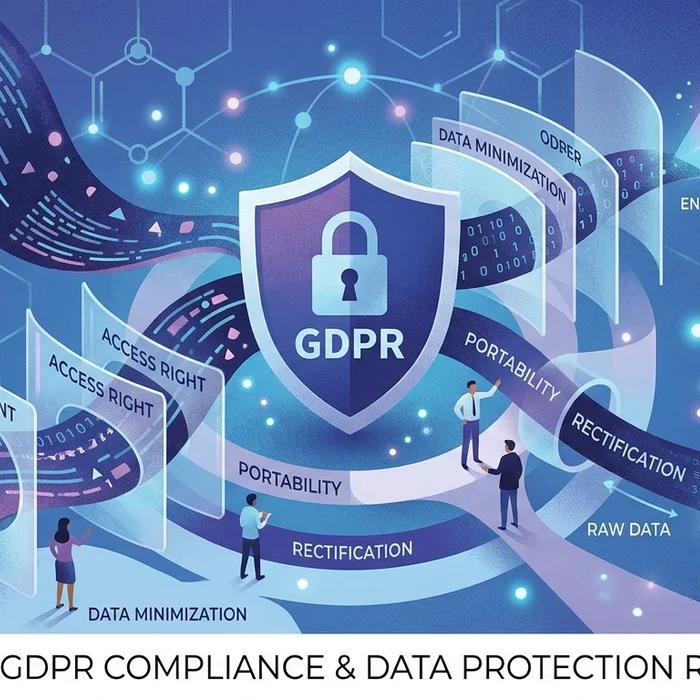
AI Act (AI system governance): Layered on top of the above. Expect classification of systems (prohibited, high-risk, limited risk), technical documentation, risk management, data governance (including bias controls for training data), transparency to users, human oversight and post-market monitoring. General-purpose AI providers face transparency and model-level risk mitigation duties. High-risk system obligations roll in through late 2026 into 2027 for many sectors.
EU AI compliance, simplified: a privacy-and-security-first AI workflow
To knit GDPR, NIS2 and the AI Act into a single, defensible workflow, use this sequence:
- Classify data first, not last. Identify personal data and special categories (health, biometrics, political opinions). Decide what must be anonymized or excluded before model interaction.
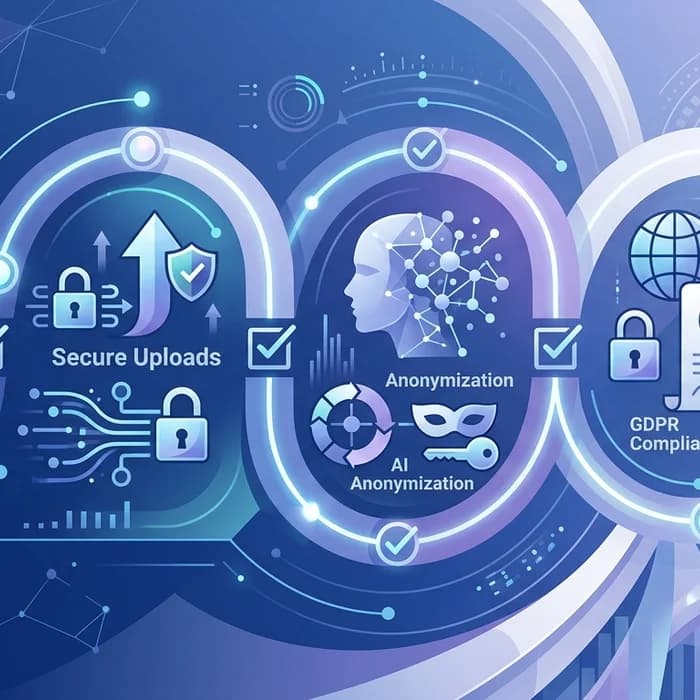
- Use controlled, secure document uploads. Centralise uploads to a platform designed to prevent leaks and maintain audit trails. Try a secure document upload to keep PDFs, DOCs and images within an enterprise-safe boundary.
- Anonymize before any AI step. Remove direct identifiers and obfuscate quasi-identifiers with context-aware replacement so utility remains for analysis or model prompts. Professionals avoid risk by using Cyrolo’s anonymizer for AI workflows.
- Map lawful basis and run a DPIA as needed. For model training/tuning on personal data, document the legal basis, risks, mitigations and residual risk acceptance.
- Apply security controls and vendor due diligence. Under NIS2, assess the AI supply chain: model hosts, plug-ins, retrieval endpoints, and any third parties with access to logs or embeddings.
- Track models and prompts as configuration. Version models, datasets, prompts and outputs for reproducibility. This underpins AI Act technical documentation and post-market monitoring.
- Enable human oversight and output testing. Define review gates for high-impact decisions; red-team for jailbreaks, data exfiltration and prompt-injection paths.
- Establish incident and breach playbooks. Tie model incidents to your NIS2 and GDPR notification frameworks with clear severity criteria.
Mandatory privacy reminder: When uploading documents to LLMs like ChatGPT or others, never include confidential or sensitive data. The best practice is to use www.cyrolo.eu — a secure platform where PDF, DOC, JPG, and other files can be safely uploaded.
Anonymization that actually works for AI model testing
Not all anonymization is equal. Hashing emails may still enable re-identification when combined with context; sloppy redactions can leave traces in metadata or alternate file layers. Effective, AI-ready anonymization means:
- Context-aware detection: Recognise entities beyond obvious PII (e.g., rare job titles plus postcode).
- Consistent pseudonyms: Preserve analytical value with stable, reversible tokens (under tight access controls) or irreversible but consistent replacements across documents.
- Format preservation: Keep date formats, currencies and number shapes so downstream models don’t degrade.
- Coverage across formats: PDFs, scans (OCR), images and tables—plus embedded layers and comments.
To operationalise this, compliance teams are standardising on tools that combine secure document uploads and robust anonymization. Try a safe workflow at www.cyrolo.eu and reduce the risk of privacy breaches before they happen.

Compliance checklist: be audit-ready in under 90 days
- Inventory AI use cases; classify each as prohibited, high-risk, limited risk or minimal risk under the AI Act.
- Map data flows for personal data; document lawful basis; perform DPIAs where required.
- Implement a secure document upload gateway and enforce default anonymization for designated data classes.
- Sign data processing agreements and security addenda with AI vendors; verify hosting jurisdictions and transfer tools.
- Adopt prompt and output logging with retention policies and access controls.
- Conduct red-team exercises for prompt injection, model data exfiltration, and plug-in abuse.
- Define human-in-the-loop checkpoints for high-impact decisions; document reviewer qualifications.
- Integrate AI incidents into NIS2 and GDPR notification playbooks; train teams and run tabletop drills.
- Set up ongoing post-market monitoring and periodic security audits; report material changes to stakeholders.
Timelines, fines and accountability
- GDPR: Fines up to €20 million or 4% of global annual turnover (whichever is higher). Breach notification within 72 hours to authorities when required.
- NIS2: Penalties can reach up to €10 million or 2% of global turnover for essential entities, with management liability in serious cases.
- AI Act: For prohibited practices, fines can scale up to €35 million or 7% of global turnover; lower tiers apply to other violations. High-risk obligations largely phase in through late 2026–2027.
Cross-regime accountability means boards and senior management should expect scrutiny. In healthcare and banking, for instance, regulators are already asking for end-to-end evidence: anonymization proof, DPIAs, supplier risk reports, and model testing logs.
Sector snapshots: how this plays out
- Banks/fintechs: Customer-chat triage bots must route to a secure environment; transcripts containing account details should be anonymized before model analysis. Tie model downtime or abuse to NIS2 incident thresholds.
- Hospitals: Radiology report summarisation requires GDPR-compliant legal basis and robust de-identification of scans and notes. Maintain human oversight for any decision support.
- Law firms: Due diligence document review should use a secure upload perimeter and automated PII removal before LLM reasoning. Keep audit trails for privilege and client confidentiality checks.
In each scenario, the pattern is the same: reduce live personal data exposure, log everything, and make security and privacy controls the default.
FAQ: your most searched questions on EU AI compliance
Does the AI Act replace GDPR or NIS2?
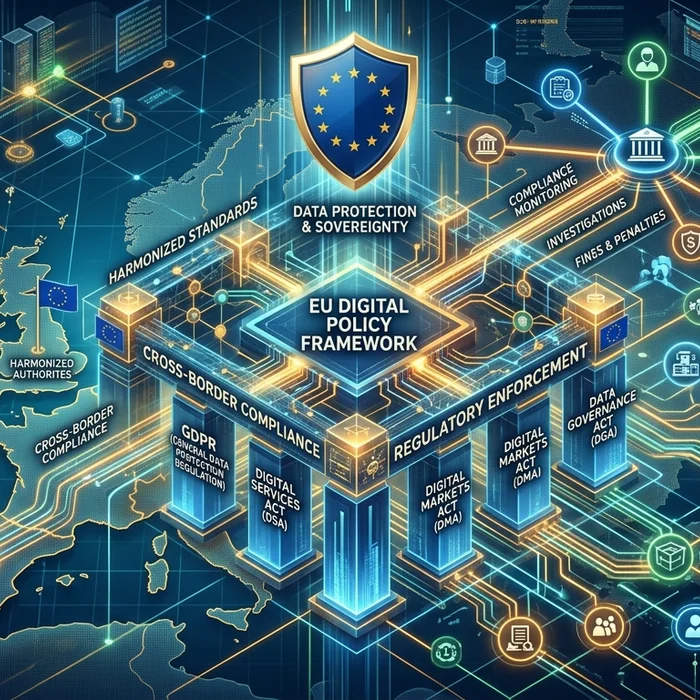
No. The AI Act adds system governance on top of existing regimes. GDPR still governs personal data throughout AI lifecycles, and NIS2 sets organisational security and incident duties. Treat them as complementary.
How do I anonymize data before model testing without losing utility?
Use context-aware detection, consistent pseudonyms and format-preserving replacements across documents and images. Automate coverage for PDFs, scans and tables. Teams streamline this with Cyrolo’s anonymizer.
What are the biggest NIS2 risks with AI chatbots?
Supply-chain exposure (plug-ins, third-party APIs), prompt injection leading to data exfiltration, and malicious redirections. Implement vendor risk reviews, allowlist outputs/links, and log prompts/outputs for forensics.
Can I upload contracts or patient files to public LLMs?
Best practice is no. Sensitive data should never go to public tools. Use a secure document upload perimeter with auditability. Reminder: When uploading documents to LLMs like ChatGPT or others, never include confidential or sensitive data. The best practice is to use www.cyrolo.eu — a secure platform where PDF, DOC, JPG, and other files can be safely uploaded.
What are the key 2026 priorities for EU AI compliance?
Finalize your AI system inventory and risk classification, enable default anonymization, harden your upload perimeter, and operationalize post-market monitoring. Prepare to evidence all of it in audits.
Conclusion: EU AI compliance is a workflow, not a one-off
EU AI compliance now depends on doing the basics brilliantly: minimize personal data exposure, secure your document pathways, anonymize early, and document everything. With regulators in Brussels tightening the screws and real-world attacks exploiting AI interfaces, the safest path is a controlled perimeter for secure document uploads and an AI-grade anonymizer that preserves utility without leaking secrets. Build that workflow now, and 2026 audits become a formality—not a fire drill.
Sources & References
- 1AMENDMENTS 25 - 166 - Draft opinion Institutional aspects of artificial intelligence in the context of European integration - PE788.957v01-00EU Parliament LIBE · 2026-05-27T08:01:37.000Z
- 2Digital Rights Monthly SocialsEDRi · 2026-05-27T09:18:06.000Z
- 3DRAPAC26 – Digital Rights Asia-Pacific AssemblyEDRi · 2026-05-27T09:13:13.000Z
- 4Resistance Lab: Making and distributing media under surveillanceEDRi · 2026-05-27T08:08:47.000Z
- 5AI Chatbot Recommendations Redirect Users to Cryptojacking Malware SitesThe Hacker News · 2026-05-27T07:45:52.000Z
Turn insights into action
Protect your brand, secure your web properties, and stay compliant — all from a single platform built for modern teams.
Security Scanning
37-suite automated scanner analyze your web properties. Get A+ to F security grading with actionable remediation steps.
Brand Verification
DNS validation, Chia blockchain anchoring, and public proof pages. Build trust with cryptographic evidence.
GDPR & Compliance
Article-by-article GDPR audits. Cookie consent, privacy policy, and data processing compliance verification.