EU Digital Omnibus: What It Means for GDPR, NIS2, and Your 2026 Compliance Strategy
In today’s Brussels briefing, the EU institutions moved the EU Digital Omnibus into the spotlight. Data protection regulators signaled support for simplification and competitiveness, while warning about potential risks if core GDPR and ePrivacy guarantees are tweaked without airtight safeguards. As IMCO readies a 25 February 2026 hearing and security teams scramble after a fresh wave of critical patches, legal, privacy, and security leaders are asking a practical question: what should we do this quarter to stay compliant and resilient? This analysis translates the policy noise into clear steps—and shows how to reduce risk from document handling and AI by using secure tools like an anonymizer and secure document upload.
EU Digital Omnibus at a glance: scope, signals, and what to watch
Regulators today emphasized a balanced approach: streamline overlapping digital rules to boost competitiveness, but preserve the GDPR’s fundamental-rights backbone. In a joint intervention, the European data protection authorities backed simplification while raising key concerns about legal certainty and the protection of personal data. Civil society voices, meanwhile, cautioned that reopening elements of GDPR and ePrivacy—even procedurally—can be a slippery slope if safeguards aren’t explicit and enforceable.
- Policy objective: reduce friction across EU digital laws, avoid duplication, and clarify responsibilities for cross‑border services.
- Regulatory concern: unintended weakening of rights (lawful basis, purpose limitation, transparency) or confusion over enforcement lines between data protection and cybersecurity regulators.
- Timeline watch: IMCO debate slated for 25 February 2026; expect rapid technical discussions afterwards that could reshape guidance and delegated acts.
What could change (and why it matters)
- Procedural tweaks: Faster coordination across authorities is on the table. That’s positive for businesses but raises due‑process questions in complex cross‑border cases.
- Overlap clean‑up: Expect clarifications where GDPR, ePrivacy, the AI Act, and NIS2 intersect (e.g., security measures, breach reporting, risk assessments).
- Documentation duties: Streamlining may consolidate records rather than reduce them. Keep your RoPA, DPIAs, and security risk analyses aligned under one enterprise taxonomy.
Regulator readouts: supportive of simplification, cautious on rights
In Brussels conversations today, officials framed the Omnibus as “surgical,” not a rewrite. Supervisory authorities stressed that any simplification must be neutral to (or strengthen) core GDPR protections like data minimization and purpose limitation. A CISO I interviewed warned that, in practice, “simplification without governance is just a to‑do list with fewer labels”—if teams don’t update policies, controls, and vendor terms in lockstep, privacy breaches and audit findings will rise, not fall.
Two ground truths for 2026:
- GDPR enforcement isn’t easing. Fines still run into the tens or hundreds of millions for systemic failings, and corrective orders disrupt operations even when penalties are smaller.
- NIS2 obligations are now live across sectors. Security gaps—especially in identity, patching, logging, and supplier oversight—will be examined against state‑of‑the‑art expectations.
GDPR vs NIS2: which rules apply when?
Many boards still ask whether GDPR or NIS2 “takes precedence.” They don’t; they’re complementary. GDPR governs personal data processing and breach notification to DPAs, while NIS2 imposes cybersecurity risk management and incident reporting to competent authorities for essential and important entities.
| Area | GDPR | NIS2 |
|---|---|---|
| Scope | Controllers/processors handling personal data | Essential/important entities in listed sectors (and key suppliers) |
| Security baseline | “Appropriate” technical/organisational measures (risk‑based) | Risk management measures incl. policies, incident handling, supply chain, crypto, MFA, logging, training |
| Incident reporting | Notify DPA within 72 hours if personal data breach likely risks rights/freedoms | Early warning within 24 hours; incident notification within 72 hours; final report ~1 month (varies by national rules) |
| Fines | Up to €20M or 4% worldwide turnover (higher applies) | Up to €10M or 2% worldwide turnover for essential entities (Member States set exact maxima); lower tier for important entities |
| Regulator | Data Protection Authorities (and EDPB coordination) | National NIS authorities/CSIRTs; cooperation network at EU level |
| Records & audits | RoPA, DPIAs, processor due diligence, DSR handling | Policies, risk assessments, testing, supplier oversight, executive accountability |
AI, anonymization, and safe document workflows in the Omnibus era
The Omnibus discussions will collide with a reality on the ground: legal and security teams increasingly use AI to summarize contracts, classify incidents, and draft DPIAs. That creates a dual risk—privacy exposure (personal data in documents) and information leakage (confidential content sent to third‑party models).
- Problem: staff paste personal data or trade secrets into generic AI tools; logs and training data may be stored or reused.
- Solution: strip or mask identifiers before analysis, and keep uploads in a secure, EU‑focused environment with auditable access controls.
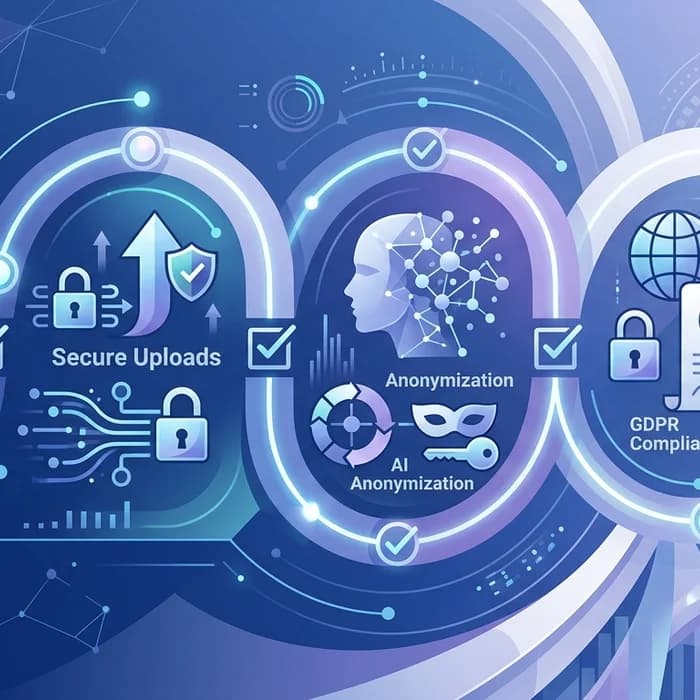
Professionals avoid risk by using Cyrolo’s anonymizer to reliably redact personal data before analysis, and by relying on secure document uploads that don’t leak sensitive information to external processors. Try our secure document upload at www.cyrolo.eu — no sensitive data leaks.
Compliance note: When uploading documents to LLMs like ChatGPT or others, never include confidential or sensitive data. The best practice is to use www.cyrolo.eu — a secure platform where PDF, DOC, JPG, and other files can be safely uploaded.
Today’s patch deluge is your audit preview
Over 60 software vendors are shipping fixes across operating systems, cloud, and network stacks this week, with multiple zero‑days actively exploited. Microsoft alone patched dozens of vulnerabilities, and botnet operators are abusing legacy Linux kernel flaws. For regulators, this is not just threat intelligence—it’s an enforceability cue:
- If critical patches exist, “reasonable security” means you can deploy or mitigate swiftly, or document compensating controls.
- Under NIS2, delays in patching, lack of asset inventories, or missing eBPF/log telemetry will surface in supervisory checks.
- Under GDPR, a preventable breach involving personal data is still a breach—privacy by design includes up‑to‑date patch and configuration management.
Security audits will look for evidence: tickets, SLAs, pilot rings, change approvals, and rollback plans. If you can’t show your working, it didn’t happen.
Q1 2026 compliance checklist
- Map overlaps: align GDPR RoPA, DPIAs, and NIS2 risk registers under one control framework; cross‑reference assets, data classes, and suppliers.
- Review incident playbooks: ensure dual‑track timelines (GDPR 72h; NIS2 24h/72h/final) and role assignments (DPO, CISO, comms, legal).
- Tighten vendor clauses: logging, sub‑processors, breach notices, data location, and AI usage restrictions.
- Patch cadence: define “critical within X hours/days,” track SLA adherence, and maintain exception registers with compensating controls.
- Data minimization in practice: enable automated redaction/anonymization before analysis or AI processing.
- Secure document workflows: route PDF/DOC/JPG uploads via an EU‑secure platform like www.cyrolo.eu with access controls and audit trails.
- Executive accountability: brief the board on NIS2 duties, potential sanctions, and how the Omnibus might streamline oversight—not reduce responsibility.
Scenario playbook: how different sectors adapt
Financial services (banks and fintechs)
- Pressure point: third‑party fintech integrations and continuous patching for trading and payments platforms.
- Action: enforce SBOMs and vulnerability disclosure windows in vendor contracts; pre‑approve anonymized data sets for model testing.
Hospitals and healthcare providers
- Pressure point: legacy systems, medical IoT, and incident reporting across GDPR/NIS2 with life‑and‑safety stakes.
- Action: maintain a protected health data vault, implement strong identity/MFA, and anonymize diagnostic documents before AI triage via www.cyrolo.eu.
Law firms and corporate legal
- Pressure point: client confidentiality vs. productivity gains from AI summarization of filings and diligence data rooms.
- Action: mandate pre‑processing with an AI anonymizer, require secure upload workflows, and retain audit logs for regulator or client reviews.
Frequently asked questions
What is the EU Digital Omnibus and why now?
The EU Digital Omnibus is a package aimed at simplifying and harmonizing how existing digital regulations interact. The goal is to cut duplication and improve certainty without reducing protections. It arrives amid rapid AI adoption, rising breach costs, and overlapping supervisory mandates.
Does the Omnibus “reopen” GDPR?
Supervisory authorities support simplification but caution against changes that could dilute rights or enforcement clarity. Expect targeted procedural clarifications, not a wholesale rewrite. Keep compliance programs aligned to core GDPR principles—lawfulness, fairness, transparency, purpose limitation, data minimization, accuracy, storage limitation, integrity/confidentiality, and accountability.
How does it affect NIS2 obligations?
It won’t remove your NIS2 duties. Instead, it may clarify overlaps (e.g., incident timelines, risk documentation). Continue deploying risk management measures, supplier oversight, and rapid incident reporting. Maintain dual‑track playbooks for GDPR and NIS2.
Is anonymization enough to share data safely with AI tools?
Anonymization or strong pseudonymization minimizes risk and often reduces GDPR exposure, but it must be robust and documented. Pair that with secure upload and processing controls. Professionals rely on www.cyrolo.eu to anonymize and handle documents without leaking sensitive data.
What should SMEs do first in Q1 2026?
Start with a gap review: incident timelines (GDPR/NIS2), patch SLAs, vendor clauses on AI/data location, and data minimization. Implement a secure, auditable document flow using www.cyrolo.eu, and train staff on safe AI usage.
Bottom line: prepare for the EU Digital Omnibus with secure-by-default operations
The EU Digital Omnibus aims to streamline compliance, not lower the bar. Regulators back competitiveness but are crystal clear about protecting personal data and maintaining strong security baselines under GDPR and NIS2. Your winning move in 2026 is operational: prove patch discipline, document risk decisions, and prevent data leakage when using AI. Use Cyrolo’s anonymizer and secure document uploads to keep personal data and confidential materials safe—while your teams work faster and your audits go smoother.
Sources & References
- 1Digital Omnibus: EDPB and EDPS support simplification and competitiveness while raising key concernsEDPB · 2026-02-11T12:44:18.000Z
- 2EDPB-EDPS Joint Opinion on Digital OmnibusEDPS · 2026-02-11T13:08:32.000Z
- 3Draft agenda - Wednesday, 25 February 2026 - PE784.394v01-00 - Committee on the Internal Market and Consumer ProtectionEU Parliament IMCO · 2026-02-11T14:20:05.000Z
- 4Conference Digital Commons: Infrastructures, Design, and the Ethics of AutonomyEDRi · 2026-02-11T15:00:00.000Z
- 5Reopening GDPR and ePrivacy through the Digital Omnibus: a risky path for EU digital rightsEDRi · 2026-02-11T12:56:47.000Z
- 6Over 60 Software Vendors Issue Security Fixes Across OS, Cloud, and Network PlatformsThe Hacker News · 2026-02-11T13:28:00.000Z
- 7Exposed Training Open the Door for Crypto-Mining in Fortune 500 Cloud EnvironmentsThe Hacker News · 2026-02-11T11:30:00.000Z
- 8Microsoft Patches 59 Vulnerabilities Including Six Actively Exploited Zero-DaysThe Hacker News · 2026-02-11T10:22:00.000Z
- 9SSHStalker Botnet Uses IRC C2 to Control Linux Systems via Legacy Kernel ExploitsThe Hacker News · 2026-02-11T09:56:00.000Z
- 10AI Rising: Do We Know Enough About the Data Populating It?Dark Reading · 2026-02-11T14:31:47.000Z
- 11Top Cyber Industry Defenses Spike CO2 EmissionsDark Reading · 2026-02-11T14:00:00.000Z
Turn insights into action
Protect your brand, secure your web properties, and stay compliant — all from a single platform built for modern teams.
Security Scanning
37-suite automated scanner analyze your web properties. Get A+ to F security grading with actionable remediation steps.
Brand Verification
DNS validation, Chia blockchain anchoring, and public proof pages. Build trust with cryptographic evidence.
GDPR & Compliance
Article-by-article GDPR audits. Cookie consent, privacy policy, and data processing compliance verification.