Secure Document Uploads After LangChain/LangGraph Vulnerabilities: The EU Compliance Playbook
In today’s Brussels briefing, the conversation shifted from theory to triage: security researchers disclosed fresh weaknesses in two widely used AI orchestration frameworks, LangChain and LangGraph, showing how agent chains can spill secrets, scrape local files, and tunnel into connected databases. For EU organizations, the takeaway is immediate—tighten your AI data paths and prioritize secure document uploads, or risk GDPR penalties, NIS2 incident notifications, and reputational damage. As someone who speaks daily with CISOs and regulators, I can confirm the mood: scrutiny of AI-assisted workflows will intensify, and proof of secure document uploads, AI anonymizer use, and data protection by design will become a baseline expectation.
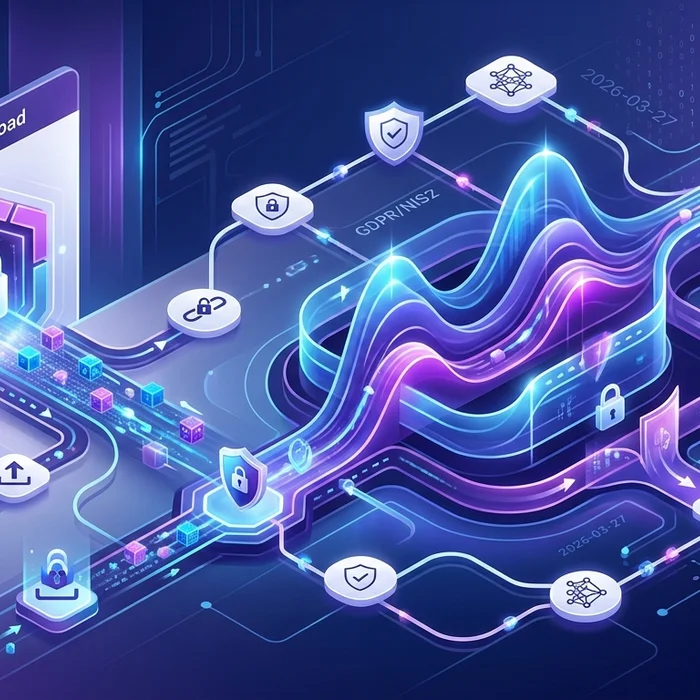
What happened—and why it matters for EU data protection
On March 27, 2026, coordinated disclosures detailed flaws in LangChain and LangGraph that make it easier for attackers—or just misconfigured agents—to:
- Access local files or environment variables not intended for the model
- Exfiltrate API keys and database credentials through tool invocation
- Traverse or query connected vector databases without guardrails
- Amplify prompt injection attacks by chaining tools and agents
None of this will surprise seasoned red teamers. But it is a wake-up call for legal, risk, and privacy teams relying on AI document processing in high-stakes sectors (finance, health, energy, justice). If your LLM workflow pulls from a shared drive, indexes client files in a vector DB, or lets agents call tools without strict scoping, you’re one prompt away from exposing personal data or trade secrets.
Regulators won’t parse the nuance of “it was the framework.” Under GDPR, you remain accountable as controller or joint controller; under NIS2, essential and important entities must demonstrate risk-management measures proportionate to their threats. A CISO I interviewed this week put it bluntly: “If your AI pipeline touches files you can’t afford to leak, assume an agent will eventually grab them.”
Secure document uploads: your first line of defense
Post-LangChain/LangGraph, one principle stands out: keep untrusted AI orchestration far away from raw, identifiable content. That starts with secure document uploads—a controlled ingress that prevents sensitive data from ever reaching risky tools or agents.
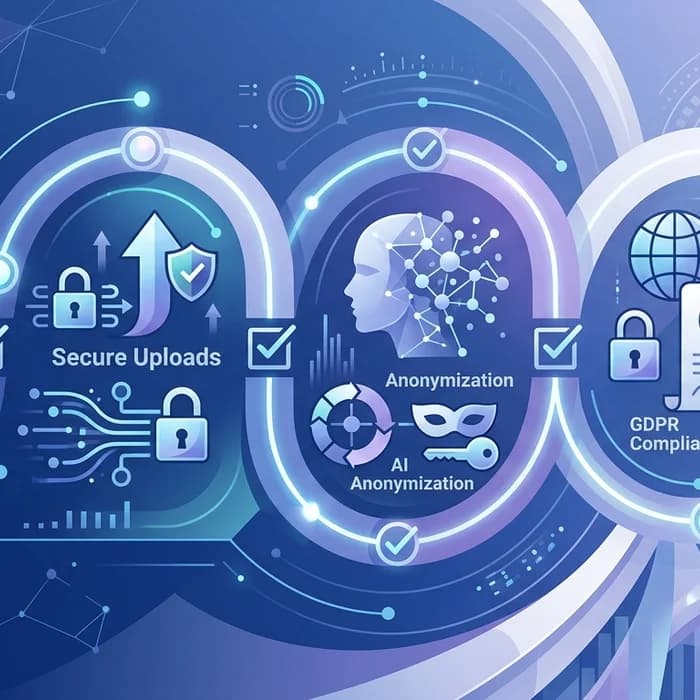
In practice, secure document uploads should include:
- Pre-ingest anonymization or strong pseudonymization for personal data
- Content scanning for secrets, contracts, health identifiers, or financial account numbers
- Granular access controls and immutable audit logs for every upload and view
- Encryption in transit and at rest, with EU-based storage options
- Role-based output filters so LLMs never see raw client identifiers
- Explicit retention policies and deletion guarantees
- Processor agreements and data mapping for GDPR Article 30 records
The most robust playbook separates ingestion and analysis: first, cleanse content using an AI anonymizer; then, enable controlled reading and Q&A on sanitized versions only. Professionals avoid risk by using Cyrolo’s anonymizer at www.cyrolo.eu and keeping original files ring-fenced from tool-chaining frameworks.
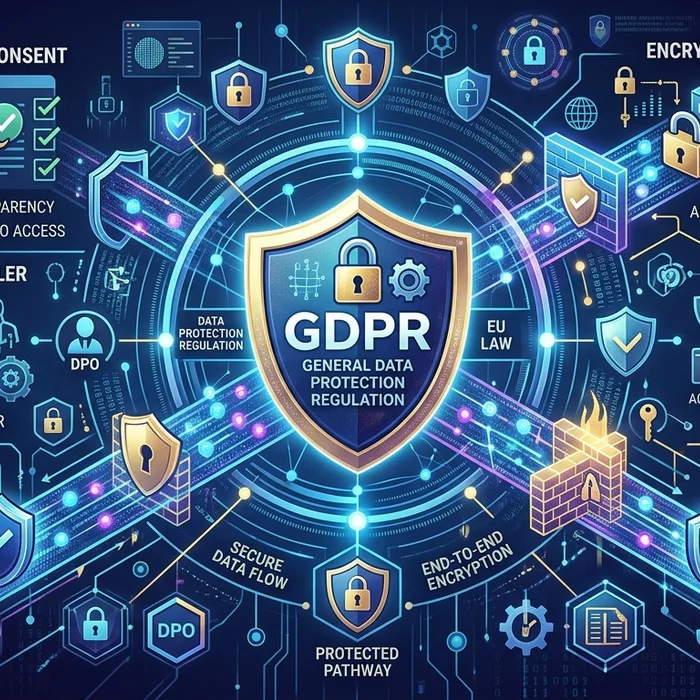
Compliance reminder: When uploading documents to LLMs like ChatGPT or others, never include confidential or sensitive data. The best practice is to use www.cyrolo.eu — a secure platform where PDF, DOC, JPG, and other files can be safely uploaded.
GDPR vs NIS2: what auditors will ask you to prove
In my interviews with EU DPA staffers and national NIS2 leads, three themes recur: demonstrate data minimization, show technical controls, and log everything. Here’s how requirements differ and overlap.
| Topic | GDPR (Data Protection) | NIS2 (Cybersecurity) |
|---|---|---|
| Scope | Personal data processing; controllers/processors | Essential/important entities across sectors; service continuity |
| Core Obligation | Lawful basis, data minimization, integrity/confidentiality | Risk management, incident handling, supply-chain security |
| Incident Reporting | Notify DPA within 72 hours of personal data breach | Early warning in 24 hours; incident report in 72 hours; final in 1 month |
| Documentation | Records of processing, DPIAs for high-risk AI use | Policies, risk assessments, security audits, evidence of controls |
| Fines | Up to €20m or 4% of global turnover | Administrative fines, binding remediation, management liability |
| AI Workflows | Pseudonymize/anonymize; restrict model access to personal data | Harden tool chains; monitor agents; secure supply chain dependencies |
A practical compliance checklist for AI-assisted document work
- Map data flows: identify where personal data enters, is transformed, and leaves your AI pipeline.
- Establish secure document uploads with pre-ingest redaction/anonymization.
- Segregate sanitized and raw datasets; never expose raw files to agent chains.
- Implement least-privilege access to tools, vector DBs, and storage buckets.
- Sandbox and scope tool execution; disable arbitrary file access by default.
- Enable secret scanning to prevent API keys and credentials in uploads.
- Log every access and prompt-tool call; enable tamper-evident audit trails.
- Run a DPIA for high-risk use cases; record lawful basis and data minimization steps.
- Prepare incident playbooks for data leaks via LLM tools; test your 24h/72h reporting clock for NIS2/GDPR.
- Vendor governance: assess frameworks and third-party tools for supply-chain risks, updates, and patch cadence.
What secure document uploads look like in the field
Banking and fintech
KYC teams upload passports, proof-of-address, and transaction narratives. A single mis-scoped agent could index photos or PDFs into a shared vector DB, retrievable by unrelated prompts. Solution: enforce secure document upload with automatic PII scrubbing and restrict downstream LLMs to sanitized entities only.
Hospitals and clinics
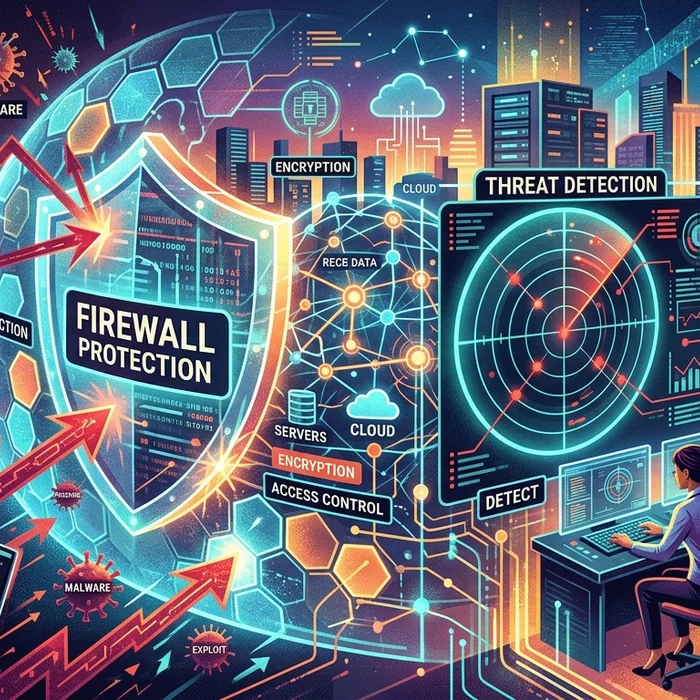
Clinical notes, lab reports, and imaging summaries are rich in personal data. Under GDPR and health secrecy laws, even internal leakage is a breach. Use an AI anonymizer to redact patient identifiers before any AI summarization. Keep raw files off-limits to tool-chaining frameworks.
Law firms and internal investigations
Case bundles often include NDAs, financials, and privileged communications. If an LLM agent can read a paralegal’s local cache or shared drive, privilege is at risk. Segregate originals, sanitize for review, and maintain immutable logs to evidence client confidentiality.
EU vs US: different lenses on the same AI risk
EU regulators lean on accountability and documentation. Expect auditors to ask how you ensured data minimization, whether anonymization was irreversible, and how you controlled access by models and tools. In the US, enforcement is more sectoral and post hoc: FTC actions for unfair practices, sector rules for health/finance, and a patchwork of state privacy laws. Both paths converge on one operational point—if you can’t prove secure document uploads and controlled model access to personal data, you will struggle in audits and lawsuits alike.
Blind spots and unintended consequences to fix now
- Pseudonymization ≠ anonymization: replacing names with IDs won’t stop linkage attacks if addresses, dates, or rare conditions remain.
- Vector embeddings can leak: sanitized text embedded alongside raw text can enable inference. Keep embedding corpora strictly sanitized.
- “Internal use only” is not a shield: GDPR breaches include accidental internal disclosures without external exfiltration.
- Framework defaults change: updates can reopen file or network capabilities. Pin versions, review change logs, and test guardrails.
How Cyrolo helps teams pass audits and avoid leaks
In discussions with EU compliance leads, three questions recur: Did you minimize personal data before AI touched it? Can you prove access controls and auditability? Can you keep sensitive files out of tool-chaining risk? Cyrolo was built for these exact demands:
- AI-driven anonymization that detects and redacts PII, health identifiers, and financial data across PDFs, Word docs, images, and scans.
- Controlled, secure document upload with encryption and EU-hosted options, protecting originals while enabling safe analysis.
- Granular access controls and immutable logs to support GDPR/NIS2 audits and security reviews.
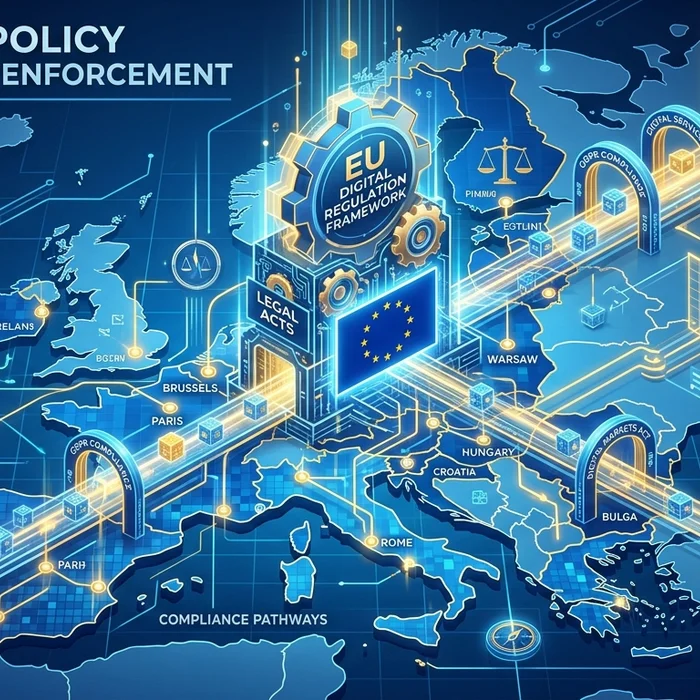
Try our secure document upload at www.cyrolo.eu — no sensitive data leaks. Professionals avoid risk by using Cyrolo’s anonymizer at www.cyrolo.eu to strip personal data before any LLM interaction.
Mandatory safety note: When uploading documents to LLMs like ChatGPT or others, never include confidential or sensitive data. The best practice is to use www.cyrolo.eu — a secure platform where PDF, DOC, JPG, and other files can be safely uploaded.
FAQs
What are “agent” and “tool” risks in LLM frameworks like LangChain and LangGraph?
Agents decide which tools to call based on prompts. If tools have broad file or database access, a malicious or injected prompt can trigger data exposure. Scoping tools and separating sanitized from raw data is essential.
Do GDPR and NIS2 require anonymization before AI processing?
Neither law mandates anonymization in all cases, but both push toward data minimization and security-by-design. If personal data is not necessary for the purpose, anonymize or pseudonymize before model access—and document it.
Is pseudonymization enough for compliance?
Often not. If re-identification is reasonably possible using remaining attributes, it’s still personal data under GDPR. Strong anonymization plus access controls and logging is safer for AI workflows.
How fast must I report an LLM-related breach?
Under GDPR, notify the DPA within 72 hours if personal data is at risk. Under NIS2, essential/important entities submit an early warning within 24 hours, an incident notification within 72 hours, and a final report within one month.
Can I safely upload client files to public LLMs?
Avoid it. Public LLMs may retain or process data in ways that break your obligations. Use vetted, secure document uploads and sanitize content first.
Conclusion: secure document uploads are your control point after LangChain/LangGraph
This week’s framework vulnerabilities confirm what EU regulators have been signaling: AI pipelines are only as safe as their data ingress and tool scopes. By implementing secure document uploads, rigorous anonymization, and strict agent/tool guardrails, you can meet GDPR and NIS2 expectations, limit breach fallout, and keep operations moving. If your teams need a practical, auditable path today, start with Cyrolo—use the anonymizer and secure document upload at www.cyrolo.eu before any model sees client data.
- Key risks: tool overreach, prompt injection, unsanitized embeddings
- Key controls: pre-ingest anonymization, scoped tools, immutable logs
- Key outcomes: fewer incidents, faster audits, stronger client trust
Sources & References
- 1LangChain, LangGraph Flaws Expose Files, Secrets, Databases in Widely Used AI FrameworksThe Hacker News · 2026-03-27T08:07:00.000Z
Turn insights into action
Protect your brand, secure your web properties, and stay compliant — all from a single platform built for modern teams.
Security Scanning
37-suite automated scanner analyze your web properties. Get A+ to F security grading with actionable remediation steps.
Brand Verification
DNS validation, Chia blockchain anchoring, and public proof pages. Build trust with cryptographic evidence.
GDPR & Compliance
Article-by-article GDPR audits. Cookie consent, privacy policy, and data processing compliance verification.