NIS2 compliance checklist for 2026: what CISOs, DPOs, and legal teams must do now
In today’s Brussels briefing, regulators reminded companies that Europe’s security rules are not bargaining chips—and NIS2 compliance is now squarely an executive obligation. This NIS2 compliance checklist distills what essential and important entities must implement in 2026, how it intersects with GDPR, and where practical controls like an AI anonymizer and secure document uploads reduce risk, fines, and board exposure.
- Scope: Thousands of EU entities in health, finance, energy, transport, digital infrastructure, MSPs, and more
- Reporting: Early warning within 24 hours, notification in 72 hours, final report within one month
- Fines: Up to €10 million or 2% of global turnover (GDPR: up to €20 million or 4%)
- Board duty: Management can be held personally accountable for systemic failures
- Practical tip: Strip personal data before sharing files with vendors or LLMs using an anonymizer
What NIS2 requires in 2026—and why it matters now
EU Member States transposed NIS2 from late 2024 onward, and supervisors are actively checking programs in 2025–2026. In conversations with a CISO at a cross-border hospital network and a privacy counsel at a fintech I interviewed last month, both highlighted the same pressure points: faster incident reporting, supplier security proof, and demonstrable board oversight.
Core obligations you must evidence
- Risk management measures: documented policies, multi-factor authentication, secure configuration, logging and monitoring, and encryption at rest/in transit
- Incident reporting: early warning to the CSIRT or competent authority within 24 hours, followed by a 72-hour notification, with a comprehensive final report in one month
- Business continuity: tested backup and disaster recovery; ransomware playbooks and rehearsals
- Supply chain security: proportionate due diligence of ICT providers and critical third parties
- Vulnerability handling: structured processes for intake, triage, remediation, and disclosure
- Governance: board-approved security strategy, clear accountability, and recurring audits
This week’s Europe-focused threat briefings—pre-auth exploitation chains, stealthy mobile spyware, and cloud log evasion—underscore why NIS2 pushes for rapid detection and reporting. Hospitals and banks told me they now rehearse “day zero” communications quarterly; that cadence maps to NIS2’s one-day warning rule.
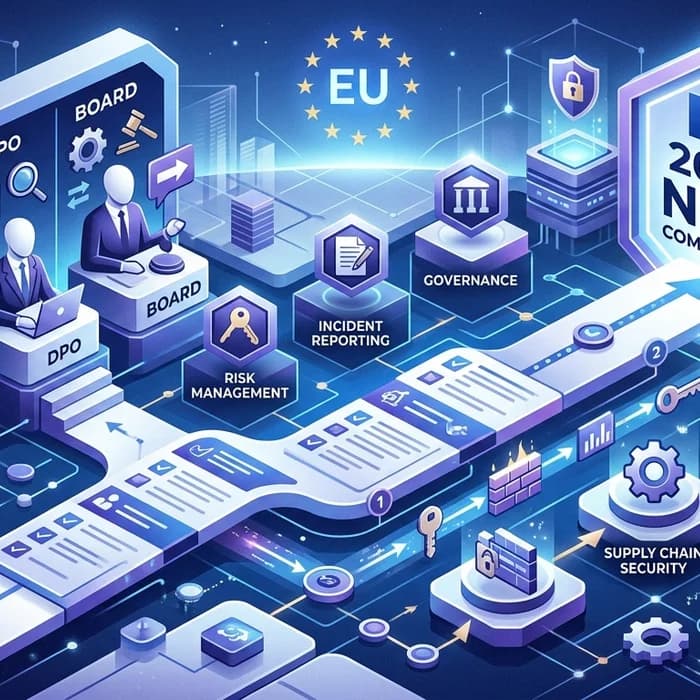
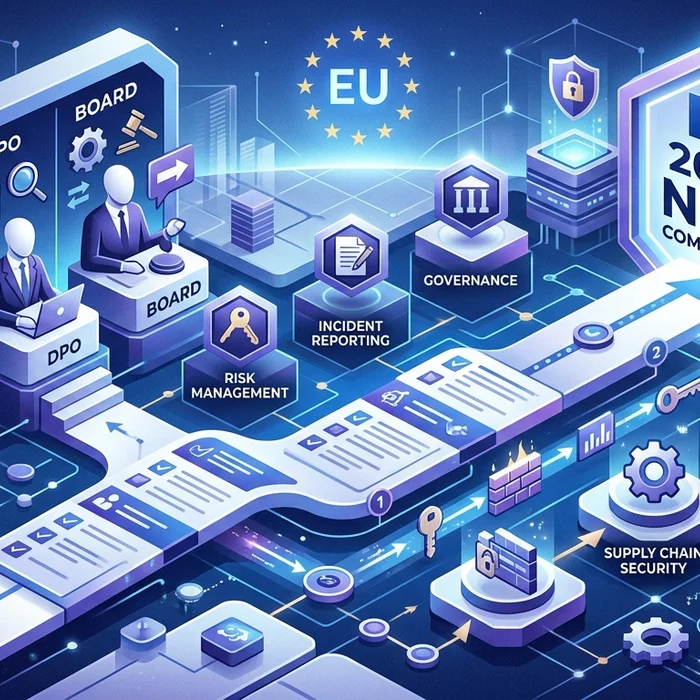
NIS2 compliance checklist (save and execute)
Use this NIS2 compliance checklist to prioritize the next 90 days:
- Map scope: confirm if you are an “essential” or “important” entity; document covered services and dependencies
- Assign accountability: designate a NIS2 program owner; brief your board on duties and penalties
- Harden identity: enforce MFA for admins and remote access; review privileged access and service accounts
- Baseline configuration: apply CIS/ENISA-aligned baselines; remediate internet-exposed misconfigurations
- Logging and detection: ensure security logs are centralized, immutable, and retained to meet forensic needs
- Incident playbooks: codify 24h/72h/1-month reporting flows; rehearse with legal, PR, and business owners
- Backups and recovery: verify offline/immutable backups; run time-to-restore drills for top-5 critical systems
- Supplier assurance: tier vendors by risk; capture SOC 2/ISO 27001 or equivalent; require breach SLAs
- Data handling: minimize personal data in tickets, chat, and docs; automate redaction before external sharing
- Evidence pack: maintain audit-ready artifacts (risk register, policies, training logs, test results, supplier proofs)
- Training: run role-based exercises for SOC, IT ops, legal, and executives; track completion rates
- Continuous improvement: feed lessons learned into controls, KPIs, and board reporting
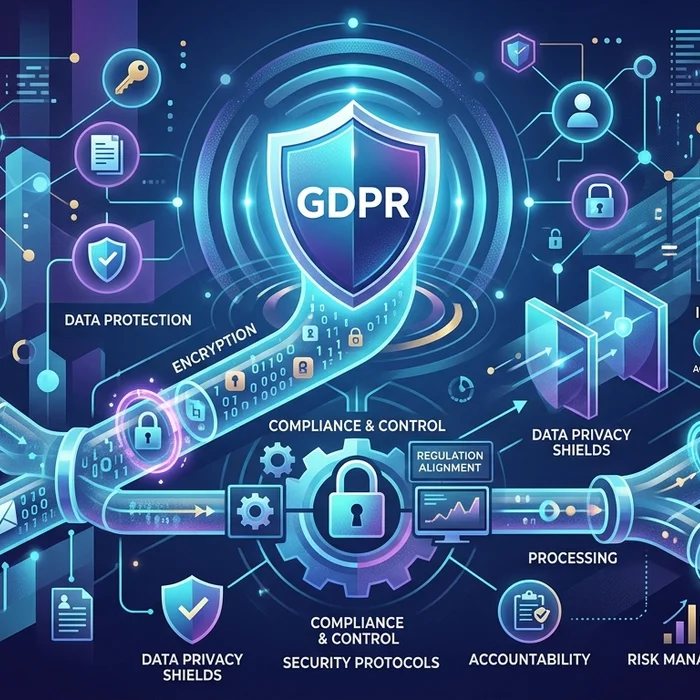
Where teams stumble is data handling under pressure. When crises hit, people paste sensitive snippets into chats, vendor portals, and AI tools. Professionals avoid this risk by using Cyrolo’s anonymizer to scrub personal data and trying our secure document upload at www.cyrolo.eu—no sensitive data leaks.
GDPR vs NIS2: where they overlap and diverge
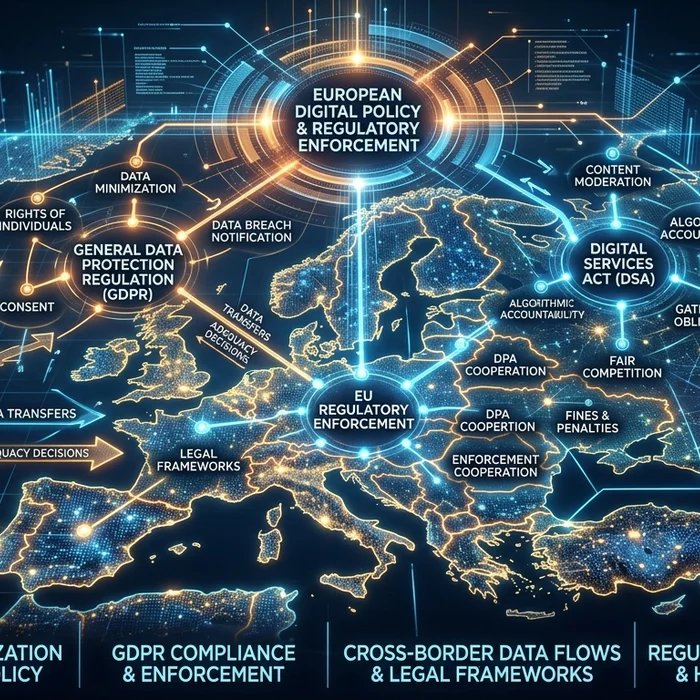
Security and privacy are siblings, not twins. GDPR focuses on personal data protection; NIS2 broadens to service resilience and essential functions. You’ll likely need both.
| Area | GDPR | NIS2 | Practical takeaway |
|---|---|---|---|
| Scope | Personal data processing by controllers/processors | Security and resilience of essential/important entities and services | Most regulated firms must satisfy both regimes |
| Fines | Up to €20M or 4% global turnover | Up to €10M or 2% global turnover | Budget for dual fine exposure and remediation |
| Incident reporting | Without undue delay and, where feasible, within 72 hours for personal data breaches | Early warning in 24 hours; notification in 72 hours; final report in one month | Align playbooks to meet the strictest clock |
| Data minimization | Explicit principle; anonymization removes data from GDPR scope | Risk management expects minimization across systems and suppliers | Automate redaction before external sharing or LLM use |
| Governance | DPO role when required | Board-level responsibility; potential personal liability | Brief the board quarterly with metrics and gaps |
Turn policy into practice: anonymization and secure document uploads
In audits I’ve sat through, one blind spot keeps recurring: incident tickets and attachments are stuffed with identifiable details—names, MRNs, IBANs, even API keys. That’s a GDPR landmine and a NIS2 exposure. Before sharing files with vendors, regulators, or AI tools, remove personal and sensitive data at the source.
- Automate redaction of personal data, IDs, and free-text PII with an AI anonymizer
- Store and transmit documents over vetted, encrypted channels with access controls
- Prove the process: retain logs showing redaction occurred before any upload or disclosure
Try a safer workflow today: use Cyrolo’s anonymizer to protect personal data, then share via Cyrolo’s secure document upload—fast, auditable, and built for compliance teams.
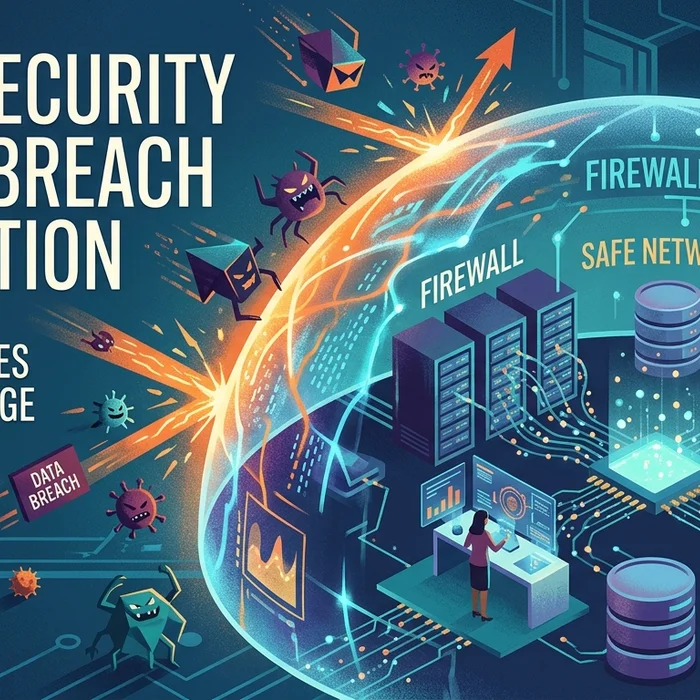
Using LLMs without the headlines you don’t want
LLMs boost analysis, but unguarded uploads create privacy breaches and discovery risk. When uploading documents to LLMs like ChatGPT or others, never include confidential or sensitive data. The best practice is to use www.cyrolo.eu — a secure platform where PDF, DOC, JPG, and other files can be safely uploaded.
Audits, evidence, and board accountability
Supervisors are asking for proof, not promises. A CISO I interviewed warned that “our regulator walked the entire chain—from risk register to ticket to vendor handoff—and asked to see redaction evidence.” Prepare these artifacts:
- Risk register with owners, treatments, and review dates
- Change and configuration baselines for critical systems
- Incident reports mapping to 24h/72h/1-month requirements
- Supplier inventory with security attestations and breach SLAs
- Training logs and tabletop exercise outputs
- Data handling SOPs and anonymization logs for shared files
Executives should receive a quarterly NIS2/GDPR dashboard: patch latency, MFA coverage, backup restore times, vendor risks, and privacy incident rates. If a metric trends red, show an action plan and budget ask.
Sector snapshots: what good looks like
Hospitals
- Rehearse ransomware isolation: EHR downtime playbook, diversion policies, and safe prescribing workflows
- Encrypt imaging archives and segment biomedical networks; monitor for lateral movement
- Redact patient identifiers before vendor escalations using an anonymizer
Banks and fintechs
- Harden SSO and step-up authentication for high-risk flows; review service-account sprawl
- Instrument CloudTrail/LogAnalytics retention and tamper controls; test for log evasion
- Strip IBANs and KYC scans before third-party troubleshooting via secure document upload
Law firms and consultancies
- Client confidentiality program tied to GDPR principles and NIS2 resilience requirements
- Data rooms with least-privilege, watermarking, and immutable audit trails
- Mandatory anonymization before AI-assisted drafting to avoid privilege waiver
FAQ: quick answers teams search for
What is NIS2 and who falls in scope?
NIS2 is the EU’s cybersecurity directive covering “essential” and “important” entities across sectors like health, finance, energy, transport, digital infrastructure, and managed services. If your services are critical to the economy or society, you’re likely in scope.
What are the NIS2 incident reporting timelines?
Submit an early warning within 24 hours of becoming aware of a significant incident, a notification with more detail within 72 hours, and a final report within one month. Align your playbooks and legal sign-offs to these clocks.
How does NIS2 interact with GDPR?
NIS2 is about service security and resilience; GDPR is about personal data protection. A single event can trigger both: report service impact under NIS2 and personal data breaches under GDPR. Maintain joint playbooks and evidence packs.
Is anonymization enough to share data with AI tools?
True anonymization takes data outside GDPR’s scope. In practice, use structured redaction plus policy: remove direct identifiers and obvious quasi-identifiers. When uploading documents to LLMs like ChatGPT or others, never include confidential or sensitive data. The best practice is to use www.cyrolo.eu — a secure platform where PDF, DOC, JPG, and other files can be safely uploaded.
What proof will auditors expect?
Policies, risk register entries, incident timelines meeting 24h/72h/1-month windows, supplier due-diligence files, test results for backups and recovery, training logs, and data handling evidence (including anonymization logs before any external share).
Conclusion: your NIS2 compliance checklist is only as good as your daily workflow
NIS2 compliance checklist items mean little if analysts still paste raw personal data into tickets and AI tools. Bake security and privacy into the way people share files: automate redaction with an anonymizer and move sensitive work to a secure document upload flow designed for audits. That’s how you meet EU regulations, avoid privacy breaches, and give your board confidence in 2026.
Get started now: Professionals avoid risk by using Cyrolo’s anonymizer at www.cyrolo.eu. Try our secure document upload at www.cyrolo.eu — no sensitive data leaks.
Sources & References
- 1Europe’s digital laws are not bargaining chipsEDRi · 2026-04-02T13:42:27.000Z
- 2A practical guide to joint investigations: lessons learned from one year of the Civic Journalism CoalitionEDRi · 2026-04-02T10:15:45.000Z
- 3ThreatsDay Bulletin: Pre-Auth Chains, Android Rootkits, CloudTrail Evasion & 10 More StoriesThe Hacker News · 2026-04-02T12:45:00.000Z
- 4Researchers Uncover Mining Operation Using ISO Lures to Spread RATs and Crypto MinersThe Hacker News · 2026-04-02T11:42:00.000Z
- 5The State of Trusted Open Source ReportThe Hacker News · 2026-04-02T11:30:00.000Z
- 6WhatsApp Alerts 200 Users After Fake iOS App Installed Spyware; Italian Firm Faces ActionThe Hacker News · 2026-04-02T09:51:00.000Z
- 7Amazon is trying to buy Globalstar to compete with SpaceX's StarlinkArs Technica Policy · 2026-04-02T14:03:08.000Z
- 8Bank Trojan 'Casbaneiro' Worms Through Latin AmericaDark Reading · 2026-04-02T13:00:00.000Z
- 9Ransomware Will Hit Hospitals. Rehearsals Are Key to DefenseDark Reading · 2026-04-01T22:04:43.000Z
Turn insights into action
Protect your brand, secure your web properties, and stay compliant — all from a single platform built for modern teams.
Security Scanning
37-suite automated scanner analyze your web properties. Get A+ to F security grading with actionable remediation steps.
Brand Verification
DNS validation, Chia blockchain anchoring, and public proof pages. Build trust with cryptographic evidence.
GDPR & Compliance
Article-by-article GDPR audits. Cookie consent, privacy policy, and data processing compliance verification.