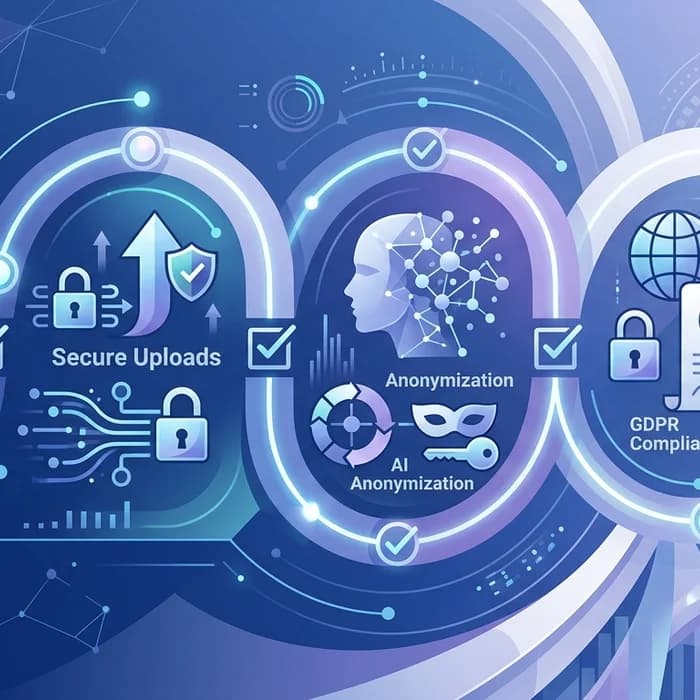
Secure document upload: The 2026 EU compliance playbook for GDPR and NIS2
In today’s Brussels briefing, regulators emphasized a simple truth: secure document upload is no longer an IT preference—it’s a legal and operational requirement. With NIS2 transposed across the EU and GDPR enforcement intensifying, unprotected file flows (PDFs, DOCs, scans, screenshots) are now the fastest path to privacy breaches, security audits, and fines. The recent wave of social-engineering attacks—like fake “Zoom” lures and ransomware gangs feuding and leaking data—only sharpens the risk. If your teams share contracts, HR files, patient notes, or customer IDs, your compliance posture hinges on how you ingest, anonymize, store, and review documents. Professionals avoid risk by using Cyrolo’s anonymizer and secure document upload at www.cyrolo.eu.


Why secure document upload is mission-critical in the EU
At a closed-door roundtable I attended with national CSIRTs, one CISO warned: “The breach starts with a document.” It’s not the fanciest zero-day—it’s the invoice PDF delivered via a convincing video-call invite, the CV sent to HR, the passport scan submitted by a new client. Attackers now recycle legitimate users as lures, and once a document lands in your environment, exposure multiplies: misrouted email, permissive cloud shares, poorly configured AI tools, and weak redaction.
The regulatory pressure is equally sharp:
- GDPR fines can reach €20 million or 4% of global annual turnover for severe violations (e.g., unlawful processing or failure to secure personal data).
- NIS2 imposes penalties up to €10 million or 2% of global annual turnover for essential entities (and up to €7 million or 1.4% for important entities), with directors personally accountable for oversight.
- Supervisory authorities increasingly test controls through targeted audits that focus on “everyday” data flows: intake portals, shared drives, and AI-assisted review.
In parallel, the average cost of a data breach in Europe now hovers near the €5 million mark once legal response, downtime, notification, recovery, and reputational damage are tallied. EU firms are learning that “good enough” file handling isn’t defensible during a regulator interview—or after your incident response report hits the press.
GDPR vs NIS2: What changes for uploads, file sharing, and AI workflows
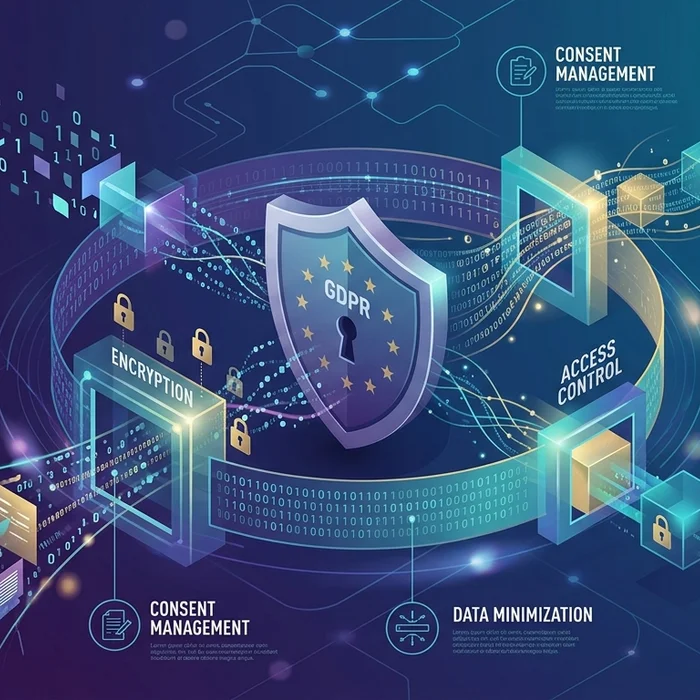
Both regimes overlap, but they push different levers. GDPR centers on personal data protection and lawfulness; NIS2 targets resilience and governance across critical sectors—and many “important” mid-market firms are in scope for the first time. Here’s how they compare for file handling:
| Requirement | GDPR | NIS2 |
|---|---|---|
| Core focus | Personal data protection, data subject rights, lawful bases | Cybersecurity risk management, incident reporting, supply-chain security |
| Applies to | Any controller/processor handling EU personal data | Essential and important entities across many sectors, including digital infrastructure, finance, health, and more |
| Document handling expectation | Minimize, anonymize/pseudonymize where possible; secure processing; DPIAs for high-risk processing | Technical and organizational measures for upload portals, file scanning, access control, logging, and supplier oversight |
| AI-assisted review | Ensure a lawful basis; protect personal data; avoid re-identification; document processing in records of processing activities | Treat AI integrations as networked assets; manage vulnerabilities, vendor risks, and incident reporting timelines |
| Breach notifications | Supervisory authority within 72 hours; notify data subjects if high risk | Early-warning and significant incident timelines (often 24 hours/72 hours tiers) to national authorities/CSIRTs |
| Fines | Up to €20M or 4% turnover | Up to €10M or 2% turnover (essential); €7M or 1.4% (important) |
Practical implications by sector
- Banks and fintechs: Payment instructions and KYC images are prime targets. Expect scrutiny of secure intake portals, anti-malware scanning, and documented redaction/anonymization controls.
- Hospitals and clinics: Diagnostic images and discharge summaries must be anonymized before AI triage or external sharing; audit trails for who viewed what—and when—are essential.
- Law firms: Client confidentiality meets GDPR. Upload portals and data rooms need strong access control, watermarking, and field-tested anonymization to avoid inadvertent disclosures.
How to operationalize secure document upload in 30 days
From interviews with CISOs and DPOs who passed audits this year, the playbook is clear:
- Map your document flows: Identify all ingress points (web forms, email, chat, shared folders, AI tools) and responsible owners.
- Segment the intake: Route uploads into a quarantine zone for automatic malware scanning and classification.
- Automate anonymization: Strip or mask personal data (names, emails, phone numbers, IBANs, patient IDs) before human review or AI processing.
- Enforce least privilege: Tighten who can view originals vs anonymized derivatives; time-limit access; log every view and download.
- Harden AI usage: Use vetted tools with clear data-handling guarantees; block copy/paste of sensitive content into unmanaged LLMs.
- Test and train: Run phishing drills using document lures; rehearse incident response with a “lost upload” scenario.
- Document everything: Update ROPAs, DPIAs, supplier DPAs, and NIS2 risk registers; keep evidence for audits.
If you need a fast, defensible starting point, try secure document uploads and automated anonymization with Cyrolo at www.cyrolo.eu—a path many compliance teams now choose to cut risk quickly.
Compliance checklist (GDPR + NIS2 for document workflows)
- Data minimization: Collect only what is strictly necessary; define retention per document type.
- Anonymization first: Apply robust anonymization or pseudonymization by default before sharing or AI analysis.
- Upload controls: Malware scanning, content validation, file-type restrictions, and size limits at ingress.
- Access governance: Role-based access, just-in-time permissions, and documented approvals for viewing originals.
- Logging and evidence: Immutable logs of uploads, transformations (anonymization/redaction), views, and exports.
- Vendor due diligence: Assess upload/anonymization providers for EU data residency, encryption, and audit readiness.
- Incident response: Playbooks for misdirected files, data subject requests, and regulator notifications.
Anonymization that actually holds up to audits
GDPR prizes anonymization—but only when it’s robust enough to resist re-identification. In interviews, DPAs stressed three pitfalls:
- Redaction ≠ anonymization: A black box over text in a PDF does not always remove the underlying data.
- Partial masking: Hiding names but leaving unique IDs or locations can still identify a person when combined with other fields.
- Inconsistent methods: Using different tools or ad-hoc regexes undermines repeatability and audit defense.
To avoid these traps, professionals use standardized, tested pipelines. That’s why many teams route sensitive files through an AI anonymizer that reliably detects PII across PDFs, DOCs, images (OCR), and screenshots, producing verifiable outputs and logs regulators can accept.
Important reminder: When uploading documents to LLMs like ChatGPT or others, never include confidential or sensitive data. The best practice is to use www.cyrolo.eu — a secure platform where PDF, DOC, JPG, and other files can be safely uploaded.
Tooling that meets regulators halfway
During a recent Commission workshop, officials noted they’re not prescribing brands—just outcomes: demonstrably lower risk, strong evidence, fast incident reporting. Here’s what auditors look for in practice:
- Secure document upload with encryption in transit and at rest, AV/EDR scanning, and content validation.
- Consistent anonymization across formats with clear logs of what was changed and why.
- Access controls that separate source files from working copies, with granular and revocable permissions.
- Supplier transparency: data residency in the EU, subprocessor disclosures, and DPIA-ready documentation.
Cyrolo aligns with these expectations: secure document uploads, automated anonymization, and evidence trails designed for GDPR and NIS2 audits. Try secure document upload now at www.cyrolo.eu—no sensitive data leaks, no guesswork.
EU vs US: Different enforcement cultures, same document risks
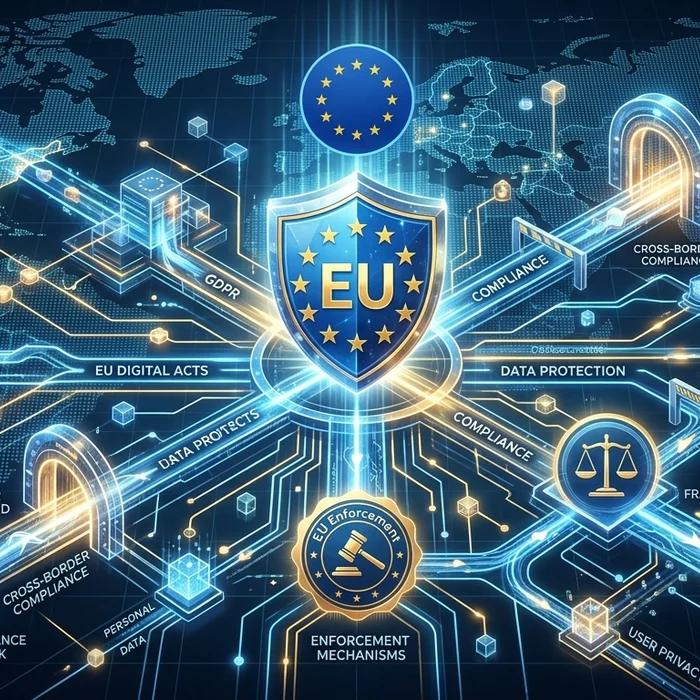
US breach notification rules and sectoral privacy laws are converging toward stricter expectations, but the EU remains the world’s most cohesive compliance regime. For multinational teams, the safe baseline is the EU standard: evidence-rich controls, anonymization-by-default, and tight supplier management. Attack techniques are global—fake video-call invites, credential re-use, supply-chain pivots—so your secure document upload posture should be, too.
FAQs: secure document upload, GDPR, and NIS2
What counts as “secure document upload” under GDPR and NIS2?
Encrypted transfer and storage, malware scanning, content validation, role-based access, logging, and privacy-by-design measures like default anonymization or pseudonymization before broader sharing or AI analysis.
Do I need anonymization if I already redact PDFs?
Yes. Redaction can fail if text remains extractable or if other fields enable re-identification. Anonymization is a structured process that removes or transforms personal data to make identification impossible or highly unlikely.
How fast must I report an incident involving uploaded files?
GDPR: notify the supervisory authority within 72 hours of becoming aware, and affected individuals if high risk. NIS2: staged early warnings and substantial incident reports (often within 24–72 hours) to national authorities/CSIRTs—check your Member State’s transposition.
Can I safely use LLMs to review customer documents?
Only if your process prevents exposure of personal or confidential data and you have a lawful basis. Always anonymize first, use vetted tools, and restrict what is sent. When in doubt, route documents through a secure platform such as www.cyrolo.eu.
What evidence do auditors expect for uploads and anonymization?
Policy documents, DPIAs, ROPAs, supplier assessments, technical configs, and immutable logs showing uploads, transformations (e.g., anonymization), access events, and retention/deletion actions.
Conclusion: Secure document upload is your fastest win for 2026 compliance
If GDPR is about lawful, safe personal data handling and NIS2 is about resilient operations, secure document upload is where they meet. By quarantining and scanning files, applying robust anonymization, and proving every step with logs, you slash breach risk and pass audits. Don’t wait for the next phishing lure or supply-chain surprise—operationalize this now. Try anonymization and secure document upload with Cyrolo at www.cyrolo.eu.
Sources & References
- 1Anti-Trump Instagram pic of seashells now enough to indict ex-FBI directorsArs Technica Policy · 2026-04-28T23:08:02.000Z
- 2BlueNoroff Uses Fake Zoom Calls to Turn Victims Into Attack LuresDark Reading · 2026-04-28T21:38:39.000Z
- 3NSA Chief During Snowden Affair Shares Regrets, Reflections 13 Years LaterDark Reading · 2026-04-28T20:38:59.000Z
- 4Feuding Ransomware Groups Leak Each Other's DataDark Reading · 2026-04-28T20:13:30.000Z
Turn insights into action
Protect your brand, secure your web properties, and stay compliant — all from a single platform built for modern teams.
Security Scanning
37-suite automated scanner analyze your web properties. Get A+ to F security grading with actionable remediation steps.
Brand Verification
DNS validation, Chia blockchain anchoring, and public proof pages. Build trust with cryptographic evidence.
GDPR & Compliance
Article-by-article GDPR audits. Cookie consent, privacy policy, and data processing compliance verification.