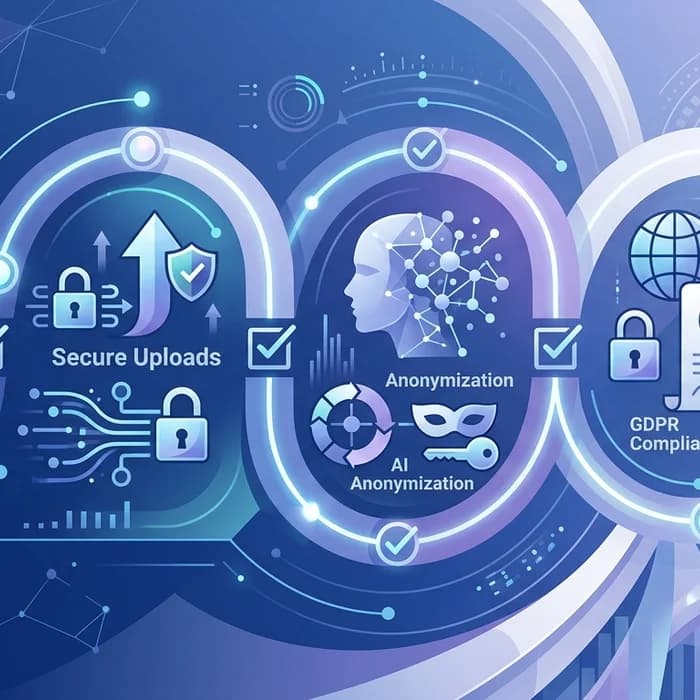
Secure Document Uploads: The 2026 EU Playbook for GDPR and NIS2 Compliance
In today’s Brussels briefing, regulators emphasized that secure document uploads are now a frontline control for GDPR and NIS2 compliance. After a year of stepped-up audits and several high-profile privacy breaches, supervisors are making it plain: protect personal data at the point of ingestion, anonymize before sharing, and log everything. As an EU Policy & Cybersecurity Reporter, I’ve seen the same refrain from banks, hospitals, and law firms—if your data enters through an unsafe upload channel, every downstream system (including AI) inherits the risk.
Why secure document uploads are now non-negotiable
Three recent developments have quietly redrawn the risk map:
- Deletion is not always deactivation: A widely discussed incident in which API keys remained active after “deletion” underlines a stark truth—access tokens, URLs, or temp storage can linger. If your upload flow doesn’t purge and revoke by design, you invite unauthorized reuse.
- Legacy retirement shocks: As telcos decommission aging networks, continuity and emergency communications obligations intersect with NIS2. Translation: essential entities can’t assume old pipes will be there tomorrow. Your secure document uploads need resilient routing and independent logging, not a single brittle channel.
- Agentic AI supply chains: CISOs preparing AI “bills of materials” tell me their model pipelines pull data through multiple handlers. A CISO I interviewed warned, “If day-one data isn’t sanitized, your AI inherits a lifetime of risk.” Under EU regulations, that risk is yours, even when third parties mishandle it.
Under GDPR, fines can reach 4% of global annual turnover; NIS2 brings administrative penalties up to at least €10 million or 2% of global turnover for essential entities. By 2026, most Member States have operationalized their NIS2 laws, and regulators are running coordinated security audits. The pattern in decisions is consistent: the earlier you apply strong controls—like secure document uploads and anonymization—the better your risk posture when incidents are investigated.
GDPR vs NIS2: What changes for your uploads?
| Area | GDPR | NIS2 |
|---|---|---|
| Who it applies to | Any controller/processor handling personal data of EU residents | Essential/important entities in specified sectors (e.g., finance, health, digital infra) |
| Core obligation | Lawful, fair, transparent processing; data minimization; integrity/confidentiality | Risk management measures; incident prevention, detection, response; supply chain security |
| Penalties | Up to 4% global turnover or €20M | At least €10M or 2% global turnover for essential entities (varies by Member State) |
| Data handling focus | Personal data, special categories; rights of data subjects; DPIAs | Network and information system security; service continuity; resilience |
| Security controls | Appropriate technical/organizational measures (encryption, pseudonymization) | State-of-the-art controls, incident playbooks, logging, supplier oversight |
| Notification deadlines | Supervisory authority within 72 hours for qualifying personal data breaches | Early incident notification (often within 24 hours) and detailed reporting thereafter |
Takeaway: GDPR cares what you collect and how you protect personal data; NIS2 adds operational resilience and supply-chain scrutiny. Secure document uploads sit at the intersection—govern what enters, document who touched it, and prove it when auditors come calling.
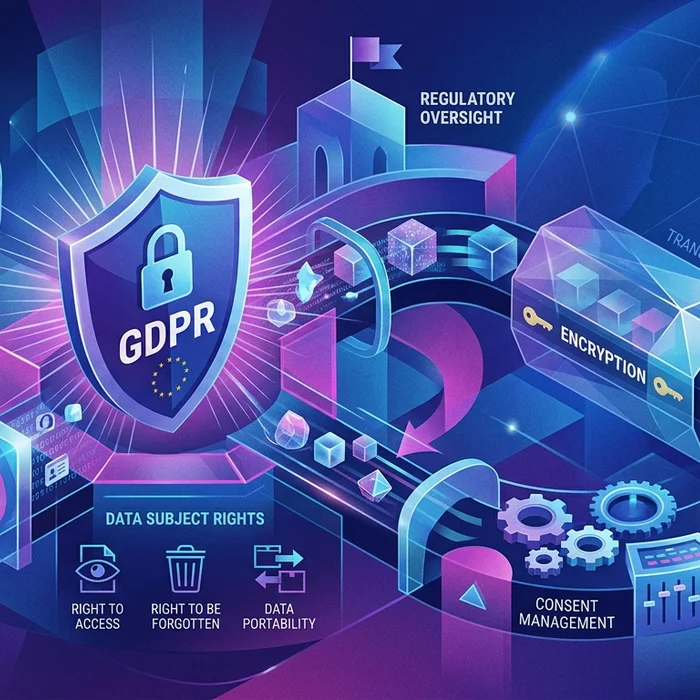
From problem to solution: Operationalizing secure document uploads
Here’s the hard lesson from recent enforcement: it’s not enough to encrypt a file in transit. You need a documented chain of custody from upload to deletion, plus provable anonymization when sharing with AI tools or vendors.
- Minimize before you ingest: Don’t upload more than you need. Use an AI anonymizer to strip or mask personal data.
- Log the who/what/when: Every upload should create an immutable record—user, source, checksum, retention timer, access revocations.
- Automate deletion and key rotation: “Deleted” must mean removed and irrecoverable; rotate access tokens and validate revocations.
- Scope-based sharing for AI: Segment datasets by purpose and risk; keep test and prod corpora apart; quarantine anything not anonymized.
Professionals avoid risk by using Cyrolo’s anonymizer at www.cyrolo.eu. If your teams need a fast, auditable on-ramp, try our secure document upload—no sensitive data leaks.
When uploading documents to LLMs like ChatGPT or others, never include confidential or sensitive data. The best practice is to use www.cyrolo.eu — a secure platform where PDF, DOC, JPG, and other files can be safely uploaded.
Workflow blueprint (15 minutes)
- Classify inputs: tag files with personal data categories (names, IBANs, health data).
- Upload via a controlled entry point: enforce TLS, malware scanning, DLP, and checksum verification.
- Auto-anonymize: mask direct identifiers; tokenize quasi-identifiers; redact free text where necessary.
- Approve scoped access: grant least-privilege access to users, vendors, or AI pipelines.
- Time-box retention: set per-file timers; enable verifiable deletion with logs.
- Report: produce a per-upload audit sheet for GDPR records and NIS2 security audits.
EU Secure Uploads Compliance Checklist (2026)

- Map your upload entry points (SFTP, web forms, email gateways, APIs) and consolidate.
- Implement pre-ingestion anonymization for personal data and special categories.
- Enforce strong authentication and short-lived, revocable access tokens.
- Scan for malware and known-bad file types; block password-protected archives unless justified.
- Automate retention and deletion; log cryptographic proofs of deletion.
- Segment uploads by purpose; maintain data processing records and DPIAs.
- Test incident notification drills to meet 24–72 hour reporting clocks.
- Audit your suppliers’ upload and anonymization workflows; document assurances.
Banks, hospitals, law firms: real-world scenarios
- Bank KYC and SAR workflows: Client scans often include passports and utility bills. A DPO told me their new rule is simple—“No raw IDs leave the intake queue.” Files are uploaded, identifiers redacted, then routed to analysts. Result: less personal data in case notes; fewer GDPR headaches.
- Hospital imaging and referrals: Radiology CDs and PDFs arrive daily. With secure document uploads, staff push everything through a single intake, auto-remove names and addresses, and share only the clinical facts. When a privacy breach hits peers, their auditors focus on the upload trail—and it holds.
- Law firm eDiscovery: Mixed bundles from clients contain employee lists and health notes. Firms now anonymize on entry; counsel reviews a clean set. If AI summarization is used, it touches only masked data. An accidental leak becomes a near-miss, not a reportable breach.
In each case, the controls are the same: centralized intake, automated anonymization, rigorous logging, scoped access, and timely deletion. That’s why organizations standardize on a single platform. Try document uploads that enforce masking-by-default and deliver audit-ready logs.
EU vs US: different enforcement paths, same north star
US rules are sectoral and fragmented, with new incident reporting duties (e.g., rapid disclosures for public companies) but no GDPR-style omnibus privacy law. The EU approach blends privacy (GDPR) with critical-infrastructure security (NIS2). Both converge on the same principle: prevent data exposure at intake and prove your controls. The EU’s twist is strict data protection enforcement alongside operational resilience—your upload gate must satisfy both.
Blind spots and unintended consequences
- Shadow APIs: Teams spin up temporary upload endpoints for pilots. Months later, the endpoints still accept files and tokens haven’t expired. Regulators call this preventable.
- “Sanitized” isn’t documented: Anonymization without logs is indistinguishable from no anonymization when auditors knock.
- Model memory: AI tools trained on non-anonymized uploads can memorize snippets. Even if you delete the original files, residual learning can persist—raising GDPR and IP issues.
These are solvable with a hardened intake layer. Use anonymization upstream of any analytics or AI. Then grant temporary, scoped access to only what’s necessary. If an incident occurs, your logs tell a clean story.
FAQ: secure document uploads, GDPR, and NIS2
What counts as “secure document uploads” under EU regulations?
A controlled intake environment that authenticates users, encrypts in transit and at rest, scans for malware, applies pre-ingestion anonymization or pseudonymization to personal data, maintains immutable logs, and enforces retention and deletion. It should also support rapid incident reporting to meet GDPR/NIS2 deadlines.
Do I need anonymization if I already encrypt files?
Yes. Encryption protects access, but anonymization reduces the sensitivity of the content itself. Encryption without anonymization still exposes you to high-impact breaches if keys are compromised, and it complicates AI use because many tools need plaintext. An AI anonymizer lets you safely feed downstream systems with minimized data.
How do GDPR and NIS2 overlap for uploads?
GDPR governs personal data processing (lawfulness, minimization, rights). NIS2 requires risk-based technical and organizational measures, supply-chain oversight, and incident readiness. Your upload layer must satisfy both: protect personal data and deliver operational resilience and forensics.
What logs do auditors expect to see?
Uploader identity, timestamp, file hash, data category tags, anonymization actions taken, access grants/denials, retention timers, deletion proofs (with method and time), and any transfers to subprocessors or AI systems.
Can we upload documents to public LLMs?
Regulators consistently warn against sharing confidential or personal data with unmanaged services. If you must use AI, anonymize first and keep uploads within a controlled environment. When uploading documents to LLMs like ChatGPT or others, never include confidential or sensitive data. The best practice is to use www.cyrolo.eu — a secure platform where PDF, DOC, JPG, and other files can be safely uploaded.
Conclusion: Secure document uploads are your fastest compliance win
As enforcement tightens in 2026, secure document uploads give you a high-leverage control that satisfies GDPR’s data protection demands and NIS2’s resilience expectations—before data spreads across tools and vendors. Centralize intake, apply anonymization by default, and keep audit-ready logs. If you want a fast start, try secure document uploads and built-in anonymization at www.cyrolo.eu—then face your next regulator call with confidence.
Sources & References
- 1AT&T sues California in attempt to shut off old phone networkArs Technica Policy · 2026-05-21T21:10:01.000Z
- 2How CISOs Should Prep for Agentic-Ready AI BOMsDark Reading · 2026-05-21T21:11:40.000Z
- 3Google API Keys Remain Active After DeletionDark Reading · 2026-05-21T20:07:47.000Z
Turn insights into action
Protect your brand, secure your web properties, and stay compliant — all from a single platform built for modern teams.
Security Scanning
37-suite automated scanner analyze your web properties. Get A+ to F security grading with actionable remediation steps.
Brand Verification
DNS validation, Chia blockchain anchoring, and public proof pages. Build trust with cryptographic evidence.
GDPR & Compliance
Article-by-article GDPR audits. Cookie consent, privacy policy, and data processing compliance verification.