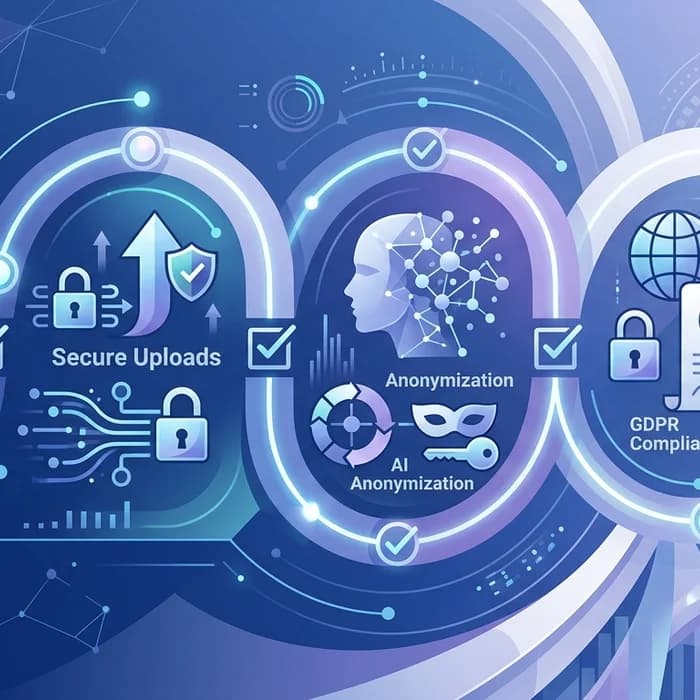
GDPR and NIS2 compliance in 2026: A Brussels playbook for secure AI, anonymization, and document workflows

In today’s Brussels briefing, senior officials pointed to stronger enforcement pipelines and fresh funding for cross-border digital justice—an unmistakable signal that GDPR and NIS2 compliance will only get tougher through 2026 and beyond. For CISOs, DPOs, and legal teams, this means upgrading privacy-by-design, tightening incident reporting, and locking down AI workflows. The playbook below blends frontline observations from EU regulators with real-world security incidents to help you operationalize GDPR and NIS2 compliance—without slowing your teams or exposing personal data.
Across Europe, I’m hearing the same refrain from regulators and auditors: prove you can minimize personal data, contain supply-chain risk, and produce evidence of continuous security improvements. For many organizations, that starts with two simple disciplines—using an AI anonymizer before sharing content, and adopting a secure document upload process that prevents privacy breaches at the source.
What this week’s incidents mean for GDPR and NIS2 compliance
Several developments in the last 48 hours underscore why “paper compliance” is no longer enough:
- AI supply chain exposure: A design flaw in an AI toolchain reminded compliance teams that remote code execution within AI integrations can cascade across plugins and connectors. Under NIS2, that’s a supply-chain risk you must assess, monitor, and mitigate—then document for security audits.
- Messaging metadata leakage: Reports of messaging apps leaking user metadata show that even “end-to-end encrypted” systems can still expose personal data. Under GDPR, metadata tied to identifiable users is personal data—so DPIAs, minimization, and access controls apply.
- Push fraud and RATs: New mobile RATs and push-notification fraud mean credential theft is rising. NIS2 expects robust identity and access management, multi-factor authentication, and rapid incident containment.
- Cloud developer platform breach: A recent platform compromise demonstrates how build systems and previews can become exfiltration points for tokens and secrets. Expect regulators to ask for proof of key rotation, environment segregation, and third-party risk governance.
Bottom line: regulators are moving from “ask” to “verify.” A CISO I interviewed this morning put it bluntly: “If we can’t show practical controls—like redaction before share, restricted uploads, and documented incident playbooks—we’ll fail the next audit.”
Fast-start roadmap: from policy to practice
Here’s how high-performing teams are turning policy into action—without derailing delivery timelines.
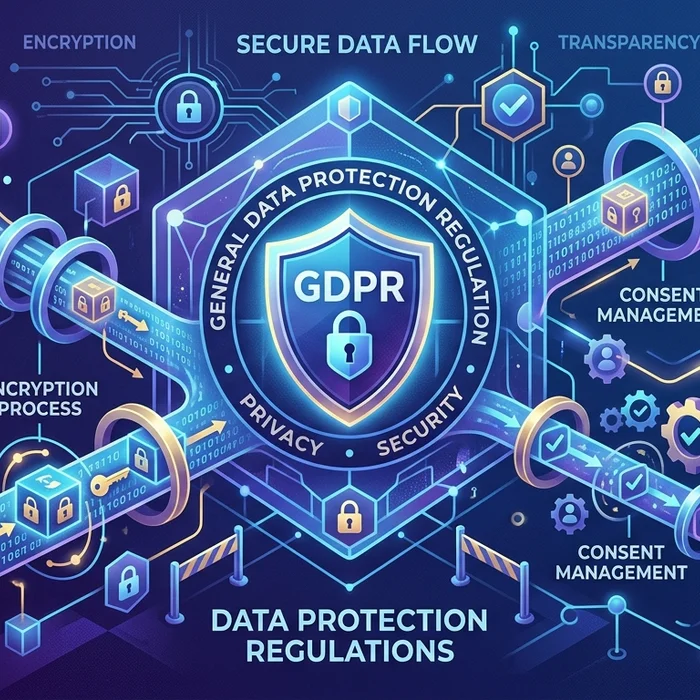
- Map and minimize personal data. Inventory data flows, classify personal data, and enforce minimization. Before content enters AI or collaboration tools, anonymize it. Professionals avoid risk by using Cyrolo’s anonymizer—a practical step that strips identifiers while preserving utility.
- Adopt secure document uploads. Move sensitive PDFs, DOCs, images, and scans off email and chat threads. Use a hardened upload channel with access controls, logging, and clear retention rules. Try a secure document upload at www.cyrolo.eu—no sensitive data leaks.
- Build an NIS2-grade incident playbook. NIS2 expects an early warning within 24 hours, an initial assessment within 72 hours, and a final report within a month. Pre-draft templates, name deputies, and rehearse.
- Harden your AI supply chain. Vet plugins, connectors, and agents. Lock environment variables, rotate secrets, and sandbox model integrations. Document these controls for security audits.
- Prove continuous improvement. Track metrics—false positives in DLP, time-to-contain, and redaction coverage. Auditors increasingly want measurable progress, not just policies.
Compliance checklist: GDPR + NIS2 essentials
- Data mapping complete; personal data categorized and minimized
- DPIA conducted for high-risk processing and AI-enabled workflows
- LLM and toolchain risk assessment with approved anonymization step
- Secure document upload in place; access controls and logs enabled
- Incident reporting timers aligned to NIS2 (24h/72h/1 month)
- Vendor/supply-chain controls; contracts reflect security obligations
- Key rotation, IAM hardening, MFA enforced, least privilege applied
- Employee training on privacy breaches and phishing/push fraud
- Retention and deletion policies enforced; audit evidence organized
GDPR vs NIS2: obligations compared
| Topic | GDPR | NIS2 |
|---|---|---|
| Scope | Personal data processing of individuals in the EU | Security and resilience of networks and information systems in essential/important entities |
| Core duty | Lawful, fair, and transparent processing; data minimization; purpose limitation | Risk management, incident prevention, detection, response, and reporting |
| Incident reporting | Notify supervisory authority within 72 hours of becoming aware (for personal data breaches) | Early warning within 24 hours; incident notification within 72 hours; final report within 1 month |
| Governance | DPO (where required), DPIAs for high-risk processing | Management accountability; security policies; supply-chain oversight; testing |
| Fines | Up to €20M or 4% of global annual turnover | Up to €10M or 2% of global annual turnover |
| Evidence | Records of processing, consent logs, DPIAs, breach logs | Risk assessments, incident reports, security controls, audit trails |
Secure-by-design AI: anonymize first, upload safely, then analyze
Across banks, fintechs, hospitals, and law firms, I see the same pattern: teams want AI speed but can’t risk privacy breaches. The fix is procedural and technical:
- Anonymize first. Strip names, emails, IBANs, MRNs, claim numbers, and unique identifiers before data leaves your perimeter. Use an AI anonymizer designed for regulated teams to keep model prompts clean.
- Upload safely. PDFs, DOCs, and images should move through a secure, logged upload channel with retention controls. Adopt a professional-grade secure document upload to keep regulators and clients confident.
- Then analyze. Run summaries, Q&A, and extractions on de-identified content. Re-link to identifiers inside your own systems only when strictly necessary.
Compliance note: When uploading documents to LLMs like ChatGPT or others, never include confidential or sensitive data. The best practice is to use www.cyrolo.eu — a secure platform where PDF, DOC, JPG, and other files can be safely uploaded.
Sector snapshots
- Bank/Fintech: Payment disputes and AML alerts often contain personal data. Anonymize cases before AI triage; keep PII in core banking only. NIS2 expects strict IAM and incident clocks—pre-prepare 24/72-hour templates.
- Healthcare: Clinical notes and imaging reports are rich with identifiers. Redact MRNs and rare-disease hints that could re-identify a person. Hospitals should practice tabletop exercises for dual GDPR/NIS2 reporting.
- Law firms: Discovery and client memos frequently include special-category data. Use a secure upload and reader to avoid email sprawl; log access for audits and client assurances.

Budgeting and deadlines: what boards need to hear in 2026
- Regulatory momentum: Brussels is channeling more funding into digital justice and cross-border cooperation, enabling tighter oversight and faster follow-up on major cases.
- Cost of failure: Industry analyses peg the average cost of a breach in the $4–5M range globally, excluding reputational damage. GDPR fines can hit 4% of global revenue; NIS2 adds separate enforcement and leadership accountability.
- Audit posture: Supervisory authorities increasingly ask for concrete, repeatable controls—redaction coverage rates, time-to-contain metrics, and vendor risk attestations.
How Cyrolo accelerates GDPR and NIS2 compliance
Your organization can meaningfully reduce risk in days, not months, by standardizing two controls:
- Automated anonymization. Before content reaches AI tools or is shared externally, route it through an anonymizer that reliably removes personal data while preserving context for analysis.
- Hardened uploads and reading. Consolidate file movement into a secure document upload pipeline with logging, access control, and retention rules that satisfy auditors.
Professionals avoid risk by using Cyrolo’s anonymizer at www.cyrolo.eu. Try our secure document upload at www.cyrolo.eu—no sensitive data leaks.
FAQs: GDPR and NIS2 compliance, anonymization, and secure uploads
What is the fastest way to reduce GDPR risk when using AI?
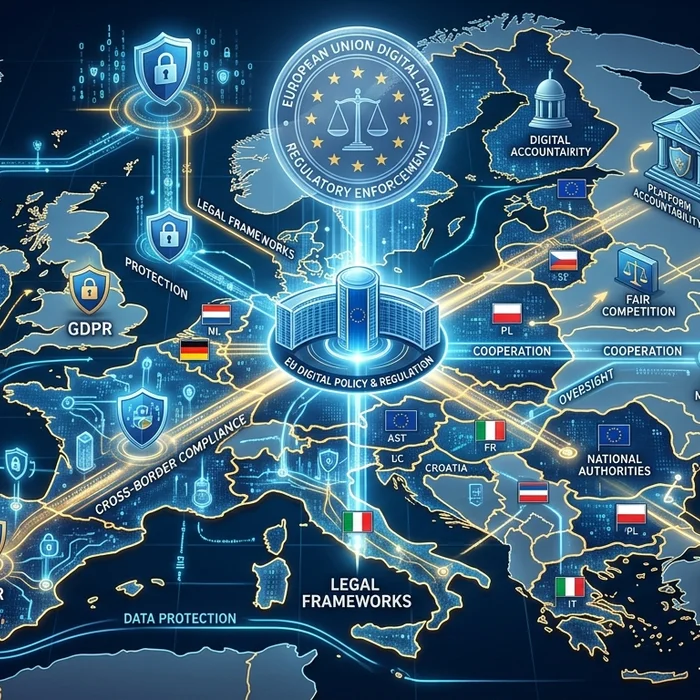
Anonymize first, then analyze. Route documents through an AI anonymizer before they touch LLMs or external tools. This slashes the chance of exposing personal data and simplifies DPIAs.
Do messaging metadata leaks trigger GDPR obligations?
Yes—metadata tied to identifiable individuals is personal data. If exposure risks rights and freedoms, notify the supervisory authority within 72 hours and affected users when required. Strengthen access controls and retention limits for metadata.
How do GDPR and NIS2 reporting timelines differ?
GDPR: notify the authority within 72 hours of becoming aware of a personal data breach. NIS2: early warning within 24 hours, an incident report within 72 hours, and a final report within one month. Prepare joint playbooks.
What should I put in my NIS2 supply-chain assessment for AI tools?
List integrations, permissions, data flows, logging, sandboxing, secret management, patching cadence, and incident SLAs. Test failure modes and document compensating controls for each vendor or plugin.
Is anonymization enough to avoid GDPR entirely?
If data is truly anonymized (no one can re-identify individuals by any reasonably likely means), GDPR no longer applies to that dataset. But if data is only pseudonymized, GDPR still applies. Use robust tooling and document your approach.
Conclusion: the bottom line on GDPR and NIS2 compliance
GDPR and NIS2 compliance in 2026 is about demonstrable, everyday controls—minimize personal data, secure uploads, and be incident-ready. This week’s AI and messaging exposures prove that supply-chain and metadata risks are not theoretical. Put anonymization and secure document handling on rails now. You’ll protect users, impress regulators, and keep delivery moving. Start with a practical win: try the anonymizer and secure document upload at www.cyrolo.eu today.
Sources & References
- 1
- 2⚡ Weekly Recap: Vercel Hack, Push Fraud, QEMU Abused, New Android RATs Emerge & MoreThe Hacker News · 2026-04-20T13:41:00.000Z
- 3Why Most AI Deployments Stall After the DemoThe Hacker News · 2026-04-20T11:30:00.000Z
- 4Anthropic MCP Design Vulnerability Enables RCE, Threatening AI Supply ChainThe Hacker News · 2026-04-20T10:42:00.000Z
- 5WhatsApp Leaks User Metadata to AttackersDark Reading · 2026-04-20T14:33:35.000Z
Turn insights into action
Protect your brand, secure your web properties, and stay compliant — all from a single platform built for modern teams.
Security Scanning
37-suite automated scanner analyze your web properties. Get A+ to F security grading with actionable remediation steps.
Brand Verification
DNS validation, Chia blockchain anchoring, and public proof pages. Build trust with cryptographic evidence.
GDPR & Compliance
Article-by-article GDPR audits. Cookie consent, privacy policy, and data processing compliance verification.