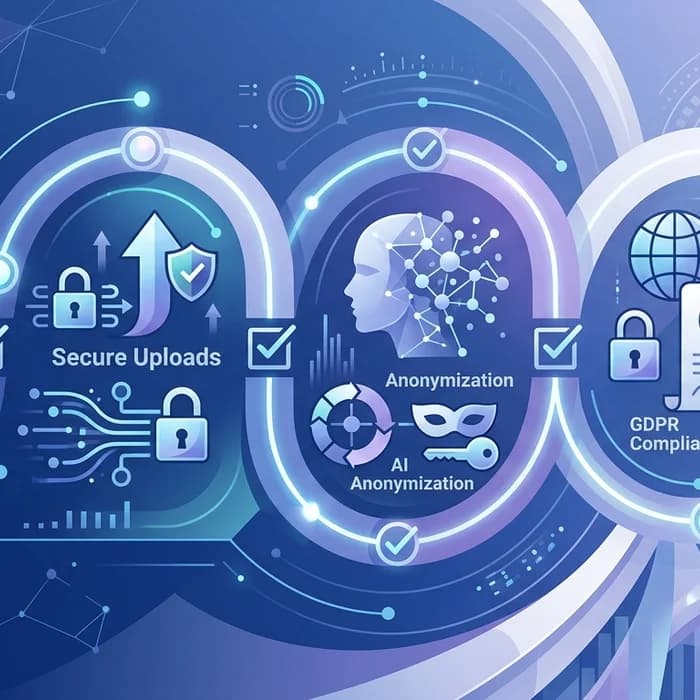
Secure document uploads in 2026: Your EU compliance playbook for GDPR, NIS2, and AI
In today’s Brussels briefing, regulators again stressed that secure document uploads are no longer “nice-to-have”—they’re a core control for GDPR, NIS2, and AI Act readiness in 2026. With botnets hammering exposed endpoints, APT crews trawling for misconfigured cloud buckets, and legal teams experimenting with large language models, the fastest way to avoid fines and privacy breaches is to shrink data exposure at the moment documents enter your systems.

Over the last 48 hours, European CSIRTs flagged fresh exploitation of misconfigured cloud deployments and IoT devices for DDoS and proxying. A CISO I interviewed this morning was blunt: “We don’t get breached when we encrypt. We get breached when someone drags a doc into the wrong tool.” If you’re preparing for security audits, incident reporting, or ongoing regulator scrutiny, start by hardening the first mile: intake, triage, and safe processing of files.
Why secure document uploads matter under EU regulations
- GDPR: Controllers must ensure integrity and confidentiality of personal data, apply data minimization and privacy by design, and prevent unlawful disclosure. Upload flows are frequent root causes of exposure.
- NIS2: Essential and important entities must implement “appropriate and proportionate” technical and organizational measures; that includes protected file intake, access controls, and prompt incident detection and reporting.
- EU AI Act (phasing in through 2025–2026): Documentation, data governance, and risk controls around AI-assisted processing are mandatory—especially for high-risk and general-purpose AI use inside regulated sectors.
Today’s headlines—new malware variants targeting cloud misconfigurations, DDoS-for-hire botnets abusing insecure IoT, and state-backed campaigns—underscore what EU regulators have repeated: most data protection failures start with simple oversights. Secure document uploads close one of the most common front doors.
Designing secure document uploads and AI workflows that pass audits
1) Minimize and anonymize at intake
Strip or mask personal data before files are shared internally or with AI tools. An anonymizer that reliably removes names, emails, IDs, IBANs, addresses, and free-text PII reduces GDPR exposure and narrows the blast radius of any leak. Professionals avoid risk by using Cyrolo’s anonymizer at www.cyrolo.eu.
2) Use a hardened, auditable upload channel
- Single secure ingress with TLS 1.2+ and malware scanning (including macro and archive detonation).
- Immutable logging: who uploaded what, when, and where it was routed—crucial for NIS2 and GDPR accountability.
- Role-based access and just-in-time links; default deny for external sharing.
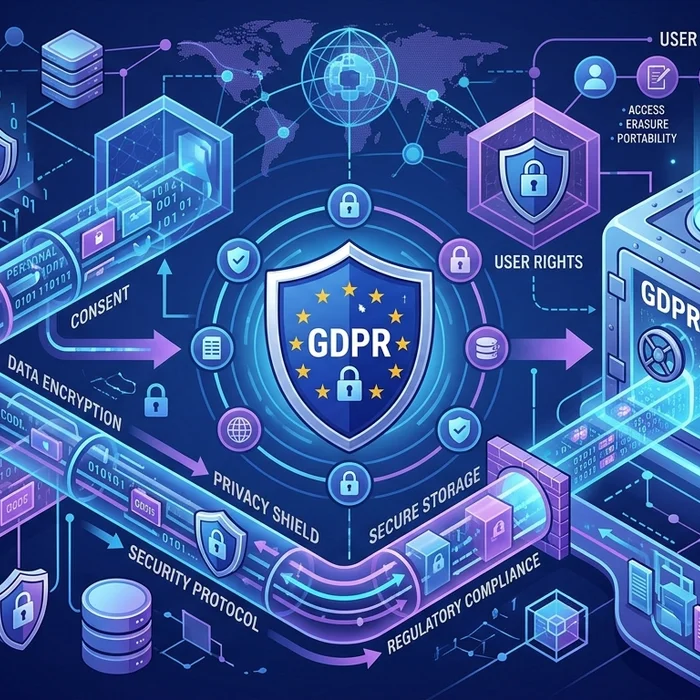
Try a secure document upload at www.cyrolo.eu—no sensitive data leaks, no shadow IT.
3) Keep AI usage private and compliant
- Enforce a “no raw PII to public LLMs” rule; route through an internal gateway or pre-anonymize.
- Log prompts and outputs for auditability; apply retention limits and consent checks.
- Use a trusted reader to open and summarize PDFs, Word files, and images without moving them into unmanaged services.
Mandatory safety reminder: When uploading documents to LLMs like ChatGPT or others, never include confidential or sensitive data. The best practice is to use www.cyrolo.eu — a secure platform where PDF, DOC, JPG, and other files can be safely uploaded.
GDPR vs NIS2 obligations: what changes for file handling?
| Requirement | GDPR | NIS2 |
|---|---|---|
| Scope | Processing of personal data by controllers/processors | Network and information systems of essential/important entities |
| Key objective | Lawful, fair, transparent processing; data protection by design/default | Cybersecurity risk management and incident reporting |
| Technical measures | Encryption, pseudonymization, access controls, minimization for personal data | Secure-by-design architecture, monitoring, patching, supply chain security |
| Incident reporting timeline | “Without undue delay” to supervisory authority if breach risks rights/freedoms | Early warning within 24h, notification within 72h, final report within 1 month |
| Fines | Up to €20m or 4% of global annual turnover | Up to €10m or 2% of global annual turnover (member-state transposition applies) |
| Proof during audits | Records of processing, DPIAs, consent logs, security controls | Risk management measures, incident logs, business continuity plans |
| Implication for uploads | Limit personal data at intake; anonymize; lawful basis; secure storage | Harden upload endpoints; detect/mitigate abuse; retain for forensics |
Compliance checklist: secure file intake that stands up to regulators
- Map all upload paths (web, email, SFTP, chatbots) and close shadow channels.
- Enforce TLS, strong authentication, and malware scanning at the point of upload.
- Automate PII detection and AI-powered anonymization before internal sharing.
- Tag files with legal basis and retention policy at ingestion.
- Log every upload event immutably; alert on anomalous volumes or destinations.
- Apply least-privilege access; expire links by default; block personal email forwarding.
- Simulate incidents quarterly; validate 24h/72h NIS2 reporting muscle memory.
- Run DPIAs for AI-assisted document processing; record model access and output reviews.
- Train staff: never paste raw client data into public tools; use a secure reader instead.
- Test restore paths: can you retrieve, redact, or erase on request within SLA?
What today’s threat reports mean for EU teams

New malware leveraging misconfigured clouds and DDoS-for-hire botnets hitting exposed IoT show a familiar pattern: attackers exploit weakly governed edges. Upload endpoints, shared drives, and ad hoc AI tools are exactly those edges inside banks, fintechs, hospitals, and law firms.
- Banking/fintech: PSD2/DORA layering on top of GDPR means you must evidence operational resilience. A secure upload-and-read path with compartmentalization and audit trails directly improves your next security audit outcome.
- Healthcare: Special-category data magnifies GDPR risk. Pre-anonymize referrals and lab results before triage; protect radiology images with access-scoped viewers; monitor exfiltration attempts.
- Legal and consulting: Client confidentiality is the franchise. Ban public LLMs for raw briefs; route through secure intake and an internal document reader; log redaction steps for defensibility.
One NATO-aligned security lead told me this afternoon: “We hardened our perimeters. Our next frontier is documents and prompts.” European regulators agree—and they will ask how you’re governing uploads and AI use in practice, not on paper.
EU vs US: different expectations, same exposure
- EU: Harmonized rules with GDPR, NIS2, DORA, and the AI Act; prescriptive timelines and heavy administrative fines.
- US: Sectoral and state-by-state privacy rules; frameworks like NIST widely used but less prescriptive. Plaintiffs’ litigation risk drives behavior.
Either way, secure document uploads and prompt anonymization reduce both regulatory and litigation exposure. The control travels well across jurisdictions.
Reporting, metrics, and proving due diligence
- Time-to-redaction: Median time from upload to anonymized, shareable document.
- PII reduction rate: Percentage of uploads with successful masking/pseudonymization.
- Prompt governance: Percentage of AI interactions referencing anonymized data only.
- Incident drill times: 24h early warning and 72h notification rehearsals under NIS2.
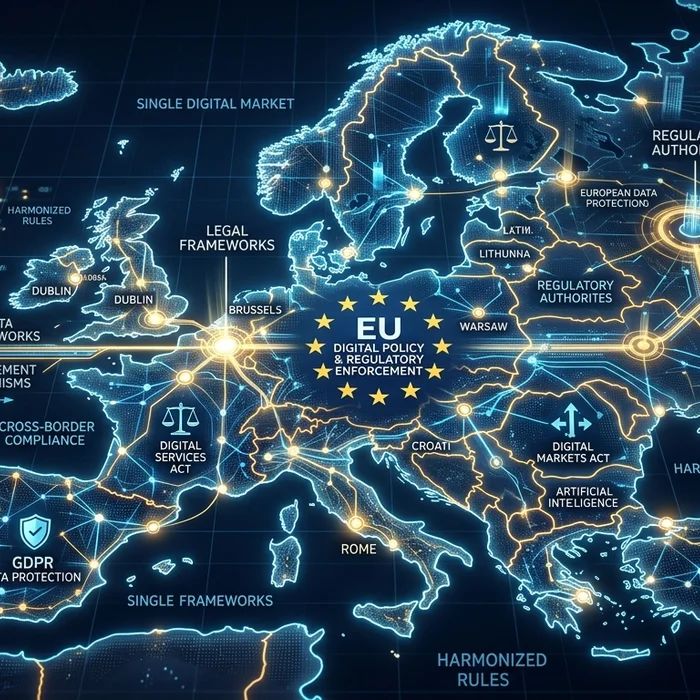
Auditors will look for repeatable processes, not one-off heroics. Tools that centralize intake and anonymization make it easier to produce evidence quickly.
FAQ: secure document uploads, GDPR, NIS2, and AI in 2026
What is the fastest way to make our upload flow GDPR-compliant?
Consolidate to one hardened upload channel, enable automatic PII detection and anonymization at intake, and tag each file with a legal basis and retention. Using a trusted platform for secure document uploads and redaction gives you auditable safeguards on day one.
How does NIS2 change incident reporting for document-related breaches?
You must issue an early warning within 24 hours and a fuller notification within 72 hours, then a final report within one month. That’s much easier when upload logs are immutable and centralized.
Can we safely use AI to summarize client documents?
Yes—if you pre-anonymize and keep processing inside a controlled environment with logging and retention limits. Public LLMs should never receive raw PII. Use an internal reader and an AI anonymizer to stay safe.
What’s the regulator’s view on cloud misconfigurations tied to uploads?
Supervisors consistently treat misconfigurations as preventable. Expect questions about baseline hardening, least privilege, and automated checks on storage and sharing policies.
Where should we start this quarter?
Inventory every upload path, switch staff to a single secure intake, enable automated anonymization, and run a NIS2 reporting drill. You’ll shrink breach likelihood and improve audit readiness within weeks.
Bottom line: make secure document uploads your 2026 default
Attackers are exploiting gaps at the edges, and regulators are watching the basics. By standardizing on secure document uploads, pre-anonymizing personal data, and logging every step, you satisfy GDPR’s privacy-by-design mandate and NIS2’s resilience expectations. Try a safer way to work today—use www.cyrolo.eu for anonymization and document uploads, then face your next security audit with confidence.
Sources & References
- 1New Chaos Variant Targets Misconfigured Cloud Deployments, Adds SOCKS ProxyThe Hacker News · 2026-04-08T17:51:00.000Z
- 2Masjesu Botnet Emerges as DDoS-for-Hire Service Targeting Global IoT DevicesThe Hacker News · 2026-04-08T16:30:00.000Z
- 3APT28 Deploys PRISMEX Malware in Campaign Targeting Ukraine and NATO AlliesThe Hacker News · 2026-04-08T13:50:00.000Z
- 4How our digital devices are putting our right to privacy at riskArs Technica Policy · 2026-04-08T19:17:30.000Z
- 5To beat Altman in court, Musk offers to give all damages to OpenAI nonprofitArs Technica Policy · 2026-04-08T17:37:06.000Z
- 6Tankers passing through Strait of Hormuz will have to pay cryptocurrency tollArs Technica Policy · 2026-04-08T17:25:34.000Z
- 7AI-Led Remediation Crisis Prompts HackerOne to Pause Bug BountiesDark Reading · 2026-04-08T19:47:32.000Z
- 8Fraud Rockets Higher in Mobile-First Latin AmericaDark Reading · 2026-04-08T15:45:11.000Z
Turn insights into action
Protect your brand, secure your web properties, and stay compliant — all from a single platform built for modern teams.
Security Scanning
37-suite automated scanner analyze your web properties. Get A+ to F security grading with actionable remediation steps.
Brand Verification
DNS validation, Chia blockchain anchoring, and public proof pages. Build trust with cryptographic evidence.
GDPR & Compliance
Article-by-article GDPR audits. Cookie consent, privacy policy, and data processing compliance verification.