GDPR vs NIS2: Your 2026 EU Cybersecurity Compliance Playbook for Secure Document Uploads and AI Anonymization
In today’s Brussels briefing, policymakers and CISOs alike are asking the same question: GDPR vs NIS2 — what changes for real-world teams managing secure document uploads, AI anonymizers, and data protection in 2026? As enforcement tightens and ransomware evolves, the gap between policy on paper and operational controls in legal, healthcare, finance, and public sector workflows is where risk (and fines) now live.
Over the past week, I’ve heard three consistent signals: regulators want measurable outcomes, boards want provable resilience, and security leads want fewer data leaks from day-to-day document handling. This playbook breaks down how GDPR and NIS2 intersect, what auditors now look for, and how to harden uploads, sharing, and AI usage without slowing your teams.
What “GDPR vs NIS2” really means in 2026
GDPR and NIS2 overlap, but they are not interchangeable. GDPR protects personal data in any sector. NIS2 raises baseline cybersecurity for “essential” and “important” entities in critical and important sectors, with governance duties, risk management measures, and incident reporting.
- GDPR: Applies to controllers and processors of personal data. Core principles include lawfulness, transparency, purpose limitation, data minimization, integrity/confidentiality, and accountability.
- NIS2: Applies to sector-defined entities (energy, transport, health, finance, digital providers, etc.) with proportionate technical and organizational measures, board-level accountability, and mandatory reporting on significant incidents.
Enforcement snapshot I heard repeatedly in Brussels: GDPR demands privacy-by-design and breach notification within 72 hours; NIS2 demands risk management, supply-chain controls, and tiered incident reporting from 24 hours onward — and it reaches your executives. Fines differ too: GDPR up to the higher of €20 million or 4% of global turnover; NIS2 up to €10 million or 2% (essential entities), and up to €7 million or 1.4% (important entities), with national transposition nuances.
Why secure document uploads are your new weakest link
A CISO I interviewed last Friday put it bluntly: “We’ve solved perimeter security; our leaks now happen when humans move files.” The latest ransomware families don’t just encrypt — some destroy mid-sized files, collapsing recovery options. And AI supply-chain bugs are now pivot points into internal data lakes and document repositories.
Three recurring failure modes in audits and post-incident reviews:
- Shadow uploads: Staff sending PDFs, HR records, or client files to consumer AI tools or personal email to “work faster.”
- Over-sharing: Teams uploading full documents instead of anonymized extracts, breaching data minimization and increasing privacy breach blast radius.
- Unlogged access: No auditable trail of who uploaded what, when, and where it went — a problem under both GDPR accountability and NIS2 security audits.
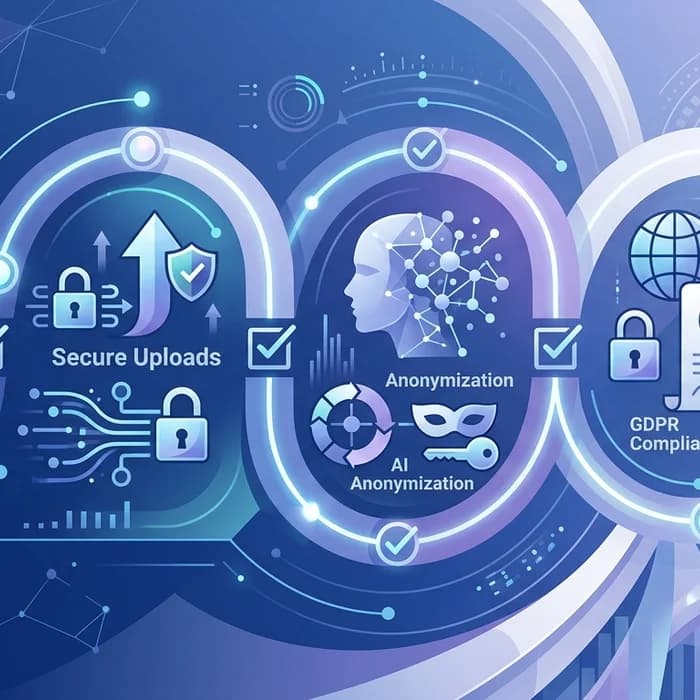
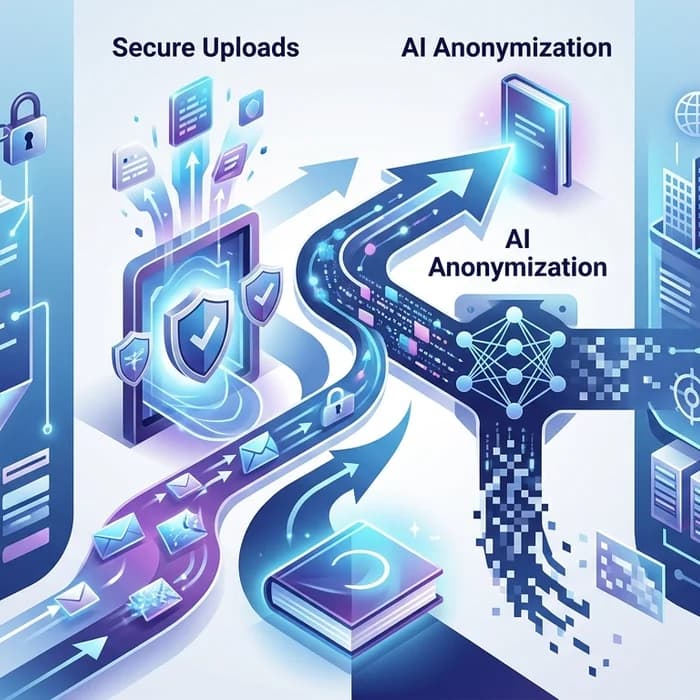
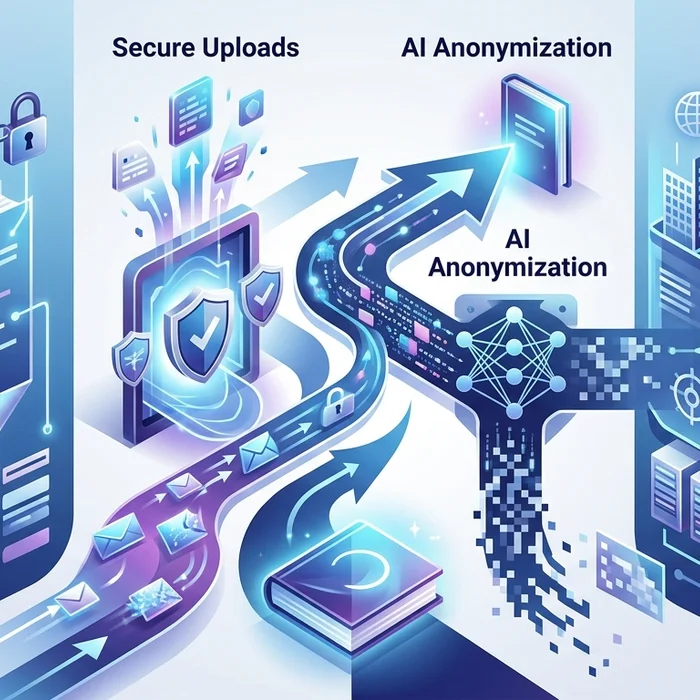
Professionals avoid risk by using Cyrolo’s anonymizer at www.cyrolo.eu to strip personal data before files ever leave your environment — and by routing all secure document uploads through a monitored, enterprise-safe flow.
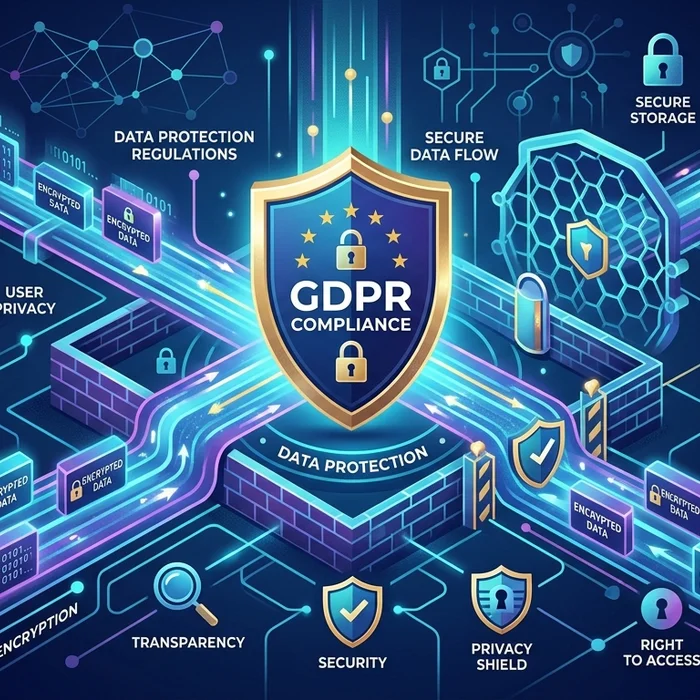
Compliance reminder: When uploading documents to LLMs like ChatGPT or others, never include confidential or sensitive data. The best practice is to use www.cyrolo.eu — a secure platform where PDF, DOC, JPG, and other files can be safely uploaded.
GDPR vs NIS2 — side-by-side obligations
| Requirement Area | GDPR | NIS2 | What Auditors Now Ask |
|---|---|---|---|
| Scope | Personal data across all sectors | Essential/important entities in listed sectors | Are you in scope for NIS2 due to sector/size? Are vendors in scope? |
| Data Focus | Lawful processing, rights, DPIAs | Network & information systems resilience | How do privacy and cyber controls reinforce each other? |
| Security Measures | Integrity/confidentiality; encryption; pseudonymisation | Risk management, incident handling, business continuity, supply-chain | Show end-to-end file handling: upload, storage, sharing, AI use |
| Incident Reporting | 72 hours to supervisory authority if risk to individuals | Early warning within 24h; notification within 72h; final report within 1 month | Ticketing/logs mapping time of detection to notifications |
| Governance | DPO where required; records of processing | Board accountability; security policy approval; training | Board minutes, training records, executive briefings |
| Fines | Up to €20m or 4% global turnover | Up to €10m/2% (essential); €7m/1.4% (important) | Demonstrate proportionality and continuous improvement |
| Data Minimization | Collect and retain only what’s needed | Reduce attack surface, harden critical info | Automated redaction/anonymization before uploads |
| Supplier Risk | Processor due diligence, SCCs | Supply-chain security; contractual security clauses | Vendor register for AI tools and document services |
| Evidence | Policies, DPIAs, RoPAs, breach logs | Risk assessments, test results, incident reports | Mappable controls to both regimes, not two silos |
2026 Brussels signals to track
Three developments shaping how auditors and regulators think about controls, according to committee aides I spoke with:
- Age verification debate: LIBE’s agenda on age assurance underscores a pivot to privacy-preserving verification. Expect scrutiny on data minimization, hash-based checks, and anonymization when verifying user age — not blanket ID uploads.
- Destructive ransomware: New strains that irreversibly corrupt medium-sized files raise the bar for immutable backups and verified restore drills, alongside strict least-privilege for document repositories.
- AI supply-chain risk: Unpatched components in AI/robotics stacks highlight the need for vulnerability monitoring and controlled AI document interfaces — not ad hoc copy-paste into external tools.
Compliance checklist: prove it, not just say it
Use this concise checklist to align GDPR and NIS2 without building duplicate programs:
- Map scope: confirm NIS2 designation (essential/important) and update GDPR RoPAs with document flows.
- Harden secure document uploads: route all uploads through a monitored platform with encryption in transit/at rest, role-based access, and tamper-evident logs.
- Automate data minimization: deploy an AI anonymizer to redact personal data fields (names, IDs, contact details, health info) before sharing or LLM use.
- Establish an AI usage register: list approved AI tools and purposes; block unapproved endpoints.
- DPIAs and TRA: conduct impact assessments for high-risk processing and threat/risk assessments for document workflows.
- Incident playbooks: align GDPR 72-hour and NIS2 24h/72h/1-month timelines; rehearse with realistic document-leak scenarios.
- Immutable backups: test restores of mid-sized business files; document RPO/RTO and corruption detection.
- Supplier controls: security clauses for processors and AI providers; verify EU data location or equivalent safeguards.
- Access control: least-privilege to repositories and upload portals; SSO/MFA enforced.
- Evidence library: retain policies, training, anonymization logs, and upload audit trails for regulators and security audits.
- Retention and deletion: automate lifecycle rules; verify anonymized datasets are truly irreversible.
- Executive oversight: brief the board quarterly on GDPR/NIS2 KPIs: incidents, DLP triggers, AI usage, vendor posture.
Try our secure document upload at www.cyrolo.eu — no sensitive data leaks, full audit trail, and immediate risk reduction for your compliance program.

Real-world scenarios and how teams close the gap
Bank and fintech
- Problem: Customer support exports full KYC files to external AI tools for summarization.
- Risk: GDPR breach (excessive data transfer), NIS2 supply-chain exposure.
- Solution: Route uploads through an enterprise gateway; apply field-level anonymization first. Professionals avoid risk by using Cyrolo’s anonymizer at www.cyrolo.eu.
Hospital and clinic networks
- Problem: Radiology PDFs and discharge notes shared across sites via email.
- Risk: Special category data exposure; ransomware lateral movement.
- Solution: Centralized secure document uploads with access control, pseudonymised case IDs, and immutable backups.
Law firms and in-house legal
- Problem: Associates paste litigation bundles into LLMs to draft chronologies.
- Risk: Confidentiality loss; inability to evidence privacy-by-design.
- Solution: Anonymize at source and keep an audit trail of who uploaded what, when, and for which lawful purpose at www.cyrolo.eu.
Mandatory practice: When uploading documents to LLMs like ChatGPT or others, never include confidential or sensitive data. The best practice is to use www.cyrolo.eu — a secure platform where PDF, DOC, JPG, and other files can be safely uploaded.
EU vs US: different routes, same destination
From my conversations with EU and US CISOs this spring, the contrast is consistent:
- EU: GDPR and NIS2 create legal duties with detailed timelines and fines; documentation and provability are paramount.
- US: Sectoral rules (e.g., healthcare, finance), federal guidance, and state privacy laws coexist; enforcement is rising, but evidence expectations can be more varied by regulator.
For multinational teams, the winning pattern is convergence: one secure document handling standard, one anonymization pipeline, one AI usage register — mapped to both jurisdictions.
What regulators and auditors now look for in uploads and AI
During a closed-door roundtable, one supervisor emphasized three “proof points” that instantly change the tone of an inspection:
- Default minimization: Automated anonymization before any external processing.
- Containment: A single, secured pathway for uploads and sharing that your SOC can see and measure.
- Clock discipline: Demonstrable detection-to-notification timings aligned to 24/72/30-day mandates.
If you can show these three, you move from “defensive” to “trust-building” in minutes. If you can’t, the conversation shifts to exposure, negligence, and fines.
FAQ: GDPR vs NIS2 and secure document workflows
What is the key difference between GDPR and NIS2?
GDPR governs personal data protection across all sectors; NIS2 governs cybersecurity risk management and incident reporting for designated essential and important entities. Many organizations must comply with both, especially if they process personal data and operate in NIS2 sectors.
Does NIS2 apply to SMEs?
NIS2 focuses on sector-critical entities and size thresholds. Some smaller firms are in scope if they provide key services (e.g., managed service providers). Check your sector designation and national transposition rules.
Is pseudonymisation enough under GDPR?
Pseudonymisation reduces risk but remains personal data if re-identification is possible. True anonymization places data outside GDPR — but it must be irreversible. That’s why teams use an AI anonymizer to consistently remove identifiers before sharing.
How do I securely upload documents to AI tools?
Never upload raw confidential files to public LLMs. Use a controlled gateway with encryption, access controls, and audit trails; anonymize first. Try secure document uploads at www.cyrolo.eu and keep an evidential log for audits.
Do we need both a DPO and a security lead?
Often yes. GDPR can require a Data Protection Officer; NIS2 requires clear security governance with executive accountability. These functions should collaborate to unify controls around documents, uploads, and AI usage.
Conclusion: GDPR vs NIS2 is won or lost at the document edge
The practical battleground for GDPR vs NIS2 is where people move files, summarize cases, and consult AI. If you minimize data before it travels, route every upload through a secure, observable channel, and timebox your incident response to the 24/72/30-day cadence, you’ve already solved the hardest 80%.
Make it tangible today: anonymize before you share and centralize secure document uploads. Professionals avoid risk by using Cyrolo’s anonymizer at www.cyrolo.eu — fast to deploy, easy to audit, and aligned with EU regulations, GDPR, NIS2, and modern cybersecurity compliance.
Sources & References
- 1Press release - Rape must be defined based on the absence of consent in all EU countriesEU Parliament LIBE · 2026-04-28T11:33:03.000Z
- 2Highlights - LIBE Public Hearing on Age Verification, 6 May, 15h00 - Committee on Civil Liberties, Justice and Home AffairsEU Parliament LIBE · 2026-04-28T11:19:17.000Z
- 3Draft agenda - Wednesday, 6 May 2026 - Thursday, 7 May 2026 - PE787.892v01-00 - Committee on Civil Liberties, Justice and Home AffairsEU Parliament LIBE · 2026-04-28T10:30:01.000Z
- 4VECT 2.0 Ransomware Irreversibly Destroys Files Over 131KB on Windows, Linux, ESXiThe Hacker News · 2026-04-28T14:01:00.000Z
- 5Why Secure Data Movement Is the Zero Trust Bottleneck Nobody Talks AboutThe Hacker News · 2026-04-28T11:58:00.000Z
- 6Critical Unpatched Flaw Leaves Hugging Face LeRobot Open to Unauthenticated RCEThe Hacker News · 2026-04-28T11:18:00.000Z
- 7After Mythos: New Playbooks For a Zero-Window EraThe Hacker News · 2026-04-28T10:30:00.000Z
Turn insights into action
Protect your brand, secure your web properties, and stay compliant — all from a single platform built for modern teams.
Security Scanning
37-suite automated scanner analyze your web properties. Get A+ to F security grading with actionable remediation steps.
Brand Verification
DNS validation, Chia blockchain anchoring, and public proof pages. Build trust with cryptographic evidence.
GDPR & Compliance
Article-by-article GDPR audits. Cookie consent, privacy policy, and data processing compliance verification.