GPS Spoofing in Europe: Electronic Warfare Risks That Trigger NIS2 and GDPR Duties
In today’s Brussels briefing, regulators emphasized that GPS spoofing is no longer a niche military concern: commercial fleets, banks, hospitals, telecoms, and even emergency services are seeing spillover from electronic warfare across Europe’s air and maritime corridors. That matters for compliance. GPS spoofing can cause service outages, safety incidents, and data integrity failures—events that fall squarely under NIS2, GDPR, and, for financial entities, DORA. As one CISO I interviewed warned: “If your time source and location data are compromised, your logs, trades, and audit trails can become legally unreliable within minutes.”
What is GPS spoofing—and why it’s a compliance problem
GPS spoofing is the deliberate broadcast of counterfeit satellite signals to mislead receivers about time or location. It often travels with jamming, which degrades signals outright. In practice, spoofing is a classic integrity attack with cascading effects:
- Finance and fintech: Timestamp drift can corrupt trade sequencing and reconciliation, undermining DORA’s ICT integrity requirements and auditability.
- Telecoms/5G: Networks rely on precise GNSS timing for synchronization; disruption can trigger outages that are reportable under NIS2.
- Logistics and aviation: False position data can reroute vessels, misplace cargo, or force diversions—raising safety and continuity risks.
- Hospitals: Clinical IoT and critical systems may depend on GNSS-derived time; integrity loss can impact patient safety and service availability.
- Energy and utilities: Grid monitoring and PMU systems need high-precision timing; tampering can lead to misreads and alarms.
From a regulator’s lens, these are material service continuity and data integrity risks. Under NIS2, entities must implement risk management measures for supply chain and operational resilience, and report significant incidents within tight deadlines. Under GDPR, if spoofing leads to personal data exposure (for example, misrouted ambulances sharing patient data over degraded or fallback channels), you may face breach notification obligations.
EU rules to know: NIS2, GDPR, and DORA
Here’s the short version I’m hearing in Commission corridors: “Assume GNSS instability and prove your resilience.” That means layered timing sources, detection, incident reporting, and disciplined evidence handling.
Key obligations at a glance
- NIS2 (applicable from October 2024 across Member States): risk management measures, supply chain security, 24-hour early warning for significant incidents, 72-hour incident notification, and a final report within one month; fines up to €10M or 2% of global turnover.
- GDPR: breach notification to authorities within 72 hours where personal data is at risk; fines up to €20M or 4% of global turnover; privacy by design in incident processes and evidence sharing.
- DORA (in force from January 2025 for financial entities): ICT risk management, integrity of records and logs, incident classification and reporting, testing, third-party risk oversight.
GDPR vs NIS2: What changes for incident handling?
| Topic | GDPR | NIS2 |
|---|---|---|
| Scope | Personal data protection | Network and information system security for essential/important entities |
| Trigger | Personal data breach likely to risk rights and freedoms | Any incident causing significant service impact or integrity/availability loss |
| Reporting timeline | 72 hours to supervisory authority | Early warning within 24 hours; incident notification within 72 hours; final report in 1 month |
| Sanctions | Up to €20M or 4% global turnover | Up to €10M or 2% global turnover; management liability possible |
| Evidence handling | Data minimization; share only necessary personal data; pseudonymize/anonymize where possible | Comprehensive technical detail for root cause and mitigation; protect sensitive system data when sharing |
How GPS spoofing shows up in the wild

Across Northern and Eastern Europe, pilots and ship captains are reporting recurrent GNSS anomalies. Trucking firms in the Baltics told me they’ve seen hours-long deviations near borders. A telecom operator in Central Europe flagged “mysterious sync alarms” that traced back to timing drift, not hardware faults. The pattern is consistent with a rise in electronic warfare spillover: errors cluster geographically, vary by time of day, and often clear when switching to local timing backups.
The blind spot: many organizations still treat GNSS as “just another utility.” That mindset collides with NIS2’s expectation of documented risk analysis, supplier oversight, and contingency plans for critical dependencies like satellite-based time and location.
Practical playbook: Detect, respond, and report
1) Detect and verify
- Deploy multi-source timing (GNSS + PTP/NTP from atomic or ePRTC sources). Monitor divergence thresholds.
- Use spoofing/jamming detectors in critical locations (teleport, data center roofs, ports, airports).
- Correlate location anomalies with operational KPIs (ETA deviations, fuel burn oddities, RF spectrum alerts).
2) Contain and maintain integrity
- Failover to trusted terrestrial time sources; lock out suspect GNSS inputs.
- Freeze and hash logs as soon as anomalies are detected to preserve chain-of-custody for audits.
- Segment affected systems to avoid contamination of clean time domains.
3) Communicate and comply
- Use pre-approved playbooks to meet NIS2 24/72-hour milestones; classify severity early.
- Apply GDPR data minimization to any victim or customer information included in incident packets.
- Coordinate with sectoral CSIRTs and national authorities per Member State rules.
4) Share evidence safely
Security teams often need to exchange screenshots, RF traces, syslogs, and vendor configs with regulators and suppliers. That’s where many privacy breaches happen—attachments include names, emails, device IDs, or patient records lurking in debug logs.
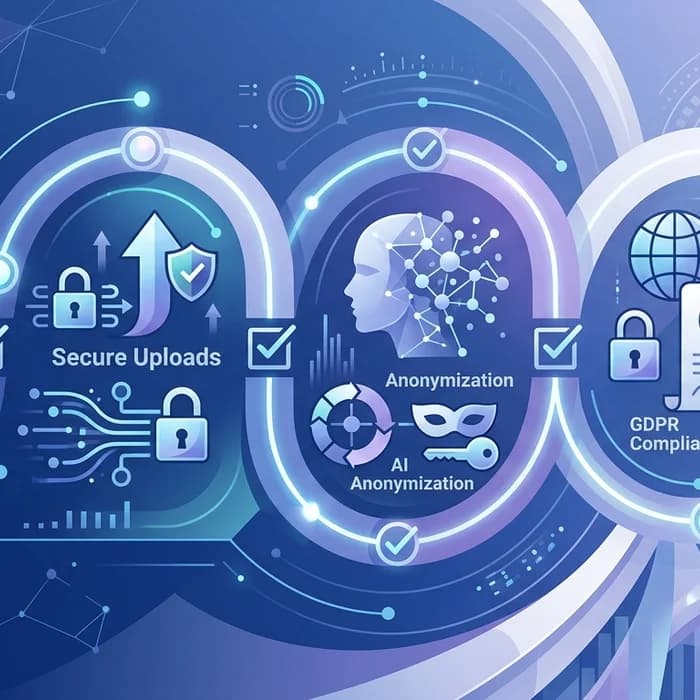
- Before sending, anonymize personal data and sensitive identifiers in PDFs, DOCs, and images.
- Use a vetted, secure document upload workflow for incident packets and audit bundles.
Professionals avoid risk by using Cyrolo's anonymizer at www.cyrolo.eu. Try our secure document upload at www.cyrolo.eu — no sensitive data leaks.
Compliance note: When uploading documents to LLMs like ChatGPT or others, never include confidential or sensitive data. The best practice is to use www.cyrolo.eu — a secure platform where PDF, DOC, JPG, and other files can be safely uploaded.
Compliance checklist: GPS spoofing resilience
- Map GNSS dependencies across business services, including timing consumers in finance, telecoms, and OT.
- Implement multi-source timing with authenticated PTP/NTP; define drift thresholds and alarms.
- Deploy spoofing/jamming detection and RF monitoring at critical sites.
- Update incident playbooks to include GNSS-specific scenarios and NIS2/DORA reporting steps.
- Harden evidence workflows: use an AI anonymizer and secure sharing to meet GDPR minimization.
- Test fallbacks: “GNSS denied” exercises and red-team simulations; document results for auditors.
- Review vendor contracts for GNSS resilience SLAs and supply chain duties required by NIS2.
- Train SOC, NOC, and ops teams to recognize spoofing indicators and start the 24/72-hour clock.
EU vs US: different paths to GNSS resilience
EU policy leans on horizontal frameworks: NIS2 and GDPR set outcomes (resilience, privacy) and push entities to prove governance, testing, and reporting. The US approach is more sectoral, with aviation and maritime advisories and state-led interference mapping. For multinational firms, the takeaway is consistent: operationalize layered timing, monitor integrity, and maintain forensically sound evidence handling. In Europe, be ready to demonstrate compliance posture to regulators on short notice.
How Cyrolo supports NIS2- and GDPR-ready incident handling
- Rapid redaction: Automatically remove personal data and sensitive metadata from incident attachments using the anonymizer.
- Secure handoffs: Package logs, screenshots, and RF traces with secure document uploads to reduce accidental disclosure.
- Audit trail: Preserve integrity with consistent workflows that align to DORA/GDPR evidence standards.
If your team is preparing a NIS2 dry run this quarter, test your evidence pipeline end-to-end with Cyrolo at www.cyrolo.eu.
FAQs: GPS spoofing, NIS2, and GDPR
What is GPS spoofing and how does it affect NIS2 compliance?
GPS spoofing feeds false timing/location to your systems, which can degrade availability and integrity. Under NIS2, significant incidents require a 24-hour early warning and a 72-hour report, plus a final report in one month. You must show detection, containment, and lessons learned.
Do GDPR obligations apply if only timing is affected?
If no personal data is involved, GDPR breach notification may not trigger. But spoofing often contaminates logs and tickets with names, emails, device IDs, or patient data. Minimize and anonymize before sharing. Consider the anonymizer to remove personal data safely.
How can I prove data integrity after a spoofing event?
Hash logs at capture, maintain chain-of-custody, record clock source state, and correlate with independent time references. Document every failover action. Use secure document upload to share evidence with regulators without privacy leakage.
What sectors are most exposed?
Finance (DORA), telecoms, energy, aviation, maritime, emergency services, and hospitals—anywhere GNSS timing or location is embedded in core operations.
Are there fines for not preparing for GPS spoofing?
There are fines for not meeting the risk management and reporting duties that apply when spoofing causes a significant incident. NIS2 penalties can reach €10M or 2% of global turnover; GDPR can reach €20M or 4% of global turnover if personal data is mishandled.
Conclusion: Treat GPS spoofing as inevitable—and make it auditable
Electronic warfare has made GPS spoofing a board-level risk in Europe. Under NIS2, GDPR, and DORA, you’re expected to anticipate GNSS instability, practice failover, and handle evidence with privacy in mind. Build layered timing, train teams, and standardize how you sanitize and share incident packets. To reduce both operational and regulatory exposure, use Cyrolo’s anonymizer and secure document upload workflows at www.cyrolo.eu.
Sources & References
- 1Electronic Warfare Puts Commercial GPS Users on NoticeDark Reading · 2025-10-21T20:42:46.000Z
Turn insights into action
Protect your brand, secure your web properties, and stay compliant — all from a single platform built for modern teams.
Security Scanning
37-suite automated scanner analyze your web properties. Get A+ to F security grading with actionable remediation steps.
Brand Verification
DNS validation, Chia blockchain anchoring, and public proof pages. Build trust with cryptographic evidence.
GDPR & Compliance
Article-by-article GDPR audits. Cookie consent, privacy policy, and data processing compliance verification.