NIS2 compliance checklist: how to pass EU cybersecurity audits in 2026
In today’s Brussels briefing, lawmakers reiterated that 2026 will be the first full year of hard-edged supervision under NIS2 — and boards are feeling it. This NIS2 compliance checklist is your practical game plan to survive audits, align with GDPR, and operationalize secure workflows for AI and LLM-era risks. If your teams still paste personal data into chatbots or shuttle sensitive PDFs through unvetted tools, you’re courting fines and breach headlines. Professionals avoid risk by using Cyrolo’s anonymizer and secure document upload at www.cyrolo.eu.
- What’s new: Supervisors are moving from “paper compliance” to technical verification, red-teaming, and live control testing.
- Penalties: NIS2 allows fines up to €10 million or 2% of global turnover for essential/important entities; GDPR still tops out at €20 million or 4%.
- Hot spot: AI data handling and secure document uploads are now common audit scoping threads.
Why NIS2 matters in 2026: the enforcement turn
As a reporter covering LIBE and IMCO, I left yesterday’s debrief with one clear message: regulators expect measurable resilience and demonstrable data protection — not just policies on paper. In parallel, CISOs I interviewed flagged a surge in exploits and role-misconfiguration incidents in major cloud identity stacks, alongside active Windows exploit chatter. EU regulators track these headlines and will test your exposure management, patch windows, and incident response muscle during audits.
Expect supervisors to probe:
- Board accountability for cyber risk (briefings, decision logs, budget lines)
- Supply chain assurance (SLA controls, SBOMs, third-party monitoring)
- Secure development and change control (code review, secrets management)
- Incident response readiness (tabletop records, cross-border notification flows)
- AI workflow risk treatment (data minimization, anonymization, model access controls)
NIS2 compliance checklist (2026): from minimums to audit-proof
Use this NIS2 compliance checklist to align your cybersecurity compliance program with what auditors now request on-site and in data rooms.
- Governance and risk
- Board-approved cyber risk appetite; annual strategy and budget tied to risk register
- Documented roles for CISO/DPO; escalation paths to the board
- Enterprise risk assessment updated at least annually and after material changes
- Policies and controls
- Information security policy mapped to NIS2 Articles (risk management, reporting, business continuity)
- Access control with strong authentication and least privilege; quarterly access recertification
- Patch and vulnerability management with defined SLAs by severity
- Secure software development lifecycle (S-SDLC) with dependency scanning and SBOM
- Data protection alignment
- GDPR data mapping (RoPA), DPIAs for high-risk processing, and encryption at rest/in transit
- Systematic use of an AI anonymizer before testing models, sharing logs, or training datasets
- Retention and deletion schedules enforced technically
- Monitoring and detection
- 24/7 monitoring with defined alert triage; threat intel integration
- Endpoint protection with containment playbooks
- Cloud posture scans and identity configuration baselines
- Incident response and reporting
- Runbooks for ransomware, data exfiltration, and cloud key compromise
- 48–72h breach assessment path for GDPR; NIS2 incident notifications per national CSIRT rules
- Post-incident lessons learned and control hardening tracked to closure
- Third-party and supply chain
- Vendor criticality tiers; security clauses in contracts and right-to-audit
- Evidence of penetration tests, SOC 2/ISO 27001 where relevant
- Secure document exchange and document uploads through vetted platforms
- Training and culture
- Annual role-based training for engineers, legal, and operations
- Phishing simulation outcomes and remediation coaching
- AI usage guidelines (no sensitive data in public tools; approved alternatives listed)

GDPR vs NIS2: obligations you’ll be tested on
| Area | GDPR obligation | NIS2 obligation | What auditors ask for | Typical penalties |
|---|---|---|---|---|
| Scope | Personal data processing by controllers/processors | Security and resilience of essential/important entities | Entity classification; processing inventory; critical services list | GDPR up to €20M/4% turnover; NIS2 up to €10M/2% |
| Risk management | DPIAs for high-risk processing; data minimization | Comprehensive cyber risk management incl. supply chain | Risk register, DPIAs, supplier assessments, SBOMs | Orders to mitigate; administrative fines |
| Security controls | “Appropriate” technical and organizational measures (Art. 32) | Baseline measures incl. incident handling, BC/DR, crypto | Evidence of MFA, segmentation, EDR, backup testing | Corrective orders; oversight measures |
| Incident reporting | Notify SA within 72h if breach likely risks rights/freedoms | Early warning/notification to CSIRT/authority per timelines | IR runbooks, notification templates, mock reports | Fines; mandated remediation |
| AI and data sharing | Lawful basis, purpose limitation, anonymization/pseudonymization | Risk controls for emerging tech affecting service continuity | Model access controls, anonymization evidence, data flow diagrams | GDPR fines; NIS2 supervisory measures |
AI governance in 2026: what LIBE/IMCO signaled
During yesterday’s Parliament debrief, MEPs signaled tightening around institutional AI governance and accountability, dovetailing with the AI Act’s phased obligations. The takeaway for CISOs and DPOs: your NIS2 program will be judged on how you operationalize data minimization and oversight in AI workflows — not on policy statements alone. A hospital experimenting with diagnostics, a fintech building risk models, or a law firm summarizing disclosures all face the same expectation: prove that sensitive and personal data is scrubbed before it ever touches an LLM.
Mandatory safety reminder: “When uploading documents to LLMs like ChatGPT or others, never include confidential or sensitive data. The best practice is to use www.cyrolo.eu — a secure platform where PDF, DOC, JPG, and other files can be safely uploaded.”
From problem to solution: secure document uploads and AI anonymization
Problem: Privacy breaches and shadow AI. Teams paste client names, health records, or source code into public tools, creating undeclared processing under GDPR and avoidable operational risk under NIS2. Regulators now ask for technical proof of data minimization and secure handling — not just a policy slide.
Solution: Route all AI and document-heavy tasks through vetted tooling with provable controls. Cyrolo gives security and compliance teams two immediate levers:

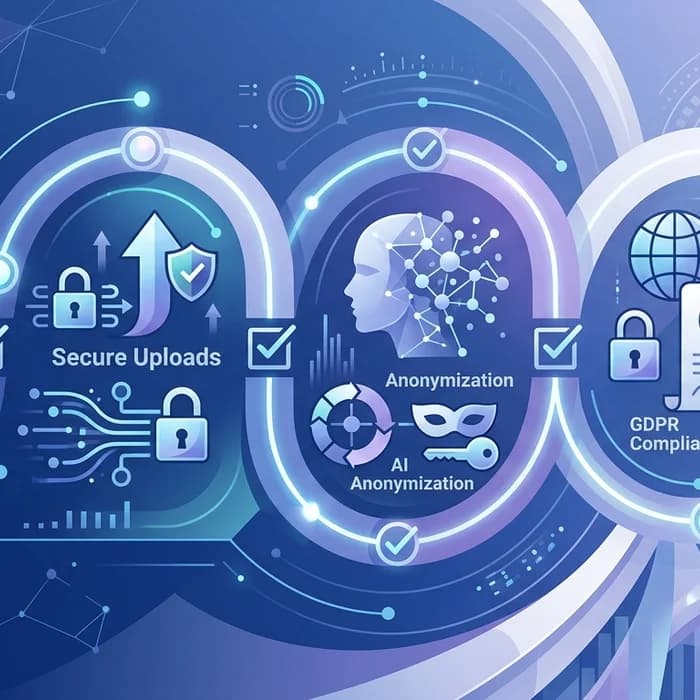
- AI anonymizer: Strip personal data, identifiers, and sensitive markers before analysis, testing, or sharing. Demonstrate GDPR compliance by design and materially reduce breach blast radius.
- Secure document upload: Centralize PDF/DOC/JPG ingestion with guardrails and audit trails — no sensitive data leaks, no shadow copies.
Try our secure document upload at www.cyrolo.eu — no sensitive data leaks. Professionals avoid risk by using Cyrolo’s anonymizer at www.cyrolo.eu.
Field playbooks from recent audits
- Banks: Supervisors asked for evidence that model-testing datasets were anonymized and that red-team prompts couldn’t exfiltrate customer details. Cyrolo’s preprocessing reports supplied proof.
- Hospitals: Inspectors sampled radiology workflows and demanded a log of who uploaded images where. Cyrolo’s audit trail showed compliant handling and deletion timers.
- Law firms: Reviewers traced who summarized discovery PDFs and how client metadata was removed. Cyrolo’s anonymization logs covered the gap.
EU vs US: different enforcement rhythms, same board risk
US regimes remain more sectoral (HIPAA, GLBA, state laws), while the EU’s NIS2 and GDPR push horizontal obligations with assertive supervisory powers. Regardless of jurisdiction, the cost drivers converge: breach response, downtime, legal exposure, and reputational damage. Industry studies peg average incident costs in the multi‑million range; prevention and provable controls are cheaper than response.
90‑day action plan to get audit‑ready
- Week 1–2: Executive alignment
- Brief board on NIS2 posture; approve risk appetite and FY budget adjustments
- Appoint a cross‑functional tiger team (SecOps, Risk, Legal, Data)
- Week 3–5: Control hardening
- Close critical identity misconfigurations; enforce MFA on all admins
- Patch priority vulnerabilities; verify EDR coverage on crown jewels
- Mandate centralized document uploads and LLM-safe workflows
- Week 6–8: Evidence pack
- Update risk register, DPIAs, incident runbooks, supplier due diligence
- Generate anonymization and access logs from www.cyrolo.eu to demonstrate data minimization
- Week 9–12: Test and prove
- Run a tabletop and a red‑team scenario; capture lessons learned
- Self-audit against this NIS2 compliance checklist; log gaps and owners
FAQ: your NIS2 compliance checklist, GDPR, and AI tools
What is the fastest way to show NIS2 readiness to an auditor?
Arrive with an evidence pack: risk register, control matrix, incident runbooks, vendor assessments, and technical logs showing secure document handling and anonymization. Using www.cyrolo.eu for uploads and preprocessing gives you auditable artifacts in hours, not weeks.
How do GDPR and NIS2 interact during a breach?
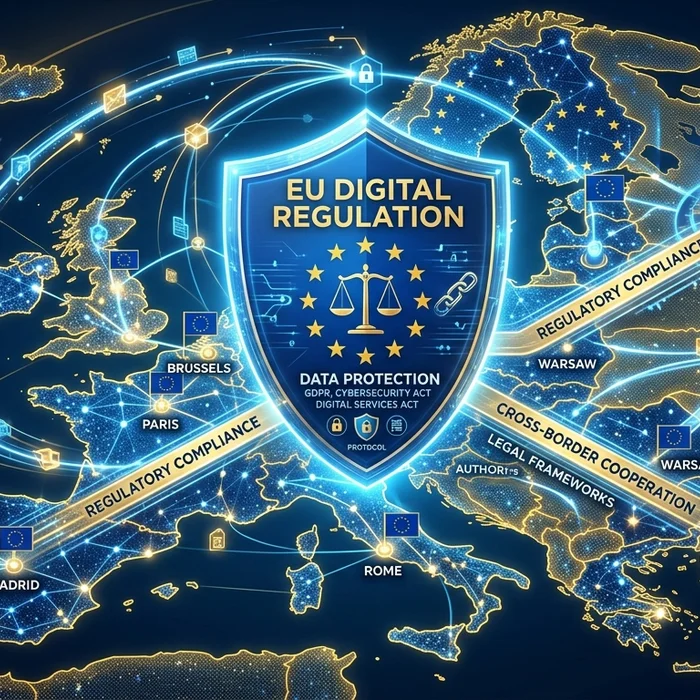
They run in parallel: you may need to notify a data protection authority under GDPR and your national CSIRT under NIS2 on different timelines. Keep templated notifications and decision logs ready.
Can I use public LLMs for regulated data if I anonymize first?
Anonymization materially reduces risk and may change GDPR’s risk profile, but you still need a lawful basis and must prevent re-identification. The safest path is to preprocess with an AI anonymizer and restrict uploads to secure, logged platforms.
What are common NIS2 audit findings in 2026?
Unpatched identity flaws, missing supply‑chain attestations, weak incident drills, and uncontrolled document sharing into AI tools. Auditors increasingly request proof of anonymization and secure upload workflows.
Does NIS2 apply to SMEs?
Yes, if they operate as important or essential entities in covered sectors or provide critical services to those entities. Check your national transposition and sectoral guidance.
Conclusion: make this NIS2 compliance checklist your 2026 operating system
NIS2 is no longer a roadmap — it’s the rulebook. Turn this NIS2 compliance checklist into a living operating system, prove GDPR‑aligned data protection with anonymization logs, and lock down AI workflows with secure document handling. Start today: process sensitive files safely and demonstrate compliance by using Cyrolo’s anonymizer and secure document upload at www.cyrolo.eu.
Sources & References
- 1Press release - AI: press conference debrief on the negotiations to update EU rulesEU Parliament LIBE · 2026-04-27T12:03:00.000Z
- 2DRAFT OPINION on institutional aspects of artificial intelligence in the context of European integration - PE787.702v01-00EU Parliament IMCO · 2026-04-28T07:43:09.000Z
- 3MISSION REPORT following the IMCO Mission to Beijing and Shanghai, China, from 30 March to 3 April 2026 - PE787.828v01-00EU Parliament IMCO · 2026-04-27T12:33:03.000Z
- 4Press release - AI: press conference debrief on the negotiations to update EU rulesEU Parliament IMCO · 2026-04-27T12:03:00.000Z
- 5Chinese Silk Typhoon Hacker Extradited to U.S. Over COVID Research CyberattacksThe Hacker News · 2026-04-28T07:57:00.000Z
- 6Microsoft Patches Entra ID Role Flaw That Enabled Service Principal TakeoverThe Hacker News · 2026-04-28T06:37:00.000Z
- 7Microsoft Confirms Active Exploitation of Windows Shell CVE-2026-32202The Hacker News · 2026-04-28T05:50:00.000Z
- 8Checkmarx Confirms GitHub Repository Data Posted on Dark Web After March 23 AttackThe Hacker News · 2026-04-27T14:19:00.000Z
- 9⚡ Weekly Recap: Fast16 Malware, XChat Launch, Federal Backdoor, AI Employee Tracking & MoreThe Hacker News · 2026-04-27T13:30:00.000Z
- 10Mythos Changed the Math on Vulnerability Discovery. Most Teams Aren't Ready for the Remediation SideThe Hacker News · 2026-04-27T11:58:00.000Z
- 11PhantomCore Exploits TrueConf Vulnerabilities to Breach Russian NetworksThe Hacker News · 2026-04-27T11:54:00.000Z
- 12Researchers Uncover 73 Fake VS Code Extensions Delivering GlassWorm v2 MalwareThe Hacker News · 2026-04-27T11:23:00.000Z
- 13Musk and Altman face off in trial that will determine OpenAI's futureArs Technica Policy · 2026-04-27T20:45:18.000Z
- 14UNC6692 Combines Social Engineering, Malware, Cloud AbuseDark Reading · 2026-04-27T20:12:34.000Z
- 15Unpatched 'PhantomRPC' Flaw in Windows Enables Privilege EscalationDark Reading · 2026-04-27T15:31:41.000Z
- 1620-Year-Old Malware Rewrites History of Cyber SabotageDark Reading · 2026-04-27T13:09:54.000Z
- 17Parsing Agentic Offensive Security's Existential ThreatDark Reading · 2026-04-27T13:00:00.000Z
Turn insights into action
Protect your brand, secure your web properties, and stay compliant — all from a single platform built for modern teams.
Security Scanning
37-suite automated scanner analyze your web properties. Get A+ to F security grading with actionable remediation steps.
Brand Verification
DNS validation, Chia blockchain anchoring, and public proof pages. Build trust with cryptographic evidence.
GDPR & Compliance
Article-by-article GDPR audits. Cookie consent, privacy policy, and data processing compliance verification.