NIS2 compliance: 2026 survival guide for EU CISOs, DPOs, and legal teams
In today’s Brussels briefing, regulators signaled a simple truth: NIS2 compliance is no longer a paper exercise. It’s a board-level, evidence-backed obligation that collides with fast-moving threat campaigns, tightening EU regulations, and the day-to-day realities of asset patching and third‑party risk. From backdoors that outlive security updates to phishing aimed at strategic software, the message is clear—your governance, detection, and response capabilities must be provable, measurable, and audit‑ready.
What NIS2 compliance means in 2026
NIS2 expands and hardens the EU’s cybersecurity baseline. It widens sectoral scope (energy, transport, health, digital infrastructure, banking, public administration, and more), introduces tougher incident reporting timelines, and elevates management accountability. In interviews this week, one CISO told me, “NIS2 is where our SOC metrics meet our board minutes.” That’s the ethos: security outcomes, not security theater.
- Scope and sectors: Essential and important entities, including many mid‑market firms that previously sat outside strict supervision.
- Governance: Management bodies must approve and oversee cybersecurity risk management measures—and can be sanctioned for failures.
- Incident reporting: Early warning rapidly (within 24 hours) and full reporting within 72 hours; follow‑ups are expected.
- Supply chain risk: Evidence your third‑party due diligence, from MSPs to cloud and software vendors, including secure development and updates.
- Fines: Up to the higher of 10 million EUR or 2% of global turnover, depending on the Member State regime. GDPR fines (up to 4% of global turnover) may stack if personal data is involved.
Headlines to boardroom: threat reality check for NIS2 audits
This week’s cases echo the very weaknesses regulators now scrutinize:
- Backdoors persisting through patches: A federal network device compromise reportedly survived standard updates—an auditor’s red flag for inadequate validation of remediation and weak post‑incident containment.
- High‑yield phishing against critical staff: Targeted lures at scientific and defense‑adjacent communities reveal how business email compromise and credential theft cascade into supplier risk.
- Hardware trust and sourcing rules: Policy shifts on foreign‑made routers and hotspots illustrate a growing expectation for verifiable supply‑chain security and asset provenance.
- AI‑enabled misinformation: From fake sightings to synthetic documents, AI misuse complicates forensics and legal discovery—expect questions about content validation, chain of custody, and data minimization.
In short, if your security program assumes “patch and forget,” or your incident workflow stops at “ticket closed,” you’re misaligned with today’s supervisory expectations under EU regulations.
GDPR vs NIS2: how obligations compare
| Dimension | GDPR | NIS2 |
|---|---|---|
| Primary objective | Protect personal data and data subject rights | Ensure cybersecurity and service continuity for essential/important entities |
| Scope | Controllers and processors of personal data | Sector-based entities (essential/important) with operational impact |
| Incident reporting | Notify DPA of personal data breaches within 72 hours | Early warning within 24 hours; incident notification within 72 hours; final report after resolution |
| Management liability | Organizational accountability | Explicit management oversight and possible sanctions for non‑compliance |
| Supply chain | Processor due diligence and DPAs | Mandatory third‑party risk management and secure development/updates |
| Controls emphasis | Lawful basis, minimization, data subject rights, DPIAs | Risk management, detection/response, logging, encryption, business continuity |
| Fines | Up to 20M EUR or 4% of global turnover | Up to 10M EUR or 2% of global turnover (Member State variants) |
Data protection in practice: anonymization and secure document uploads
Two controls consistently close audit gaps while reducing breach impact: rigorous anonymization and safe document handling. I keep seeing the same failure pattern in breach post‑mortems: well‑meaning staff paste sensitive excerpts into online tools or upload raw exhibits for “quick analysis.” Minutes saved; months of regulatory cleanup created.
- Before sharing case files, contracts, or health records, fully strip or mask personal data—names, IDs, locations, free‑text notes, and metadata.
- Route files through a secured handling layer for malware scanning, content policy checks, and encryption at rest and in transit.
- Log who accessed what, when, and why; retain evidence for regulator and court needs.
Professionals avoid risk by using Cyrolo’s anonymizer at www.cyrolo.eu. And for privacy‑preserving reviews, try our secure document upload at www.cyrolo.eu — no sensitive data leaks.
When uploading documents to LLMs like ChatGPT or others, never include confidential or sensitive data. The best practice is to use www.cyrolo.eu — a secure platform where PDF, DOC, JPG, and other files can be safely uploaded.
Real‑world scenarios I’m seeing
- Banking and fintech: A payments processor receives a regulator’s RFI. Instead of forwarding raw CSVs with PAN fragments and names, the team performs anonymization and tokenization first, then shares only what’s necessary—shrinking breach radius and GDPR exposure.
- Hospitals and clinics: Imaging files and referral letters often leak more personal data than intended. A secured document upload pipeline with OCR redaction and audit trails satisfies both NIS2 availability goals and GDPR’s minimization principle.
- Law firms and e‑discovery: Litigation bundles pass through many hands. Centralized redaction and controlled sharing cut the risk of privilege waivers and privacy breaches during cross‑border transfers.
NIS2 compliance checklist for your next audit
- Governance and accountability
- Board‑approved cybersecurity policy with defined risk appetite
- Named accountable executives; training for management on duties
- Risk management and controls
- Asset inventory, criticality ranking, and software bill of materials (SBOM)
- Hardening and patching SLAs; compensating controls for unpatchable systems
- Multi‑factor authentication and least privilege across admins and vendors
- Network segmentation and egress filtering for appliance‑class devices
- Detection and response
- Centralized logging and retention aligned to legal holds
- Runbooks for early warning (24h), 72‑hour notification, and final reports
- Post‑incident validation that eradication actually worked
- Supply chain and procurement
- Vendor risk assessments and contractual security clauses
- Evidence of secure development, update integrity, and device provenance
- Privacy‑by‑design data handling
- Data minimization, DPIAs where needed, and systematic anonymization
- Safe, logged document uploads for internal and external collaboration
- People and culture
- Targeted phishing training for high‑risk roles (IT, finance, research)
- Exercises that combine cyber, legal, and communications teams
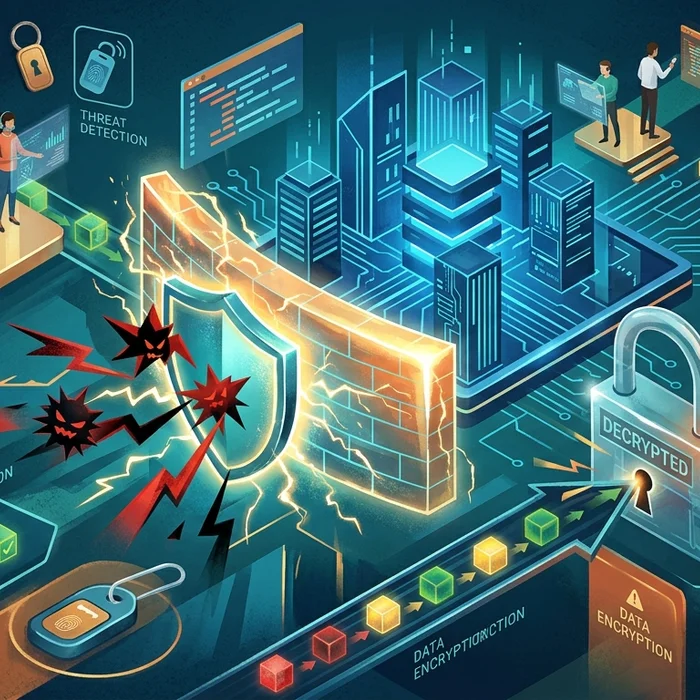
NIS2 compliance: 30–60–90 day action plan
- Days 1–30
- Confirm in‑scope entities and accountable management
- Baseline asset inventory and high‑risk vendor list
- Gap‑assess incident reporting workflow and on‑call coverage
- Days 31–60
- Close top five control gaps (e.g., MFA for admins, log centralization, segmentation)
- Implement secured file handling with automated redaction and audit trails
- Run a tabletop: simulate a persistent device backdoor plus supplier notification
- Days 61–90
- Codify reporting templates; rehearse 24h/72h notifications
- Sign vendor security addenda; request SBOM and update integrity proofs
- Brief the board on risk posture and residual exposures; record decisions
Why today’s threats change your evidence standard
A backdoor that survives a patch forces a mindset shift: compliance isn’t about having a change ticket; it’s about demonstrating that the change neutralized the adversary. Similarly, phishing against scientific staff is no longer “just awareness”—it’s access control, anomaly detection, and supplier notification rolled into one. And with AI accelerating content fabrication, your legal and PR teams need faster, forensically sound ways to triage documents without exposing personal data.
That’s why teams are standardizing pre‑sharing steps: sanitize, upload via a secure platform, log, and only then collaborate. It’s faster than cleanup after a privacy breach—and far cheaper than fines or contract penalties.
How Cyrolo helps close NIS2 and GDPR gaps
- Pre‑processing guardrail: Automated redaction and AI anonymizer workflows strip personal data before documents ever leave your boundary.
- Controlled collaboration: Use secure document uploads to share with counsel, auditors, or vendors—complete with logs that stand up in regulatory reviews.
- Reduced blast radius: If an incident occurs, minimized data equals minimized harm, shorter notifications, and clearer regulator communications.
Try it today: Professionals across finance, healthcare, and legal avoid risk by using Cyrolo at www.cyrolo.eu.
FAQ: your most‑searched questions on NIS2 compliance
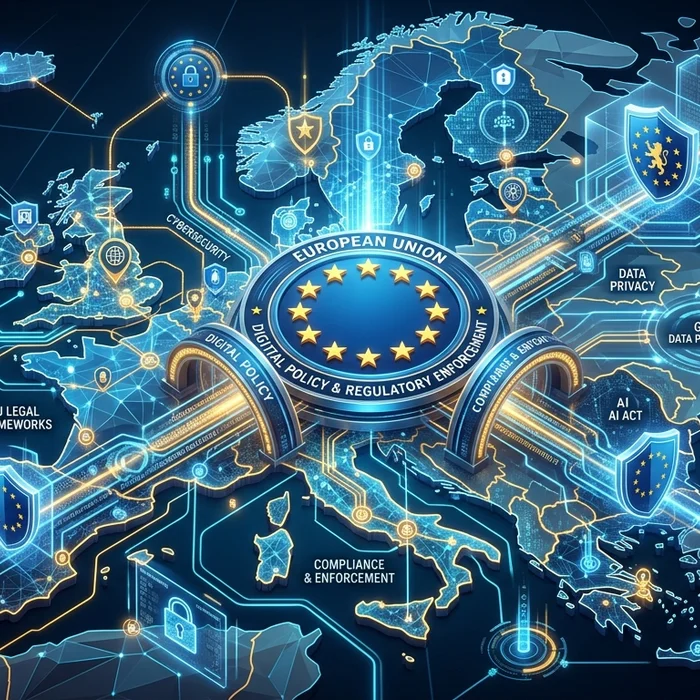
Who must comply with NIS2 and what are the penalties?
Essential and important entities across key sectors (energy, transport, health, banking, digital infrastructure, public administration, and more) are in scope. Penalties can reach the higher of 10 million EUR or 2% of global turnover, depending on national transposition. Management can face sanctions for oversight failures.
How does NIS2 interact with GDPR?
They are complementary. A cyber incident under NIS2 may also be a personal data breach under GDPR. That means dual obligations: service continuity and cybersecurity controls (NIS2) plus data protection principles and breach notifications (GDPR). Expect parallel reporting lines to sectoral authorities and data protection authorities.
What should be in my 24‑hour early warning versus the 72‑hour report?
The early warning flags the incident’s nature and suspected cross‑border impact. The 72‑hour report adds scope, indicators of compromise, mitigations, and initial root cause. Final reporting documents eradication, lessons learned, and measures to prevent recurrence.
Can my team upload case files to ChatGPT or other LLMs for analysis?
Do not upload confidential or personal data to public LLMs. Use a secure platform with anonymization, access control, and audit trails instead. When uploading documents to LLMs like ChatGPT or others, never include confidential or sensitive data. The best practice is to use www.cyrolo.eu — a secure platform where PDF, DOC, JPG, and other files can be safely uploaded.
What evidence do auditors expect for supply‑chain risk management?
Documented vendor assessments, contract clauses on security and updates, SBOMs, provenance for network equipment, and proof you can revoke access fast. If you rely on a managed service provider, show how you monitor their controls and how you’ll operate during their outage.
Conclusion: NIS2 compliance is operational resilience, not paperwork
NIS2 compliance in 2026 means proving that your organization can withstand—and recover from—real adversaries, not just pass a checklist. That proof now includes how you handle data, from redaction to secure document uploads, and whether your remediation truly closes the door. Turn today’s headlines into tomorrow’s audit wins by minimizing sensitive data exposure with anonymization, locking down collaboration flows, and practicing your 24/72‑hour playbook. When the regulator calls, you’ll have evidence, not excuses.
Sources & References
- 1Press release - Rule of law in the EU: press conference on Tuesday 28 April at 15.30 CESTEU Parliament LIBE · 2026-04-24T15:23:02.000Z
- 2Press release - Consent-based definition of rape in EU law: press conference Tuesday 28 April 17:00 CESTEU Parliament LIBE · 2026-04-24T15:13:00.000Z
- 3FIRESTARTER Backdoor Hit Federal Cisco Firepower Device, Survives Security PatchesThe Hacker News · 2026-04-24T17:06:00.000Z
- 4NASA Employees Duped in Chinese Phishing Scheme Targeting U.S. Defense SoftwareThe Hacker News · 2026-04-24T14:13:00.000Z
- 5FCC: Router ban includes portable hotspots, but not phones with hotspot featuresArs Technica Policy · 2026-04-24T19:30:14.000Z
- 6Soldier won $410K in Polymarket bets on timing of Maduro capture, US allegesArs Technica Policy · 2026-04-24T17:41:43.000Z
- 7Man faces 5 years in prison for using AI to fake sighting of runaway wolfArs Technica Policy · 2026-04-24T15:05:23.000Z
- 8US Busts Myanmar Ring Targeting US Citizens in Financial FraudDark Reading · 2026-04-24T16:48:04.000Z
- 9Glasswing Secured the Code. The Rest of Your Stack Is Still on YouDark Reading · 2026-04-24T15:04:29.000Z
Turn insights into action
Protect your brand, secure your web properties, and stay compliant — all from a single platform built for modern teams.
Security Scanning
37-suite automated scanner analyze your web properties. Get A+ to F security grading with actionable remediation steps.
Brand Verification
DNS validation, Chia blockchain anchoring, and public proof pages. Build trust with cryptographic evidence.
GDPR & Compliance
Article-by-article GDPR audits. Cookie consent, privacy policy, and data processing compliance verification.