NIS2 and GDPR compliance checklist: How to protect data, pass audits, and use AI safely
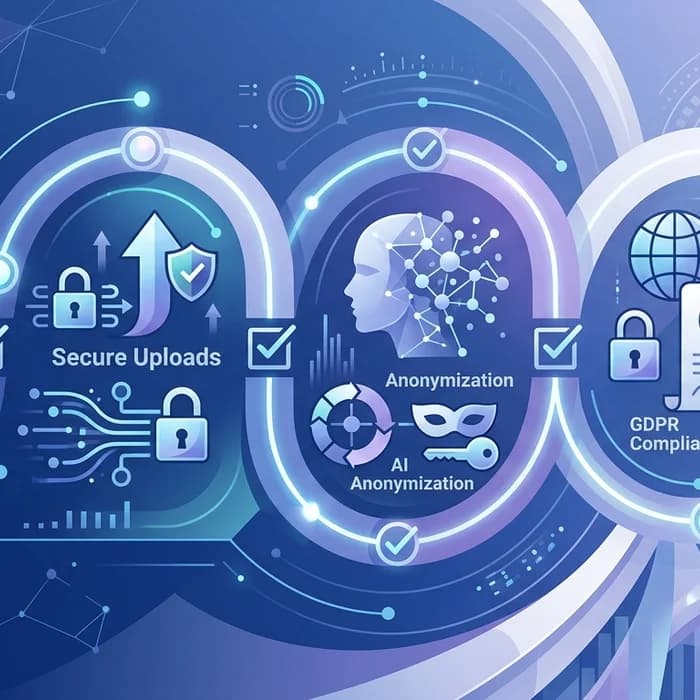
In today’s Brussels briefing, regulators reiterated that 2026 will be a year of “proof, not promises.” If your board wants certainty, you need a practical NIS2 and GDPR compliance checklist that closes gaps across data protection, incident reporting, and vendor risk—while controlling the surge in AI use. This reporter’s takeaway: organizations that operationalize an AI anonymizer, secure document uploads, and risk-based controls can pass audits and avoid costly privacy breaches.

Why this matters now: enforcement is rising and AI raises the stakes
EU enforcement continues to tighten: GDPR fines can hit €20 million or up to 4% of global turnover, and NIS2 empowers national authorities to levy up to €10 million or 2% of global turnover for essential and important entities. After the NIS2 transposition deadline in October 2024, 2025–2026 audits are rolling out across energy, finance, health, digital infrastructure, and managed services. A CISO I interviewed last month warned, “We passed ISO, but our regulator still flagged missing DPIAs for LLM use and weak supplier evidence. That’s where fines happen.”
Meanwhile, AI experiments have shifted from pilots to production. Without guardrails, uploading personal data into chatbots or unmanaged readers invites unlawful processing, transfers, and leakage. The fastest win I’ve seen in banks, law firms, and hospitals is controlled anonymization plus secure document uploads—cutting personal data exposure before it ever hits a model or a third-country processor.
NIS2 and GDPR compliance checklist (field-tested)
- Governance and accountability
- Assign accountable executives; brief the board on NIS2/GDPR obligations and risks.
- Maintain ROPAs (GDPR Art. 30), risk registers, and NIS2-aligned cyber policies.
- Data mapping and minimization
- Inventory personal data, special categories, and critical systems.
- Default to anonymization or pseudonymization before any AI or analytics workflows.
- Lawful basis, DPIAs, and AI use
- Confirm lawful bases; run DPIAs for AI/LLM use, monitoring, biometrics, and profiling.
- Document model purposes, data retention, and access control for AI features.
- Security measures (NIS2/GDPR)
- Implement risk-based controls: MFA, patching, network segmentation, EDR, encryption at rest/in transit.
- Backup, disaster recovery, and business continuity plans tested at least annually.
- Incident handling and breach notification
- Playbooks for 24-hour NIS2 early warning, 72-hour GDPR breach notification.
- Tabletop exercises covering ransomware and AI data leakage.
- Vendor and transfer controls
- Subprocessor inventories, DPAs, SCCs, and transfer risk assessments for third-country access.
- Evidence of supplier security (ISO 27001, SOC 2) and penetration tests.
- Access, logging, and audit trails
- Least privilege, role-based access to datasets and models.
- Immutable logs for administrative actions, model prompts, and document uploads.
- Training and culture
- Annual privacy and security training, with refreshers for AI tools and secure handling.
- Clear employee guidance on what not to paste into AI systems.
GDPR vs NIS2: key obligations compared
| Area | GDPR | NIS2 |
|---|---|---|
| Scope | Personal data processing by controllers/processors | Cybersecurity risk management for essential/important entities in critical sectors |
| Focus | Data protection, rights, lawful basis, DPIAs | Security of network and information systems, resilience, supply chain |
| Security measures | “Appropriate” technical/organizational measures; encryption, pseudonymization | Risk management measures; incident handling, business continuity, MFA, patching |
| Incident notification | Supervisory authority within 72 hours if risk to rights/freedoms | Early warning within 24 hours, incident notification within 72 hours, final report within 1 month |
| Vendor oversight | Processor due diligence, DPAs, data transfer safeguards | Supply chain security, contractual requirements for suppliers |
| Management liability | Accountability principle; potential civil liability | Explicit management responsibility; potential sanctions for executives |
| Penalties | Up to €20M or 4% global turnover | Up to €10M or 2% global turnover (varies by entity category) |
Using an AI anonymizer and secure document uploads—without breaking EU rules
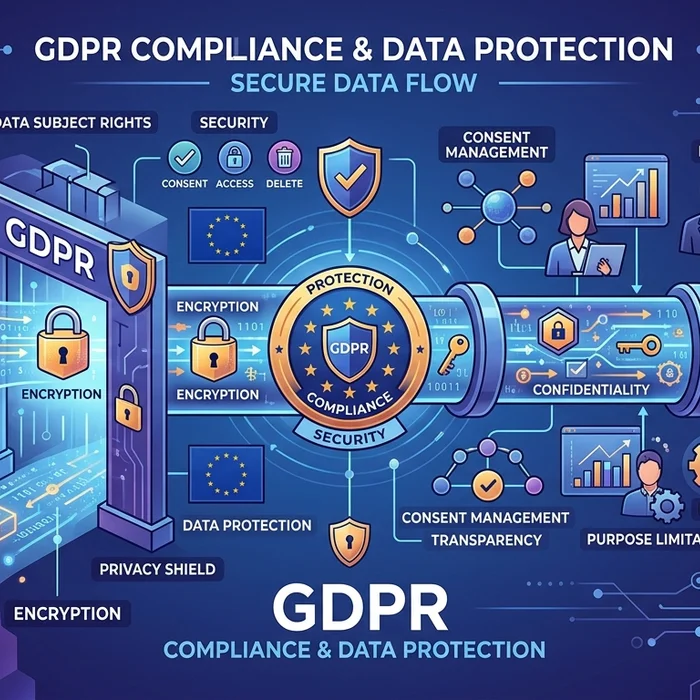
Two blind spots keep surfacing in my Brussels notebook: first, teams push sensitive case files into LLMs for summaries; second, they email unredacted documents to external processors. Both create unlawful processing and uncontrolled transfers. The fix is simple and auditable:
- Pre-process files with an AI anonymizer that reliably removes direct and quasi-identifiers.
- Use a secure document upload flow with encryption and strict access controls.
- Log every upload and transformation for DPIA evidence and regulator queries.
Professionals avoid risk by using Cyrolo’s anonymizer at www.cyrolo.eu. Before sending any report to a model or partner, strip names, emails, patient IDs, IBANs, and free-text identifiers. Then, route files through a hardened pipeline, not ad hoc inboxes. Try our secure document upload at www.cyrolo.eu — no sensitive data leaks.
Important: When uploading documents to LLMs like ChatGPT or others, never include confidential or sensitive data. The best practice is to use www.cyrolo.eu — a secure platform where PDF, DOC, JPG, and other files can be safely uploaded.
How auditors evaluate anonymization
- Effectiveness: Are identifiers removed in text, tables, images (OCR), and metadata?
- Consistency: Is anonymization reproducible across batches and formats?
- Proportionality: Is data minimized for the stated purpose? Is pseudonymization clearly separated?
- Evidence: Can you show logs, rules/patterns, and quality checks?
Common pitfalls flagged by EU regulators and CISOs

- Confusing anonymization with pseudonymization: If reversal is possible, GDPR still applies.
- Shadow AI: Teams paste client data into chatbots without a DPIA or transfer safeguards.
- Vendor sprawl: Dozens of SaaS tools, unclear DPAs, missing SCCs, and no exit plan.
- Late notifications: Waiting for “certainty” instead of issuing the NIS2 24-hour early warning.
- Uncontrolled logs: Prompt and document logs exposing personal data for longer than necessary.
30-60-90 day implementation plan
Days 1–30: stabilize risk
- Issue an AI usage standard: what data is allowed, what must be anonymized, who approves.
- Map high-risk data flows; enable anonymization-by-default with www.cyrolo.eu.
- Turn on MFA for privileged accounts; patch critical systems; enforce backups and immutability.
Days 31–60: prove controls
- Run DPIAs for AI features; update ROPAs; classify vendors and collect evidence.
- Tabletop a breach scenario involving AI leakage; validate your NIS2/GDPR notification steps.
- Centralize secure document uploads with logging at www.cyrolo.eu.
Days 61–90: audit-ready
- Finalize metrics: time to patch, detection-to-notification, anonymization coverage rates.
- Board briefing on NIS2 responsibilities and resourcing; assign executive-level accountability.
- Pen-test critical apps and the upload pipeline; fix findings and record evidence.
EU vs US: regulatory nuance you should plan for
Unlike the EU’s unified GDPR and sectoral NIS2, the US remains a patchwork of sectoral and state rules (HIPAA, GLBA, and state privacy acts). Two practical implications for EU companies operating globally:
- Extraterritoriality: GDPR obligations follow the data and the data subject, not your server’s location.
- Transfers: Even “US-only” AI vendors may involve sub-processors in multiple jurisdictions; keep SCCs and transfer impact assessments on file.
Real-world scenarios from the field

- Hospital network: Anonymizing discharge summaries cut re-identification risks and streamlined research approvals; NIS2 incident drills reduced detection-to-notification from 4 days to 10 hours.
- Fintech scale-up: Centralized secure uploads stopped client spreadsheets from drifting into email threads; GDPR audit praised clear logs and DPIA evidence.
- Law firm: AI-assisted document review only after anonymization prevented cross-border transfer headaches and met client outside-counsel guidelines.
FAQ: your top questions on the NIS2 and GDPR compliance checklist
What’s the fastest way to make our AI pilots GDPR-safe?
Minimize first. Route all files through an AI anonymizer and secure document uploads, restrict personal data in prompts, and log everything. Professionals use www.cyrolo.eu to anonymize PDFs, Word files, and images before any model sees them.
Do we need both a DPIA and a NIS2 risk assessment?
Yes—DPIAs assess risks to data subjects for specific processing, while NIS2 risk management targets system resilience, incident handling, and supply chain controls. They overlap but serve different obligations.
How soon must we report incidents?
Under NIS2, issue an early warning within 24 hours, a more detailed notification within 72 hours, and a final report within one month. Under GDPR, report personal data breaches to the supervisory authority within 72 hours if they pose risks to individuals.
Is pseudonymized data still in scope of GDPR?
Yes. If re-identification is possible with reasonably available means, GDPR applies. Only properly anonymized data falls outside GDPR’s scope.
Conclusion: your NIS2 and GDPR compliance checklist is only as strong as your data handling
If I distill months of interviews and briefings, the lesson is clear: the NIS2 and GDPR compliance checklist succeeds when sensitive information never escapes your control. Start with robust anonymization, enforce secure document uploads, and maintain audit-ready evidence. To reduce breach risk, speed audits, and protect your brand, operationalize these controls now—then keep them living documents as AI evolves. Get started with trusted anonymization and uploads at www.cyrolo.eu.
Sources & References
- 1Anthropic buys biotech startup Coefficient Bio in $400M deal: ReportsTechCrunch Privacy · 2026-04-03T20:28:40.000Z
- 2Elon Musk insists banks working on SpaceX IPO must buy Grok subscriptionsArs Technica Policy · 2026-04-03T21:17:01.000Z
- 3Trump ignores biggest reasons his AI data center buildout is failingArs Technica Policy · 2026-04-03T20:43:14.000Z
- 4Inconsistent Privacy Labels Don't Tell Users What They Are GettingDark Reading · 2026-04-03T21:05:07.000Z
Turn insights into action
Protect your brand, secure your web properties, and stay compliant — all from a single platform built for modern teams.
Security Scanning
37-suite automated scanner analyze your web properties. Get A+ to F security grading with actionable remediation steps.
Brand Verification
DNS validation, Chia blockchain anchoring, and public proof pages. Build trust with cryptographic evidence.
GDPR & Compliance
Article-by-article GDPR audits. Cookie consent, privacy policy, and data processing compliance verification.