NIS2 compliance checklist: the 2026 playbook for GDPR-savvy security and legal teams
In today’s Brussels briefing, national coordinators reminded companies that 2026 is the first full year of audits under transposed NIS2 laws. If you already run a mature GDPR program, this NIS2 compliance checklist will help you convert privacy muscle into operational resilience. As a cybersecurity reporter who’s sat in IMCO hearings and spoken with CISOs on both sides of the Atlantic, I’ll break down what’s changed, what regulators expect, and where practical tools—like an AI anonymizer and secure document uploads—take risk off the table.
Why NIS2 matters in 2026: scope, sanctions, and the new “prove it” era
Unlike the original NIS Directive, NIS2 (Directive (EU) 2022/2555) widens the net to thousands more “essential” and “important” entities across finance, health, energy, transport, digital infrastructure, managed services, and SaaS. The penalty regime is no longer a paper tiger: essential entities face administrative fines up to €10 million or 2% of global annual turnover (whichever is higher); important entities up to €7 million or 1.4%.
Enforcement is already visible. Several Member States began supervisory “horizontal sweeps” in late 2025, with 2026 focused on documented risk management, supply-chain controls, and incident response readiness. A CISO I interviewed last week summed it up: “NIS2 turns audits from checkbox to evidence hunt. If it’s not written down—and tested—it didn’t happen.”
Threat-wise, the timing is apt. This morning’s threat reports again flagged supply-chain pressure: a China-linked crew abusing a long-patched archive flaw, and cloud analytics bugs enabling cross-tenant data exfiltration. NIS2’s heart is precisely there: patching discipline, identity hardening, monitoring, and supplier assurance.
GDPR vs. NIS2: how your obligations differ—and overlap
Think of GDPR as protecting personal data; NIS2 safeguards the continuity and security of essential services. The two interact in incidents: a breach may trigger both GDPR 72-hour notifications and NIS2’s staged reporting. Your privacy governance becomes the foundation for NIS2’s security governance—but you’ll need new controls for operational resilience and suppliers.
| Topic | GDPR | NIS2 |
|---|---|---|
| Primary scope | Personal data processing by controllers/processors | Security and resilience of essential/important services across critical sectors |
| Who is covered | Any entity processing personal data in the EU | EU and certain non-EU entities providing covered services to the EU; size-cap plus sectoral lists |
| Security baseline | Art. 32: appropriate technical/organisational measures, risk-based | Mandatory risk management measures (governance, incident handling, supply-chain risk, crypto, identity, patching, monitoring) |
| Incident reporting | Notify DPA within 72 hours of becoming aware of a personal data breach | Early warning within 24 hours; incident notification within 72 hours; final report within 1 month |
| Supervision | Data Protection Authorities (DPAs) | National competent authorities and CSIRTs; coordinated at EU level |
| Penalties | Up to €20m or 4% global turnover | Up to €10m/2% (essential) or €7m/1.4% (important) |
| Third parties | Controller–processor contracts; DPIAs for high risk | Supplier assurance, software/managed service oversight, SBOM/patch cadence, contractual security requirements |
The definitive NIS2 compliance checklist for 2026
- Map your designation and scope
- Confirm if you’re “essential” or “important” in your Member State’s transposition.
- Inventory covered services, critical assets, and dependencies (cloud, MSPs, APIs).
- Establish governance and accountability
- Board-approved NIS2 policy and risk appetite; assign accountable exec.
- Define incident roles (legal, CISO, PR) and CSIRT contact protocols.
- Risk management and controls
- Perform a service-centric risk assessment aligned to NIS2 control themes.
- Harden identity (MFA, least privilege), crypto (TLS 1.2+/1.3, key rotation), and vulnerability management (SLA-based patching).
- Implement continuous monitoring and log retention for forensics.
- Supplier and software assurance
- Tier suppliers by criticality; require security addenda, SBOMs, and incident notification clauses.
- Evaluate MSPs/SaaS for cross-tenant isolation and identity boundaries.
- Incident reporting playbook
- Draft 24h early-warning and 72h notification templates; rehearse the 1‑month final report.
- Run table-top exercises focused on cloud and identity compromise.
- Training and awareness
- Brief executives on liability and sanctions; certify role-based training for ops, dev, and legal.
- Evidence and audit readiness
- Centralize policies, logs, test results, and supplier attestations for inspections.
- Use anonymization for case files and incident packets shared with counsel or vendors.
Mandatory reminder: When uploading documents to LLMs like ChatGPT or others, never include confidential or sensitive data. The best practice is to use www.cyrolo.eu — a secure platform where PDF, DOC, JPG, and other files can be safely uploaded.
Tools that actually reduce audit risk: anonymization and secure document handling
Two recurring audit pain points are unnecessary exposure of personal data during investigations and uncontrolled sharing of evidence with vendors. Both are avoidable.
- De-identify before you share
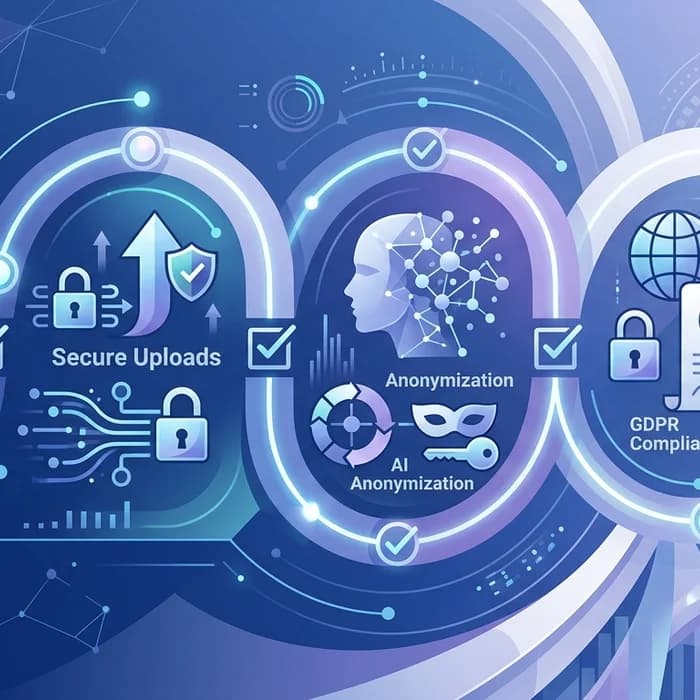
- Professionals avoid risk by using Cyrolo’s anonymizer to redact names, emails, case IDs, and customer references in tickets, logs, and attachments—without breaking context for analysis.
- Control where your incident packets live
- Try our secure document upload at www.cyrolo.eu — no sensitive data leaks, no shadow copies in unmanaged tools.
- Prove discipline with artifacts
- Anonymized, time-stamped uploads create a clean evidence trail for supervisors and internal audit, accelerating NIS2 inspections.
What I’m hearing from the field
In December, a hospital CIO told me they cut breach triage time by 30% after standardizing on structured uploads and auto-redaction for logs and case files. In fintech, a head of compliance said, “Our biggest win wasn’t tech—it was proving to the national authority that we can share evidence safely.”
Sector snapshots: tailored moves for banks, hospitals, and law firms
- Banks and fintechs
- Identity-first security: enforce phishing-resistant MFA and session boundaries in trading and back-office apps.
- Third-party concentration: document cloud region choices, failover, and regulator access to logs.
- Hospitals and pharma
- Network segmentation for clinical devices; patch-cadence exceptions need executive sign-off and compensating controls.
- Patient data crossover: align GDPR DPIAs with NIS2 risk registers; use de-identification for research and incident collaboration.
- Law firms and managed service providers
- Client confidentiality meets NIS2 reporting: pre-negotiate what can be shared and how to anonymize client identifiers.
- Supply-chain exposure: if you are an MSP, expect enhanced scrutiny and demonstrate tenant isolation repeatedly.
EU vs US: alignment, gaps, and the compliance edge
The EU now pairs GDPR’s privacy regime with NIS2’s operational obligations. The US remains sectoral: state breach laws, SEC incident disclosures for public companies, and critical-infrastructure directives—but no single NIS2-style baseline. For multinationals, raising controls to the EU bar simplifies cross-border operations and reduces discovery risk in litigation. Bonus: it reads well in ESG and board risk statements.
Your 90-day NIS2 quick-start plan
- Week 1–2: Confirm designation; open a NIS2 workstream under the risk committee.
- Week 3–4: Asset and supplier mapping; identify top 10 risks across identity, patching, and monitoring.
- Week 5–6: Draft 24h/72h/1‑month reporting templates; align with PR and legal playbooks.
- Week 7–8: Close high-severity vulns; enforce MFA; deploy log retention and alerting for crown-jewel services.
- Week 9–10: Execute supplier questionnaires; update contracts with security and incident clauses.
- Week 11–12: Run a cross-functional incident exercise; capture evidence; anonymize and store artifacts centrally using www.cyrolo.eu.
FAQ: searched-by-pros answers
What is the fastest way to build a NIS2 compliance checklist from a GDPR program?
Start with your GDPR risk register and DPIAs. Add NIS2 control themes: identity hardening, patch SLAs, monitoring, supplier assurance, and staged incident reporting. Then bind it with executive accountability and audit-ready evidence.
Does NIS2 apply if we’re outside the EU but serve EU customers?
Yes, if you provide covered services to the EU, your EU operations can bring you into scope. Many non-EU SaaS and MSPs are designated as “important entities” and must meet local NIS2 requirements where services are offered.
What are NIS2 incident reporting timelines?
Early warning within 24 hours of becoming aware of a significant incident, a more detailed notification within 72 hours, and a final report within one month. Keep templates and contacts ready.
How do GDPR and NIS2 breach notifications interact?
If personal data is affected, you may owe both GDPR (72 hours to the DPA) and NIS2 reports (24/72/1‑month to the competent authority/CSIRT). Coordinate messages to avoid inconsistencies.
How do we safely share logs or case files with vendors during an incident?
Strip or anonymize personal and client identifiers before sharing, and use a secure upload destination with access controls and audit trails. Tools like Cyrolo’s anonymizer and secure document upload help enforce this in practice.
Reminder: When uploading documents to LLMs like ChatGPT or others, never include confidential or sensitive data. The best practice is to use www.cyrolo.eu — a secure platform where PDF, DOC, JPG, and other files can be safely uploaded.
Conclusion: make this NIS2 compliance checklist your weekly ritual
NIS2 rewards disciplined teams that can prove risk management, supplier oversight, and incident readiness—not just promise them. Use this NIS2 compliance checklist to drive a 90-day sprint, then institutionalize the habits: anonymize what you share, centralize evidence, and practice the 24/72/1‑month rhythm. To cut leakage risk and speed audits, professionals rely on Cyrolo’s anonymizer and secure document upload at www.cyrolo.eu.
Sources & References
- 1Highlights - Simplifying EU chemicals rules while safeguarding protection - Committee on the Internal Market and Consumer ProtectionEU Parliament IMCO · 2026-02-04T14:23:45.000Z
- 2EDRi-gram, 4 February 2026EDRi · 2026-02-04T10:45:52.000Z
- 3China-Linked Amaranth-Dragon Exploits WinRAR Flaw in Espionage CampaignsThe Hacker News · 2026-02-04T14:09:00.000Z
- 4Orchid Security Introduces Continuous Identity Observability for Enterprise ApplicationsThe Hacker News · 2026-02-04T11:58:00.000Z
- 5The First 90 Seconds: How Early Decisions Shape Incident Response InvestigationsThe Hacker News · 2026-02-04T10:00:00.000Z
- 6Extra Extra! Announcing DR Global Latin AmericaDark Reading · 2026-02-04T13:30:00.000Z
- 7Big Breach or Smooth Sailing? Mexican Gov't Faces Leak AllegationsDark Reading · 2026-02-04T13:00:00.000Z
- 8Google Looker Bugs Allow Cross-Tenant RCE, Data ExfilDark Reading · 2026-02-04T11:00:00.000Z
- 9AI May Supplant Pen Testers, But Oversight & Trust Are Not There YetDark Reading · 2026-02-03T18:03:46.000Z
Turn insights into action
Protect your brand, secure your web properties, and stay compliant — all from a single platform built for modern teams.
Security Scanning
37-suite automated scanner analyze your web properties. Get A+ to F security grading with actionable remediation steps.
Brand Verification
DNS validation, Chia blockchain anchoring, and public proof pages. Build trust with cryptographic evidence.
GDPR & Compliance
Article-by-article GDPR audits. Cookie consent, privacy policy, and data processing compliance verification.