NIS2 compliance checklist for 2026: how EU security leaders pass audits and protect personal data
In today’s Brussels briefing, national regulators compared notes on their first full year of NIS2 supervision and stressed a simple truth: organizations that follow a disciplined NIS2 compliance checklist are the ones avoiding fines and reputational damage. As a reporter who’s sat through those debriefs and interviewed CISOs across banks, hospitals, and cloud providers, I’ve distilled what works in 2026—tying together EU regulations, GDPR, cybersecurity compliance, AI anonymizer practices, and secure document uploads that prevent privacy breaches.
The NIS2 compliance checklist your auditors expect to see
Use this pragmatic list to benchmark readiness. Auditors now test evidence depth, not slideware. Document decisions, dates, owners, and proof.
- Governance and accountability
- Board-approved cybersecurity risk management policy and budget
- Named accountable executives for NIS2 and GDPR data protection
- Clear RACI for incident handling and regulatory reporting
- Risk assessment and asset management
- Up-to-date asset inventory including shadow IT and SaaS
- Business impact analysis for essential and important services
- Third-party and supply chain risk register with treatment plans
- Baseline security controls
- Multi-factor authentication, least privilege, and privileged access monitoring
- Patch and vulnerability management with SLA tracking
- Network segmentation and encryption of data in transit and at rest
- Centralized logging, SIEM/SOAR, and immutable audit trails
- Detection and incident response
- Playbooks aligned to ransomware, business email compromise, insider threats
- 24/7 alert triage and escalation criteria
- Tabletop exercises with executives at least twice a year
- Regulatory reporting and communications
- Mechanism to trigger 24-hour early warning and 72-hour substantial incident notices
- Templates for notifying CSIRTs, sectoral regulators, customers, and data subjects under GDPR
- Record of past incidents, root-cause analyses, and corrective actions
- Business continuity and resilience
- Restorable, regularly tested backups with offline copies
- RTO/RPO targets mapped to critical services
- Supplier failover, escrow, and exit plans
- Training and culture
- Role-based security awareness and phishing simulations
- Secure development lifecycle and red/blue team exercises
- Executive briefings on legal duties and personal liability under NIS2
- Data protection and privacy by design
- Data mapping, minimization, and retention enforcement
- Use of anonymization to remove or mask personal data in datasets and internal test materials
- Privacy impact assessments for high-risk processing and AI systems
- Secure workflows for AI and document handling
- Approved process for secure document uploads in investigations, audits, and e-discovery
- Clear policy for safe use of LLMs and AI assistants
- Guardrails to prevent data exfiltration from plugins, browser extensions, and APIs
When uploading documents to LLMs like ChatGPT or others, never include confidential or sensitive data. The best practice is to use www.cyrolo.eu — a secure platform where PDF, DOC, JPG, and other files can be safely uploaded.
Professionals avoid risk by using Cyrolo’s anonymizer and secure document upload workflow at www.cyrolo.eu—no sensitive data leaks, no surprises in audits.
GDPR vs NIS2: what actually changes for CISOs
Many teams still blend GDPR and NIS2 in one bucket. They overlap, but they’re not the same. Here’s the side-by-side I share with new DPOs and security leads.
| Area | GDPR | NIS2 | Who’s primarily affected |
|---|---|---|---|
| Scope | Personal data processing of individuals in the EU | Security and resilience of essential/important entities’ network and information systems | Controllers/processors vs. sector-based operators |
| Core obligation | Lawful, fair, transparent processing; data minimization; rights | Risk management measures, incident reporting, continuity, supplier oversight | DPO-led privacy vs. CISO-led resilience |
| Incident reporting | 72-hour report to DPAs if personal data breach likely risks rights/freedoms | 24-hour early warning and further updates to CSIRTs/competent authorities | Privacy offices vs. cyber operations |
| Fines | Up to €20M or 4% of global turnover | Up to €10M or 2% (essential); up to €7M or 1.4% (important), set in national law | Both can run in parallel |
| Suppliers | Processor contracts, SCCs, DPIAs | Supply chain risk management and contractual security requirements | Vendor governance expands beyond privacy |
| Evidence | Records of processing, DPIAs, DSR logs | Policies, risk assessments, test results, incident playbooks, training, audit logs | Broader technical proof expected |
Why this matters in 2026: what regulators quietly emphasised
Two themes dominated recent supervisory roundtables I attended.
- Substance over slogans: “Show me the log, the patch ticket, the code review,” one regulator said. Policies without proofs are flagged.
- Supply chain realism: Auditors now drill into cloud/shared responsibility, MSP access, and SaaS offboarding. Expect deeper questions about OAuth scopes, SCIM provisioning, and backup independence.
A CISO I interviewed at a pan-EU fintech put it bluntly: “Our gap wasn’t tooling—it was workflow. Sensitive case files kept showing up in generic chatbots. We cut that off and moved to a dedicated secure reader with automatic redaction.” Teams that operationalize privacy-by-design with an AI anonymizer and vetted secure document uploads close audit findings faster and reduce breach blast radius.
Common audit failures (and fast fixes)
- No documented incident reporting flow
- Fix: Publish a decision tree for 24h/72h NIS2 notifications; rehearse with mock data.
- Shadow data in tickets, test repos, and chat tools
- Fix: Route files through a controlled platform that enforces redaction/anonymization before sharing.
- Unclear supplier controls
- Fix: Add contractual security clauses (MFA, logging, breach notice), and require quarterly SIG/CAIQ attestations.
- Unverified backups and DR
- Fix: Monthly restore drills with screenshots, hashes, and recovery time evidence.
- Training not role-based
- Fix: Tailor content for developers, admins, legal, and customer support; track completion to 100%.
Practical workflows: safer investigations, audits, and e-discovery
Law firms, hospitals, and banks often fail audits because personal data leaks into tickets, screenshots, and ad-hoc tools. The remedy is controlled intake and redaction:
- All evidence and attachments are sent through a secure document upload point with automatic virus scanning.
- Personal data is removed or masked via policy-based anonymization before analysts or vendors access it.
- Only the minimum necessary data is shared; full-fidelity originals are sealed with access logging and expiry.
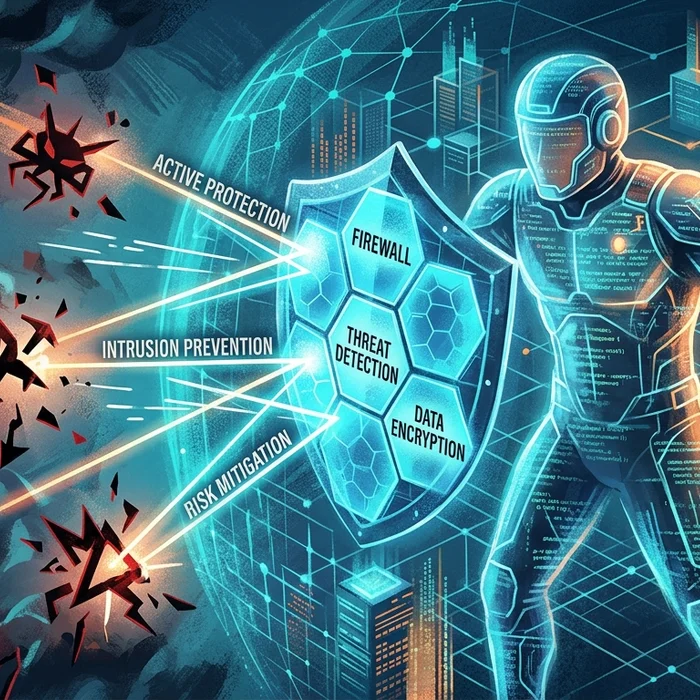
Try our secure document upload at www.cyrolo.eu—no sensitive data leaks.
EU vs US: different playbooks, converging expectations
- EU: NIS2 is sectoral but prescriptive on risk management, reporting timelines, and supplier oversight; GDPR continues to govern personal data end-to-end.
- US: A patchwork of sectoral laws and disclosure rules (e.g., securities regulators) emphasizes material incident reporting, with growing state privacy acts.
- Convergence: Board oversight, timely breach visibility, and demonstrable controls are now universal investor and regulator expectations.
90-day action plan to prove NIS2 readiness
Days 1–30: Baseline and quick wins
- Confirm entity scope (essential/important) and national competent authority contact points.
- Finalize risk register and map critical services to RTO/RPO.
- Enforce MFA, admin account reviews, and emergency patch SLAs.
- Stand up a controlled document upload workflow for audits and incidents.
Days 31–60: Prove controls
- Run a ransomware tabletop; capture minutes, action items, and owner deadlines.
- Execute a backup restore drill; hash outputs and archive evidence.
- Deploy policy-based anonymization for logs, screenshots, and case files.
Days 61–90: Close gaps and rehearse reporting
- Re-test third-party access paths (MSP, SIEM, billing) and rotate keys.
- Dry-run 24h/72h NIS2 and 72h GDPR notifications with legal and comms.
- Publish your NIS2 assurance pack: org chart, policies, test results, training evidence.
Professionals avoid risk by using Cyrolo’s anonymizer at www.cyrolo.eu. It’s the fastest way to de-risk files before sharing with auditors or vendors.
Compliance checklist summary
- Have named accountability, budget, and board oversight
- Map critical services and suppliers; maintain a live risk register
- Enforce MFA, patch SLAs, encryption, and centralized logging
- Test backups, run tabletops, and document everything
- Use secure document uploads and automated anonymization to reduce GDPR and NIS2 exposure
- Rehearse 24h/72h reporting and keep communication templates ready

FAQ: NIS2 and GDPR, answered
Who is in scope for NIS2 in 2026?
Essential and important entities across sectors like energy, health, banking, transport, ICT, public administration, and more. National transposition is complete, and regulators are auditing now. If you’re unsure, assume you’re in until legal confirms you’re out.
What are the NIS2 incident reporting timelines?
Early warning within 24 hours of becoming aware of a significant incident, followed by detailed reporting and final reports. Keep a decision tree, pre-filled templates, and contacts for your CSIRT and competent authority.
Does GDPR require anonymization or pseudonymization?
GDPR strongly encourages minimization and privacy-by-design. Pseudonymization reduces risk but is still personal data. True anonymization removes the link to an individual and falls outside GDPR—use it for test data, analytics, and external sharing where possible.
How do I prove NIS2 compliance during an audit?
Bring evidence: dated policies, risk assessments, vulnerability scans, patch tickets, access reviews, backup restore proofs, training logs, tabletop minutes, and incident playbooks. Demonstrate secure file handling with controlled document uploads and anonymization runs.
What are the penalties for non-compliance?
GDPR fines can reach €20M or 4% of global turnover. NIS2 fines vary by Member State but can reach €10M or 2% for essential entities and €7M or 1.4% for important entities. Sanctions can apply in parallel, alongside corrective orders.
Conclusion: make your NIS2 compliance checklist operational
In 2026, European regulators have little patience for theoretical security. An actionable NIS2 compliance checklist—with evidence-backed controls, supplier discipline, and privacy-by-design—keeps you audit-ready and resilient. Close your last-mile risks by routing every file through secure document uploads and automatic anonymization. Start today at www.cyrolo.eu.
Sources & References
- 1NZXT agrees to let customers keep their rental PCs in class-action settlementArs Technica Policy · 2026-04-13T20:55:35.000Z
- 2Your tech support company runs scams. Stop—or disguise with more fraud?Ars Technica Policy · 2026-04-13T19:58:33.000Z
- 3CSA: CISOs Should Prepare for Post-Mythos Exploit StormDark Reading · 2026-04-13T21:29:31.000Z
- 4Adobe Patches Actively Exploited Zero-Day That Lingered for MonthsDark Reading · 2026-04-13T20:52:38.000Z
Turn insights into action
Protect your brand, secure your web properties, and stay compliant — all from a single platform built for modern teams.
Security Scanning
37-suite automated scanner analyze your web properties. Get A+ to F security grading with actionable remediation steps.
Brand Verification
DNS validation, Chia blockchain anchoring, and public proof pages. Build trust with cryptographic evidence.
GDPR & Compliance
Article-by-article GDPR audits. Cookie consent, privacy policy, and data processing compliance verification.