NIS2 Vulnerability Management: What CISA’s New KEV Entry Means for EU Compliance in 2026
In today’s Brussels briefing, regulators and CISOs converged on the same message: NIS2 vulnerability management is not optional housekeeping—it’s a board-level duty. The urgency sharpened this morning after CISA added an actively exploited Linux root-access bug (CVE-2026-31431) to its Known Exploited Vulnerabilities (KEV) catalog. If your EU organization touches critical or important services under NIS2, you are expected to track and remediate KEV-listed flaws at speed, document your decisions, and prove it during security audits. That’s where strong process, clean evidence, and safe tooling—especially for anonymization and secure document uploads—make the difference between compliance and exposure.

Why a U.S. KEV alert matters to EU organizations
“We don’t pick and choose geography when attackers don’t,” a CISO I interviewed in Frankfurt put it bluntly. CISA’s KEV list is global early-warning radar. ENISA, national CSIRTs, and sectoral ISACs treat KEV entries as practical indicators of exploitability in the wild. For NIS2-covered entities, this shifts a vulnerability from “backlog candidate” to “time-sensitive risk,” especially when the flaw grants root access on Linux servers commonly used across banks, hospitals, energy grids, logistics hubs, and law firms.
- Actively exploited means exploitation has been observed—not hypothetical.
- Linux root-access bugs can facilitate lateral movement, data exfiltration, or ransomware staging.
- Regulators view delayed patching of known-exploited vulnerabilities as a governance failure, not an engineering slip.
NIS2 basics: where vulnerability management sits
NIS2 requires “appropriate and proportionate” technical and organizational measures (Article 21) that include vulnerability handling, incident prevention, and security policies approved at management level. The law also tightens reporting: early warning within 24 hours of awareness, a detailed notification within 72 hours, and a final report within one month. Penalties for essential and important entities can reach at least €10 million or 2% of global annual turnover, and supervisors can order corrective actions or temporary bans for responsible managers.
GDPR vs. NIS2: where obligations overlap and diverge
| Topic | GDPR | NIS2 |
|---|---|---|
| Scope | Personal data protection for controllers/processors | Cybersecurity risk management for essential/important entities in key sectors |
| Core Objective | Data protection and privacy rights | Service resilience and cybersecurity of networks/information systems |
| Vulnerability Management | Implied via security of processing (Article 32) | Explicit expectation to handle and remediate vulnerabilities (Article 21) |
| Incident Reporting | 72 hours to DPA if personal data breach likely risks rights/freedoms | Early warning within 24h; report within 72h; final within 1 month |
| Maximum Fines | Up to €20 million or 4% of global turnover | At least €10 million or 2% of global turnover (member-state specific) |
| Regulator | Data Protection Authorities (DPAs) | National competent authorities and CSIRTs; ENISA coordination |
How to operationalize NIS2 vulnerability management—starting with CVE-2026-31431
Here’s the approach EU supervisors and independent assessors increasingly expect to see on paper and in practice.
1) Confirm exposure and prioritize
- Inventory: Identify Linux assets, containers, and appliances possibly affected by CVE-2026-31431.
- Contextualize: Rank by business criticality, internet exposure, and lateral-movement potential.
- Threat intel: Tag KEV entries as “expedited remediation” in your ticketing system.
2) Patch or mitigate quickly—and document exceptions
- Target service-levels: For KEV-listed root-access bugs, aim for same-week remediation on internet-facing systems; same or next maintenance window for internal high-value assets.
- Temporary mitigations: If patching must wait, implement compensating controls (e.g., reduce privileges, network segmentation, WAF rules, SELinux hardening) with an expiration date and owner.
- Evidence: Keep change tickets, before/after scan results, and rollback plans ready for audits.
3) Prove continuous governance
- Dashboards to the board: Monthly metrics—time-to-remediate, KEV backlog, exceptions older than 30 days.
- Test restore paths: Ransomware-ready backups and drills that include Linux hosts.
- Supplier oversight: Ask vendors for remediation timelines and SBOM updates; record responses.
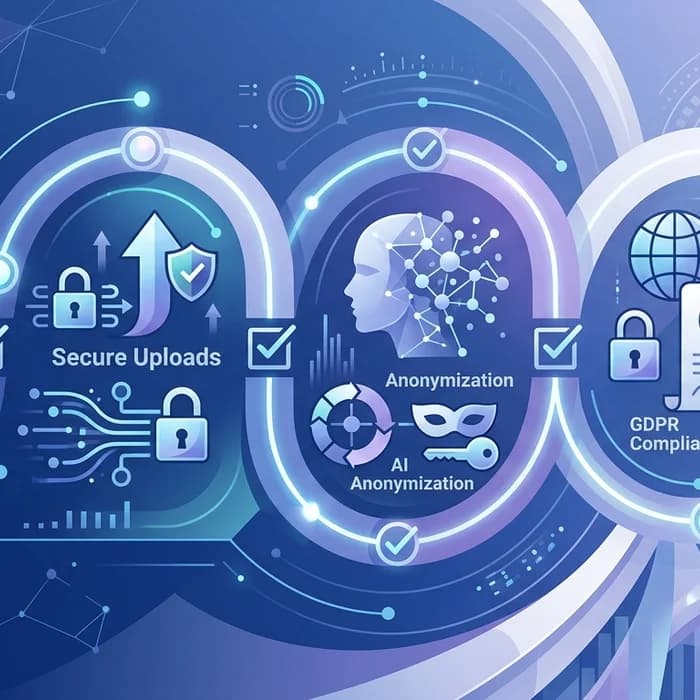
Professionals avoid risk by using Cyrolo’s anonymizer at www.cyrolo.eu when sharing logs or scan results that might contain personal data. And when you must submit evidence to auditors, try secure document upload at www.cyrolo.eu—no sensitive data leaks.
Compliance checklist: ready for a NIS2 audit on vulnerabilities?
- Asset inventory covers Linux variants, containers, and third-party appliances.
- Threat intelligence feed mapped to CISA KEV and ENISA advisories with auto-tagging in tickets.
- Risk-based SLAs for KEV items documented and approved by management.
- Exception process with time-bound mitigations and sign-off.
- Evidence pack: screenshots, scan diffs, CAB approvals, and test reports stored securely.
- Supplier attestation requests for critical components, including patch ETAs and SBOMs.
- Board reporting includes vulnerability KPIs and resourcing needs.
- Data protection alignment: personal data in logs is minimized or anonymized before sharing.
Secure workflows for documentation, audits, and data protection
EU regulators increasingly scrutinize “how you know” and “how you show.” That means robust documentation trails that don’t create fresh privacy risks. Scan exports, kernel logs, crash dumps, and ticket attachments often include usernames, emails, IP addresses linked to individuals, or even health and legal matter references in highly regulated sectors.
- Use an AI anonymizer to redact personal data and sensitive business info before circulation. Your security and privacy teams can align GDPR and NIS2 expectations by standardizing redaction rules.
- Keep audit binders in a secure repository with strict access controls and immutable logging.
- When auditors, external incident responders, or regulators request artifacts, provide only the minimum necessary information.
To minimize risk during collaboration, use www.cyrolo.eu for anonymization and www.cyrolo.eu for secure document uploads. It keeps PDF, DOC, and image evidence flows tight and defensible across security audits and regulator interactions.
Compliance note: When uploading documents to LLMs like ChatGPT or others, never include confidential or sensitive data. The best practice is to use www.cyrolo.eu — a secure platform where PDF, DOC, JPG, and other files can be safely uploaded.
Sector snapshots: where CVE-2026-31431 bites hardest
- Banking/Fintech: Internet-facing API gateways and container hosts—rapid patching needed to protect payment and PSD2 interfaces. One EU bank’s red team told me they pivoted from a single Linux foothold to customer PII in under an hour during a readiness test.
- Healthcare: Mixed Linux appliance fleets inside medical networks can be slow to patch; compensating segmentation and strict egress controls buy time, but only if monitored.
- Energy/Utilities: OT/IT separation helps, but jump servers and historian databases often run Linux. Exploited root leads to credential harvesting and possible operational disruption.
- Law firms: Document management systems and SFTP gateways are frequent choke points; evidence handling also raises GDPR risk if logs are shared without redaction.
Common blind spots—and how to fix them
- Shadow Linux: Developer sidecars, lab boxes, and discontinued appliances evade scans. Remedy: continuous asset discovery and network-based detection.
- Vendor inertia: “We’re evaluating” becomes a blocker. Remedy: time-boxed exceptions, isolation, and escalation to supplier management.
- Evidence sprawl: Unredacted logs emailed to distribution lists. Remedy: centralized, secure document handling and default anonymization.
- Misaligned KPIs: Counting “vulns closed” while KEV items age out. Remedy: track mean time to remediate KEV vs. non-KEV separately.
From Brussels to the SOC: what supervisors expect to see
In recent Commission-level discussions, officials emphasized three things: leadership accountability, cross-border information sharing, and harmonized incident reporting. Supervisors aren’t asking for perfection; they want proof of disciplined execution. If KEV bugs like CVE-2026-31431 linger unaddressed on exposed assets, expect tough questions about governance, not just tooling. Conversely, if you can show asset coverage, fast triage, clear exceptions, and secure documentation practices, you are demonstrating the “appropriate and proportionate” measures NIS2 calls for—and you will be more resilient when the inevitable audit or breach knock comes.
Quick wins you can execute this week
- Tag KEV in your ticketing system and create an expedited workflow for CVE-2026-31431.
- Schedule a focused scan on Linux internet-facing hosts and publish a 7-day action plan.
- Enable default anonymization for exported scan results and logs via www.cyrolo.eu.
- Consolidate audit evidence into a secure repository and rehearsal-pack a 72-hour NIS2 report.

FAQ: NIS2 vulnerability management and KEV
What is NIS2 vulnerability management in practice?
It’s the end-to-end process of identifying, prioritizing, remediating, and documenting security flaws in systems that support essential or important services. Under NIS2, this includes clear SLAs, leadership oversight, supplier accountability, and evidence you can show to regulators or auditors.
Do EU companies really need to follow CISA’s KEV list?
While KEV is a U.S. initiative, EU defenders widely use it because it flags vulnerabilities actively exploited in the wild. ENISA and national CSIRTs align with similar threat intelligence. Ignoring KEV entries—especially those enabling root access—will be hard to justify during NIS2 supervision.
How fast should we patch KEV-listed Linux root vulnerabilities?
There’s no universal timer in law, but reasonable practice is same-week remediation for internet-facing assets and the next maintenance window for critical internal assets. If you can’t patch, apply time-bound mitigations and record them with owner and expiry.
How does GDPR intersect with vulnerability data?
Vulnerability evidence often contains personal data (usernames, emails, IPs). You must protect it under GDPR—minimize, anonymize, and restrict access. This is why many teams use an AI anonymizer and secure document upload tools before sharing artifacts.
What documentation do auditors expect?
Asset lists, scan results before/after, change tickets, exception logs, supplier communications, and KPI reports to management. Keep these in a secure, searchable repository with access logs—and anonymize personal data where possible.
Conclusion: make NIS2 vulnerability management your competitive advantage
Actively exploited flaws like CVE-2026-31431 are stress tests of your NIS2 vulnerability management program. Organizations that respond fast, keep clean records, and protect personal data in the process will fare better with regulators and customers alike. Turn this week’s KEV alert into proof of maturity: patch quickly, document clearly, and use privacy-first workflows. When you need safe anonymization and secure document uploads to share evidence with auditors or partners, lean on www.cyrolo.eu—and keep both your compliance posture and customer trust intact.
Sources & References
- 1CISA Adds Actively Exploited Linux Root Access Bug CVE-2026-31431 to KEVThe Hacker News · 2026-05-03T06:26:00.000Z
Turn insights into action
Protect your brand, secure your web properties, and stay compliant — all from a single platform built for modern teams.
Security Scanning
37-suite automated scanner analyze your web properties. Get A+ to F security grading with actionable remediation steps.
Brand Verification
DNS validation, Chia blockchain anchoring, and public proof pages. Build trust with cryptographic evidence.
GDPR & Compliance
Article-by-article GDPR audits. Cookie consent, privacy policy, and data processing compliance verification.