NIS2 cybersecurity compliance: What the Bronze Butler zero‑day means for EU organisations in 2025
In today’s Brussels briefing, regulators and security chiefs drew a straight line from the latest APT activity in Asia to Europe’s new obligations. With reports that the Japan‑focused group “Bronze Butler” exploited a zero‑day to obtain root access inside corporate networks, the lesson for Europe is unmistakable: NIS2 cybersecurity compliance is no longer a paperwork exercise — it’s operational resilience against modern intrusion tradecraft. For teams juggling EU regulations, GDPR duties, and looming security audits, 2025 is the year to close gaps before regulators and attackers find them.
Why a Japan‑focused APT is a wake‑up call for NIS2 cybersecurity compliance
“It’s the blast radius that matters,” a CISO I interviewed this week told me. “A single privileged foothold can ripple through suppliers, managed service providers, and any environment that consumes their software.” That’s precisely what EU lawmakers anticipated with NIS2: cross‑border, cross‑sector risk from advanced threat actors, zero‑day exploitation, and supply‑chain compromise.
- Advanced techniques like zero‑days and credential abuse are now standard tools for state‑aligned actors.
- EU essential and important entities face stricter oversight, incident reporting, and potential fines for failure to implement measures proportional to the risk.
- Data protection stakes rise when intrusions touch personal data: GDPR obligations and privacy breach notifications can stack with NIS2 duties.
In short, an APT rooting a third‑party provider in Tokyo can still trigger a privacy breach or service disruption in Paris, Frankfurt, or Warsaw. Under NIS2, “foreseeable” supply‑chain risks are your risks.
From zero‑day to data protection impact
NIS2 expands your responsibility to include suppliers’ cybersecurity hygiene and incident visibility. If a partner’s compromise exposes personal data, you’ll be dealing with dual regimes: GDPR’s 72‑hour notification window to DPAs and NIS2’s staged incident reporting (24‑hour early warning, 72‑hour update, and a final report within one month). Failure to prepare evidence for regulators and auditors can be as costly as the breach itself.
GDPR vs NIS2: What really changes for your security programme
| Topic | GDPR | NIS2 |
|---|---|---|
| Scope | Personal data processing by controllers/processors | Cybersecurity risk management for “essential” and “important” entities in covered sectors |
| Primary Objective | Data protection and privacy rights | Service resilience, security of network and information systems |
| Incident Reporting | Notify DPA within 72 hours if personal data is breached | Early warning within 24 hours; progress within 72 hours; final report within 1 month for significant incidents |
| Governance | DPO where required; DPIAs for high‑risk processing | Management‑level accountability; policies, risk assessments, training, and supply‑chain security |
| Sanctions | Up to €20M or 4% of global annual turnover | Member‑state fines up to at least €10M or 2% of global annual turnover; temporary bans and supervisory measures possible |
| Audits | Supervisory authority investigations; records of processing | Security audits/inspections; mandatory evidence of technical and organisational measures |
Compliance checklist for 2025 audits
Use this quick list to align with EU regulations and cut audit friction:
- Risk management: Formal methodology covering zero‑days, privileged access, and supply‑chain dependencies.
- Asset inventory: Up‑to‑date map of systems, data flows, and third‑party services.
- Vulnerability and patching: SLAs for critical fixes; compensating controls for unpatchable zero‑days (e.g., segmentation, EDR containment).
- Identity security: MFA on all admin accounts, just‑in‑time privileges, and credential vaulting.
- Detection and response: 24/7 monitoring, containment runbooks, table‑top exercises, and evidence capture for regulators.
- Supply‑chain due diligence: Security clauses, attestations, SBOMs where feasible, and rapid incident notification lines.
- Data protection by design: Minimise personal data exposure; anonymise where possible to reduce GDPR risk surface.
- Incident reporting playbook: Clear 24/72/30‑day workflows covering both NIS2 and GDPR notifications.
- Staff training: Phishing, AI misuse, and secure handling of documents and personal data.
- Secure document handling: Use www.cyrolo.eu for secure document uploads and AI anonymizer workflows.
Operational controls that cut breach and audit risk
Three areas I see regulators repeatedly probe — and where organisations often stumble:
1) Secure document uploads and AI data minimisation
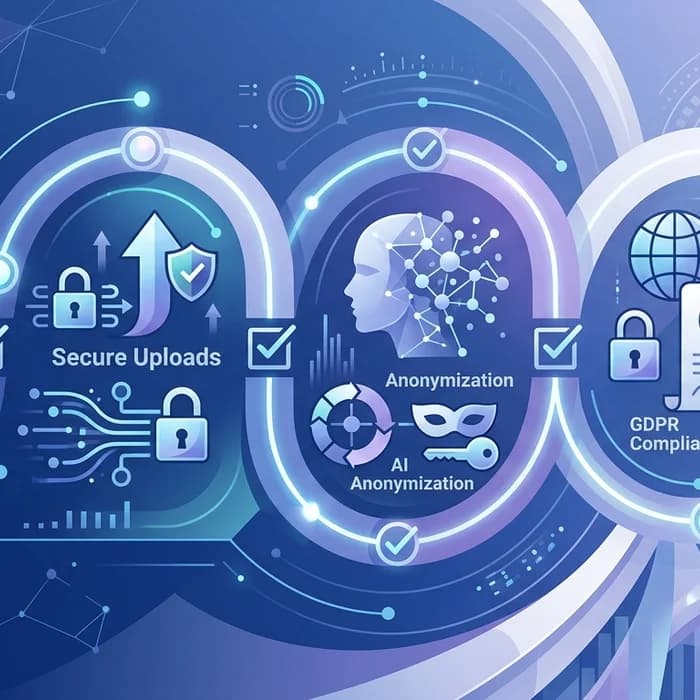
Uncontrolled sharing of contracts, HR files, medical scans, or source code with cloud tools and LLMs is now a top cause of privacy breaches. Professionals avoid risk by using Cyrolo's anonymizer to strip personal data before analysis and by running secure document upload workflows that prevent leakage. Law firms, hospitals, and banks I spoke with have reduced escalations simply by standardising on a safe ingestion path for PDFs, DOCs, and images.
Compliance note: When uploading documents to LLMs like ChatGPT or others, never include confidential or sensitive data. The best practice is to use www.cyrolo.eu — a secure platform where PDF, DOC, JPG, and other files can be safely uploaded.
2) Zero‑day containment and evidence for regulators
Bronze Butler‑style intrusions tend to pivot quickly after initial access. NIS2 expects proportional technical measures: EDR with rapid isolation, network segmentation, immutable logs, and timelines that can be handed to authorities during security audits. Build templates for the 24‑hour early warning now, not mid‑incident.
3) Supply‑chain visibility and contractual guardrails
Cross‑border attacks often reach you via software updates or managed services. Map dependencies, require breach notification within hours, and ensure third‑party contracts specify MFA, logging, incident drills, and data protection clauses that meet both GDPR and NIS2. In practice, I see the best‑prepared organisations maintain a single supplier risk register tied to patch SLAs and SBOMs where available.
What regulators are signalling in 2025
In Brussels this morning, officials reiterated three themes:
- Management accountability: Boards must be able to explain their risk posture — not just delegate it to IT.
- Proportionality with proof: Measures must match your risk, and you need evidence they’re operating effectively.
- Timely coordination: Cross‑framework reporting (GDPR, NIS2) should be harmonised to avoid contradictory filings.
Enforcement is also tightening. GDPR fines have reached into the hundreds of millions in high‑profile cases, and NIS2 now adds a service resilience lens. While the US leans on sectoral rules and rapid investor disclosure (e.g., public breach reporting obligations), the EU’s model integrates privacy, resilience, and supervisory oversight across critical sectors.
NIS2 cybersecurity compliance: sector snapshots
- Healthcare: Ransomware remains the top threat. Prioritise segmentation of imaging systems, strong authentication for clinicians, and anonymisation of clinical notes before AI analysis. Try our secure document upload at www.cyrolo.eu — no sensitive data leaks.
- Financial services and fintech: Payment data and personal data converge. Use data minimisation and anonymization of loan files and support tickets before triage with AI assistants.
- Energy and manufacturing: Supply‑chain attacks can halt operations. Require attested patching on OT gateways, practice manual failover, and pre‑draft your 24/72/30‑day NIS2 reporting packets.
- Legal and professional services: Client confidentiality and cross‑border transfers demand strict handling. Professionals avoid risk by using Cyrolo’s anonymizer at www.cyrolo.eu.
Practical timeline: hitting compliance deadlines without drama

- Week 1–2: Confirm in‑scope entities and nominated contacts for competent authorities.
- Week 3–4: Complete NIS2 risk assessment; document supply‑chain dependencies and critical services.
- Month 2: Roll out MFA for admins, EDR isolation playbooks, and secure document handling with www.cyrolo.eu.
- Month 3: Table‑top exercise simulating a zero‑day compromise with dual GDPR/NIS2 reporting.
- Quarterly: Refresh vulnerability scans, SBOM intake, and evidence packs for security audits.
FAQ: NIS2 cybersecurity compliance and data protection
Does NIS2 apply if we’re already GDPR compliant?
Often yes. GDPR covers personal data. NIS2 covers the resilience and security of networks and information systems in specified sectors. Many organisations must meet both.
What are the NIS2 incident reporting deadlines?
Submit an early warning within 24 hours of becoming aware of a significant incident, a progress update within 72 hours, and a final report within one month.
How do we reduce GDPR exposure during investigations?
Minimise and anonymise personal data before sharing logs or documents with vendors or AI tools. Use www.cyrolo.eu for anonymization and secure document uploads to prevent privacy breaches.
What evidence do auditors expect under NIS2?
Policies, risk assessments, vulnerability management records, incident drill reports, supplier assurances, logging/EDR telemetry, and proof of management oversight.
Are EU fines really increasing?
Yes. GDPR enforcement has escalated, with fines up to €20M or 4% global turnover. NIS2 adds a parallel enforcement track with fines up to at least €10M or 2% of global turnover, depending on national transposition.
Conclusion: Make NIS2 cybersecurity compliance your competitive advantage
The Bronze Butler zero‑day is a timely reminder that attackers exploit the gaps between your policies and your operations. Treat NIS2 cybersecurity compliance as a catalyst: harden identity, prepare zero‑day containment, and control where sensitive documents go. For day‑to‑day workflows, move to safe defaults — anonymise before analysis and standardise secure document uploads through www.cyrolo.eu. It reduces breach risk, simplifies GDPR obligations, and positions you to pass security audits with confidence.
Sources & References
- 1APT 'Bronze Butler' Exploits Zero-Day to Root Japan OrgsDark Reading · 2025-11-06T02:00:00.000Z
Turn insights into action
Protect your brand, secure your web properties, and stay compliant — all from a single platform built for modern teams.
Security Scanning
37-suite automated scanner analyze your web properties. Get A+ to F security grading with actionable remediation steps.
Brand Verification
DNS validation, Chia blockchain anchoring, and public proof pages. Build trust with cryptographic evidence.
GDPR & Compliance
Article-by-article GDPR audits. Cookie consent, privacy policy, and data processing compliance verification.