NIS2 compliance in 2025: Lessons from a US crypto bust and what EU leaders must do now
Brussels is reading the same headlines you are: a major US crypto bust showing real traction against cybercrime syndicates. In today’s Brussels briefing, regulators emphasized how money-flows fuel ransomware, supply chain breaches, and data exfiltration. For EU organizations, the wake-up call dovetails with a harder-edged regulatory regime. NIS2 compliance is no longer optional—it's an operational baseline tied to incident reporting, supply chain oversight, and board-level accountability.

Key takeaways
- The US crypto crackdown highlights how disrupting criminal financing complements EU measures under NIS2, GDPR, and the anti-money laundering package.
- NIS2 enforcement in 2025 expects mature risk management, rapid incident reporting (24h/72h/1 month), and verifiable security controls.
- Boards and executives are now directly responsible for cybersecurity governance, including training and oversight of third-party suppliers.
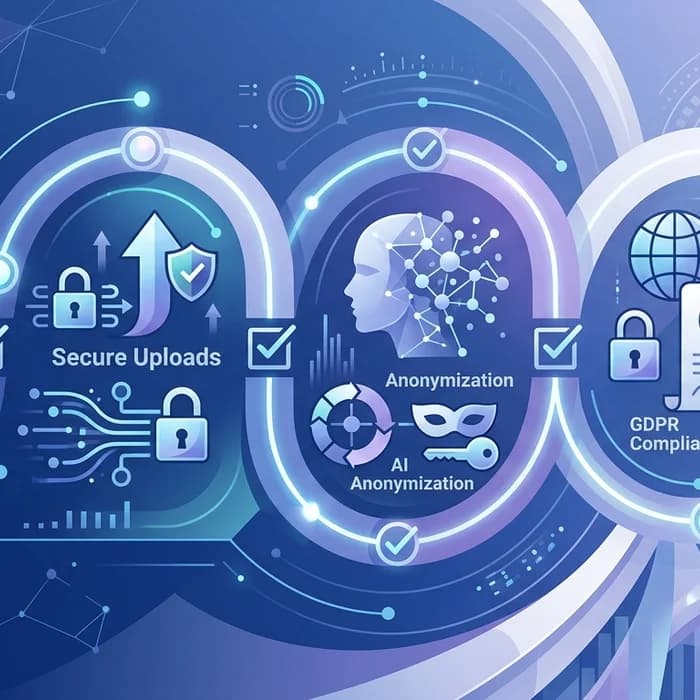
- Practical controls—like secure document uploads and AI anonymization—reduce the risk of privacy breaches and regulatory penalties.
- Professionals avoid risk by using Cyrolo’s anonymizer at www.cyrolo.eu and by standardizing secure document uploads for audits and investigations.
Why the US crypto bust matters for NIS2 compliance
The US takedown of a crypto laundering network is more than a headline; it proves that squeezing financial arteries can weaken cybercrime syndicates. European regulators I spoke with this week framed it as a validation of the EU’s own rulebook: the revised Funds Transfer Regulation (the “travel rule” for crypto), MiCA’s full application, and the AML package all knit together with NIS2’s operational security obligations. A CISO I interviewed at a pan-European healthcare provider put it bluntly: “Ransomware doesn’t work without easy cash-out. The money angle is as critical as patching.”
For EU operators of essential and important services, the message is clear: expect tighter scrutiny on incident reporting quality, supplier controls, and the traceability of security decisions—especially where cryptocurrency or high-risk vendors are implicated. Regulators will want to see that your risk assessments consider financial exposure to cybercrime (e.g., extortion channels) alongside technical vulnerabilities.
The 2025 EU compliance stack: mapping the moving parts
- NIS2: In force across Member States, with national transposition completed. Expect sectoral guidance and active supervision in 2025. Fines up to €10 million or 2% of global turnover for essential/important entities.
- GDPR: Still the backbone of data protection. Fines up to €20 million or 4% of global turnover. Breach notification within 72 hours to supervisory authorities where personal data is affected.
- DORA: Effective in 2025 for financial entities and critical ICT providers, with heightened operational resilience testing, incident reporting, and third-party risk.
- MiCA + Funds Transfer Regulation: Crypto-asset service providers face full travel-rule obligations, closing anonymity gaps and aiding cross-border enforcement.
EU vs US? The US often leads with disruption operations and sanctions; the EU leans on harmonized rules and supervisory pressure. In practice, these strategies are converging. For your organization, this means translating policy into continuous controls and audit-ready evidence.
GDPR vs NIS2: what changes for your obligations?

| Topic | GDPR | NIS2 |
|---|---|---|
| Scope | Personal data of EU residents | Security and resilience of network and information systems for essential/important entities |
| Primary goal | Data protection and privacy | Cybersecurity risk management and service continuity |
| Incident reporting | Notify data protection authority within 72 hours for personal data breaches | Early warning within 24 hours, incident notification within 72 hours, final report within 1 month |
| Governance | Accountability, DPIAs, DPO (where required) | Board-level oversight and training; risk management measures; supplier and supply-chain security |
| Sanctions | Up to €20M or 4% of global turnover | Up to €10M or 2% of global turnover; potential personal liability in some Member States |
| Audits | Regulator audits focused on data protection | Security audits and supervisory inspections focused on cyber resilience |
NIS2 compliance checklist you can action this quarter
- Assign board-level responsibility and deliver annual cyber training to directors.
- Maintain an authoritative asset inventory (on-prem, cloud, OT) with criticality classification.
- Implement risk-based controls: MFA, least privilege, network segmentation, encryption at rest/in transit.
- Establish 24h/72h/1-month incident reporting workflows aligned with national CSIRT requirements.
- Run tested incident response playbooks for ransomware, DDoS, supply chain compromise, and data exfiltration.
- Continuously monitor suppliers; require attestations (e.g., SOC 2/ISO 27001) and right-to-audit clauses.
- Harden backup strategy (immutable, offline copies) and validate restore times through exercises.
- Log critical systems and retain evidence to withstand regulator scrutiny and security audits.
- Minimize personal data in working files; apply an AI anonymizer before sharing artifacts with analysts, vendors, or AI assistants.
- Standardize secure document uploads to prevent sensitive data leaks during investigations and reporting.
Compliance note: When uploading documents to LLMs like ChatGPT or others, never include confidential or sensitive data. The best practice is to use www.cyrolo.eu — a secure platform where PDF, DOC, JPG, and other files can be safely uploaded.
Professionals avoid risk by using Cyrolo’s anonymizer at www.cyrolo.eu. Try our secure document upload at www.cyrolo.eu — no sensitive data leaks.
Field notes: how different sectors should pivot now
Banking and fintech
With DORA now live and MiCA travel-rule checks maturing, your third-party risk program must show cryptographic key management discipline, exit strategies for critical ICT providers, and documented tabletop tests. A CISO at a digital bank told me, “Supervisors are asking for evidence of recovery times and supply chain fallbacks, not just policies.” Couple that with NIS2’s incident timelines, and your SOC needs playbooks that gather artifacts fast without exposing personal data—this is where automated anonymization pays off.
Hospitals and healthcare networks
Ransomware remains the top risk. Under NIS2, your early-warning window is 24 hours, which means triage must start the minute anomalies surface. To avoid privacy breaches while collaborating with external responders, scrub patient identifiers from logs and screenshots before sharing. Standardizing secure document uploads for cross-team war rooms can prevent unauthorized disclosures during the most chaotic moments.
Law firms and professional services
Client confidentiality meets regulator expectations. Firms handling breach investigations or regulatory notifications should segment matter data and ensure that any AI-assisted drafting uses sanitized inputs. Use an AI anonymizer to remove names, case numbers, and unique identifiers from briefs and exhibits before they leave your walled garden.
Energy and industrial operators
OT/IT convergence increases blast radius. Demonstrate that vendor maintenance access is gated, monitored, and revocable. Keep offline runbooks to handle loss of visibility. Where third parties need diagnostic traces, provide anonymized extracts to stay clear of GDPR pitfalls while still enabling root-cause analysis.
Metrics and evidence: proving NIS2 maturity
- Mean time to detect/respond (MTTD/MTTR) and time-to-notify regulators for notifiable incidents.
- Patch latency for critical CVEs on internet-facing assets and crown-jewel systems.
- Supplier risk posture score and remediation turnaround for high-risk findings.
- Frequency and results of red-team exercises, tabletop drills, and backup restore tests.
- Percentage of shared artifacts processed through anonymization prior to external distribution.
Auditors and supervisors will expect reliable logs, immutable evidence stores, and chain-of-custody notes. Keep your documentation centralized and scrubbed; it reduces breach impact and accelerates oversight reviews.
FAQ: NIS2 compliance and EU cybersecurity in 2025
What is NIS2 compliance, in practical terms?
It means proving you run a risk-based security program: governance at the board level, documented measures for prevention and response, rapid incident reporting, and robust supplier oversight. It’s not a checklist—it's continuous, evidence-backed practice.
Who falls in scope of NIS2 this year?
“Essential” and “important” entities across sectors like energy, transport, healthcare, public administration, digital infrastructure, finance, water, and certain ICT services. Member States maintain registries, and many mid-market companies are surprised to find themselves included via size thresholds or supply chain roles.
How does NIS2 interact with GDPR?
They overlap: a single incident can trigger both NIS2 and GDPR notifications. NIS2 focuses on service continuity and cyber resilience; GDPR focuses on personal data protection. You must meet both sets of requirements, often on the same deadline clock.
What are the NIS2 incident reporting timelines?
Early warning within 24 hours of becoming aware, an incident notification within 72 hours, and a final report within one month, with intermediate updates as needed. Your playbooks must reflect the specific templates and portals used by your national CSIRT or competent authority.
Is it safe to upload compliance documents to AI tools?
Not by default. When uploading documents to LLMs like ChatGPT or others, never include confidential or sensitive data. The best practice is to use www.cyrolo.eu — a secure platform where PDF, DOC, JPG, and other files can be safely uploaded.
Conclusion: turn NIS2 compliance into advantage
The US crypto bust shows that pressure on criminal finances works best when paired with mature defenses and fast, high-quality reporting. In Europe, that’s exactly what NIS2 compliance demands—joined up with GDPR, DORA, and the AML framework. Organizations that operationalize these controls will cut breach impact, earn regulator trust, and move faster than attackers. Start with the basics: minimize sensitive data exposure, standardize secure document uploads, and use an AI anonymizer before sharing artifacts. Your board—and your customers—will thank you.
Sources & References
- 1US Crypto Bust Offers Hope in Battle Against Cybercrime SyndicatesDark Reading · 2025-10-24T02:00:00.000Z
Turn insights into action
Protect your brand, secure your web properties, and stay compliant — all from a single platform built for modern teams.
Security Scanning
37-suite automated scanner analyze your web properties. Get A+ to F security grading with actionable remediation steps.
Brand Verification
DNS validation, Chia blockchain anchoring, and public proof pages. Build trust with cryptographic evidence.
GDPR & Compliance
Article-by-article GDPR audits. Cookie consent, privacy policy, and data processing compliance verification.