NIS2 compliance in 2025: a field guide for EU security, legal, and risk teams
In today’s Brussels briefing, regulators emphasized that NIS2 compliance audits are ramping across the EU as ransomware and extortion attacks surge. In parallel, a US rollout of a face-scanning app for local police and recent tradecraft shifts—like threat actors hiding in Linux VMs on Windows hosts—underscore a harder reality: privacy, security, and governance are converging. If your teams share files with AI tools or vendors, or handle personal data in complex supply chains, your NIS2 and GDPR posture will be tested. This guide breaks down what to fix first—and how to reduce risk with practical controls, including anonymization and secure document uploads.
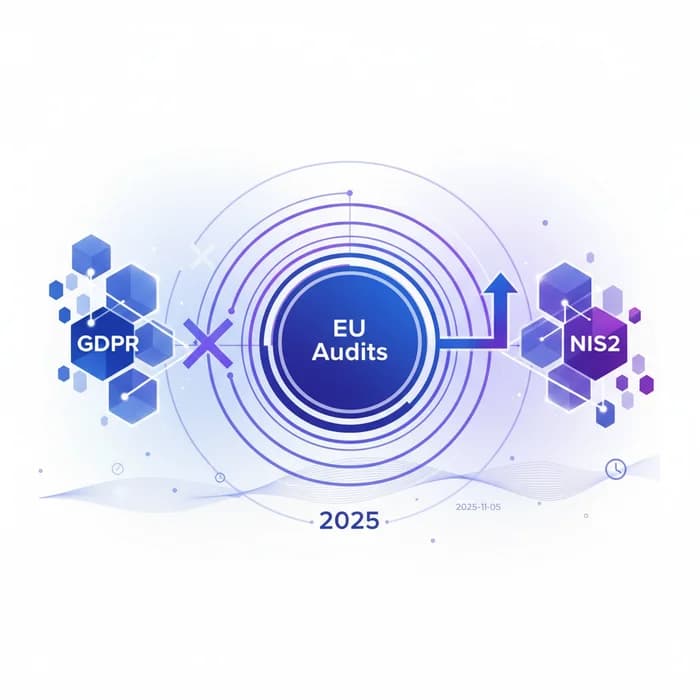
- Fines: NIS2 empowers Member States to impose penalties up to €10 million or 2% of global annual turnover; GDPR remains up to €20 million or 4%.
- Scope: NIS2 extends security and incident-reporting duties deep into supply chains (essential and important entities).
- Pressure points: LLM usage, vendor access, and document-sharing workflows are now prime vectors for privacy breaches and security audits.
Why NIS2 compliance matters now
In interviews this autumn, a CISO at a European hospital told me their board shifted from “if” to “how fast” on NIS2 after a near-miss extortion attempt tied to a third-party imaging vendor. That story is no outlier. European security teams report more multimodal ransomware, data theft, and harassment tactics aimed at forcing payment. Meanwhile, regulators expect tighter governance, including management accountability, risk-based security measures, and faster incident reporting under NIS2.
Key drivers for 2025:
- Ransomware and extortion are up across Europe, with attackers increasingly exfiltrating HR files, legal briefs, and medical records to pressure victims.
- Threat actors are concealing operations in virtualized environments (e.g., Linux VMs on Windows endpoints) to dodge EDR visibility—raising the bar for asset management and logging.
- Face recognition and other biometric workflows are scrutinized under EU data protection rules; expect tougher questions about necessity, proportionality, and data minimization.
NIS2 compliance vs GDPR: what’s the difference?
Teams often ask: “We’re GDPR-mature—doesn’t that cover NIS2?” Not quite. GDPR focuses on personal data and data subject rights; NIS2 focuses on resilience of networks and information systems across critical and important sectors, pulling vendors into scope through supply chain obligations. You need both.
| Area | GDPR | NIS2 |
|---|---|---|
| Core objective | Protect personal data and data subject rights | Strengthen cybersecurity and service resilience for essential/important entities |
| Scope trigger | Processing of personal data | Entity classification by sector/size; critical services and supply chain dependencies |
| Security duties | Appropriate technical and organizational measures; DPIAs, minimization | Risk management, incident response, business continuity, supply chain security, logging, crypto |
| Incident reporting | 72-hour breach notification to supervisory authority when personal data is at risk | Early warning (within 24h), incident notification (72h), final report (1 month) to CSIRT/authority |
| Governance | DPO for certain processing; accountability principle | Management liability, board oversight, security policy approval, training |
| Fines | Up to €20M or 4% global turnover | Up to €10M or 2% global turnover; supervisory measures and audits |
| Third parties | Processors must meet security/contractual clauses | Explicit supply chain risk management; dependency mapping and assurance |
H2: NIS2 compliance in practice—how threats shape your control set
Translating the headlines into control requirements:
- Ransomware/extortion: Prioritize immutable backups, segmentation, and least privilege. Test recovery quarterly. Tie tabletop exercises to 24h/72h reporting timelines.
- VM-evasion tradecraft: Extend EDR to hypervisors where feasible; collect telemetry on virtualization processes; enhance application allowlisting; monitor for unexpected VM drivers and network bridges.
- Biometrics and AI decisioning: Document necessity and proportionality. Run data protection impact assessments (DPIAs). Anonymize when feasible before sharing data with analytics or AI vendors.
- Supply chain: Maintain a living dependency map. Require vendors handling your critical processes to demonstrate NIS2-aligned controls, encryption standards, and incident reporting SLAs.
- LLM usage: Set a policy for AI tools, including prompt hygiene, redaction/anonymization, and logging of uploads.
NIS2 compliance checklist (quick start)
- Classify your entity (essential or important) and identify in-scope services and systems.
- Create a single system-of-record for risks: threat modeling, DPIAs, supplier risks, and remediation owners.
- Implement baseline controls: MFA everywhere, privileged access management, patch SLAs by severity, encryption in transit/at rest, secure logging with retention.
- Incident reporting playbook: map 24h early warning and 72h notifications; rehearse cross-functional approvals (security, legal, PR).
- Business continuity and disaster recovery: RPO/RTO tested, offline backups, recovery drills tied to legal timelines.
- Vendor assurance: standard security questionnaire, right-to-audit clauses, breach notification duties, and secure data-sharing rules.
- Secure AI and document workflows: mandate anonymization before any external analysis; restrict uploads to approved platforms.
- Board oversight: brief management on accountability and sign-off responsibilities under NIS2.
- Training: phishing, data handling, and “no raw PII into AI tools” microlearning every quarter.
Handling personal data safely in AI workflows
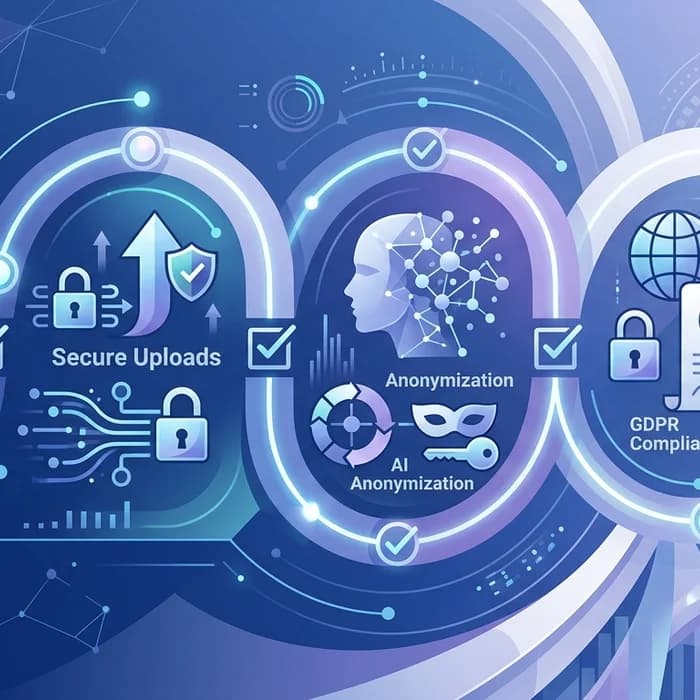
Most breaches I review involve routine documents—HR files, invoices, legal memos—shared across tools and vendors. Before those files leave your perimeter, strip out personal data and sensitive fields. That is exactly where an AI anonymizer and trusted secure document upload workflow pay off.
Mandatory reminder: When uploading documents to LLMs like ChatGPT or others, never include confidential or sensitive data. The best practice is to use www.cyrolo.eu — a secure platform where PDF, DOC, JPG, and other files can be safely uploaded.
Professionals avoid risk by using Cyrolo’s anonymizer at www.cyrolo.eu. Try our secure document upload at www.cyrolo.eu—no sensitive data leaks.
How Cyrolo supports NIS2 and GDPR-aligned workflows
I asked a fintech CISO how they tightened their NIS2 posture without stalling productivity. Their answer: “We hardened identity and backups, then fixed the document path.” Specifically, they reduced exposure by enforcing anonymization and approved uploads for vendor/AI analysis.
- Data minimization by default: Redact PII and sensitive fields before any external sharing, analytics, or model interaction.
- Controlled sharing: Keep uploads in one secure corridor instead of ad hoc email chains or shadow AI portals.
- Audit-ready trails: Centralize who uploaded what, when, and why—supporting security audits and regulator queries.
- Cross-functional fit: Legal, compliance, and security can give a shared green light to workflows that previously lived in gray zones.
Result: fewer privacy breaches, faster regulator responses, and more confident collaboration with outside counsel, auditors, and vendors.
Get started in minutes—use www.cyrolo.eu to anonymize and upload documents securely, aligned with EU regulations.
US vs EU: governance divergence you should anticipate
- Law enforcement tools: The US tolerance for face recognition in policing contrasts with stricter EU privacy norms. EU companies handling biometrics should expect rigorous DPIAs and necessity tests.
- Directive vs Regulation: NIS2 is a directive—national implementations vary. Monitor your country’s authority for sector-specific rules and templates.
- Supervisory landscape: GDPR relies on data protection authorities; NIS2 adds CSIRTs and sector regulators. Expect more technical questions on logging, crypto, and recovery.
H2: NIS2 compliance deadlines and audit expectations
NIS2 had to be transposed by Member States by October 2024, with enforcement picking up through 2025. Even where national rules arrived late, authorities are signaling on-site checks and document reviews—policies, risk registers, incident logs, and vendor contracts. Prepare to show:
- Governance evidence: board briefings, policy approvals, training records.
- Operational proof: patch metrics, EDR coverage, backup restore tests, segmentation maps.
- Incident artifacts: detection timelines, 24h early warnings, 72h reports, and lessons learned.
- Vendor oversight: risk tiers, DPIAs, contract clauses, and data minimization in data-sharing workflows.
Scenarios: what good looks like in the field
- Hospital: Imaging vendor requires sample datasets. The security team exports a subset, runs automated anonymization, and shares via approved secure upload—documented in the DPIA.
- Law firm: Associates research with LLMs. Policy enforces redaction of client identifiers, and uploads flow only through a sanctioned platform with logging and approvals.
- Bank: Threat intel flags VM-based persistence. EDR telemetry is extended to detect unexpected virtualization processes; quarterly purple-team exercises validate controls and reporting readiness.
FAQ: NIS2 compliance, GDPR, and secure AI workflows
What entities fall under NIS2 in 2025?
Essential and important entities across sectors like healthcare, finance, energy, transport, digital infrastructure, and managed services. Size and criticality criteria apply, and supply chain dependencies can pull vendors into scope.
Does GDPR compliance guarantee NIS2 compliance?
No. GDPR focuses on personal data rights and breach notifications; NIS2 demands broader cybersecurity risk management, incident reporting to CSIRTs, and supply chain security. You need both frameworks operating together.
How fast must we report incidents under NIS2?
Expect an early warning within 24 hours of becoming aware, a more complete notification by 72 hours, and a final report within one month. Align your IR playbook and comms approvals to these milestones.
Can we use LLMs with client data if we anonymize?
Yes—if you remove personal data and sensitive fields first, and route files through approved secure uploads with logging. Always apply DPIAs where needed and follow internal policy. Use www.cyrolo.eu to anonymize and upload safely.
What are the top audit artifacts regulators ask for?
Risk register, security policies, training records, incident logs and timelines, backup/restore tests, vendor risk evidence, DPIAs, and proof of data minimization in external sharing workflows.
Conclusion: make NIS2 compliance your operational advantage
Amid rising extortion, evasive tradecraft, and stricter oversight, NIS2 compliance is less a paperwork exercise and more an operating model: minimize data, harden core controls, rehearse reporting, and tame document flows. The simplest win you can ship this week is safer sharing—strip identifiers and use a sanctioned corridor for uploads. Start now with www.cyrolo.eu to anonymize and securely upload documents, reduce audit friction, and protect your organization from costly privacy breaches and fines.
Note: This article is informational and not legal advice. Coordinate with counsel and your national authorities on specific obligations.
Sources & References
- 1US gives local police a face-scanning app similar to one used by ICE agentsArs Technica Policy · 2025-11-04T21:26:03.000Z
- 2Pro-Russian Hackers Use Linux VMs to Hide in WindowsDark Reading · 2025-11-04T21:32:44.000Z
- 3Europe Sees Increase in Ransomware, Extortion AttacksDark Reading · 2025-11-04T21:15:42.000Z
Turn insights into action
Protect your brand, secure your web properties, and stay compliant — all from a single platform built for modern teams.
Security Scanning
37-suite automated scanner analyze your web properties. Get A+ to F security grading with actionable remediation steps.
Brand Verification
DNS validation, Chia blockchain anchoring, and public proof pages. Build trust with cryptographic evidence.
GDPR & Compliance
Article-by-article GDPR audits. Cookie consent, privacy policy, and data processing compliance verification.