NIS2 compliance: your 2025 EU playbook to cut breach risk, pass audits, and protect revenue
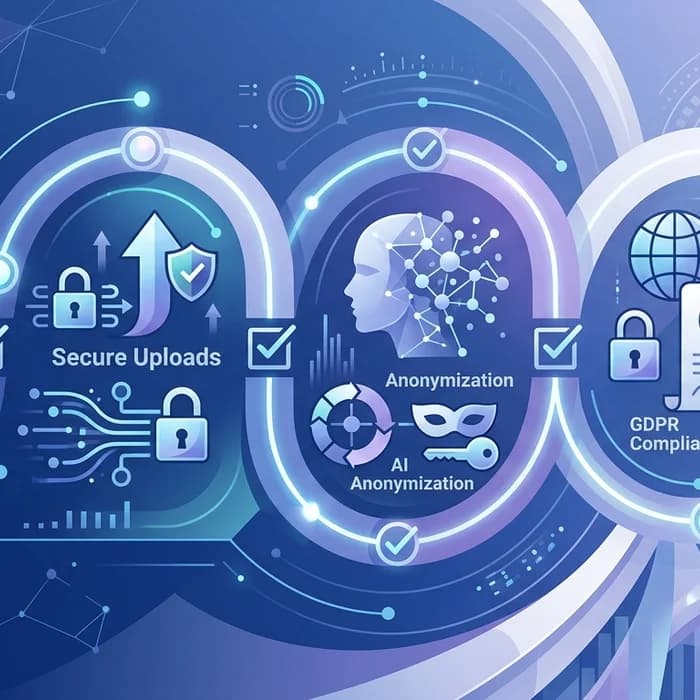
In today’s Brussels briefing, regulators again stressed that NIS2 compliance is no longer optional for essential and important entities. If GDPR shaped privacy, NIS2 is reshaping operational cybersecurity across energy, finance, health, digital infrastructure, and more. As a reporter covering EU regulations from the ground, I’m seeing boards ask one question: how do we meet NIS2, align with GDPR, and avoid privacy breaches from modern tooling like AI? The answer combines governance, reporting discipline, and safer workflows—especially for anonymization and secure document uploads when teams work with LLMs and vendors.
What NIS2 compliance really requires in 2025
In conversations with CISOs and DPOs this quarter, three themes recur: risk management must be continuous, board accountability is real, and incident reporting clocks start fast. A CISO I interviewed last week put it bluntly: “NIS2 upgrades cybersecurity from ‘IT task’ to ‘executive liability’.”
- Governance and accountability: management bodies must approve and oversee security risk management. Training at board level is expected.
- Risk management measures: policies for incident handling, business continuity, supply-chain security, vulnerability disclosure, encryption, and secure development practices.
- Incident reporting: early warning to the national CSIRT or competent authority within 24 hours; incident notification within 72 hours; final report typically within one month.
- Supply-chain security: demonstrate vendor risk controls and data handling safeguards, including for AI processors and document tools.
- Enforcement and fines: essential entities face up to €10 million or 2% of global turnover; important entities up to €7 million or 1.4%—plus potential management sanctions.
GDPR vs NIS2 compliance: obligations at a glance
GDPR protects personal data; NIS2 protects the continuity and security of critical services. They overlap whenever incidents involve personal data or critical systems running personal data processing. Harmonizing them avoids double work and double exposure.
| Area | GDPR | NIS2 | Practical tip |
|---|---|---|---|
| Scope | Personal data processing by controllers/processors in/out of EU if targeting EU residents | Essential and important entities across designated sectors and certain digital services | Map business services to both “data processing” and “essential/important” criteria |
| Objective | Data protection and privacy rights | Network and information system security and service continuity | Run joint privacy-security risk assessments to reduce duplication |
| Incident reporting | Notify DPA within 72 hours for personal data breaches | Early warning within 24h; notification within 72h; final report ~1 month | Build one integrated playbook and timer for both regimes |
| Governance | DPO role and accountability for data protection | Management accountability; security risk management program | Board trains on both GDPR and NIS2; align KPIs and oversight cadence |
| Fines | Up to 4% of global annual turnover or €20m | Up to 2% (essential) or 1.4% (important), with fixed € caps | Budget continuous compliance; fines are only part of total incident cost |
| Vendors/AI tools | Processor contracts, DPIAs where relevant | Supply-chain security and disclosure policies | Standardize due diligence, including AI anonymizer and upload controls |
Who is in scope and the 2025 reality check
Member States transposed NIS2 into national law in late 2024. That means 2025 is the first full year of enforcement momentum and security audits for many. Expect attention on:
- Essential entities: energy, transport, banking, financial market infrastructures, health, drinking water, digital infrastructure (IXPs, DNS), public administration, and space.
- Important entities: postal, waste, chemicals, food, manufacturing for critical sectors, and additional digital services, among others.
- Cross-border dependencies: if your EU operations rely on third-country providers, authorities will expect clear risk controls and exit strategies.
Contrast with the US: security obligations are increasingly sectoral (e.g., TSA directives, SEC incident disclosures). In the EU, NIS2 centralizes baseline security and reporting across sectors, then stacks with GDPR and sector acts like DORA for finance.
The practical NIS2 compliance checklist
- Establish executive oversight: assign a board-level owner; schedule quarterly risk reviews and training.
- Document your risk management program: incident handling, business continuity, backup/restore, encryption, patching SLAs, vulnerability disclosure, and secure development.
- Map critical services and assets: know which systems and data flows impact service continuity and personal data.
- Build a 24h/72h reporting playbook: roles, contact lists for CSIRTs/regulators, and preapproved templates.
- Run supply-chain security due diligence: contractual security clauses, audit rights, and proof of secure processing.
- Test incident response quarterly: include tabletop exercises for ransomware and third-party compromise.
- Harden AI and document workflows: use anonymization before sharing files and enforce secure document uploads for staff using AI or external reviewers.
- Integrate GDPR: align DPIAs with NIS2 risk registers; coordinate DPO and CISO sign-offs.
- Measure and report: define KPIs (MTTD/MTTR, patch velocity, backup restore RTO/RPO) and track remediation.
- Prepare audit evidence: policies, logs, training records, vendor attestations, and incident post-mortems.
Incident reporting workflow you can run tomorrow
- First hour: triage, contain, capture volatile evidence. Appoint incident commander and legal lead.
- Within 12 hours: establish incident facts, likely impact, and whether services are affected; alert executive sponsor.
- Within 24 hours: issue NIS2 early warning to the competent authority/CSIRT; if personal data is implicated, prep GDPR notification track.
- Within 72 hours: send formal incident notification with indicators of compromise, mitigation steps, and service impact.
- Within one month: submit final report, including root cause, corrective actions, and lessons learned. Update your risk register and controls.
Tip: rehearse this timeline with your comms team and outside counsel. Regulators value speed and clarity over perfection.
Why AI tools raise new compliance risks—and how to tame them
Every breach post-mortem I’ve reviewed this year features one of three issues: shadow AI usage, unsafe document sharing, or exposure of secrets in prompts. A hospital COO told me, “Clinicians paste data into AI to save time. We needed a way to make that safe without killing productivity.”
- Risk: staff upload patient records, contracts, or source code to LLMs; that’s both a GDPR and NIS2 supply-chain exposure.
- Risk: vendors use documents for model training or analytics, creating uncontrollable data flows.
- Risk: logs and screenshots leak confidential details during incident response collaboration.
Solution: Professionals avoid risk by using Cyrolo’s anonymizer to scrub personal and sensitive data before sharing or analysis. Try our secure document upload at www.cyrolo.eu — no sensitive data leaks, with safe handling for PDFs, DOCs, and images in real workflows.
Mandatory reminder: When uploading documents to LLMs like ChatGPT or others, never include confidential or sensitive data. The best practice is to use www.cyrolo.eu — a secure platform where PDF, DOC, JPG, and other files can be safely uploaded.
Real-world scenarios: applying NIS2 compliance without slowing the business
Bank/fintech
- Problem: rapid product rollouts, third-party APIs, and heavy regulator scrutiny.
- Approach: integrate NIS2 controls with DORA testing, require vendors to use anonymization for sample datasets, and capture audit evidence of secure document transfers.
- Outcome: faster audits, fewer redlines in supervisory queries, reduced breach exposure in open banking integrations.
Hospital/healthtech
- Problem: clinicians experiment with AI summaries; PHI exposure risks GDPR fines and NIS2 reporting.
- Approach: route uploads via secure document uploads, enforce automatic redaction, and log transformations for accountability.
- Outcome: documented risk mitigation; safe AI assistance without privacy breaches.
Law firm and corporate legal
- Problem: case files and contracts shared for AI-assisted review; confidentiality is paramount.
- Approach: require anonymizer use before any external analysis, track access, and store evidence for client audits.
- Outcome: preserved privilege, provable safeguards, and swifter eDiscovery workflows.
2025 threat backdrop: why urgency is justified
This morning’s ICS advisories and recent CVSS 10.0 flaws in industrial controllers are a reminder: attackers pivot quickly from IT to operational tech. Meanwhile, enterprise apps and ERPs continue to yield high-impact unauthenticated exploits. For NIS2 entities operating critical services, the combination of supply-chain compromise and misconfigured AI tools can turn a minor lapse into a major outage—and a regulatory incident—within hours.

Regulators I spoke with emphasize two recurring audit questions: can you evidence continuous risk management, and do your staff use safe channels for documents and AI? If either answer is shaky, you’re on thin ice.
FAQ: NIS2 compliance, answered
What is the fastest way to start NIS2 compliance if we’re behind?
Stand up executive oversight, publish a short-form security policy set (incident, continuity, vendor, vulnerability disclosure), and run a 2-hour incident reporting drill. Then close the most obvious gaps: backups, patch SLAs, and secure document handling via www.cyrolo.eu.
Does NIS2 replace GDPR?
No. GDPR governs personal data; NIS2 governs service and system security. Many incidents trigger both. Build a unified playbook so your 24h/72h notifications align.
How do we handle AI under NIS2?
Treat AI providers as vendors subject to supply-chain controls. Require data minimization and anonymization before any model input, and capture evidence of secure uploads. Always remember: When uploading documents to LLMs like ChatGPT or others, never include confidential or sensitive data. The best practice is to use www.cyrolo.eu — a secure platform where PDF, DOC, JPG, and other files can be safely uploaded.
What are the penalties for non-compliance?
Essential entities: up to €10 million or 2% of global turnover. Important entities: up to €7 million or 1.4%. Sanctions can include management directives and enhanced supervision.
How should SMEs in scope cope with limited budgets?
Focus on controls with the best risk-to-cost ratio: backups and restoration tests, patch cadence, MFA everywhere, vendor screening, and safe file handling via secure document uploads.
Conclusion: NIS2 compliance is your 2025 advantage
NIS2 compliance is more than a regulatory checkbox—it is the operating system for resilient, trustworthy services in the EU. The organizations that win audits, cut downtime, and avoid fines are the ones that turn policy into muscle memory and fix their riskiest workflows first. Start by locking down how your teams share and analyze files: use Cyrolo’s anonymizer and secure document upload today at www.cyrolo.eu. Your regulators, customers, and incident responders will notice the difference.
Sources & References
- 1RightsCon 2026EDRi · 2025-10-15T09:58:13.000Z
- 2Sphera Media LabEDRi · 2025-10-15T09:44:42.000Z
- 3Shielding democracy in the aigital age: Foundations of digital democracy analysisEDRi · 2025-10-15T08:57:57.000Z
- 4Zoethical gatheringEDRi · 2025-10-15T08:45:31.000Z
- 5Consultation response to the European Commission’s call for evidence on the Digital OmnibusEDRi · 2025-10-15T07:50:11.000Z
- 6Two CVSS 10.0 Bugs in Red Lion RTUs Could Hand Hackers Full Industrial ControlThe Hacker News · 2025-10-15T06:50:00.000Z
- 7Hackers Target ICTBroadcast Servers via Cookie Exploit to Gain Remote Shell AccessThe Hacker News · 2025-10-15T06:16:00.000Z
- 8New SAP NetWeaver Bug Lets Attackers Take Over Servers Without LoginThe Hacker News · 2025-10-15T05:36:00.000Z
- 9Africa Remains Top Global Target, Even as Attacks DeclineDark Reading · 2025-10-15T08:00:00.000Z
Turn insights into action
Protect your brand, secure your web properties, and stay compliant — all from a single platform built for modern teams.
Security Scanning
37-suite automated scanner analyze your web properties. Get A+ to F security grading with actionable remediation steps.
Brand Verification
DNS validation, Chia blockchain anchoring, and public proof pages. Build trust with cryptographic evidence.
GDPR & Compliance
Article-by-article GDPR audits. Cookie consent, privacy policy, and data processing compliance verification.