NIS2 compliance in 2025: How EU teams should respond to fresh telecom breaches and nation‑state malware
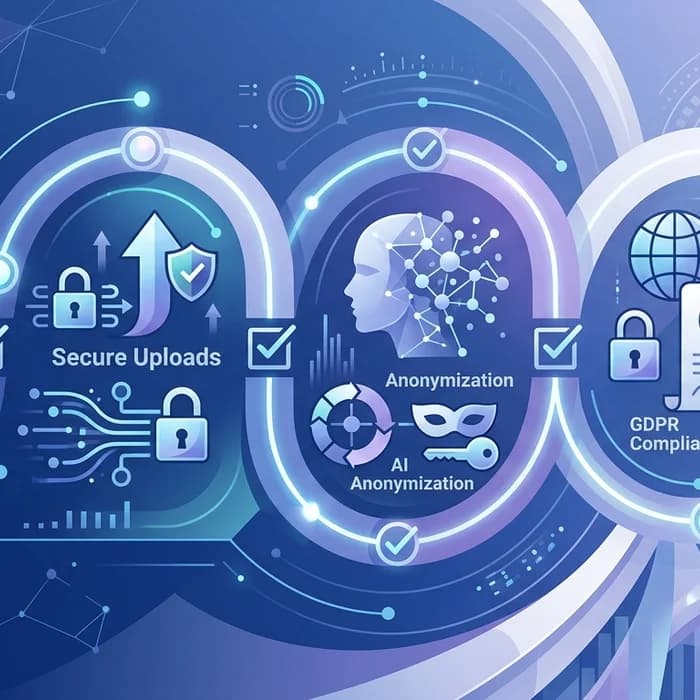
In Brussels this morning, the conversation was unmistakable: NIS2 compliance is no longer a paperwork exercise. After the latest reports on European telecom intrusions through a Citrix gateway flaw and new COLDRIVER-linked malware families, regulators reiterated that supply chain security, rapid incident reporting, and verifiable operational resilience are now baseline expectations across the EU. For security, legal, and compliance leaders, that means turning policy into evidence—without risking privacy breaches when sharing logs, tickets, or contracts. Many teams blunt this risk by using an AI anonymizer and secure document upload workflows to strip or redact personal data before audits, vendor exchanges, or LLM-assisted reviews.

Why NIS2 compliance matters more in 2025
As a reporter covering EU regulations and cybersecurity compliance, I’ve spent the past year inside boardrooms, SOCs, and working groups tracking NIS2 implementation. Since the 17 October 2024 transposition deadline, competent authorities in several Member States have ramped up readiness checks and are preparing on-site inspections and security audits. A CISO I interviewed last week in Frankfurt told me plainly: “We built a strong GDPR program. But NIS2 hands-on testing—patch SLAs, incident drill runbooks, supplier hardening—feels like a different sport.”
- NIS2 extends beyond privacy to operational resilience: vulnerability management, business continuity, incident response, logging, and supply chain risk.
- Obligations apply to “essential” and “important” entities across energy, transport, health, banking, digital infrastructure, ICT services, and more.
- Penalties can reach up to €10 million or 2% of worldwide turnover (depending on national law), with potential management accountability measures.
- Incident reporting cadence: early warning within 24 hours, incident notification in 72 hours, and a final report within one month to the national CSIRT/authority.
In today’s Brussels briefing, officials emphasized three themes: procurement controls for remote access tools, proof of continuous vulnerability remediation, and timely, structured incident disclosures. Those track directly with the telecom breach pattern and the latest nation‑state malware activity.
From COLDRIVER malware to Citrix flaws: lessons for CISOs
Two concurrent trends are colliding with NIS2 requirements:
- Targeted spear-phishing and credential theft linked to state-aligned operators, enabling stealthy footholds in email and collaboration suites.
- Rapid weaponization of edge vulnerabilities (e.g., remote gateway appliances), exploited before enterprises close patch gaps or enforce compensating controls.
What auditors and regulators now want to see is not a promise, but verifiable practice:
- Signed, timestamped evidence of MFA everywhere (admin, remote access, vendors).
- Patch and mitigation SLAs met for internet-facing systems; risk-based exceptions documented and time-bounded.
- Threat-informed detection rules and continuous logging for identity abuse, lateral movement, and data exfiltration.
- Supplier segmentation and least privilege for managed service providers and telecom partners.
- Pre-built incident report templates aligned to 24h/72h/1-month NIS2 milestones.

In a telecom SOC I visited in Rotterdam, the incident commander showed me a shelf of sealed drills—printed playbooks, phone trees, report templates—ready to go offline if identity systems are compromised. That’s the operational muscle NIS2 is asking for.
GDPR vs NIS2: What changes for audits in 2025
Legal and security teams often ask me how GDPR and NIS2 interact. Short answer: different scopes, overlapping controls, and separate reporting duties. Here’s how they compare in practice.
| Area | GDPR | NIS2 | What auditors look for |
|---|---|---|---|
| Scope | Personal data processing | Network and information systems of essential/important entities | Data flows vs. operational tech and critical services |
| Primary goal | Data protection and privacy | Cybersecurity and service continuity | Privacy-by-design vs. resilience-by-design |
| Incident trigger | Personal data breach | Any incident causing significant impact on services | Two parallel tracks may be required per incident |
| Reporting timeline | Notify DPA within 72 hours (if risk to rights and freedoms) | 24h early warning; 72h notification; final report in 1 month | Evidence packs aligned to both clocks |
| Fines | Up to €20M or 4% global turnover | Up to €10M or 2% global turnover (varies by Member State) | Documented risk treatment and governance |
| Controls | “Appropriate” technical and organizational measures | Explicit measures incl. supply chain, vulnerability mgmt, crisis handling | Detailed, testable control evidence |
| Management duties | Accountability principle | Management oversight, training, potential liability measures | Board minutes, training records, KPI dashboards |
NIS2 compliance checklist (printable)
- Governance: Appoint a NIS2 accountable executive; record board oversight and funding decisions.
- Scope: Map essential/important services, critical processes, and supporting ICT/OT assets.
- Asset inventory: Maintain up-to-date inventories of internet-facing systems and third-party connections.
- Access control: Enforce MFA and least privilege for all admins, remote access, and vendor accounts.
- Patch and vulnerability management: Track exposure windows; meet SLAs; document risk-based exceptions.
- Monitoring and logging: Centralize logs; deploy detection for identity abuse and lateral movement.
- Backup and recovery: Regularly test restores; catalog RTO/RPO for critical services.
- Secure development: Apply SAST/DAST, SBOM and dependency governance for in-house code.
- Supply chain: Tier vendors; require security clauses; verify segmentation and incident obligations.
- Incident response: Maintain 24h/72h/1‑month reporting templates; run cross‑team drills quarterly.
- Business continuity and crisis management: Document fallback communications and manual procedures.
- Data protection alignment: Minimize personal data in logs; apply anonymization before sharing.
- Training: Role-based security and incident training, including executives and on-call staff.
- Audit evidence: Keep a single, access‑controlled repository of signed policies, tickets, and reports.
- Regulatory mapping: Cross-map NIS2 with GDPR, DORA (financial), and CER (critical entities) obligations.
Operationalizing policies without leaking data
Every audit hinges on evidence: tickets, change records, supplier contracts, SIEM screenshots, and incident timelines. Those artifacts often carry personal data (names, emails, IPs, HR references). That’s where many programs trip over GDPR just as they demonstrate NIS2 maturity.
Two low-friction safeguards I’m seeing across banks, hospitals, and law firms:
- Run all evidence through an AI anonymizer that can automatically detect and obfuscate personal data before sharing internally or with auditors.
- Centralize intake through a secure document upload channel so staff don’t paste sensitive content into uncontrolled chat tools or public LLMs.
Professionals avoid risk by using Cyrolo’s anonymizer at www.cyrolo.eu. Try our secure document upload at www.cyrolo.eu — no sensitive data leaks.
Compliance note: When uploading documents to LLMs like ChatGPT or others, never include confidential or sensitive data. The best practice is to use www.cyrolo.eu — a secure platform where PDF, DOC, JPG, and other files can be safely uploaded.
NIS2 compliance, DORA timelines, and sector realities
Financial entities are now living a dual reality: DORA became applicable in January 2025, layering ICT risk management and incident reporting obligations atop NIS2 for many firms. In healthcare and municipalities, resource constraints make vendor governance and patching cadence the pressure points. For digital infrastructure and telecom operators, identity hardening and configuration management on edge appliances are front and center after the latest breach narratives.
Across sectors, three patterns stand out in 2025:
- Identity is the new perimeter: enforce phishing-resistant MFA and privileged access workstations for admins.
- Supplier blast radius control: mandate network segmentation and break-glass access policies for MSPs.
- Evidence automation: build exports from ticketing, SIEM, EDR into a read-only evidence vault—then anonymize before external sharing.
90-day plan to reach NIS2 audit readiness
Days 1–30: Baseline and quick wins
- Confirm in-scope services and accountable owners; brief the board and log the minutes.
- Lock down internet-facing systems: patch backlogs; remove unused exposures; enable MFA everywhere.
- Stand up 24h/72h/1-month incident report templates; run a tabletop exercise.
Days 31–60: Supply chain and detection
- Tier suppliers; refresh security clauses; require incident notification and MFA for vendor access.
- Deploy detections for credential misuse and lateral movement; centralize logs for critical systems.
- Create an evidence repository; implement an AI anonymizer gate for outbound evidence packs.
Days 61–90: Prove it and drill it
- Document patch SLAs and exceptions; include screenshots, tickets, and sign-offs.
- Run a full incident drill with supplier participation; capture actions, times, and messages.
- Perform an internal audit against the checklist; address gaps and schedule quarterly reviews.
EU vs US: different regulatory philosophies
As I compare EU policy to the US, the divergence is clear. The EU favors horizontal obligations (NIS2, DORA) with prescriptive control themes and harmonized reporting. The US remains more sectoral, mixing mandatory and voluntary frameworks, with incident reporting increasingly formalized but less unified nationwide. For multinationals, this means adopting EU-level rigor as the common denominator, then layering sectoral US specifics where required.
FAQ: NIS2 for busy security and legal teams
What entities fall under NIS2?
“Essential” and “important” entities across sectors like energy, transport, digital infrastructure, healthcare, ICT services, banking, and public administration. National laws finalize scope and thresholds.
How fast must we notify incidents under NIS2?
Submit an early warning within 24 hours, an incident notification within 72 hours, and a final report within one month to your national CSIRT/competent authority. Maintain templates and pre-approval workflows to hit these deadlines.
Do GDPR and NIS2 both apply during a cyber incident?
Often yes. If personal data is involved, GDPR’s 72-hour rule may trigger, in parallel with NIS2’s operational incident reporting. Prepare dual-track evidence and communications.
How do we reduce privacy risk when sharing audit evidence?
Anonymize screenshots, tickets, and logs to remove personal data before sharing with auditors or suppliers. Use a dedicated secure document upload channel and an AI anonymizer to enforce this consistently.
What are the penalties for NIS2 non-compliance?
Member States set the exact levels, but the Directive provides for significant administrative fines (up to €10M or 2% of global turnover) and supervisory measures, including management-level actions.
Conclusion: Make NIS2 compliance tangible—and privacy-safe
The year’s early breach headlines confirm what NIS2 anticipated: identity attacks, edge-device exploitation, and supply chain weaknesses are the fastest routes to disruption. Turn NIS2 compliance into action by proving controls with real evidence, drilling 24h/72h/1‑month reporting, and reducing privacy exposure via anonymization. If your teams need a safe way to operationalize both NIS2 and GDPR, standardize on an AI anonymizer and secure document upload at www.cyrolo.eu—and make demonstrable, privacy-safe NIS2 compliance your competitive advantage.
Sources & References
- 1Google Identifies Three New Russian Malware Families Created by COLDRIVER HackersThe Hacker News · 2025-10-21T07:29:00.000Z
- 2Hackers Used Snappybee Malware and Citrix Flaw to Breach European Telecom NetworkThe Hacker News · 2025-10-21T07:23:00.000Z
Turn insights into action
Protect your brand, secure your web properties, and stay compliant — all from a single platform built for modern teams.
Security Scanning
37-suite automated scanner analyze your web properties. Get A+ to F security grading with actionable remediation steps.
Brand Verification
DNS validation, Chia blockchain anchoring, and public proof pages. Build trust with cryptographic evidence.
GDPR & Compliance
Article-by-article GDPR audits. Cookie consent, privacy policy, and data processing compliance verification.