NIS2 compliance in 2025: a practical roadmap for EU organizations (and how to avoid data leaks while you get there)
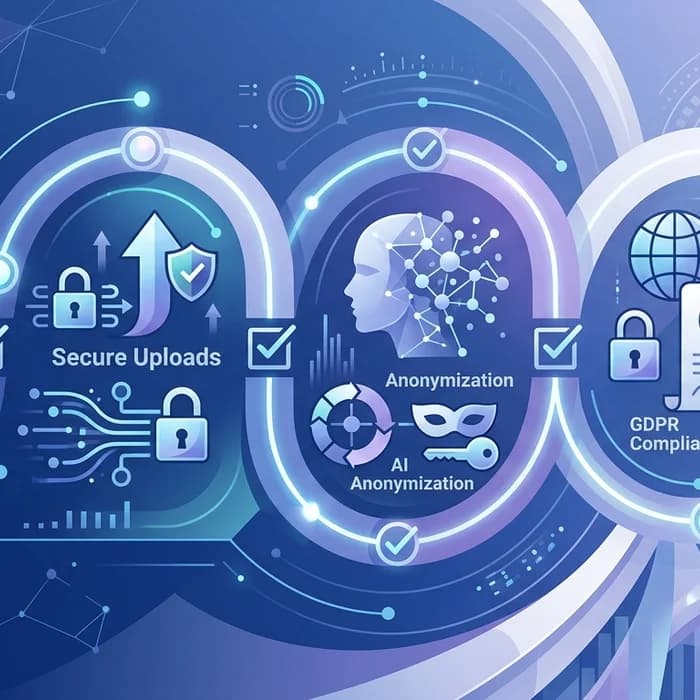
In today’s Brussels briefing, regulators and industry agreed on one point: NIS2 compliance is the most immediate cybersecurity obligation facing EU organizations in 2025. Whether you’re a bank, hospital, SaaS vendor, law firm, or a utilities operator, the Directive’s wider scope, tighter incident timelines, and governance duties now shape your risk register alongside GDPR, DORA and the AI Act. Below I unpack what’s changing, what auditors will ask for, and how privacy-first tooling—especially AI anonymizers and secure document uploads—can cut breach risk and accelerate security audits.

What is NIS2 compliance and why it matters now
NIS2 is the EU’s horizontal cybersecurity directive designed to harden essential and important entities across critical sectors and key digital services. Member States had to transpose it by 17 October 2024, with enforcement ramping up through 2025. In practical terms, NIS2 imposes:
- Board-level accountability for cybersecurity risk management.
- Mandatory incident handling, business continuity, and supply chain security controls.
- 48-hour early warning for significant incidents and detailed follow-ups.
- Risk-based technical and organizational measures, documented and auditable.
- Potential administrative fines (commonly up to €10 million or 2% of global turnover, depending on Member State transposition).
Unlike GDPR (which focuses on personal data), NIS2 targets the resilience of networks and information systems. In interviews I’ve conducted with CISOs in finance and healthcare, the toughest gap is consistent: aligning security architecture with governance proof—showing auditors that controls exist, are proportionate, and are used in day-to-day workflows, especially when staff work with AI tools.
GDPR vs NIS2: same risk language, different outcomes
GDPR and NIS2 share vocabulary—risk assessments, proportionality, incident reporting—but diverge on what they protect and how regulators measure success. Here’s a quick side-by-side to calibrate your program.
| Dimension | GDPR | NIS2 |
|---|---|---|
| Core purpose | Data protection and privacy of individuals’ personal data | Cybersecurity and resilience of networks/information systems |
| Who is in scope | Controllers and processors of personal data | Essential and important entities across critical sectors and key digital services |
| Key obligations | Lawful bases, data minimization, DPIAs, data subject rights, breach notification | Risk management policies, incident handling, supply chain security, business continuity, testing |
| Incident reporting timeline | 72 hours to notify the DPA if a personal data breach is likely to risk rights/freedoms | Early warning within 24–48 hours (Member State specifics), detailed report within days |
| Governance focus | Data protection officer (where required), privacy by design | Management accountability, board oversight, security by design |
| Sanctions | Up to €20 million or 4% of global annual turnover | Typically up to €10 million or 2% of global annual turnover (Member State dependent) |
| Audit evidence | Records of processing, DPIAs, retention schedules, breach logs | Risk registers, architecture diagrams, incident runbooks, supplier assessments, test reports |
NIS2 compliance checklist: what auditors expect to see
Use this condensed checklist to prepare for security audits and supervisory inquiries. Map each item to owners, systems, and timelines:
- Governance and risk
- Board-approved cybersecurity policy with roles, budgets, and KPIs.
- Enterprise risk assessment tied to threat modeling and business impact.
- Documented security-by-design and change management processes.
- Technical controls
- Identity and access management with MFA, least privilege, and joiner/mover/leaver flows.
- Network segmentation, EDR, patch and vulnerability management SLAs.
- Data loss prevention (DLP), encryption in transit/at rest, key management.
- Operational resilience
- Incident response plan with a 24/7 on-call and tested runbooks.
- Backup/restore and disaster recovery testing with RTO/RPO targets.
- Business continuity plan covering critical processes and third parties.
- Supply chain security
- Vendor risk assessments with contractual security clauses and right to audit.
- Software bill of materials (SBOM) or component tracking for key systems.
- Secure development lifecycle (SDLC) with code scanning and pen tests.
- Detection and reporting
- SIEM/SOAR use cases mapped to critical services and threat intel.
- Defined incident thresholds and timers to meet 24–48 hour reporting.
- Post-incident reviews with remediation tracking and board reporting.
- People and process
- Security awareness with phishing drills and AI tool usage guidance.
- Join workforce policies with clear do/don’t for data handling and document uploads.
- Training for executives on legal exposure and regulator engagement.
AI, LLMs, and shadow IT: the biggest blind spot in 2025
In conversations this week with DPOs and SOC leaders across fintech and healthcare, a common threat line emerged: staff paste sensitive content into AI tools to “move faster.” That turns into a privacy breach, a trade secrets leak, or a reportable incident—exactly the kind of event NIS2 and GDPR want you to prevent. We’ve also seen regulators warn that organizations remain accountable when staff misuse AI with personal data or confidential files.
Two pragmatic controls make a measurable difference:
- Deploy an AI anonymizer to strip personal data and identifiers from text before any analysis or sharing.
- Route all secure document uploads through a vetted platform that enforces encryption, access control, and data minimization.
Professionals avoid risk by using Cyrolo’s anonymizer at www.cyrolo.eu. Try our secure document upload at www.cyrolo.eu — no sensitive data leaks.
Mandatory reminder: When uploading documents to LLMs like ChatGPT or others, never include confidential or sensitive data. The best practice is to use www.cyrolo.eu — a secure platform where PDF, DOC, JPG, and other files can be safely uploaded.
Sector snapshots: what “good” looks like under NIS2
- Banks and fintechs
- Map NIS2 controls to existing DORA programs to avoid duplicate work.
- Prohibit direct LLM use with live client data; use anonymization and limited datasets for model prompts and testing.
- Hospitals and life sciences
- Apply strict access to EHR/PHI, pseudonymize research files before analytics.
- Centralize document uploads to prevent staff from emailing scans to unvetted services.
- Critical infrastructure and utilities
- Expand OT security monitoring; test incident runbooks with suppliers.
- Keep engineering documentation off general-purpose AI tools; anonymize sensitive schematics and logs first.
- Law firms and professional services
- Client confidentiality policies must cover AI usage; redact names, case numbers, and signatures systematically.
- Use AI anonymizers to safely summarize case files and discovery materials.
Regulatory momentum: faster attacks, tighter oversight
EU officials have repeatedly stressed two realities. First, attacks now move at machine speed—exploits appear within hours of a disclosure, long before most patch cycles complete. Second, supply-chain incidents (from compromised vendors to malicious browser extensions) cascade quickly across sectors. That is why NIS2 puts a premium on monitoring, supplier assurance, and tested incident response. Expect supervisors to ask for proof: architecture diagrams, test evidence, and how your tools prevent privacy breaches when staff interact with AI.
Across the Atlantic, U.S. rules remain more sectoral: SEC cybersecurity disclosures for listed companies, HIPAA for health, and evolving critical infrastructure mandates. The EU’s approach is more horizontal via NIS2, with GDPR continuing to set the privacy baseline. If you operate in both jurisdictions, harmonize controls by documenting once and reporting many times—regulators increasingly accept well-structured, risk-based evidence.
How Cyrolo accelerates NIS2 and GDPR outcomes
As a reporter, I’ve watched too many investigations start with a simple mistake—someone uploaded a contract or dataset into an LLM, it got logged, and suddenly legal and security are triaging an avoidable incident. Cyrolo is designed to defuse that exact scenario:
- Anonymization that removes personal data and sensitive identifiers before analysis, reducing GDPR and breach exposure.
- Secure document uploads for PDFs, Word files, and images—encryption, access control, and clean audit trails that satisfy security audits.
Result: fewer privacy breaches, faster responses to regulators, and evidence your controls work in the real world. Professionals avoid risk by using Cyrolo’s anonymizer at www.cyrolo.eu.
Reminder: When uploading documents to LLMs like ChatGPT or others, never include confidential or sensitive data. The best practice is to use www.cyrolo.eu — a secure platform where PDF, DOC, JPG, and other files can be safely uploaded.
FAQ: NIS2 compliance, anonymization, and audits
What is the NIS2 compliance deadline and who enforces it?
Member States were required to transpose NIS2 by 17 October 2024. Enforcement in 2025 is by national competent authorities and CSIRTs designated in each country. Expect sector-specific guidance and audits to increase throughout the year.
Does NIS2 replace GDPR or add to it?
It adds to it. GDPR governs personal data protection; NIS2 governs cybersecurity resilience. Many organizations must comply with both. Where they overlap (e.g., incident response), align your processes to meet the strictest timelines and evidentiary standards.
What counts as a “significant incident” under NIS2?
It generally involves substantial operational disruption, financial loss, or serious impact on services or users. Member State rules specify thresholds. Have predefined criteria and escalation paths so you can meet the 24–48 hour early-warning window.
Can AI tools be used safely without risking a privacy breach?
Yes—if you prevent uploading personal or confidential data and use privacy-first tooling. Run content through an AI anonymizer and enforce secure document uploads so sensitive files don’t reach unvetted services.
What evidence will auditors ask for first?
Board-approved cybersecurity policy, risk assessment, incident response plan with tests, supplier risk program, monitoring use cases, and proof your workforce can’t leak data through unmanaged AI tools. Screenshots, logs, and tickets beat policy text every time.
Conclusion: put NIS2 compliance on your 90-day plan
NIS2 compliance is no longer a future project—it’s today’s operating reality. Start with governance, document your controls, test your incident response, and close the AI-related data leak gap. If your people must analyze contracts, reports, or datasets, anonymize first and channel all uploads through a secure platform. Try Cyrolo’s anonymizer and secure document upload at www.cyrolo.eu to reduce risk, speed audits, and meet both NIS2 and GDPR expectations.
Sources & References
- 1Study - Proposal for a horizontal equal treatment directive: Complementary impact assessment - PE 774.698 - Committee on Civil Liberties, Justice and Home AffairsEU Parliament LIBE · 2025-11-12T23:00:00.000Z
- 2Singapore offers potential blueprint for AI sandbox initiativesIAPP Daily Dashboard · 2025-11-13T08:48:27.000Z
- 3101 AI Governance Key Terms for 2025IAPP Daily Dashboard · 2025-11-13T08:47:03.000Z
- 4Fake Chrome Extension “Safery” Steals Ethereum Wallet Seed Phrases Using Sui BlockchainThe Hacker News · 2025-11-13T13:04:00.000Z
- 5When Attacks Come Faster Than Patches: Why 2026 Will be the Year of Machine-Speed SecurityThe Hacker News · 2025-11-13T11:30:00.000Z
- 6Operation Endgame Dismantles Rhadamanthys, Venom RAT, and Elysium Botnet in Global CrackdownThe Hacker News · 2025-11-13T11:16:00.000Z
- 7ThreatsDay Bulletin: Cisco 0-Days, AI Bug Bounties, Crypto Heists, State-Linked Leaks and 20 More StoriesThe Hacker News · 2025-11-13T10:10:00.000Z
- 8Coyote, Maverick Banking Trojans Run Rampant in BrazilDark Reading · 2025-11-13T14:00:00.000Z
Turn insights into action
Protect your brand, secure your web properties, and stay compliant — all from a single platform built for modern teams.
Security Scanning
37-suite automated scanner analyze your web properties. Get A+ to F security grading with actionable remediation steps.
Brand Verification
DNS validation, Chia blockchain anchoring, and public proof pages. Build trust with cryptographic evidence.
GDPR & Compliance
Article-by-article GDPR audits. Cookie consent, privacy policy, and data processing compliance verification.