NIS2 compliance in 2026: the fast, practical guide to stay audit-ready and prevent AI-era data leaks
Breaches are getting stranger and costlier: from 175,000 exposed self-hosted AI servers to new jailbreak techniques that sidestep model safeguards. Across Europe, regulators see these as textbook failures of governance and risk management—precisely what NIS2 compliance is designed to fix. In today’s Brussels briefing, one national authority put it bluntly: “If you run essential or important services and you can’t evidence controls for patching, logging, incident reporting, and third-party risk, expect enhanced supervision in 2026.”
As someone who spends long days in EU policy rooms and longer nights with CISOs, I see the same pattern: organizations have decent GDPR paperwork but fragmented operational security. NIS2 raises the bar—tying leadership accountability to technical controls, incident reporting timelines, and supply chain duty of care. This article distills what you need now, maps NIS2 to GDPR, and shows how to reduce AI and document-handling risk with tooling teams will actually use.
Why NIS2 compliance matters in 2026
- Scope and impact: NIS2 expands beyond classic critical infrastructure to thousands of “essential” and “important” entities (e.g., cloud, data centers, digital providers, finance, health, transport, public administration, waste/water, manufacturing subsectors).
- Penalties and oversight: Administrative fines can reach the higher of EUR 10 million or 2% of global turnover for essential entities (and meaningful penalties for important entities), plus executive liability measures in national transpositions.
- Timeline and supervision: With national laws in force, 2025–2026 is the supervision window. Expect audits, requests for evidence, and incident-handling drills—especially if your sector has had outages or material privacy breaches.
- Security outcomes, not just policies: NIS2 is geared to tangible controls: risk management, business continuity, incident reporting, vulnerability handling, secure development, and third‑party risk. Paper without practice won’t pass.
What the latest incidents teach us about NIS2 controls
Three headlines from this week illustrate the gap between policy and operations:
- Exposed AI servers: Researchers found at-scale exposure of self-hosted LLM stacks, often running default configurations without authentication. Under NIS2, unmanaged internet-facing services signal failures in asset inventory, configuration baselines, and access control.
- LLM jailbreaks via “semantic chaining”: Prompt-level bypasses keep evolving. NIS2 doesn’t outlaw AI, but it requires you to assess foreseeable misuse, apply compensating controls, and record security-by-design decisions—especially where AI affects continuity or data protection.
- Mobile privacy features: Platform-level privacy (like limiting precise location to networks) is welcome, but NIS2 expects layered defense—device, app, and network. Regulators will ask for evidence that you harden endpoints, not just rely on vendor defaults.
Data minimization and anonymization, the AI reality check
GDPR tells you to minimize personal data; NIS2 makes you prove your technical path to do so under operational pressure. In practice, that means stripping identifiers before analysis, testing, and AI use—without blocking business.
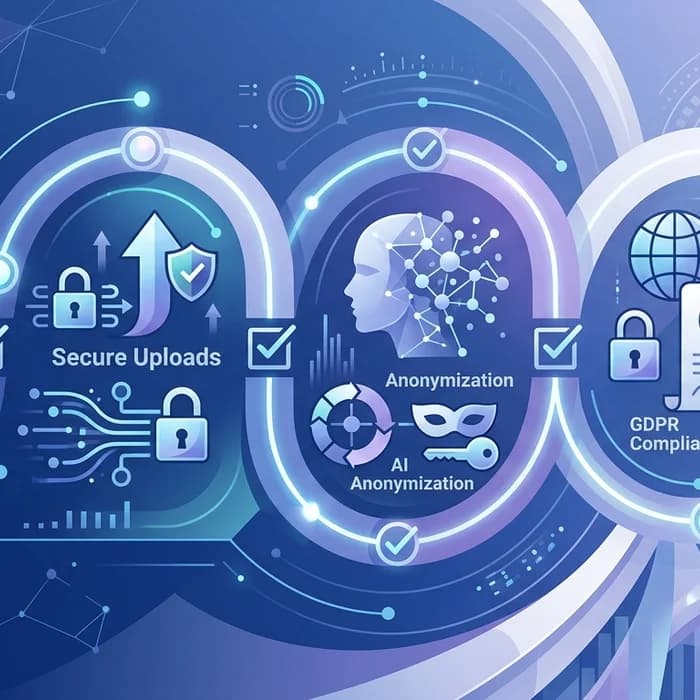
Professionals avoid risk by using Cyrolo’s anonymizer to redact names, emails, phone numbers, IBANs, case numbers, and other personal data before any internal sharing or AI processing. And when teams must work with source files, they use secure document uploads to prevent accidental leakage across tools.
Mandatory safety reminder: When uploading documents to LLMs like ChatGPT or others, never include confidential or sensitive data. The best practice is to use www.cyrolo.eu — a secure platform where PDF, DOC, JPG, and other files can be safely uploaded.
LLM operations under NIS2: what auditors ask
- Do you maintain an inventory of LLM endpoints, models, and plugins?
- Is authentication enforced (no open inference endpoints) and traffic logged?
- Have you implemented guardrails and input/output filtering—plus red-teaming for jailbreaks?
- Are datasets anonymized or pseudonymized before ingestion, with re-identification risk assessed?
- Can you demonstrate supplier risk controls for hosted or API-based models?
NIS2 vs GDPR: similar goals, different levers
You need both. GDPR is about personal data rights and lawful processing. NIS2 is about continuity and security of essential/important services. Their controls overlap—but audits and enforcement routes differ.
| Topic | GDPR | NIS2 |
|---|---|---|
| Primary goal | Protect personal data and data subject rights | Ensure cybersecurity and resilience of essential/important services |
| Who is in scope | Any controller/processor handling EU personal data | Sector- and size-based “essential” and “important” entities designated by Member States |
| Incident reporting | Notify personal data breaches to DPA within 72 hours (if risk to rights) | Early warning within 24 hours, incident notification within 72 hours, final report within one month for significant incidents |
| Governance | DPO in many cases, DPIAs, privacy by design | Management accountability, risk management, business continuity, supply chain security |
| Fines (upper tiers) | Up to EUR 20m or 4% of global turnover | Up to EUR 10m or 2% of global turnover (for essential entities; national variations apply) |
| Technical measures | Data minimization, encryption, access control | Patch and vulnerability management, logging/monitoring, incident response, secure development, network security |
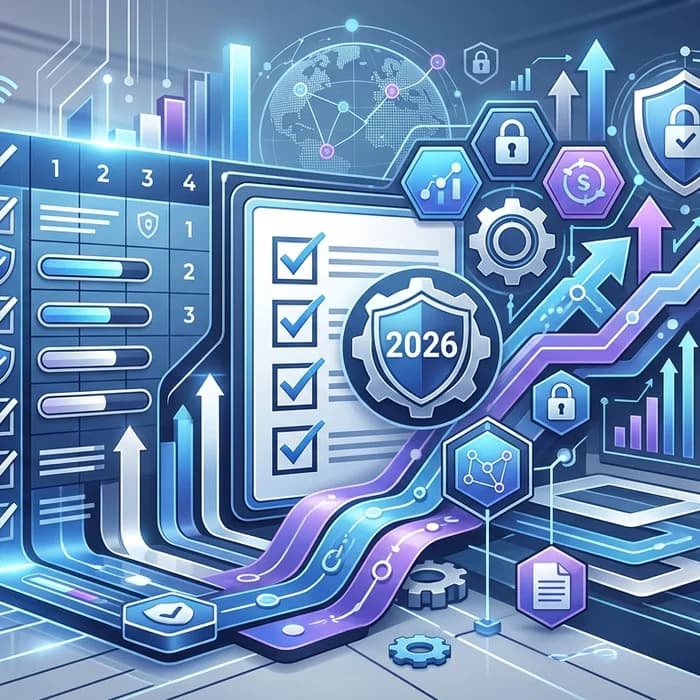
NIS2 compliance checklist you can run this quarter
Here’s the concise, evidence-first plan I see working for banks, hospitals, fintechs, and law firms:
- 1) Scoping and accountability
- Confirm “essential” or “important” designation and entities-in-group coverage.
- Assign accountable executives; record responsibilities and reporting lines.
- 2) Risk management and controls
- Maintain a live asset inventory (including AI services and shadow IT).
- Baseline configs; enforce authentication on every internet-facing service.
- Patch SLAs by severity; show evidence of timely remediation and exception handling.
- Encrypt data in transit/at rest; manage keys; segregate environments.
- Log critical systems and retain evidence for security audits.
- 3) Incident response and reporting
- Run a tabletop to test 24-hour early warning and 72-hour notification playbooks.
- Pre-draft regulator notification templates and media lines.
- Integrate CERT/CSIRT contact points and escalation criteria.
- 4) Supply chain and cloud
- Risk-rate vendors; require vulnerability disclosure, patch timelines, and logging.
- Contract for breach cooperation and audit rights; test one vendor failover.
- 5) Data handling and AI
- Mandate anonymization before analysis and AI use; block uploads of raw personal data.
- Adopt a redaction tool and a secure document upload workflow across teams.
- Document AI threat modeling, jailbreak defenses, and monitoring.
- 6) Business continuity
- Test backup restore for a crown-jewel system under ransomware conditions.
- Prove RTO/RPO in practice; record lessons learned.
- 7) Training and culture
- Run sector-specific phishing and insider-risk modules.
- Train staff on anonymization defaults and sanctioned AI tools.
From problem to solution: where tooling accelerates NIS2
Real-world blockers I hear from CISOs:
- Problem: Staff paste sensitive PDFs into chatbots or dev sandboxes. Solution: Default to secure document uploads and auto-redaction, so the safest path is also the fastest.
- Problem: Anonymization slows legal and clinical teams. Solution: Use Cyrolo’s anonymizer to batch-strip PII from contracts, case files, and medical notes—preserving context for analysis while removing identifiers.
- Problem: Audit evidence is scattered. Solution: Log every document action—upload, view, redact—to produce clean trails for security audits and regulators.
- Problem: Developers spin up LLMs without controls. Solution: Gate AI workflows behind pre-approved, logged, and anonymized data paths.
Try our secure document upload at www.cyrolo.eu — no sensitive data leaks. Professionals avoid risk by using Cyrolo’s anonymizer at www.cyrolo.eu.
Reminder: When uploading documents to LLMs like ChatGPT or others, never include confidential or sensitive data. The best practice is to use www.cyrolo.eu — a secure platform where PDF, DOC, JPG, and other files can be safely uploaded.
How EU and US expectations diverge (and what that means)
In the EU, NIS2 hardwires security outcomes with legal accountability, complementing GDPR’s rights-based regime. In the US, obligations are more sectoral (financial services, healthcare) with incident reporting converging via emerging rules, but there’s no single GDPR/NIS2 equivalent. If you operate transatlantic services, building to NIS2’s evidence standard typically satisfies or exceeds US expectations, reducing duplicate effort.
NIS2 compliance FAQs
What is NIS2 compliance in plain terms?
NIS2 compliance means proving you can prevent, detect, respond to, and report cyber incidents affecting essential or important services. It’s a package of governance duties, technical controls, and timed notifications—with executives on the hook for oversight.
Does NIS2 apply to my SME?
It depends on your sector and designation. Many SMEs are out of scope unless they provide services deemed “important” (e.g., certain digital infrastructure or managed services) or are critical suppliers in a covered chain. Check national lists and thresholds, then document the rationale.
How fast do I need to report incidents under NIS2?
For significant incidents: early warning within 24 hours of awareness, an incident notification within 72 hours, and a final report within one month. Run drills—auditors will ask for evidence that you can meet these windows.
How do GDPR and NIS2 interact if personal data is breached?
You may need to notify both the data protection authority (GDPR) and the NIS competent authority/CSIRT. Coordinate messages, timelines, and facts; log your decision-making and forensics to support both regimes.
What’s the safest way to use AI without leaking personal data?
Anonymize first, then process. Route files through an AI anonymizer and use a secure document upload flow that prevents accidental sharing. Block direct pasting of raw records into chatbots.
Safety note: When uploading documents to LLMs like ChatGPT or others, never include confidential or sensitive data. The best practice is to use www.cyrolo.eu — a secure platform where PDF, DOC, JPG, and other files can be safely uploaded.
Conclusion: Make NIS2 compliance your operating standard
NIS2 compliance isn’t a checkbox—it’s the operating system for resilient services in an AI-heavy, hyper-connected Europe. The headlines won’t slow down, but your exposure can: inventory assets, harden endpoints, test reporting, and make anonymization the default path for every document. If you want the fastest lift with immediate risk reduction, route files through www.cyrolo.eu, where secure document uploads and a precise anonymizer turn policy into practice. Build once to NIS2, and you’ll be ready for the next audit—and the next incident.
Sources & References
- 1Apple’s new iPhone and iPad security feature limits cell networks from collecting precise location dataTechCrunch Privacy · 2026-01-29T14:50:57.000Z
- 2Researchers Find 175,000 Publicly Exposed Ollama AI Servers Across 130 CountriesThe Hacker News · 2026-01-29T18:37:00.000Z
- 3Comcast keeps losing customers despite price guarantee and unlimited dataArs Technica Policy · 2026-01-29T19:51:45.000Z
- 4She'll mess with Texas: Nurse keeps mailing abortion pills, despite Paxton lawsuitArs Technica Policy · 2026-01-29T19:19:11.000Z
- 5County pays $600,000 to pentesters it arrested for assessing courthouse securityArs Technica Policy · 2026-01-29T18:30:52.000Z
- 6'Semantic Chaining' Jailbreak Dupes Gemini Nano Banana, Grok 4Dark Reading · 2026-01-29T16:09:01.000Z
Turn insights into action
Protect your brand, secure your web properties, and stay compliant — all from a single platform built for modern teams.
Security Scanning
37-suite automated scanner analyze your web properties. Get A+ to F security grading with actionable remediation steps.
Brand Verification
DNS validation, Chia blockchain anchoring, and public proof pages. Build trust with cryptographic evidence.
GDPR & Compliance
Article-by-article GDPR audits. Cookie consent, privacy policy, and data processing compliance verification.