NIS2 compliance in 2026: a Brussels insider’s guide for CISOs, DPOs, and counsel
In today’s Brussels briefing, several MEPs and national attachés repeated the same refrain: NIS2 compliance is no longer a policy horizon—it’s the new normal for operators across energy, finance, health, transport, digital infrastructure, and beyond. With LIBE preparing its 14 April session and IMCO convening a workshop the same week, compliance pressures are rising just as fresh threats hit headlines—from GPU-based privilege escalation to mass exploitation of AI toolchains. This piece translates what matters now, and how to operationalize controls quickly, including privacy-by-design workflows such as anonymization and secure document uploads.
April 2026 threat snapshot: why compliance can’t be a checkbox
- Hardware-level escalation is real: Researchers disclosed a GPU memory bit-flip technique that can cascade into full CPU privilege escalation on commodity GDDR6—proof that once-niche fault attacks are now practical. Expect regulators to probe how you manage hardware assurance and kernel-level hardening.
- Ransomware velocity is up: A China-linked intrusion set rapidly pivoted from zero-day access to Medusa ransomware, compressing dwell time and incident response windows. NIS2’s 24-hour early-warning requirement will be tested on days like these.
- AI supply-chain risk explodes: A widely used AI agent builder drew active CVSS 10.0 RCE exploitation, with over ten thousand exposed instances. This is classic “one misconfigured dev tool, many victims”—and it squarely raises NIS2 questions around third-party risk, secure development, and change management.
As one CISO I spoke with put it: “We passed last year’s audit, but today’s adversary doesn’t care about certificates. They care about the one service account and the one exposed plug-in we forgot.” NIS2’s design—governance, risk management, incident reporting, and supply-chain controls—maps to exactly these modern failure modes.
What NIS2 compliance requires in 2026
Member States have now transposed NIS2 into national law, with enforcement expanding through 2025–2026. If you operate in or serve EU markets, assume scoping under NIS2 unless you can document otherwise.
Who is in scope
- Essential and important entities across sectors such as energy, transport, banking and financial market infrastructure, health, drinking water and wastewater, digital infrastructure (IXPs, DNS, TLDs, data centers), ICT service management (including cloud and managed service providers), public administration, postal and waste, and manufacturers of critical products.
- Size-cap rules: “Medium and large” generally in scope, but certain critical services are captured regardless of size. Cross-border service provision or dependency layering can tip you into scope faster than expected.
Core obligations to operationalize
- Risk management measures: asset inventory and mapping, secure-by-design development, vulnerability management, identity and access controls, incident handling, business continuity, supplier risk, and crypto policy.
- Incident reporting timelines: early warning to CSIRTs or competent authorities within 24 hours for significant incidents; an initial notification within 72 hours; a final report within one month.
- Governance and accountability: board-level oversight, documented security strategy, evidence of continuous improvement, and staff training.
- Enforcement: administrative fines up to €10 million or 2% of global annual turnover for essential entities (and proportionate penalties for important entities). Expect supervisory powers including audits, evidence requests, and corrective orders.
GDPR vs NIS2: different scopes, shared consequences
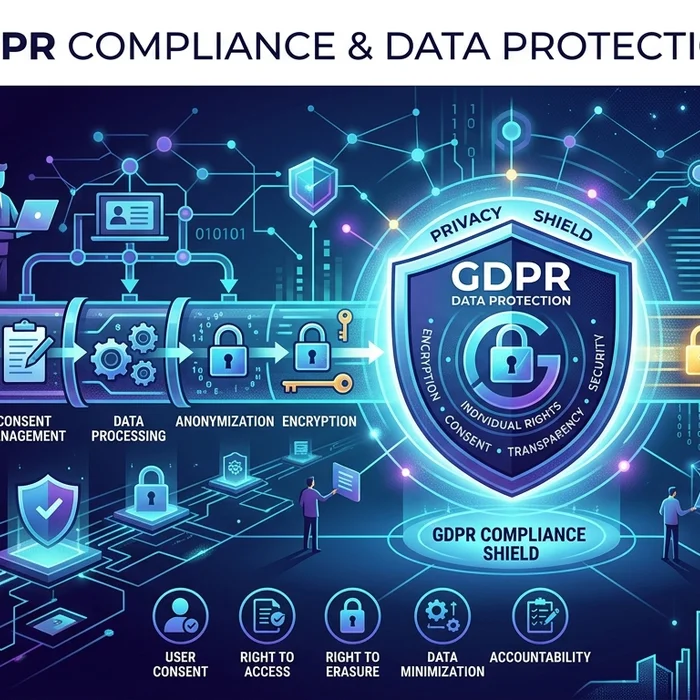
GDPR and NIS2 overlap but are not interchangeable. GDPR targets personal data processing and privacy rights; NIS2 targets network and information systems resilience for critical and important sectors. Many organizations must comply with both.
| Area | GDPR | NIS2 |
|---|---|---|
| Scope | Personal data processing by controllers/processors | Network and information systems of essential/important entities |
| Objective | Data protection, privacy rights, lawful processing | Operational resilience, security of services, continuity |
| Incident reporting | Data breach to DPA generally within 72 hours if risk to individuals | Significant incident early warning in 24 hours; initial in 72 hours; final in one month |
| Governance | DPO in certain cases; DPIAs; records of processing | Board oversight; documented risk management; supplier controls; testing |
| Fines (maximum) | €20 million or 4% global turnover | €10 million or 2% global turnover (essential entities) |
| Audits | DPA investigations, orders, sanctions | Supervisory audits, on-site inspections, corrective measures |
NIS2 compliance checklist for 2026
- Map scope: confirm entity classification (essential vs important), services, and Member State obligations.
- Establish governance: assign accountable executive; define risk appetite; approve a security program roadmap.
- Inventory and classify: create or refresh a live asset inventory (on-prem, cloud, SaaS, OT) and data flows.
- Identity-first controls: enforce MFA, PAM for admins, service account vaulting, and least privilege by default.
- Patch and exposure management: 14–30 day SLAs for high/critical vulns; continuous attack surface monitoring.
- Secure development: threat modeling, code signing, SBOMs, dependency scanning, and change control.
- Supplier assurance: tier vendors, require security attestations, test access pathways, and define offboarding.
- IR and reporting drill: run table-tops for 24/72-hour reporting with CSIRT contact trees and evidence packs.
- Continuity and recovery: test backups (immutable copies), recovery time objectives, and failover procedures.
- Privacy-by-design workflows: remove or mask personal data before analysis; restrict where files are processed.
Operationalizing privacy: anonymization and secure document uploads that pass audits
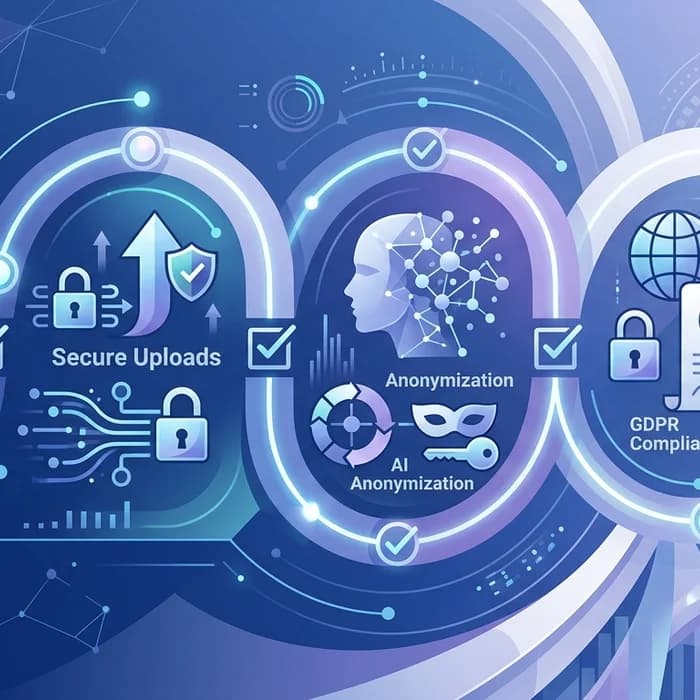
The fastest path to resilient processes is to remove sensitive data from day-to-day workflows. Professionals avoid risk by using Cyrolo’s anonymizer to strip names, IDs, health data, and other personal data from case files, tickets, and logs before they ever reach shared systems or AI tools. When teams must collaborate on large evidence sets, try our secure document upload—no sensitive data leaks, and no surprises in your audit trail.
Compliance note: When uploading documents to LLMs like ChatGPT or others, never include confidential or sensitive data. The best practice is to use www.cyrolo.eu — a secure platform where PDF, DOC, JPG, and other files can be safely uploaded.
Sector playbooks: where NIS2 meets the real world
Finance and fintech
Between NIS2, PSD2/PSR, and DORA, boards expect consolidated operational resilience. Typical gaps I see: unmanaged shadow SaaS in risk functions, weak service account hygiene in trading analytics, and ad-hoc red-teaming. Practical fix: enforce PAM, automate key rotation, and anonymize customer identifiers before model training or vendor testing via anonymization.
Hospitals and health tech
Ransomware remains the sector’s top continuity risk. Map OT/IoMT assets, ringfence legacy systems, and pre-stage 24/72-hour incident reporting templates. For research data and imaging archives, use secure document uploads to avoid mixing personal data into general-purpose tooling.
Law firms and public administration
Client confidentiality meets public-sector resilience obligations. Replace email attachments with controlled uploads, redact matter files for analytics, and log every access. If you must consult an AI assistant on a document, run an offline review or route through www.cyrolo.eu to prevent privacy breaches.
Audits, evidence, and the board: what regulators now expect
EU regulators increasingly ask for proof over policy. That means dated decisions, change records, vendor evidence, and user access diffs—plus a narrative that shows you understood material risks and acted. Industry studies put the average cost of a single breach near $4.9 million; the fine is often not the most expensive part. During a recent off-record workshop, one supervisor summed it up: “We don’t need perfection, but we do need proportional, documented control of foreseeable risks.”
- Keep a “reporting pack” ready: incident timeline, containment actions, affected services, data impact, and communications.
- Demonstrate data minimization: redact and anonymize before analytics; segregate personal data stores; restrict export paths.
- Show improvement loops: pen test findings linked to tickets, deadlines, and retest results.
For teams under time pressure, centralize sensitive handling through www.cyrolo.eu so that upstream systems never ingest raw personal data—a small process change that removes multiple breach scenarios.
Frequently asked questions about NIS2 compliance
What is NIS2 compliance and who must meet it?
NIS2 compliance means implementing security, governance, and incident reporting controls mandated by the EU’s updated Network and Information Security Directive. It applies to “essential” and “important” entities in sectors like energy, transport, health, finance, digital infrastructure, public administration, and key ICT service providers (including managed and cloud services). Many medium and large companies in these sectors are in scope, and some smaller critical providers are too.
How fast must I report incidents under NIS2?
Submit an early warning within 24 hours of becoming aware of a significant incident, an initial notification within 72 hours, and a final report within one month. Run exercises so legal, IR, and PR are on the same clock.
How does NIS2 interact with GDPR if personal data is breached?
If an incident affects personal data, you may have parallel duties: notify your competent NIS2 authority and your data protection authority under GDPR. Map both workflows and ensure your templates capture the required elements for each regime. Using anonymization upstream reduces the likelihood that a system compromise becomes a GDPR notifiable breach.
Is using AI tools allowed under NIS2 and GDPR?
Yes—if you apply risk management. Control data flows, vet suppliers, restrict tokens/keys, and never paste confidential data into public tools. Route files through secure document uploads and redact before analysis. Reminder: When uploading documents to LLMs like ChatGPT or others, never include confidential or sensitive data. The best practice is to use www.cyrolo.eu — a secure platform where PDF, DOC, JPG, and other files can be safely uploaded.
What are the penalties for non-compliance?
For essential entities, fines can reach up to €10 million or 2% of global annual turnover, with additional supervisory measures and corrective orders. Important entities face proportionate penalties. Boards are expected to oversee and resource compliance.
Bottom line: make NIS2 compliance your unfair advantage
NIS2 compliance is now a day-one requirement, not a future project. Done well, it reduces breach exposure, shortens audits, and accelerates sales in regulated markets. Start with governance, map exposures, and cut risk at the source by removing sensitive data from everyday workflows. Professionals avoid risk by using Cyrolo’s anonymizer and secure document upload to keep personal data out of harm’s way—so your next regulator meeting is a formality, not a fire drill.
Sources & References
- 1Draft agenda - Tuesday, 14 April 2026 - PE786.877v01-00 - Committee on Civil Liberties, Justice and Home AffairsEU Parliament LIBE · 2026-04-07T09:43:03.000Z
- 2Workshops - Workshop on Territorial Supply Constraints - 15-04-2026 - Committee on the Internal Market and Consumer ProtectionEU Parliament IMCO · 2026-04-07T09:38:23.000Z
- 3New GPUBreach Attack Enables Full CPU Privilege Escalation via GDDR6 Bit-FlipsThe Hacker News · 2026-04-07T08:38:00.000Z
- 4China-Linked Storm-1175 Exploits Zero-Days to Rapidly Deploy Medusa RansomwareThe Hacker News · 2026-04-07T06:35:00.000Z
- 5Flowise AI Agent Builder Under Active CVSS 10.0 RCE Exploitation; 12,000+ Instances ExposedThe Hacker News · 2026-04-07T05:56:00.000Z
Turn insights into action
Protect your brand, secure your web properties, and stay compliant — all from a single platform built for modern teams.
Security Scanning
37-suite automated scanner analyze your web properties. Get A+ to F security grading with actionable remediation steps.
Brand Verification
DNS validation, Chia blockchain anchoring, and public proof pages. Build trust with cryptographic evidence.
GDPR & Compliance
Article-by-article GDPR audits. Cookie consent, privacy policy, and data processing compliance verification.