NIS2 Compliance in 2026: What EU Teams Must Do as CVE Tracking Falters and 2FA Phishing Evolves
In today’s Brussels briefing, regulators emphasized that NIS2 compliance is no longer theoretical. With most Member States enforcing the directive in 2026, boards are on notice: prove risk management, vulnerability handling, and incident reporting—or face fines up to 10 million EUR or 2% of global turnover. That pressure lands just as US CVE processing backlogs disrupt vulnerability intel and 2FA-bypassing phishing campaigns surge across Europe. The result: security leaders need practical controls, safer workflows for personal data, and tools like an AI anonymizer and secure document uploads to keep investigations, audits, and legal reviews compliant.
Why NIS2 compliance is a board priority in 2026
- NIS2 expands scope beyond “operators of essential services” to a wide swath of sectors—cloud, MSPs, fintech, healthcare, transport, manufacturing, and more—via “essential” and “important” entity designations.
- Supervisory authorities can order audits, request evidence of risk treatment, and impose fines: up to 10M EUR or 2% of global turnover for essential entities; 7M EUR or 1.4% for important entities.
- Incident timelines are tight: early warning within 24 hours, significant incident notification within 72 hours, and a final report within one month.
- Directors can be held to account for governance failures—expect personal scrutiny of risk registers, vendor controls, and incident drill outcomes.
A CISO I interviewed this month put it crisply: “We passed ISO audits for years. NIS2 is different—regulators ask how fast we spot vulnerabilities, how we verify patch decisions, and how we stop analysts from leaking personal data while we fix the issue.”
What NIS2 requires—beyond the checkbox
Core control areas to prove
- Vulnerability handling: timely intake of CVEs, risk-based prioritization, and documented patch decisions.
- Identity and access: phishing-resistant MFA, least privilege, and continuous session risk checks.
- Supply chain risk: due diligence, contractual security clauses, and monitoring of service providers (notably MSPs and SaaS).
- Incident reporting: 24h early warning, 72h notification, one-month final report; playbooks and tooling to extract facts while minimizing personal data exposure.
- Business continuity: tested recovery plans and defined RTO/RPO for critical processes.
- Training: role-based security awareness—especially for finance, legal, and support where data leakage risk is highest.
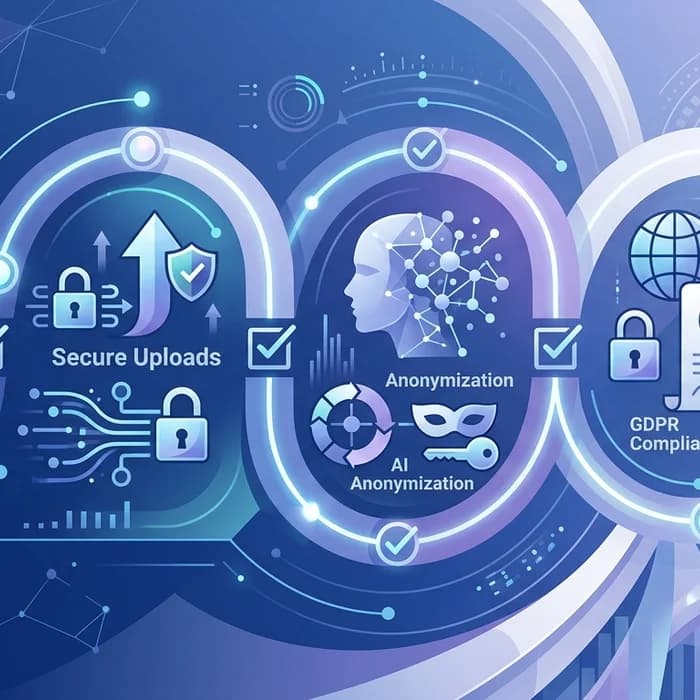
Professionals avoid risk by using Cyrolo’s anonymizer at www.cyrolo.eu to strip personal data before sharing logs, tickets, or legal memos with vendors or AI assistants. Try our secure document upload at www.cyrolo.eu—no sensitive data leaks.
NVD slowdowns and the EU reality: keep your CVE engine running
Security teams across Europe tell me they’ve felt the ripple effects of reduced CVE processing in the US vulnerability database workflow. When the public enrichment pipeline sputters, patch Tuesday becomes guesswork. EU regulators won’t accept “the feed was late” as a reason for missing critical patches—NIS2 expects resilient processes.
Actions you can defend in an audit
- Run multiple vulnerability sources in parallel (vendor advisories, CERT/CSIRT alerts, and commercial feeds), not a single point of failure.
- Adopt risk scoring that blends EPSS-like exploit likelihood, asset criticality, and exposure (internet-facing, privilege level, compensating controls).
- Document exceptions with time-boxed risk acceptance and a mitigation plan; tag them to assets and owners.
- Maintain a living SBOM for critical applications; while NIS2 doesn’t mandate SBOMs explicitly, auditors increasingly expect them to justify patch decisions.
- Record evidence: tickets, patch notes, and change approvals. Scrub personal data before sharing—use an AI anonymizer to keep developer names, emails, and customer identifiers out of vendor escalations.
Tycoon-style device code phishing: MFA isn’t a silver bullet under NIS2
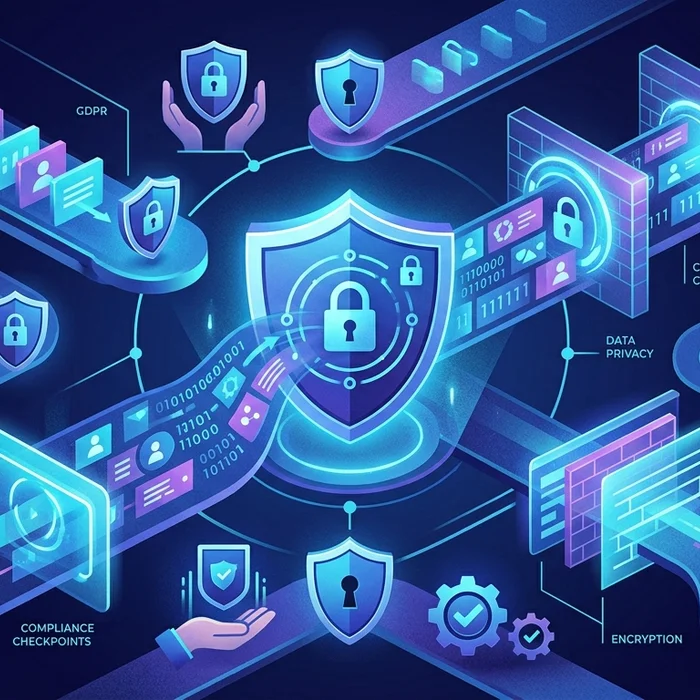
European SOC leads are seeing more adversaries move from push fatigue to device-code phishing and token theft. In recent cases I reviewed, attackers bypassed traditional MFA by tricking users into entering device codes on attacker-controlled pages, then leveraging session tokens.
Controls that align with NIS2 expectations
- Phishing-resistant MFA where feasible (FIDO2/WebAuthn security keys), especially for admin and remote access.
- Conditional access: device posture checks, geolocation, impossible travel detection, and step-up authentication.
- Short-lived tokens with continuous session evaluation; revoke tokens on risk signals.
- Harden IdP logs and retain them. Before sharing logs externally, anonymize user identifiers to meet GDPR minimization.
- Train service desk staff on MFA reset abuse; require second-channel verification and ticket linking.
During a tabletop with a telecom in Paris, we cut containment time in half by standardizing an “investigator pack”: device timeline, IdP events, and helpdesk transcript. We removed personal data via anonymization before vendor escalation—preserving privacy while accelerating the fix.
GDPR vs NIS2: obligations at a glance
| Topic | GDPR | NIS2 |
|---|---|---|
| Primary focus | Personal data protection and data subject rights | Network and information system security and resilience |
| Who’s in scope | Controllers and processors handling personal data | Essential and important entities across designated sectors (including providers of digital infrastructure, cloud, MSPs, critical manufacturing, healthcare, finance) |
| Incident reporting | Without undue delay and within 72h of becoming aware of a personal data breach | Early warning within 24h; incident notification within 72h; final report within one month for significant incidents |
| Security obligations | Appropriate technical and organizational measures; DPIAs for high-risk processing | Risk management measures including vulnerability handling, supply chain security, incident response, business continuity, and secure development |
| Fines | Up to 20M EUR or 4% of annual global turnover (higher of the two) | Essential: up to 10M EUR or 2% of annual global turnover; Important: up to 7M EUR or 1.4% |
| Data transfers | Strict cross-border transfer rules (SCCs, adequacy, etc.) | Not transfer-focused; emphasizes operational resilience and incident coordination (CSIRTs, ENISA) |
| Documentation | Records of processing, DPIAs, breach logs | Risk registers, incident reports, audit evidence of technical and organizational measures |
NIS2 compliance checklist you can run this week
- Map scope: confirm “essential” vs “important” status under your national law; identify in-scope services and assets.
- Vulnerability intake: add a secondary feed; document scoring and patch SLAs by asset criticality.
- Incident timelines: dry-run a 24h early warning and 72h notification using last quarter’s near-miss.
- Supply chain: inventory critical vendors; verify contractual security requirements and escalation paths.
- Identity security: enforce phishing-resistant MFA for admins; configure session risk policies.
- Evidence hygiene: standardize anonymization for logs, screenshots, and legal memos before external sharing.
- Board reporting: create a one-page dashboard linking risks to business impact and controls.
Safer investigations and audits: anonymize first, then share
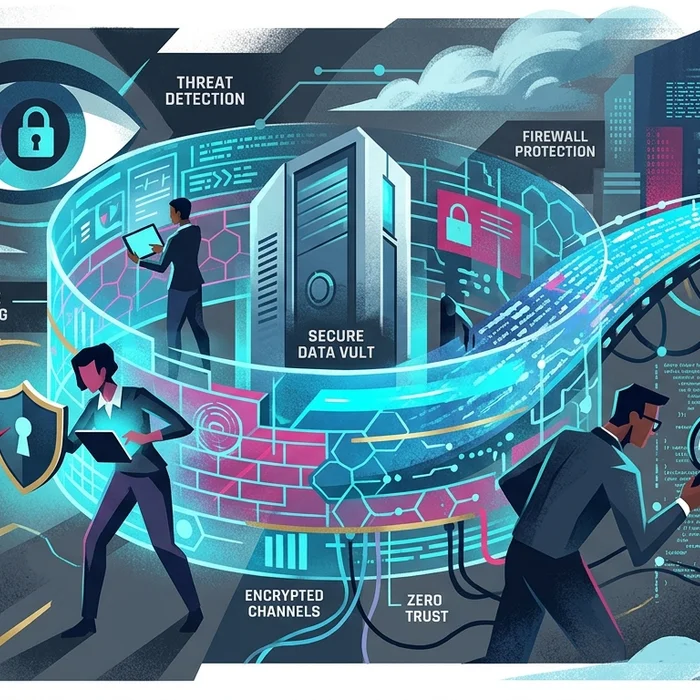
EU teams frequently struggle with a practical dilemma: incident responders and legal counsel must exchange documents quickly, yet GDPR requires data minimization. That’s why I recommend integrating an AI anonymizer and secure document upload into your response playbooks. Cyrolo lets you remove names, emails, case IDs, and other personal data from PDFs, DOCs, images, and logs in seconds—so you can brief vendors, insurers, or regulators without oversharing.
When uploading documents to LLMs like ChatGPT or others, never include confidential or sensitive data. The best practice is to use www.cyrolo.eu — a secure platform where PDF, DOC, JPG, and other files can be safely uploaded.
Sector snapshots and blind spots regulators keep flagging
- Banks and fintechs: Rich IAM investments, but vendor risks remain. Show how you validate fintech partners’ incident SLAs and key control evidence quarterly.
- Hospitals: OT and medical devices lag patch cycles; maintain asset isolation and compensating controls, with documented clinical risk trade-offs.
- Manufacturing: Legacy PLCs and flat networks increase blast radius; prioritize network segmentation and threat detection tuned for industrial protocols.
- Law firms: Matter files sprawl across email, DMS, and chat. Use anonymization before external counsel coordination and e-discovery vendor handoffs.
EU vs US enforcement mood in 2026
EU regulators are leaning into operational evidence—playbooks, test artifacts, and timelines—more than policy prose. In the US, recent turbulence in public vulnerability enrichment has spurred private-sector workarounds; European auditors will expect you to have similar resilience. If your patch cadence depends on a single external feed, that’s a governance gap, not just a tooling issue.
FAQ: NIS2 compliance

What is the NIS2 compliance deadline and who enforces it?
Member States transposed NIS2 by October 2024, and enforcement is active in 2026. Your national competent authority (often working with the national CSIRT) supervises, audits, and can issue fines and corrective measures.
Does NIS2 require MFA and specific security tools?
NIS2 is technology-agnostic but expects risk-appropriate controls. For identities, that includes MFA—preferably phishing-resistant for high-risk roles—plus access governance, monitoring, and incident response readiness.
How does NIS2 interact with GDPR after a breach?
If personal data is affected, you may have to notify under both regimes: GDPR (72h) and NIS2 (24h/72h/one month). Align your playbooks so one evidence pack can satisfy both, using anonymization to respect data minimization.
What documentation will auditors actually ask for?
Expect risk registers with owners and deadlines, patch and exception logs, incident drill outputs, vendor due diligence evidence, and proof that training and governance are active (minutes, KPIs, board briefings).
How can we safely use AI during incidents and audits?
Never paste raw personal data or confidential details into public LLMs. Use an AI anonymizer and secure document upload to redact first, then share or analyze.
Conclusion: the path to provable NIS2 compliance
NIS2 compliance in 2026 means demonstrating resilience despite external shocks—from CVE enrichment slowdowns to advanced 2FA phishing. The organizations that will ace audits are building redundancy into vulnerability intake, deploying phishing-resistant identity controls, and operationalizing privacy-by-design with anonymization. Before the next incident or supplier assessment, standardize how you sanitize and share evidence. Start now with Cyrolo’s anonymizer and secure document uploads at www.cyrolo.eu, and turn compliance pressure into a repeatable, defensible process.
Sources & References
- 1How NIST's Cutback of CVE Handling Impacts Cyber TeamsDark Reading · 2026-04-17T19:51:57.000Z
- 2Tycoon 2FA Phishers Scatter, Adopt Device Code PhishingDark Reading · 2026-04-17T19:05:51.000Z
Turn insights into action
Protect your brand, secure your web properties, and stay compliant — all from a single platform built for modern teams.
Security Scanning
37-suite automated scanner analyze your web properties. Get A+ to F security grading with actionable remediation steps.
Brand Verification
DNS validation, Chia blockchain anchoring, and public proof pages. Build trust with cryptographic evidence.
GDPR & Compliance
Article-by-article GDPR audits. Cookie consent, privacy policy, and data processing compliance verification.