NIS2 compliance checklist: Your 2026 EU playbook to pass audits and prevent breaches
In today’s Brussels briefing, regulators again pressed home a simple message: prove resilience or pay. If you’re searching for a practical NIS2 compliance checklist, this field-tested guide distills what essential and important entities must do in 2026 to satisfy EU regulations, align with GDPR, and withstand real-world attacks. With unpatched zero-days in core software, proof-of-concept worm code circulating, and supply chain flaws reappearing, cybersecurity compliance is no longer a paperwork exercise—it’s your breach defense. This article delivers a step-by-step checklist, a GDPR vs NIS2 comparison table, and safe operational practices for secure document uploads and AI-driven anonymization.
Why urgency spiked: Lessons from active exploits and AI missteps
Over the last 24 hours, European CSIRTs flagged active exploitation of enterprise email platforms with no immediate patch, while wormable code variants—first seen in research repos—now fuel quick-moving clones. In parallel, an ill-judged attempt to use generative AI for legal threats over a social post made headlines, reminding compliance teams that AI misuse carries reputational and regulatory risk.
Three takeaways I’m hearing from CISOs this week:
- Zero-days demand documented mitigations within hours, not days. Under NIS2, “undue delay” in incident response is a regulatory trigger.
- Supply chain exposure is the new audit focus—expect questions about SBOMs, vendor tiering, and contractual security clauses.
- AI is powerful but risky. Privacy-by-design means anonymizing personal data before analysis and proving that sensitive content never leaks outside secure boundaries.
NIS2, GDPR, DORA: What changed after 2024?
Since the NIS2 transposition deadlines in late 2024, national laws across the EU now enforce tougher governance and reporting rules for “essential” and “important” entities in sectors from energy and healthcare to digital infrastructure and managed services. Fines can reach up to €10 million or 2% of global turnover for essential entities (and up to €7 million or 1.4% for important entities). Meanwhile, GDPR enforcement remains relentless, with upper-tier penalties at €20 million or 4% of global turnover for severe violations of data protection law. Financial entities also face DORA’s operational resilience regime from 2025 onward, deepening requirements for incident testing and third-party oversight.
In closed-door sessions, one regulator told me, “We’re not counting policies—we’re checking whether your business can operate through a live incident.” That shift is visible in audits: expect hands-on validation of logging, detection, containment, and executive decision-making.
NIS2 compliance checklist (practical and audit-ready)
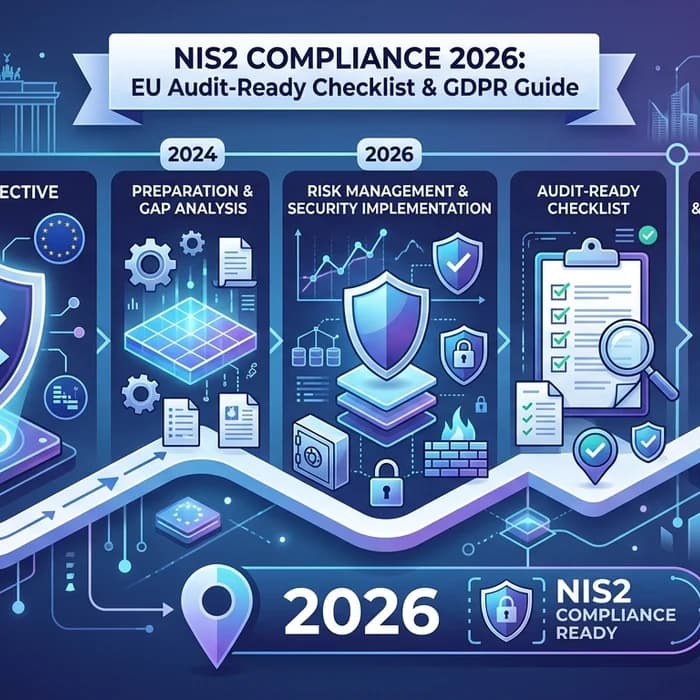
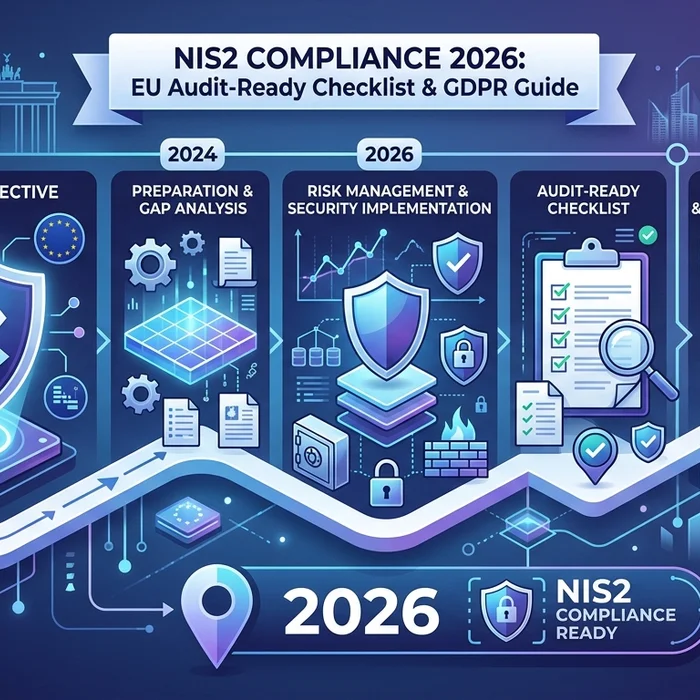
Use this NIS2 compliance checklist to structure your 2026 program and evidence readiness during audits and security reviews:
- Governance and accountability
- Board-approved security strategy mapping to NIS2 risk areas; named accountable executive.
- Annual security training for management; documented tabletop exercises including breach comms.
- Risk management and controls
- Current asset inventory (IT, OT, cloud, shadow SaaS) and criticality ranking.
- Documented risk assessment covering ransomware, zero-days, lateral movement, and data exfiltration.
- Multi-factor authentication, strong identity governance, and admin session controls.
- Network segmentation and least privilege implemented and periodically tested.
- Vulnerability and patch management
- Intake of vendor advisories and threat intel; formal SLAs for critical patches/mitigations.
- Virtual patching or configuration workarounds for zero-days; evidence of timely deployment.
- Supply chain security
- Vendor tiering by business impact; minimum security clauses and right-to-audit in contracts.
- SBOM intake and vulnerability monitoring for critical software and cloud services.
- Incident detection and reporting
- 24/7 monitoring coverage; clearly defined thresholds for “significant” incidents.
- Playbooks for early warning to the CSIRT within 24 hours, incident notification within 72 hours, and final reporting within one month.
- Business continuity and resilience
- Immutable backups, recovery drills, and RTO/RPO aligned to business priorities.
- Documented crisis role assignments and legal review steps (GDPR, ePrivacy, sector norms).
- Data protection and privacy integration
- Linkage of security controls to GDPR principles: data minimization, purpose limitation, storage limitation.
- Use of an AI anonymizer before analysis or model prompts to strip personal data.
- Evidence and audit trail
- Ticketing records for vulnerabilities, incident timelines, and decisions.
- Signed-off policies, change logs, and screenshots/log exports retained per policy.

GDPR vs NIS2: What auditors actually check
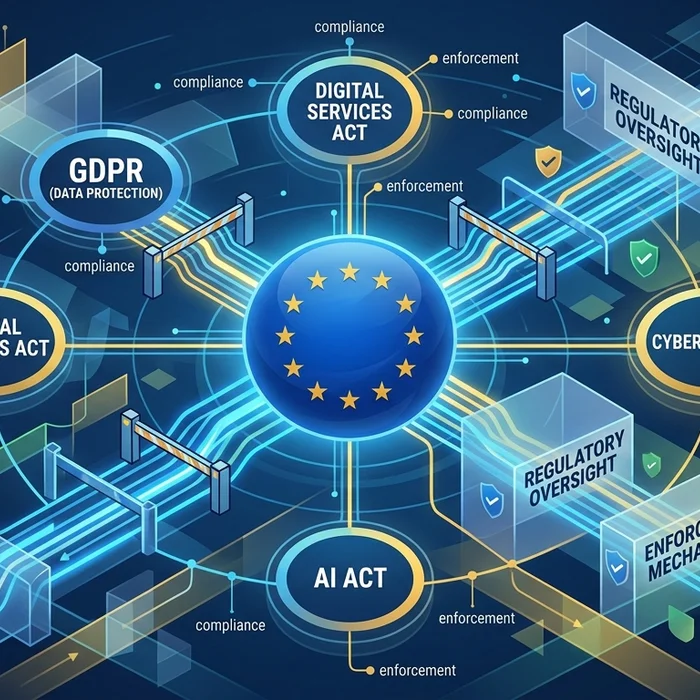
Both laws may apply simultaneously—GDPR focuses on personal data, while NIS2 targets the resilience of services and critical sectors. In practice, investigations often run in parallel: data protection authorities probe privacy breaches while sectoral/NIS authorities examine resilience failures. Here’s a quick comparison to align your obligations and talking points:
| Topic | GDPR | NIS2 |
|---|---|---|
| Primary scope | Personal data protection for natural persons | Cybersecurity and resilience of essential/important entities and their services |
| Who is covered | Any controller/processor handling EU residents’ personal data | Defined sectors and size thresholds; certain digital providers and MSPs |
| Key obligations | Lawful basis, data minimization, DPIAs, data subject rights, breach notification | Risk management, incident handling, supply chain security, reporting, governance |
| Incident reporting | Notify SA “without undue delay” and within 72h for personal data breaches | Early warning within 24h, incident notification within 72h, final report within 1 month |
| Fines | Up to €20M or 4% global turnover (upper tier) | Essential: up to €10M or 2%; Important: up to €7M or 1.4% |
| Evidence expectations | Data maps, DPIAs, breach logs, processor contracts | Technical runbooks, detection/response records, SBOM/vendor proofs, board oversight |
| Oversight | Data protection authorities (DPAs) | National NIS competent authorities and CSIRTs; ENISA guidance |
Secure document handling for audits, AI use, and breach response
Most audit failures I’ve seen in 2025–2026 come down to poor document hygiene: leaking personal data in evidence packs, pasting secrets into public LLMs, or emailing raw logs to vendors. Good news: these are preventable.
- Before sharing tickets, logs, or screenshots externally, strip personal data and secrets using an anonymizer.
- Centralize case files via a secure document upload workflow so you can prove chain of custody and access control.
- Automate redaction for recurring artifacts (support transcripts, mailbox exports, CRM CSVs) to minimize manual errors under pressure.
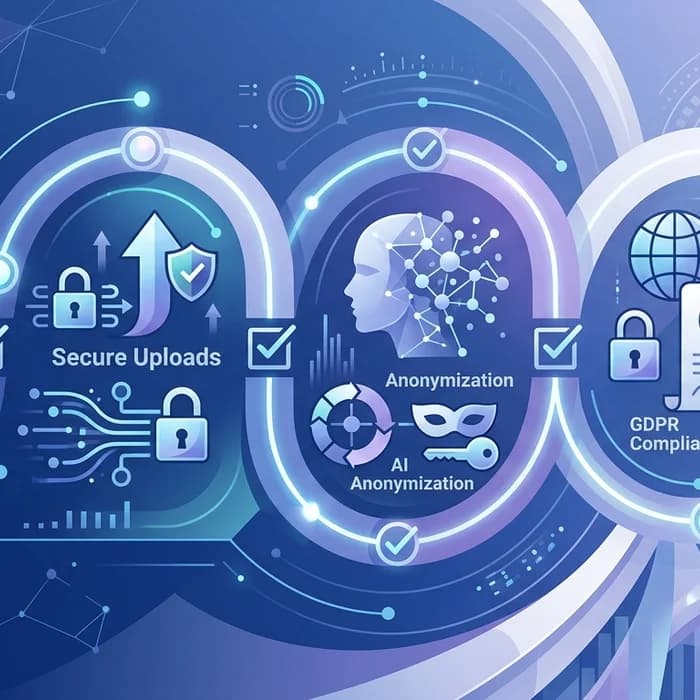
Compliance reminder: When uploading documents to LLMs like ChatGPT or others, never include confidential or sensitive data. The best practice is to use www.cyrolo.eu — a secure platform where PDF, DOC, JPG, and other files can be safely uploaded.
Professionals avoid risk by using Cyrolo’s anonymizer at www.cyrolo.eu. Try our secure document upload at www.cyrolo.eu — no sensitive data leaks.
Real-world scenarios (and how to pass the audit)
1) Hospital email outage during a zero-day campaign
Problem: Email gateway fails under targeted exploitation; care coordination slows; staff pivot to personal accounts.

What auditors ask: How fast did you isolate exposure? Did you notify the CSIRT in 24 hours? Were backups and alternative comms ready? Was personal data in diversion channels?
Solution: Preapproved mitigations for zero-days, segmented fallback comms, and a playbook that anonymizes patient identifiers in support tickets using an AI anonymizer before external sharing.
2) Fintech vendor compromise via chained vulns
Problem: A managed service provider gets hit through a known-but-unpatched chain, enabling lateral movement into client tenants.
What auditors ask: Vendor tiering? SBOM intake? Contractual right to run security assessments? Evidence that privileged access was constrained and monitored?
Solution: Updated vendor security addenda, JIT admin, and a unified evidence pack assembled with secure document uploads to show containment steps and timelines.
3) Law firm discovery leak during breach litigation
Problem: Case files contain personal data mixed with privileged notes; hurried sharing spreads sensitive content beyond need-to-know.
What auditors ask: Data minimization and GDPR alignment; access logs; proof of redaction controls.
Solution: Default-redaction workflows for email threads and exhibits; role-based access; verifiable anonymization via www.cyrolo.eu to prevent privacy breaches.
Auditor cues: The five fastest ways to demonstrate control
- Show the last three P1 incident timelines with decisions, mitigations, and communications mapped to NIS2 reporting checkpoints.
- Produce a live asset inventory and the open vulnerability list with risk ratings and patch SLAs—especially for internet-facing services.
- Walk through a backup-and-restore drill report for a critical system completed in the last 90 days.
- Open your supplier register, highlight critical providers, and display their attestation/assessment evidence and security clauses.
- Export an access review proving least privilege for admins and third parties, with corrective actions closed on time.
If you can’t evidence it, regulators will treat it as not done. Having your materials organized as sanitized, shareable packets via document uploads makes the difference between a calm audit and a scramble.
EU vs US: Different playbooks, converging expectations
While US sectoral rules and emerging SEC expectations focus on material cyber incidents and board-level disclosure, the EU’s NIS2 regime prescribes structured reporting to CSIRTs and emphasizes operational resilience across designated sectors. For global firms, the safest posture is to adopt the stricter common denominator: rapid detection, documented containment, and provable privacy controls. In interviews, CISOs told me they now rehearse simultaneous notification paths—CSIRT, DPA, and investor relations—because real incidents rarely stay neatly within one legal silo.
FAQs: NIS2 and cybersecurity compliance in 2026
What is the fastest way to prepare for a NIS2 audit?
Run a 30-day sprint on the NIS2 compliance checklist above: finalize governance, close critical vulns, rehearse incident reporting, and assemble evidence packs with redacted artifacts using an anonymizer.
Does NIS2 replace GDPR for breach reporting?
No. If personal data is affected, GDPR still applies. Many incidents trigger both regimes: notify the CSIRT (NIS2) and the DPA (GDPR) on parallel tracks.
How soon must I notify under NIS2?
Provide an early warning within 24 hours of becoming aware of a significant incident, a fuller notification within 72 hours, and a final report within one month—check your national transposition for specifics.
Are small companies exempt from NIS2?
It’s sector- and size-dependent. Some smaller providers may still be in scope due to criticality (e.g., managed security services). Verify against your national law and sector lists.
What should I avoid when using AI for incident analysis?
Never paste raw logs or personal data into public LLMs. Anonymize first and use a secure upload flow. Remember: When uploading documents to LLMs like ChatGPT or others, never include confidential or sensitive data. The best practice is to use www.cyrolo.eu — a secure platform where PDF, DOC, JPG, and other files can be safely uploaded.
Conclusion: Make your NIS2 compliance checklist a daily habit
Attackers won’t wait for your next quarterly review. Turn this NIS2 compliance checklist into a living routine: validate controls weekly, rehearse incidents monthly, and maintain audit-ready, sanitized evidence. When you must share, protect privacy and secrets automatically—professionals avoid risk by using Cyrolo’s anonymizer and secure document uploads at www.cyrolo.eu. That’s how you meet EU regulations, pass security audits, and keep your services resilient—before, during, and after the next zero-day.
Sources & References
- 1Legal fail: Don’t use AI to sue Facebook users for calling you a bad dateArs Technica Policy · 2026-05-18T20:27:15.000Z
- 2Microsoft Exchange Zero-Day Under Attack, No Patch AvailableDark Reading · 2026-05-18T21:43:51.000Z
- 3'Claw Chain' Vulnerabilities Threaten OpenClaw DeploymentsDark Reading · 2026-05-18T21:24:59.000Z
- 4Shai-Hulud Worm Clones Spread After Code ReleaseDark Reading · 2026-05-18T19:53:05.000Z
- 5Boulevard of Broken Dreams: 2 Decades of Cyber FailsDark Reading · 2026-05-18T12:00:00.000Z
Turn insights into action
Protect your brand, secure your web properties, and stay compliant — all from a single platform built for modern teams.
Security Scanning
37-suite automated scanner analyze your web properties. Get A+ to F security grading with actionable remediation steps.
Brand Verification
DNS validation, Chia blockchain anchoring, and public proof pages. Build trust with cryptographic evidence.
GDPR & Compliance
Article-by-article GDPR audits. Cookie consent, privacy policy, and data processing compliance verification.