NIS2 compliance: the 2026 EU playbook for CISOs, DPOs, and counsel
Brussels, 20 May 2026 — In today’s Brussels briefing, regulators underscored that NIS2 compliance is no longer a future ambition but a live supervisory priority across the Union. After Member States transposed the directive through 2024–2025, national authorities are now moving into inspections, testing incident reporting pipelines, and checking supply‑chain risk programs. Against a backdrop of fresh ransomware infrastructure take‑downs, typosquatting in software registries, and AI “agent” hype, the message is consistent: align your EU regulations posture across GDPR, NIS2, and DORA—or expect audits, corrective measures, and fines.
As I heard from a CISO at a major hospital network this week: “We passed our GDPR audit last year. NIS2 is a different animal—more operational, more third‑party scrutiny, more board accountability.” That reality is landing across banks, fintechs, utilities, logistics, and law firms handling critical infrastructure clients.
What NIS2 compliance means in 2026
NIS2 expands the EU’s cybersecurity baseline beyond the original NIS to cover more sectors, more suppliers, and more leadership accountability. If you are an “essential” or “important” entity—think energy, transport, banking and financial market infra, health, water, digital infrastructure, public administration, space, waste, food, postal and courier, manufacturing of critical products—you must implement risk management measures, report significant incidents quickly, and prove that your board is in control.
Who is in scope—and what supervisors will check
- Scope: Essential and important entities across critical sectors and key suppliers supporting them, including managed service providers and ICT vendors.
- Controls: Risk management, incident handling, vulnerability disclosure, secure acquisition, encryption, identity/access, and business continuity.
- Reporting: Early warning to your CSIRT or competent authority within 24 hours; a more complete notification within 72 hours; and a final report within one month for significant incidents.
- Governance: Board oversight, defined roles, recurring security audits, and disciplinary measures where leadership fails duties.
- Sanctions: For essential entities, administrative fines up to €10 million or 2% of global turnover; for important entities, up to €7 million or 1.4%, plus corrective orders and possible temporary bans for executives in egregious cases.
“NIS2 compliance” vs GDPR: how obligations differ in practice
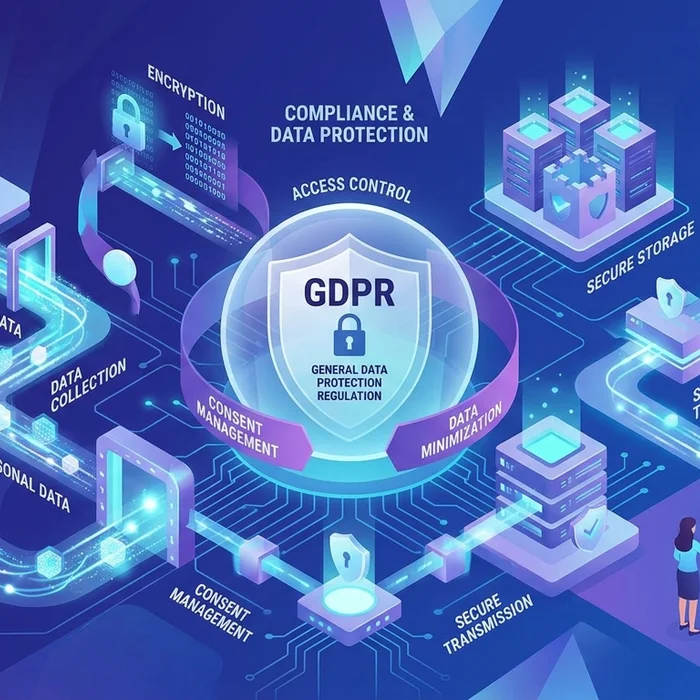
GDPR protects personal data and privacy. NIS2 protects essential services and the economy from cyber disruption. In 2026, most organizations need both. Here is what that looks like for CISOs and DPOs working together.
| Area | GDPR | NIS2 |
|---|---|---|
| Primary purpose | Data protection and privacy of personal data | Cybersecurity and resilience of essential/important services |
| Scope trigger | Processing personal data of individuals in the EU | Entity operates in listed sectors or is a key supplier; size criteria apply |
| Security baseline | “Appropriate” technical/organizational measures (Art. 32) | Defined risk management measures incl. supply chain, crypto, IAM, BCP/DR |
| Breach/incident reporting | Notify authority within 72h if personal data breach risks rights/freedoms | Early warning within 24h; incident notification within 72h; final report in 1 month |
| Board accountability | Implicit via controller/processor duties | Explicit obligations; potential management liability and training requirements |
| Fines (upper tier) | €20M or 4% global turnover | €10M or 2% (essential), €7M or 1.4% (important) |
| Third‑party risk | Processor due diligence & DPAs; data transfers | Supplier risk controls and secure acquisition mandated; dependency mapping |
The hidden risk: AI tools, document uploads, and privacy breaches
Regulators I spoke with after recent LIBE meetings were blunt: the fastest-growing set of incidents now involve well‑meaning staff pasting logs, contracts, or health records into web AI tools, and engineers pulling packages from typosquatted registries. This is where legal risk (GDPR) collides with operational risk (NIS2).
Two practical safeguards reduce 80% of AI‑related exposure:
- Use an AI anonymizer to strip personal data and secrets before analysis or model prompts. Professionals avoid risk by using Cyrolo’s anonymizer at www.cyrolo.eu.
- Centralize secure document uploads so staff don’t push sensitive files into risky apps. Try our secure document upload at www.cyrolo.eu — no sensitive data leaks.
Compliance reminder: When uploading documents to LLMs like ChatGPT or others, never include confidential or sensitive data. The best practice is to use www.cyrolo.eu — a secure platform where PDF, DOC, JPG, and other files can be safely uploaded.
Your 2026 NIS2 compliance checklist
- Map scope: confirm “essential” or “important” status, subsidiaries, and in-scope suppliers.
- Assign accountable owners: board sponsor, CISO, DPO, incident commander, third‑party risk lead.
- Risk assessment: catalog critical assets, known vulnerabilities, and business impact scenarios.
- Controls baseline: encryption policies, MFA and privileged access, network segmentation, EDR/XDR, secure software development, vulnerability disclosure program.
- Supply‑chain security: vendor tiering, contractual security clauses, SBOM/AI BOM requests, package integrity checks, typosquatting defense.
- Incident reporting playbook: 24h early warning, 72h notification, 1‑month final report templates; media and regulator comms lines tested.
- Monitoring and detection: log retention, anomaly detection, threat intel integration, ransomware readiness.
- Business continuity: backup/restore drills, RPO/RTO targets, tabletop exercises with executives and IT/OT teams.
- Security audits: internal audits scheduled; readiness for on‑site inspections by competent authorities.
- Training & awareness: board and staff training; guardrails for AI usage with anonymization and secure uploads.
- Data protection alignment: coordinate with GDPR obligations, DPIAs, and retention policies.
Scenarios from the field: banks, hospitals, and law firms
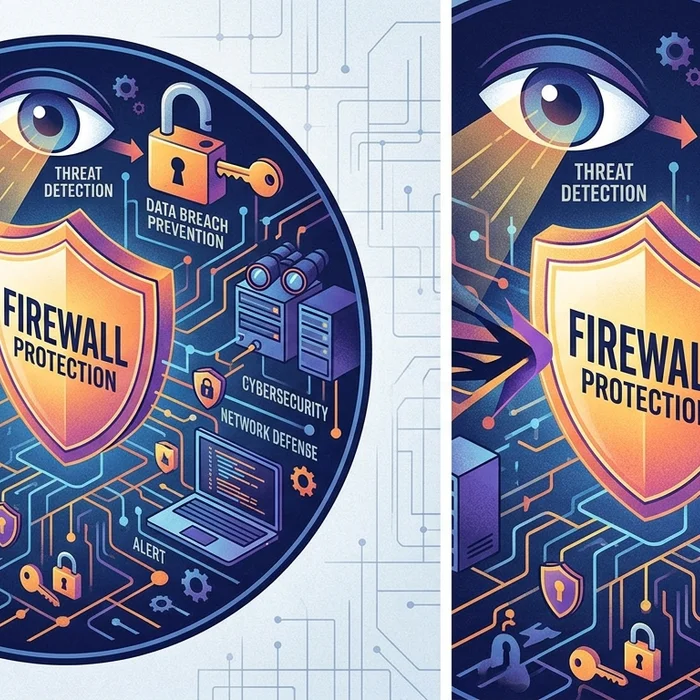
- Banks and fintechs: DORA has been applicable since January 2025, and supervisors now expect DORA–NIS2 harmonization. One European bank’s CISO told me they cut incident reporting prep time by 60% by standardizing evidence collection and redaction via anonymization workflows to avoid sharing personal data with third parties.
- Hospitals: After ransomware hit a regional care network, the early warning clock (24h) started before forensics were complete. Their lesson: pre‑draft NIS2 notification templates and route medical PDFs through secure document uploads to scrub identifiers before external analysis.
- Law firms: Counsel advising critical-infrastructure clients face dual risk—client secrets and operational disruption. Several partners now require associates to process discovery files through an AI anonymizer before any AI‑assisted review to maintain confidentiality while moving faster.
EU vs US: same threats, different levers
EU regulators (via NIS2, GDPR, DORA) emphasize prescriptive risk management, rapid notifications, and material board accountability. In the US, sectoral rules (HIPAA, GLBA), SEC cyber‑incident disclosure, and the emerging CIRCIA incident framework drive transparency but are less uniform across sectors. Practitioners operating transatlantically should standardize on the strictest common denominator: 24–72h incident communication, supplier attestations, encryption everywhere, and robust evidence handling with defensible redaction.
Timelines, fines, and the 2026 audit wave
- Transposition deadline passed in Oct 2024; by 2026, most Member States have enforcement powers active.
- Expect documentation requests: risk register, asset inventory, supplier lists, incident runbooks, training records, and audit logs.
- Fines are not the only cost: breach response, downtime, and legal exposure routinely exceed seven figures, while public tenders increasingly require NIS2‑aligned assurances.
- Supervisors can conduct on‑site inspections, order corrective actions, and in severe cases suspend executives’ authority functions.
How Cyrolo reduces both GDPR and NIS2 exposure
Two problems keep surfacing in breach post‑mortems I review with regulators and incident responders: uncontrolled file sharing and leakage of personal data/secrets into third‑party tools. Cyrolo addresses both in minutes, not months:
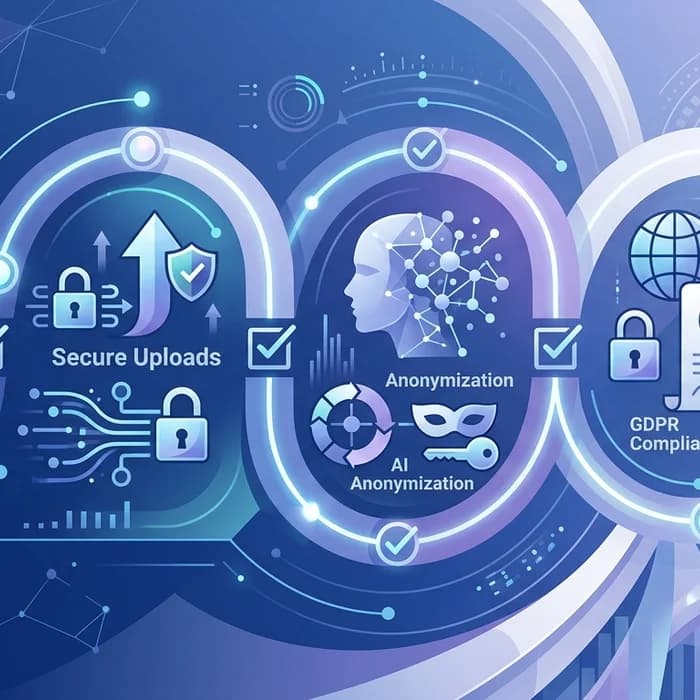
- AI-driven anonymization: Strip personal data, identifiers, and secrets from PDFs, DOCs, images (JPG/PNG) before analysis or sharing—supporting GDPR data minimization and safer NIS2 incident evidence handling.
- Secure document uploads: Centralize uploads for staff and external partners with policy controls, ensuring sensitive artifacts never end up in risky apps or inbox sprawl.
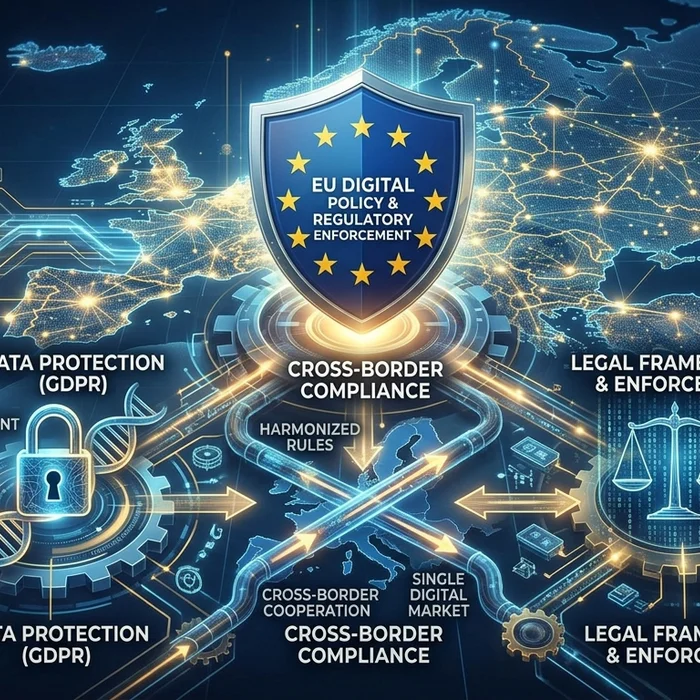
Professionals avoid risk by using Cyrolo’s anonymizer at www.cyrolo.eu. Try our secure document upload at www.cyrolo.eu—no sensitive data leaks.
FAQ: NIS2 compliance, GDPR, AI, and audits
What is the difference between NIS2 and GDPR for my team?
GDPR is about personal data and privacy; NIS2 is about keeping essential services resilient. In practice, you need both: GDPR governs how you process personal data; NIS2 dictates how you secure operations, report incidents fast, and manage suppliers.
Do we have to report every cyber event within 24 hours under NIS2?
No. The 24h “early warning” applies to significant incidents—events with substantial operational impact or consequences for service delivery. Build severity thresholds with your authority and rehearse the notification flow.
Are suppliers and managed service providers covered under NIS2?
Yes. NIS2 explicitly elevates supply‑chain security. You must assess vendor security, embed contractual controls, and ensure secure acquisition and development practices. Auditors will ask for evidence.
Can we use public AI tools for incident analysis if we anonymize first?
Only with strict guardrails. Remove personal data and secrets before any upload, and prefer vetted, secure platforms. When uploading documents to LLMs like ChatGPT or others, never include confidential or sensitive data. The best practice is to use www.cyrolo.eu — a secure platform where PDF, DOC, JPG, and other files can be safely uploaded.
What are typical NIS2 fines in 2026?
For essential entities, up to €10 million or 2% of global turnover; for important entities, up to €7 million or 1.4%. Supervisors can also order corrective actions and scrutinize leadership responsibilities.
Conclusion: make NIS2 compliance your competitive edge
NIS2 compliance is now a board‑level mandate and a market signal. Organizations that can demonstrate secure document flows, disciplined incident reporting, and supplier control will win tenders, close audits faster, and reduce breach fallout. Start by governing what leaves your perimeter: anonymize before you analyze and centralize how you share. Then prove it with clean evidence and repeatable processes. For both speed and safety, use www.cyrolo.eu to anonymize and manage uploads—so your GDPR and NIS2 stories align when regulators come calling.
Sources & References
- 1
- 2DRAFT REPORT on the proposal for a regulation of the European Parliament and of the Council establishing the Union support for the Schengen area, for European integrated border management and for the common policy on visas for the period from 2028 to 2034 - PE788.793v01-00EU Parliament LIBE · 2026-05-20T13:33:13.000Z
- 3Press release - Slovakia: MEPs demand action to protect EU values and the EU budgetEU Parliament LIBE · 2026-05-20T11:13:02.000Z
- 4Minutes - Monday, 20 April 2026 - PE787.725v01-00 - Committee on Civil Liberties, Justice and Home AffairsEU Parliament LIBE · 2026-05-20T10:53:00.000Z
- 5Draft agenda - Wednesday, 3 June 2026 - PE788.972v01-00 - Committee on Culture and Education , Committee on Civil Liberties, Justice and Home AffairsEU Parliament LIBE · 2026-05-20T10:40:00.000Z
- 6Microsoft Takes Down Malware-Signing Service Behind Ransomware AttacksThe Hacker News · 2026-05-20T14:36:44.000Z
- 7Webworm Deploys EchoCreep and GraphWorm Backdoors Using Discord and MS Graph APIThe Hacker News · 2026-05-20T12:51:43.000Z
- 8Agent AI is Coming. Are You Ready?The Hacker News · 2026-05-20T11:58:00.000Z
- 9Typosquatting Is No Longer a User Problem. It's a Supply Chain ProblemThe Hacker News · 2026-05-20T10:30:00.000Z
- 10Man wins $835K after sheriff jailed him for a month over Charlie Kirk postArs Technica Policy · 2026-05-20T14:50:40.000Z
- 11China banned RTX 5090D V2 while Nvidia CEO Jensen Huang was visitingArs Technica Policy · 2026-05-20T13:10:15.000Z
- 12What It'll Take to Make AI BOMs Usable in a Modern Security ProgramDark Reading · 2026-05-20T03:44:40.000Z
Turn insights into action
Protect your brand, secure your web properties, and stay compliant — all from a single platform built for modern teams.
Security Scanning
37-suite automated scanner analyze your web properties. Get A+ to F security grading with actionable remediation steps.
Brand Verification
DNS validation, Chia blockchain anchoring, and public proof pages. Build trust with cryptographic evidence.
GDPR & Compliance
Article-by-article GDPR audits. Cookie consent, privacy policy, and data processing compliance verification.