NIS2 compliance in 2026: EU e-commerce, app security, and product safety after IMCO’s China visit
From Brussels to Beijing, the message circulating through boardrooms this week is clear: NIS2 compliance is no longer optional for EU-facing digital businesses. In today’s Brussels briefing, MEPs from the Internal Market and Consumer Protection Committee (IMCO) underscored sustainable e-commerce, fair competition, and product safety as core trade priorities—while CISOs quietly flagged a parallel reality: cyber resilience is the unseen backbone of those goals. Add Apple’s emergency iOS 18.7.7 expansion to block the “DarkSword” exploit, and you have the perfect case study of why EU regulations, GDPR, and NIS2 must be implemented in tandem. If your teams handle personal data, AI workflows, or secure document uploads, your playbook needs to change—starting now.
Why NIS2 compliance is non-negotiable in 2026
As one regulator put it in a closed-door session I attended last quarter: “If your digital service can be weaponised, it is critical infrastructure to someone.” NIS2 (Directive (EU) 2022/2555) raises the floor for cybersecurity compliance across sectors—from online marketplaces and payment providers to health, transport, and ICT. Member States completed transposition through 2024–2025; 2026 is shaping up as the year of supervisory audits and penalty calibration.
- Penalties: Up to €10 million or 2% of worldwide annual turnover (whichever is higher), depending on national transpositions.
- Management liability: Executives can be held accountable for failing to implement risk management measures.
- Incident reporting: Early warning within 24 hours, a progress update within 72 hours, and a final report within one month to your CSIRT/competent authority.
- Supply chain duty: Security-by-design across vendors and OSS components—not just your own codebase.
For EU e-commerce and app teams, NIS2 sits alongside GDPR and product safety rules. Fail one, and the others become harder to defend during investigations or security audits.
What Brussels is signaling: sustainable e-commerce means secure commerce
IMCO’s recent outreach to China focused on fair competition and product safety in cross-border e-commerce. The unspoken corollary: unsafe connected products and insecure platforms risk becoming vectors for privacy breaches and systemic disruption. Expect national authorities to scrutinize:
- Marketplace vetting: Verification of sellers, product traceability, and takedown speed for unsafe listings.
- IoT and app safety: Security updates, vulnerability disclosure policies, and user communication during incidents.
- Data protection in commerce: Lawful bases under GDPR, data minimization, and safeguards for profiling/AI-driven recommendations.
In short, sustainability and safety narratives are converging with hard cybersecurity obligations. If your roadmap treats them separately, 2026 will be painful.
DarkSword as a warning: patch velocity is a compliance metric
Apple’s decision to expand an urgent iOS patch to older devices is a reminder that mobile ecosystems underpin payments, identity, and logistics for EU commerce. A CISO I interviewed this week called it “a supply-chain earthquake in slow motion”—one that tests whether your organization can:
- Detect exposure windows: Know which cohorts of customers and employees are running vulnerable builds.
- Enforce patch SLAs: Translate CVSS/CISA advisories into rollout deadlines with executive oversight.
- Communicate clearly: Provide accurate, timely, and non-alarming notices that satisfy NIS2’s transparency expectations.
Regulators increasingly treat patch latency as evidence of weak risk management. Your board should, too.
GDPR vs NIS2: who owns what, and where they overlap
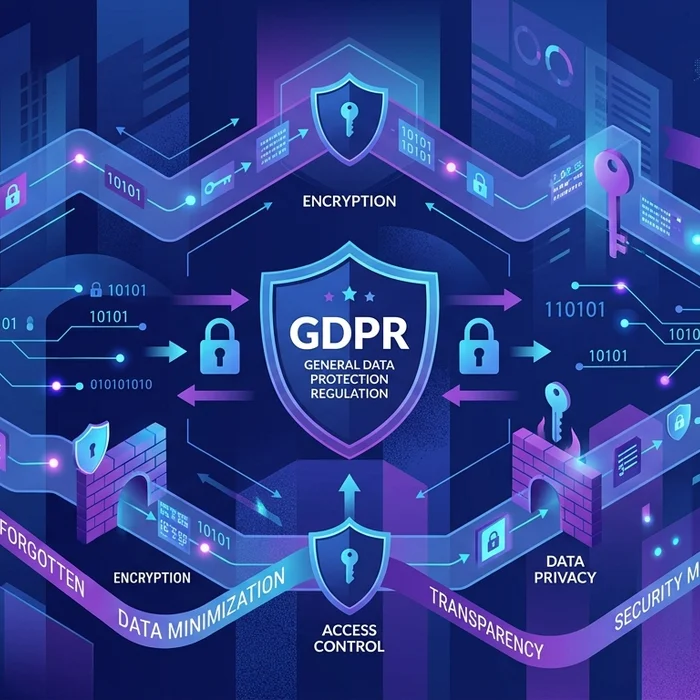
Privacy and security are two sides of the same house. GDPR protects personal data; NIS2 secures the networks and services that process it. Both expect demonstrable governance, risk management, and incident response.
| Topic | GDPR | NIS2 |
|---|---|---|
| Scope | Personal data processing by controllers/processors in the EU or targeting EU residents | Essential and important entities across specified sectors and digital services |
| Primary Goal | Data protection and privacy rights | Cyber resilience of networks and information systems |
| Governance | DPO (where required), DPIAs, records of processing | Management accountability, security policies, supplier risk controls |
| Security Measures | “Appropriate technical and organizational measures” (Art. 32) | Risk management incl. incident handling, backup, access control, crypto, supply-chain |
| Incident Reporting | Notify SA within 72 hours if breach risks rights/freedoms; inform data subjects if high risk | 24h early warning, 72h update, 1-month final report to CSIRT/authority |
| Fines | Up to €20m or 4% global turnover | Up to €10m or 2% global turnover (national variations apply) |
| Documentation | Policies, RoPA, DPIA outcomes, processor contracts | Risk assessments, asset inventories, incident logs, testing evidence |
A practical NIS2 compliance checklist for 2026
- Classify your entity: Confirm “essential” or “important” status under national NIS2 laws; map your services and jurisdictions.
- Board accountability: Assign a named executive owner; brief the board quarterly on cybersecurity posture and risks.
- Risk management baseline: Establish policies for access control, encryption, secure software development, backup/restore, and business continuity.
- Vulnerability management: Track SBOMs, prioritize exploits with threat intel, and enforce patch SLAs by asset criticality.
- Incident playbooks: Document 24h/72h/1-month reporting flows, authority contacts, and external counsel/PR escalation.
- Supply chain controls: Include NIS2-aligned clauses in vendor contracts; require breach notification and minimum controls.
- Testing and drills: Run red team exercises, tabletop incident simulations, and recovery tests with written evidence.
- Data protection integration: Align with GDPR—minimize personal data, anonymize where possible, and encrypt at rest/in transit.
- Evidence locker: Maintain audit-ready records of controls, changes, incidents, and lessons learned.
Handling personal data safely in AI workflows
AI is now embedded in due diligence, fraud detection, and customer support. But privacy breaches often begin with well-meaning staff pasting sensitive content into a chatbot. Adopt a zero-leak posture:
- Default to anonymization: Strip or mask names, emails, IBANs, addresses, and free-text identifiers before AI processing.
- Segment datasets: Keep production PII separate; use synthetic or anonymized data for model evaluation and prompts.
- Log everything: Who uploaded what, when, and why—plus masking outcomes for audit trails.
Professionals avoid risk by using Cyrolo’s anonymizer at www.cyrolo.eu to protect personal data before it ever touches an AI tool.
Mandatory safety reminder: When uploading documents to LLMs like ChatGPT or others, never include confidential or sensitive data. The best practice is to use www.cyrolo.eu — a secure platform where PDF, DOC, JPG, and other files can be safely uploaded.
Secure file handling and audit evidence, without the leaks
NIS2 and GDPR investigations hinge on documentation: policies, DPIAs, incident timelines, supplier attestations. Centralise this without risking a privacy breach.
- Secure document uploads: Use segregated, EU-hosted infrastructure; prefer platforms designed to prevent inadvertent sharing.
- Automated redaction: Remove PII and secrets from incident reports, logs, and screenshots before sharing with external counsel or authorities.
- Role-based access: Limit who can view originals vs anonymized copies; maintain immutable audit trails.
Try our secure document upload at www.cyrolo.eu — no sensitive data leaks. Pair it with automated redaction to keep investigatory files compliant and shareable.
Sector snapshots: where regulators will look first
E-commerce marketplaces
- Bot mitigation and account takeover defenses for seller/buyer portals.
- Rapid takedown and notification processes for unsafe products and scams.
- PII minimization in support transcripts; apply an AI anonymizer before triage in AI tools.
Fintech and payments
- Strong cryptographic key management; anomaly detection in transaction flows.
- Third-party risk scoring for PSP integrations and KYC vendors.
- Redact PII from AML case exports with anonymization before external analysis.
Hospitals and healthtech
- Network segmentation for clinical devices; offline-safe backups tested quarterly.
- Data protection impact assessments for telemedicine platforms.
- Replace raw PHI in AI triage or coding tools with masked values using secure uploads.
Law firms and in-house legal
- Conflict checks and eDiscovery pipelines that default to pseudonymization.
- Confidentiality walls and detailed access logs for case files.
- Share redacted exhibits with regulators via secure document uploads to avoid accidental disclosures.
How EU and US differ—and why it matters for your stack
- EU: Horizontal directives like NIS2 plus GDPR create mandatory, audit-ready controls across sectors.
- US: Sectoral rules and state privacy laws create a patchwork; federal critical infrastructure guidance is influential but often less prescriptive.
- Implication: EU-facing platforms should build to the stricter common denominator—privacy-by-design, rapid incident reporting, and supplier due diligence—then localize as needed.
FAQ: NIS2, GDPR, and secure AI practices
What companies fall under NIS2 in 2026?
Essential and important entities across sectors like energy, transport, health, digital infrastructure, ICT services, public administration, and digital providers (including online marketplaces and search engines). Check your national transposition to confirm scope and thresholds.
How fast do we have to report incidents under NIS2?
Submit an early warning within 24 hours of becoming aware of a significant incident, a progress update within 72 hours, and a final report within one month. Keep internal timelines even tighter.
Do GDPR and NIS2 both apply to the same incident?
Often, yes. A security incident that compromises personal data may trigger GDPR breach notifications and NIS2 reports. Coordinate legal, security, and communications to avoid contradictory filings.
How do we safely use AI for customer support or investigations?
Anonymize personal data and secrets before prompts or uploads. Use audit-logged, EU-hosted tools where possible. A practical option is anonymization and secure uploads via www.cyrolo.eu to reduce breach risk.
Is pseudonymization enough for GDPR?
Pseudonymization reduces risk but is still personal data if re-identification is possible. For many AI scenarios, stronger anonymization or aggregation is preferable, paired with strict access controls.
Conclusion: Make NIS2 compliance your competitive edge
NIS2 compliance, aligned with GDPR and product safety rules, is quickly becoming the price of admission for EU e-commerce and app ecosystems. The DarkSword episode shows how one upstream flaw can cascade across payments, identity, and logistics. Organizations that operationalize rapid patching, supplier diligence, and privacy-by-design will ship faster and negotiate better—with regulators, partners, and customers. If your workflows touch personal data or incident files, reduce exposure now: use anonymization and secure document uploads at www.cyrolo.eu to harden your controls and keep evidence audit-ready.
Reporting from Brussels, I’ll be watching how authorities translate IMCO’s agenda into on-the-ground supervision—expect a sharper focus on seller verification, connected product security, and cross-border incident cooperation through 2026.
Sources & References
- 1Press release - MEPs conclude China visit advocating sustainable e-commerce, fair competition and product safetyEU Parliament IMCO · 2026-04-02T09:53:00.000Z
- 2Apple Expands iOS 18.7.7 Update to More Devices to Block DarkSword ExploitThe Hacker News · 2026-04-02T07:09:00.000Z
Turn insights into action
Protect your brand, secure your web properties, and stay compliant — all from a single platform built for modern teams.
Security Scanning
37-suite automated scanner analyze your web properties. Get A+ to F security grading with actionable remediation steps.
Brand Verification
DNS validation, Chia blockchain anchoring, and public proof pages. Build trust with cryptographic evidence.
GDPR & Compliance
Article-by-article GDPR audits. Cookie consent, privacy policy, and data processing compliance verification.