NIS2 compliance: A 2026 EU readiness guide for CISOs, DPOs, and counsel
In today’s Brussels briefing, regulators emphasized that 2026 is the year when NIS2 compliance stops being a “project” and becomes operational muscle. If you handle essential services, digital infrastructure, or key supply chains in the EU, NIS2 compliance now sits alongside GDPR as a board-level obligation. As a reporter who’s spent years translating EU regulations for security and legal teams, I’ll walk you through what matters, what’s new, and how to reduce risk fast—including how anonymization and secure document uploads can close gaps that regulators are watching closely.
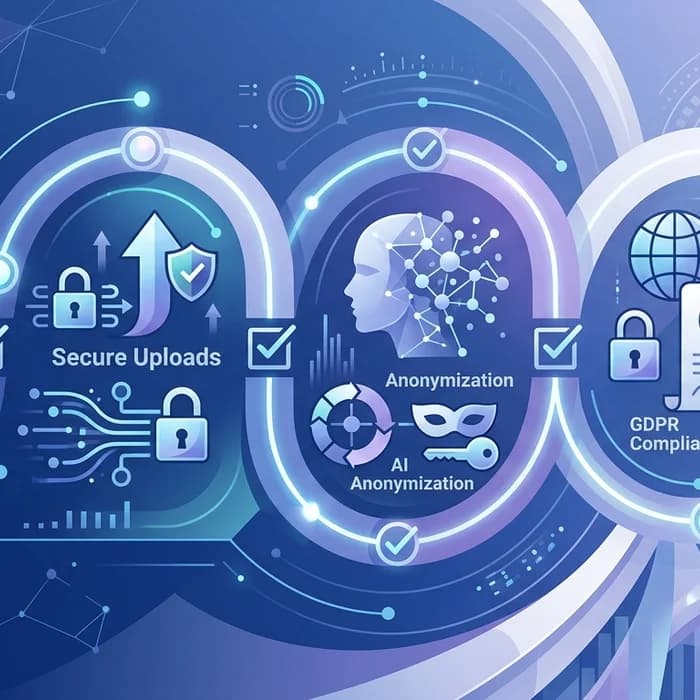
Professionals avoid risk by using Cyrolo’s anonymizer before sharing evidence in audits or incidents. And when you must exchange files with vendors or legal counsel, try a secure document upload that won’t leak personal data.
Who falls in scope under NIS2—and what’s shifting in 2026
Compared to the original NIS Directive, NIS2 (Directive (EU) 2022/2555) pulls many more organizations into scope. Beyond energy, transport, health, banking, and water, it reaches digital infrastructure (DNS, IXPs, CDNs, TLD registries), managed service providers, cloud and data centers, telecoms, waste and chemicals, postal and courier services, food production, manufacturing of critical products, and public administration. “Essential” and “important” entities face risk management, incident reporting, and strong governance duties, with supervisory scrutiny that now includes on‑site inspections and security audits.
As national transposition matured, 2025–2026 became the period when regulators started checking not just policies, but proof: logs, risk registers, supply-chain assessments, incident drill reports, and secure handling of personal data. A CISO I interviewed summed it up: “If it isn’t documented and defensible, it isn’t done.”
NIS2 compliance obligations and deadlines
Expect measurable controls, board accountability, and rapid incident notifications.
Core risk management measures
- Asset inventory and risk assessment covering IT, OT, and cloud services
- Access control and multi-factor authentication for critical systems
- Network and endpoint security, segmentation, and continuous monitoring
- Logging, detection, and response with evidence retention for audits
- Secure development, vulnerability management, and patch timelines
- Encryption in transit and at rest; secure key management
- Business continuity and backup/restore tests (including ransomware readiness)
- Supply-chain security and contractual cybersecurity clauses for vendors
- Policies for coordinated vulnerability disclosure (CVD/VDP)
- Staff training, phishing simulations, and executive accountability
Incident reporting deadlines that bite
- Early warning: within 24 hours of becoming aware of a significant incident
- Incident notification: within 72 hours with initial impact assessment
- Final report: within one month, covering root cause, mitigation, and lessons learned
This means you must have “report-ready” evidence: timelines, log extracts, data maps, and sanitized attachments. Sending raw files that expose personal data creates a GDPR liability while you’re trying to satisfy NIS2—precisely the double jeopardy that good hygiene avoids.
Governance, accountability, and fines
- Management liability: executives must approve and oversee cybersecurity risk measures; training is mandatory
- Enforcement: regulators can order remedies, audits, and temporary bans on executives for serious negligence
- Administrative fines: at least up to €10M or 2% of worldwide turnover for essential entities; €7M or 1.4% for important entities
GDPR vs NIS2: What actually changes for your teams
I often see organizations conflate the two frameworks. GDPR is about personal data protection and privacy rights; NIS2 is about the resilience of networks and systems that run the economy. Most businesses must do both—coherently.
| Area | GDPR | NIS2 | Practical Takeaway |
|---|---|---|---|
| Scope | Controllers/processors of personal data | Essential/important entities in critical sectors and digital services | Overlap is common; align data maps with system inventories |
| Primary Goal | Protect personal data and privacy rights | Ensure cybersecurity resilience and service continuity | Security + privacy must reinforce each other |
| Incident Reporting | 72 hours to DPA if personal data breach likely risks rights | 24-hour early warning; 72-hour notification; 1-month final report | Build a single cross-regulatory playbook and clock |
| Fines | Up to €20M or 4% global turnover | Up to €10M/2% (essential) or €7M/1.4% (important) | Compound penalties are a real risk post-incident |
| Data Minimization | Legal basis, minimization, retention limits | Evidence retention, forensics, and reporting needs | Anonymize before sharing; retain only what audits require |
| Third Parties | DPA-compliant processors, SCCs, TIAs | Vendor cyber clauses; supply-chain risk management | Add security annexes and breach drill obligations |
2026 threat reality: AI fraud, extension scams, and mobile surveillance
Across Europe this winter, cyber teams reported a surge in AI‑assisted fraud and fake “AI productivity” tools. One security bulletin noted hundreds of thousands of users tricked by malicious browser extensions, while another case saw mobile spyware exfiltrating messages and keystrokes in real time. Lithuania’s public campaigns on safe and inclusive e‑services are a useful model: educate citizens fast, and harden platforms against deepfake‑enabled social engineering.
For NIS2, that translates into evidence-based controls: extension allowlists, mobile device hardening, data loss prevention, and enforced least privilege. And when you must collect screenshots, logs, or emails for a regulator, strip personal data first. That’s where an AI anonymizer designed for compliance saves stress.
Secure document handling: the fastest win for audits and incidents
Most reportable incidents hinge on messy documentation: raw exports, inbox dumps, and unredacted attachments. Regulators increasingly ask: why did you share personal data when a sanitized excerpt would do? Avoid that trap.
- Use an AI anonymizer to remove names, emails, IDs, health data, and IBANs before sending evidence to external counsel or vendors.
- Share files via a secure document upload rather than ad‑hoc email chains to prevent privacy breaches.
- Maintain a “disclosure log” that records what was shared, with whom, and why—your DPO will thank you during security audits.
Compliance reminder: When uploading documents to LLMs like ChatGPT or others, never include confidential or sensitive data. The best practice is to use www.cyrolo.eu — a secure platform where PDF, DOC, JPG, and other files can be safely uploaded.
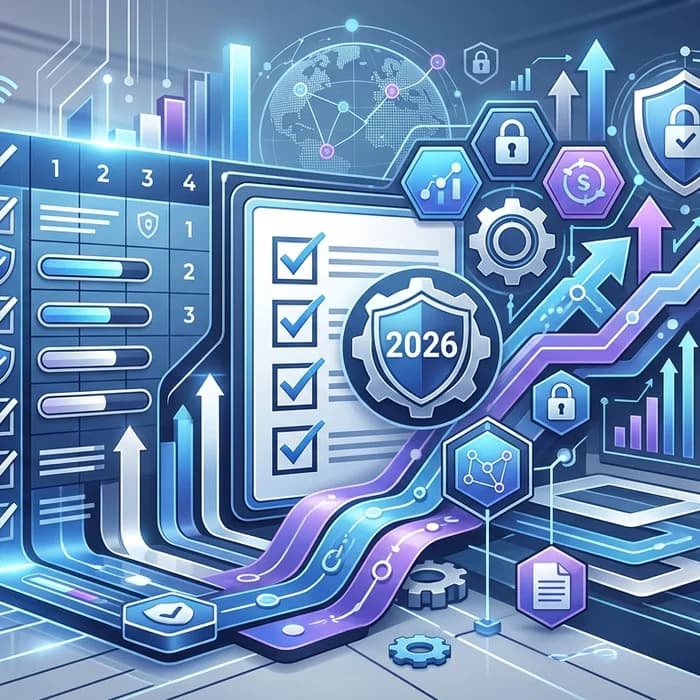
NIS2 compliance checklist (print-friendly)
- Map scope: confirm if you are “essential” or “important”; document services and dependencies
- Assign accountable owners: CISO/CIO, DPO, legal, operations, procurement, and board sponsor
- Complete a risk assessment: IT, OT, and cloud; include threat scenarios and business impact
- Implement MFA, least privilege, and admin session recording for critical systems
- Deploy centralized logging and detection; test alerting and response runbooks quarterly
- Harden endpoints and browsers; enforce extension allowlists; mobile device management
- Patch management SLAs; emergency windows for critical CVEs
- Backups and recovery drills; ransomware tabletop twice per year
- VDP/CVD policy published; process to triage and remediate reports
- Vendor due diligence: security clauses, breach notification, and evidence-sharing rules
- Incident reporting playbook aligned to 24h/72h/1‑month clocks
- Evidence hygiene: anonymize before sharing; use anonymization and secure uploads
- Executive training and approval of cybersecurity program; board briefings min. twice yearly
- Metrics and audits: KPIs, internal audit schedule, and regulator‑ready documentation
Sector snapshots: how this works in the real world
Bank and fintech
Payment outages trigger both NIS2 and PSD2 considerations. Your incident record should include sanitized transaction logs to demonstrate impact and containment without exposing personal data. Teams I spoke to now pre-template these reports and run red-team drills quarterly. Before hand‑offs to external counsel, they rely on anonymization to remove account names and identifiers.
Hospital and life sciences
Hospitals face dual exposure: service continuity and sensitive health data. A regional CISO showed me their “evidence cabinet” model—predefined folders for log bundles, vendor tickets, and clinical system screenshots—run through a secure document upload so nothing ends up in personal inboxes. Privacy-by-design meets clinical uptime.
Law firms and critical suppliers
Law firms and MSPs are now squarely in scope as supply-chain amplifiers. Contract clauses mandate breach drills and secure sharing. A partner told me, “We used to accept email zips; now we require sanitized uploads or we won’t touch the file.” If that sounds strict, remember regulators can audit you too.
How to brief your board in 10 slides
- Slide 1–2: Services in scope; essential vs important status
- Slide 3: Top risks and current control maturity
- Slide 4–5: Incident reporting clocks and recent exercises
- Slide 6: Supply-chain risk and vendor tiers
- Slide 7: Evidence management and anonymization workflow
- Slide 8: Budget and staffing vs benchmarks
- Slide 9: Outstanding gaps and dates to green
- Slide 10: Statement for approval (management accountability)
FAQ: Your most searched questions on NIS2 compliance
What is NIS2 compliance and who needs it?
NIS2 compliance means meeting the cybersecurity risk management, incident reporting, and governance duties of the EU’s updated Network and Information Systems Directive. It applies to “essential” and “important” entities across critical sectors and digital services, plus many of their key suppliers.
How does NIS2 interact with GDPR?
GDPR protects personal data; NIS2 protects the resilience of services and systems. Incidents can trigger both. Use data minimization and anonymization so your evidence satisfies NIS2 without creating a GDPR breach.
What are the NIS2 incident reporting timelines?
Early warning within 24 hours, an incident notification within 72 hours, and a final report within one month. Prepare regulator‑ready templates and pre‑approved sharing channels like a secure document upload.
Do SMEs fall under NIS2?
Yes, size alone is not a full exemption. If you provide critical services or are a key supplier to in‑scope entities, you may be covered. Check national transposition and sector guidance.
What’s the fastest first step to close exposure?
Stand up an evidence hygiene workflow: sanitize files automatically, restrict ad‑hoc emailing of logs, and document who shares what, when, and why. Tools like Cyrolo’s anonymizer make this immediate and measurable.
The bottom line
NIS2 compliance is no longer a checklist—it’s a living discipline that blends GDPR‑grade data protection with battle‑ready cyber resilience. In 2026, regulators and attackers are both moving faster. Build your playbooks around real deadlines, prove your controls with clean evidence, and stop data leaks before they start. For rapid wins, use anonymization and a secure document upload to protect personal data at the exact moment it’s most at risk. That’s how you make NIS2 compliance work—day in, day out.
Sources & References
- 1Draft agenda - Wednesday, 25 February 2026 - PE784.469v01-00 - Committee on Women’s Rights and Gender Equality , Committee on Civil Liberties, Justice and Home AffairsEU Parliament LIBE · 2026-02-16T11:10:05.000Z
- 2
- 3Weekly Recap: Outlook Add-Ins Hijack, 0-Day Patches, Wormable Botnet & AI MalwareThe Hacker News · 2026-02-16T12:55:00.000Z
- 4Safe and Inclusive E‑Society: How Lithuania Is Bracing for AI‑Driven Cyber FraudThe Hacker News · 2026-02-16T11:55:00.000Z
- 5New ZeroDayRAT Mobile Spyware Enables Real-Time Surveillance and Data TheftThe Hacker News · 2026-02-16T10:24:00.000Z
- 6Michigan accuses oil companies of antitrust violations in climate change lawsuitArs Technica Policy · 2026-02-16T14:47:38.000Z
- 7260K+ Chrome Users Duped by Fake AI Browser ExtensionsDark Reading · 2026-02-16T14:00:00.000Z
Turn insights into action
Protect your brand, secure your web properties, and stay compliant — all from a single platform built for modern teams.
Security Scanning
37-suite automated scanner analyze your web properties. Get A+ to F security grading with actionable remediation steps.
Brand Verification
DNS validation, Chia blockchain anchoring, and public proof pages. Build trust with cryptographic evidence.
GDPR & Compliance
Article-by-article GDPR audits. Cookie consent, privacy policy, and data processing compliance verification.