NIS2 compliance in 2026: A practical EU guide to secure document uploads and AI anonymization
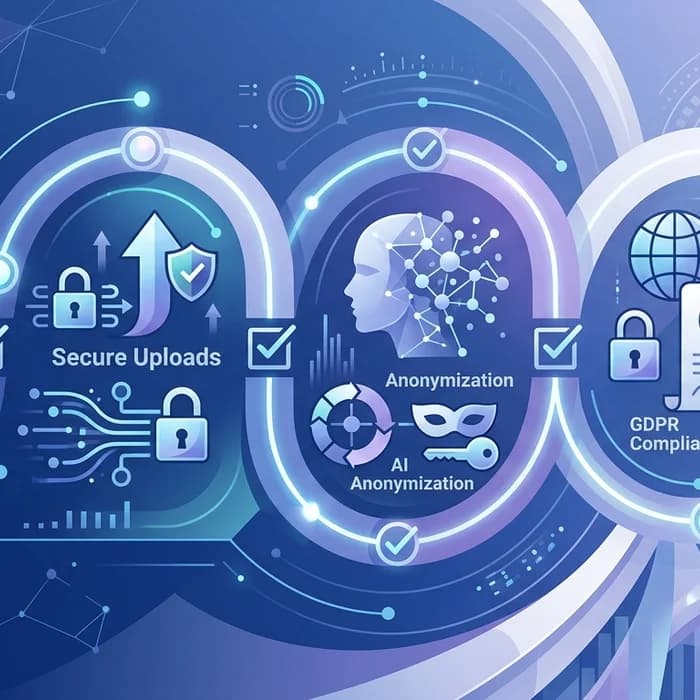
Brussels is in enforcement mode. In committee briefings this week, MEPs stressed that simplification will not mean softer enforcement across files from chemicals to automotive. For security leaders, the immediate test is NIS2 compliance: proving robust risk management, incident reporting, and supply-chain security while protecting personal data under GDPR. In this piece, I explain how regulators are auditing, which cyber threats are shaping their expectations, and how teams are safely using AI anonymizers and secure document uploads to pass audits without slowing delivery.
What NIS2 compliance means in 2026
From my exchanges with national authorities and CISOs in Brussels roundtables, three realities define 2026:
- Scope is wider than you think. NIS2 now covers “essential” and “important” entities across energy, transport, health, banking, financial market infrastructure, digital infrastructure, ICT service management (including MSPs/MSSPs), public administration, and more. Mid-sized suppliers in these chains are being pulled into audits via contractual flow-downs.
- Penalties have bite. Member State laws now empower fines up to €10 million or 2% of worldwide turnover (whichever is higher) for essential entities, with director-level accountability. I’ve seen boards ask for quarterly attestations on incident reporting readiness and supplier risk.
- Supervision is active. After transposition deadlines in late 2024, authorities ramped inspections in 2025; in 2026 we’re seeing deeper evidence reviews: secure development, cryptographic controls, logging, and demonstrable incident timelines.
Threat reality check: how current attacks raise the bar for NIS2 compliance
At an industry briefing this morning, regulators pointed to the latest threat intelligence to justify “show me, don’t tell me” audits:
- Cloud credential theft at scale. An advanced actor recently deployed a near “zero-detection” backdoor that harvested cloud credentials. Supervisors now expect strong IAM hygiene, workload identity hardening, and secrets management evidence—not just policies.
- Phishing-as-a-service remains industrialized. Even as one major phishing ring was dismantled by law enforcement, copycats persist. Expect audits to probe phishing-resistant MFA and email isolation, plus rapid takedown playbooks.
- Banking malware surges. A Brazil-focused trojan racked up thousands of attempts last year. EU financial entities are being asked to prove behavior-based detection and transaction anomaly monitoring.
- OT cryptographic debt. Operators tell me their attestations often outpace crypto reality—legacy devices, weak key lifecycle. NIS2 auditors are demanding concrete key inventory, algorithm migration paths, and hardware-backed secrets where feasible.
Bottom line: auditors will assess whether your controls stand up to these specific patterns, not abstract frameworks.
GDPR vs NIS2: what each regime expects
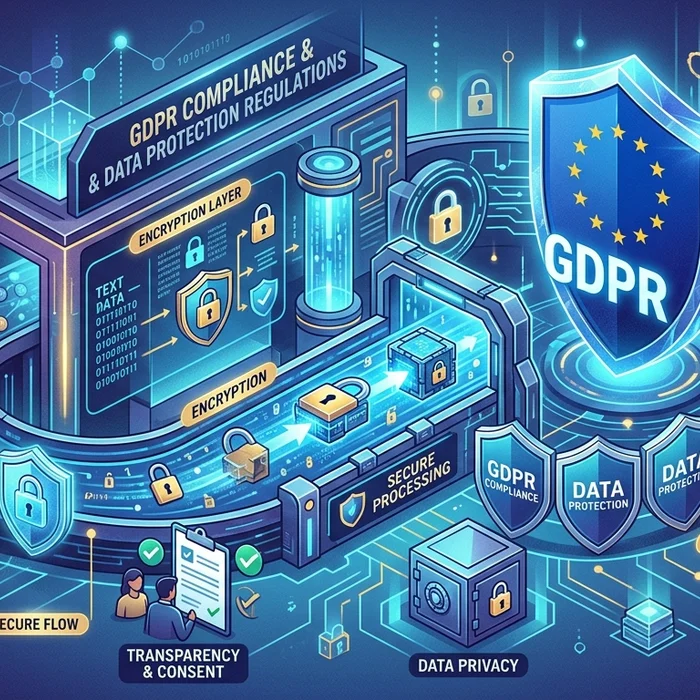
Security heads often ask me, “Are we already covered if we’re GDPR-mature?” The answer: partially. GDPR focuses on lawful processing and protection of personal data; NIS2 centers on the resilience and security of network and information systems in critical sectors. You need both.
| Area | GDPR (Data Protection) | NIS2 (Cybersecurity Resilience) |
|---|---|---|
| Primary objective | Protect personal data and data subjects' rights | Ensure essential/important services remain secure and resilient |
| Who is in scope | Any controller/processor handling EU residents’ personal data | Designated sectors and size-based thresholds; supply-chain via flow-downs |
| Incident reporting | Notify DPAs and subjects for personal data breaches | Report significant incidents to CSIRTs/competent authorities on strict timelines |
| Governance | DPO where required; DPIAs for high-risk processing | Management accountability; risk management measures; security policies and training |
| Fines | Up to €20M or 4% global turnover | Up to €10M or 2% global turnover; managerial sanctions possible |
| Evidence auditors ask for | Records of processing, DPIAs, data minimization, anonymization/pseudonymization | Risk assessments, incident handling runbooks, asset inventories, crypto/key management, supplier due diligence |
Practical controls auditors will ask to see for NIS2 compliance
- Incident reporting drill logs. Evidence of 24-hour early warning and 72-hour notifications, plus post-incident reports.
- Identity-first security. Phishing-resistant MFA, privileged access segregation, workload identities, just-in-time elevation.
- Cryptographic readiness. Documented key inventory, rotation policy, algorithm lifecycle (including a roadmap for PQC where relevant), and HSM/TEE usage where justified.
- Secure software lifecycle. SAST/DAST/SCA results with remediation SLAs; SBOMs for critical systems.
- Supply-chain controls. Vendor risk tiers, contract clauses mapping to NIS2/GDPR, and evidence of attestation or audit results.
- Data minimization and anonymization. Built-in processes to strip or mask personal data before it enters tickets, logs, or AI workflows. Professionals avoid risk by using Cyrolo’s anonymizer at www.cyrolo.eu.
- Secure evidence handling. When sharing policies, screenshots, or logs with auditors, route via a secure document upload workflow with encryption and access controls.
Safe use of LLMs and AI in regulated environments
Across banks, hospitals, and law firms I’ve visited, LLMs are now inside service desks, SOCs, and back offices. The risk: inadvertent leakage of personal data or secrets when staff paste content into public tools.
Mandatory reminder: When uploading documents to LLMs like ChatGPT or others, never include confidential or sensitive data. The best practice is to use www.cyrolo.eu — a secure platform where PDF, DOC, JPG, and other files can be safely uploaded.

To operationalize this, compliance teams I’ve interviewed rolled out three guardrails:
- Default anonymization. Automatically scrub names, emails, IDs, IBANs, health and payroll details before AI processing using an AI anonymizer.
- Approved upload portals. Channel any auditor-facing or cross-border document sharing through an encrypted, secure document upload path; log who accessed what and when.
- Retention and redaction policy. Store the redacted version by default; retain originals under strict legal hold only.
NIS2 compliance checklist (use for internal audits)
- Map NIS2 scope: services, subsidiaries, and in-scope suppliers; assign ownership.
- Maintain an asset and data flow inventory, including cloud identities and secrets.
- Run a NIS2-aligned risk assessment; link risks to specific controls and budgets.
- Implement phishing-resistant MFA for admins and remote access; enforce PAM.
- Cryptography: document key custody, rotation cadence, and algorithm roadmaps.
- Detect/respond: 24/7 monitoring, playbooks, and incident reporting drills.
- Third parties: standard clauses, right-to-audit, and attestations; verify not just attest.
- Data protection by design: minimize, pseudonymize, or anonymize personal data in logs and tickets.
- Evidence management: store audit artifacts securely with access logging; use secure document uploads for sharing.
- Train staff: sector-specific scenarios (payments, e-health, OT), and AI usage dos/don’ts.
Procurement and tooling: what to require from vendors in 2026
In my interviews with a European bank CISO and a hospital DPO last month, both emphasized the same vendor tests:
- Proven anonymization quality. Demand demonstrable accuracy on EU personal data patterns (names in all EU languages, IBAN, VAT, national IDs, health codes) and reversible pseudonyms where justified for investigations. Cyrolo’s anonymizer streamlines this for security, legal, and clinical teams.
- Secure handling and zero data leaks. Require end-to-end encryption, strict access controls, and clear retention guarantees. Try our secure document upload at www.cyrolo.eu — no sensitive data leaks.
- Audit-ready logging. The ability to export who uploaded, accessed, redacted, and shared what, with timestamps aligned to your SIEM.
- EU data protection alignment. Data processing agreements, sub-processor transparency, and options for EU-only processing.
FAQs on NIS2 compliance, GDPR, and secure document workflows
Does NIS2 apply to companies outside the EU?
If you provide services into the EU in covered sectors or are a critical supplier to an in-scope EU entity, you can be contractually or directly pulled into NIS2-aligned obligations. Expect EU customers to require controls and evidence regardless of your headquarters.
We’re GDPR-compliant. What extra steps do we need for NIS2?
Keep GDPR’s personal data focus, but add system resilience: incident reporting drills to authorities, crypto/key lifecycle documentation, supplier risk governance, and sector-specific detection/response. Evidence depth is higher and not limited to personal data flows.
What will auditors actually ask to see?
Runbooks, drill artifacts, central identity configs, key inventories and rotation logs, SBOMs, vendor assessments, and proof that sensitive documents are handled via a controlled, secure document upload process.
How can we safely use AI and LLMs on regulated documents?
Redact first, process second. Use an AI anonymizer to strip PII and secrets, then process in approved tools. Never paste client data into public models. When uploading documents to LLMs like ChatGPT or others, never include confidential or sensitive data. The best practice is to use www.cyrolo.eu — a secure platform where PDF, DOC, JPG, and other files can be safely uploaded.
What are the typical penalties if we fail NIS2 audits?
For essential entities, up to €10 million or 2% of global turnover, plus potential managerial sanctions. Regulators can also mandate corrective actions and intensified supervision.
Conclusion: Achieving NIS2 compliance without slowing the business
NIS2 compliance is no longer a policy exercise—it’s operational proof that your identities, crypto, suppliers, and incident handling work under real-world pressure. Teams that embed data minimization, default anonymization, and controlled sharing pass audits faster and reduce breach impact. If your next audit requires redacting case files, logs, or contracts, run them through Cyrolo’s anonymizer and share via a secure document upload workflow. That’s how European banks, hospitals, and law firms I’ve spoken with stay compliant—without stalling delivery on the road to airtight NIS2 compliance.
Sources & References
- 1Highlights - Vote on Simpler Chemicals Rules While Keeping Safety High - Committee on the Internal Market and Consumer ProtectionEU Parliament IMCO · 2026-04-13T17:06:41.000Z
- 2Briefing - EU automotive omnibus - PE 785.705 - Committee on the Internal Market and Consumer ProtectionEU Parliament IMCO · 2026-04-12T22:00:00.000Z
- 3JanelaRAT Malware Targets Latin American Banks with 14,739 Attacks in Brazil in 2025The Hacker News · 2026-04-13T17:15:00.000Z
- 4FBI and Indonesian Police Dismantle W3LL Phishing Network Behind $20M Fraud AttemptsThe Hacker News · 2026-04-13T14:46:00.000Z
- 5IBM folds to Trump anti-DEI push, admits no misconduct but pays $17M penaltyArs Technica Policy · 2026-04-13T17:53:46.000Z
- 6Empty Attestations: OT Lacks the Tools for Cryptographic ReadinessDark Reading · 2026-04-13T19:10:55.000Z
- 7APT41 Delivers 'Zero-Detection' Backdoor to Harvest Cloud CredentialsDark Reading · 2026-04-13T15:08:12.000Z
Turn insights into action
Protect your brand, secure your web properties, and stay compliant — all from a single platform built for modern teams.
Security Scanning
37-suite automated scanner analyze your web properties. Get A+ to F security grading with actionable remediation steps.
Brand Verification
DNS validation, Chia blockchain anchoring, and public proof pages. Build trust with cryptographic evidence.
GDPR & Compliance
Article-by-article GDPR audits. Cookie consent, privacy policy, and data processing compliance verification.