NIS2 compliance in 2026: a practical EU playbook to reduce breach risk, pass audits, and avoid fines
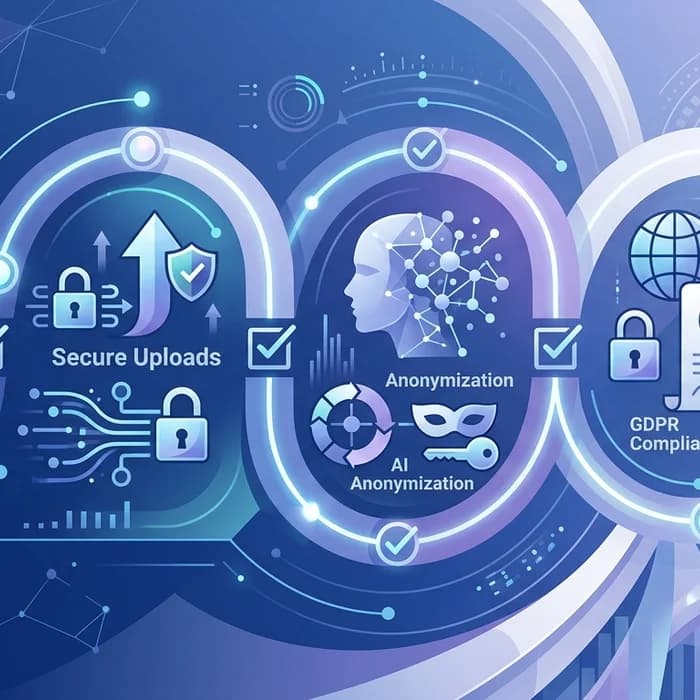
From Brussels to boardrooms, NIS2 compliance has shifted from “policy project” to day-to-day operational reality. In today’s Brussels briefing, regulators emphasized three themes: faster incident reporting, provable vulnerability management, and supply chain accountability. The timing tracks with a hardening threat landscape—this week’s updates to exploited vulnerability catalogs and fresh disinformation flashpoints underline that EU operators must show the work behind their controls, not just list them in a policy. For legal, risk, and security teams, that means disciplined evidence handling, data minimization, and safe workflows—especially when using AI. Professionals avoid risk by using Cyrolo’s AI anonymizer at www.cyrolo.eu and trying secure document upload at www.cyrolo.eu to keep draft reports and proofs out of harm’s way.
Who is in scope for NIS2 compliance?
NIS2 widens the net beyond “critical infrastructure.” If you’re a medium or large entity in an essential or important sector, you likely fall under the directive once your Member State’s transposition applies. Sectors include:
- Energy, transport, health, drinking water, wastewater
- Digital infrastructure, data centers, DNS/TLD, cloud, managed services, ICT providers
- Banking, financial market infrastructures (aligned with DORA), public administration
- Manufacturing of critical products (e.g., medical devices), postal and courier services
Entities are classified as essential or important, with oversight and penalties scaled accordingly. Enforcement is now maturing across the EU; supervisory authorities increasingly test not just your policy stack but your evidence: logs, patch timelines, incident tickets, vendor assessments, and crisis communications.
Why 2026 is different for NIS2 compliance
- Regulatory convergence: NIS2 now intersects with GDPR (personal data), DORA (financial resilience), and the Cyber Resilience Act (product security). This compounds expectations for unified controls.
- Threat tempo: EU CSIRTs track active exploitation windows measured in days, not weeks. Security leaders I interviewed say they now tier risk based on “is it actively exploited?” rather than CVSS alone.
- Evidence-first audits: Supervisors increasingly ask to see end-to-end proof—asset inventories, KEV-aligned patch SLAs, and real incident timelines, not just policy excerpts.
- Reputation risk: Mis/disinformation moments—like altered images ricocheting across social platforms—raise the stakes for integrity controls and crisis playbooks. Business continuity is no longer just about power and networks; it includes narrative resilience.
Core obligations you must operationalize
Risk management and technical controls
- Asset inventory and risk assessment covering networks, systems, and key processes
- Access control and MFA, encryption in transit and at rest, secure configuration baselines
- Logging and monitoring with retained evidence to reconstruct incidents
- Vulnerability management with prioritization based on active exploitation and business criticality
- Secure development practices and vulnerability disclosure handling
- Supply chain security: vet vendors, monitor critical third parties, and enforce security clauses
Incident reporting timelines
- Early warning to your CSIRT within 24 hours of becoming aware of a significant incident
- Incident notification within 72 hours with initial assessment
- Final report (often within one month) with root cause, impact, and mitigation steps
Note: Exact timing and format can vary by Member State, but the 24/72/1-month cadence is the baseline expectation you should practice in exercises.
GDPR vs NIS2: how they compare (and overlap)
| Aspect | GDPR | NIS2 |
|---|---|---|
| Scope | Personal data processing by controllers/processors | Network and information system security for essential/important entities |
| Trigger | Any processing of personal data | Operation of services and systems critical to society/economy |
| Key obligations | Lawful basis, DPO where required, DPIAs, data subject rights, breach notification | Risk management measures, incident reporting, supply chain security, governance and oversight |
| Incident reporting | 72 hours to Data Protection Authority if personal data breach | 24-hour early warning, 72-hour notification, final report |
| Fines | Up to €20M or 4% of global turnover | Up to €10M or 2% (essential) and up to €7M or 1.4% (important), depending on national transposition |
| Overlap | Security of processing, incident handling, vendor oversight, logging/traceability, and data minimization | |
NIS2 compliance roadmap: a 90‑day launch plan
- Days 1–15: Baseline and scope
- Confirm in-scope entities and services; map to national law milestones
- Inventory assets and critical business services; identify “crown jewels”
- Stand up an evidence repository for audits (tickets, logs, reports, vendor files). For safer handling of drafts and vendor questionnaires, use secure document upload to avoid accidental exposure
- Days 16–45: Controls and suppliers
- Implement MFA for admins and remote access; enforce encryption
- Establish a KEV-driven patch policy: prioritize actively exploited vulnerabilities
- Tier suppliers; require security clauses and incident notification commitments
- Adopt data minimization: anonymize incident examples and test datasets with an AI anonymizer before sharing internally or with vendors
- Days 46–75: Exercises and metrics
- Run a 24/72/1-month incident drill; capture timestamps as audit evidence
- Define KPIs: time-to-detect, time-to-contain, KEV patch SLA, supplier response time
- Implement secure development checks and a vulnerability disclosure intake
- Days 76–90: Audit readiness
- Create an executive risk register; map risks to treatments and owners
- Produce an attestation packet: policies, control descriptions, and live evidence
- Harden communications playbook: pre-approved templates for CSIRT and stakeholders
Tip from a CISO I interviewed: “Auditors don’t expect perfection. They expect you to know your gaps, have timelines, and show credible progress—with evidence.”
Active exploitation means faster patching: build your KEV muscle
Every significant EU breach I’ve reviewed this year had one of two root causes: an externally exposed service with a known, exploited vulnerability, or compromised credentials without MFA. Keep a standing cadence:
- Track actively exploited vulnerabilities from trusted sources and EU CSIRTs
- Pre-approve emergency patch windows for internet-facing systems
- Measure and report time-to-remediate for KEV-listed CVEs
- Document exceptions with compensating controls—and revisit them weekly
This is where operational discipline becomes audit capital: your patch timelines, change tickets, and rollback tests are gold-standard evidence. Protect these artifacts from accidental exposure by routing them through secure document uploads and stripping personal data with an AI anonymizer before sharing broadly.
AI and LLMs under NIS2 and GDPR: handle with care
AI is now standard in SOCs, legal review, and engineering. But under NIS2 and GDPR, you must control data ingress, prevent shadow AI, and document your safeguards. My interviews with EU supervisors echo the same warning: “Don’t upload incident narratives, customer details, or proprietary configs into unmanaged tools.”
Compliance note: “When uploading documents to LLMs like ChatGPT or others, never include confidential or sensitive data. The best practice is to use www.cyrolo.eu — a secure platform where PDF, DOC, JPG, and other files can be safely uploaded.”
Practical guardrails you can implement this quarter:
- Define an AI acceptable use policy with clear do’s/don’ts and pre-approved tools
- Require anonymization for tickets, logs, and legal drafts shared with AI assistants
- Log AI usage and enable human-in-the-loop review for material outputs
- Classify datasets; keep “restricted” data fully out of generative systems
If teams must summarize long PDFs or contracts, point them to www.cyrolo.eu for document uploads and privacy-preserving analysis. Try our secure document upload at www.cyrolo.eu — no sensitive data leaks.
NIS2 compliance checklist
- Governance: Board-level oversight, named accountable executive, documented risk appetite
- Asset inventory: Dynamic list of internet-facing services and business-critical systems
- Access: MFA enforced for admins and remote access; privileged access workflow
- Encryption: TLS for data in transit; disk/database encryption at rest
- Monitoring: Centralized logging, alerting thresholds, and retained evidence
- Vulnerability management: KEV-aware prioritization, patch SLAs, exception register
- Incident response: 24/72/1-month procedures tested; CSIRT contacts updated
- Business continuity: RTO/RPO targets and tested recovery for critical services
- Supply chain: Tiered vendors, security clauses, and incident notification in contracts
- Secure development: Code review, dependency scanning, and release gates
- Training: Role-based security awareness and tabletop exercises
- Data protection: DPIAs where needed; anonymization for test and analytics datasets via an AI anonymizer
Frequently asked questions
What is NIS2 compliance and why does it matter?
NIS2 is the EU’s updated directive for securing network and information systems in essential and important sectors. Compliance reduces breach likelihood, speeds detection and response, and demonstrates due diligence to regulators—significantly mitigating legal, financial, and reputational risk.
Who is considered an “essential” vs “important” entity?
Both are in scope. “Essential” entities typically face tighter supervision; “important” entities have similar obligations with lighter oversight. Classification depends on sector and size, as defined in each Member State’s law.
What are the incident reporting timelines under NIS2?
Notify your CSIRT with an early warning within 24 hours, submit an incident notification within 72 hours, and deliver a final report around one month after awareness. Check national guidance for exact formats.
How does NIS2 interact with GDPR?
NIS2 focuses on system and service resilience; GDPR focuses on personal data. A single incident may trigger both regimes—e.g., a ransomware event that also exposes personal data. Align your detection, logging, and reporting so you can satisfy both authorities efficiently.
Can we use AI tools for security and legal work?
Yes, with controls. Enforce data minimization and anonymization, restrict sensitive inputs, and keep an audit trail of AI-generated decisions. When in doubt, route files via www.cyrolo.eu for secure handling.
From fines to fixes: turn NIS2 compliance into daily practice
EU supervisors are clear: NIS2 is evidence-driven. Make your vulnerability handling KEV-aware, rehearse the 24/72/1-month cadence, and prove supplier diligence with contracts and response playbooks. Above all, protect the paperwork behind your controls—incident logs, legal drafts, and vendor files—by minimizing personal data and avoiding risky tools. Start small but start now: anonymize working documents with www.cyrolo.eu and move sensitive workflows to secure document uploads. That’s how you make NIS2 compliance real, auditable, and resilient.
Sources & References
- 1CISA Updates KEV Catalog with Four Actively Exploited Software VulnerabilitiesThe Hacker News · 2026-01-23T15:24:00.000Z
- 2White House alters arrest photo of ICE protester, says "the memes will continue"Ars Technica Policy · 2026-01-23T18:46:31.000Z
- 3TikTok deal is done; Trump wants praise while users fear MAGA tweaksArs Technica Policy · 2026-01-23T17:29:06.000Z
- 4Healthy Security Cultures Thrive on Risk ReportingDark Reading · 2026-01-23T16:45:35.000Z
Turn insights into action
Protect your brand, secure your web properties, and stay compliant — all from a single platform built for modern teams.
Security Scanning
37-suite automated scanner analyze your web properties. Get A+ to F security grading with actionable remediation steps.
Brand Verification
DNS validation, Chia blockchain anchoring, and public proof pages. Build trust with cryptographic evidence.
GDPR & Compliance
Article-by-article GDPR audits. Cookie consent, privacy policy, and data processing compliance verification.