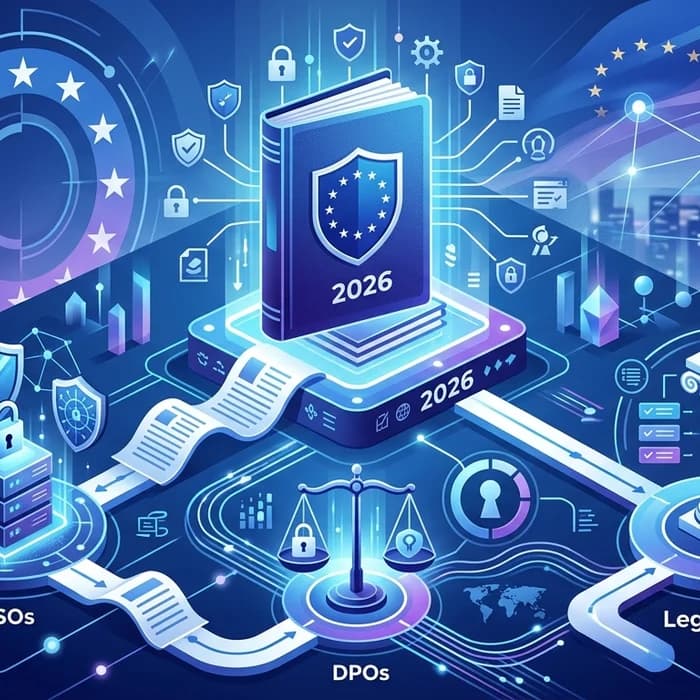
NIS2 compliance: the 2026 EU playbook for CISOs, DPOs, and legal teams
European boards are asking one question in Q2 2026: are we truly ready for NIS2 compliance? Since the directive’s obligations began biting across Member States, regulators have sharpened audits, widened scope to more sectors, and raised expectations for incident reporting and board accountability. As I heard in today’s Brussels briefing, supervisors want evidence that security-by-design is real, not a checkbox. If you’re juggling GDPR, NIS2, and AI workflows, this guide distills what matters—and how to operationalize fast with secure document uploads, anonymization, and defensible controls.
What NIS2 compliance means now (and who is in scope)
NIS2 updates the EU’s network and information systems security regime across energy, finance, health, transport, digital infrastructure, managed service providers, public administration, and more. It classifies “essential” and “important” entities, each facing differing supervisory intensity but broadly similar security obligations.
- Board accountability: executives must approve and oversee cybersecurity measures and can face temporary bans for severe failures.
- Mandatory risk management: encryption, multi-factor authentication, secure development, vulnerability handling, and supply-chain controls are no longer “nice to have.”
- Incident reporting clock: early warning within 24 hours to the national CSIRT/competent authority, a fuller 72-hour notification, and a final report typically within one month.
- Harmonized penalties: for essential entities, up to €10 million or 2% of global annual turnover; for important entities, up to €7 million or 1.4%—whichever is higher under national transposition.
In conversations with a CISO at a pan‑EU hospital group last week, the key pain points were visibility into third‑party risk and securing AI-driven workflows where clinicians and analysts increasingly paste sensitive notes into general LLMs. That is a recurring blind spot in audits.
GDPR vs NIS2: obligations you must separate (but coordinate)
GDPR is about personal data protection and privacy; NIS2 is about resilience and security of services. Both intersect after a breach, but they pull different levers, involve different regulators, and can apply simultaneously.
| Topic | GDPR | NIS2 |
|---|---|---|
| Core objective | Protect personal data and data subject rights | Ensure cybersecurity risk management and service resilience |
| Scope trigger | Processing of personal data | Operation of essential/important services in listed sectors |
| Regulator | Data Protection Authorities (DPAs) | National NIS competent authorities/CSIRTs |
| Incident reporting | Notify DPA within 72 hours of becoming aware of a personal data breach | Early warning within 24 hours; 72-hour notification; final report (~1 month) |
| Security baseline | “Appropriate” technical/organizational measures | Prescriptive controls incl. MFA, encryption, vulnerability handling, supply-chain risk |
| Fines (max) | €20M or 4% of global turnover | €10M/2% (essential) and €7M/1.4% (important) |
| Board liability | Indirect via accountability duties | Explicit oversight duties; possible temporary bans for serious non-compliance |
| Audits | Privacy and data protection audits | Security audits, evidence of incident handling and risk management |
NIS2 compliance checklist: what auditors asked for this quarter
Based on interviews and supervisory guidance, here is a concise checklist to align your files with what inspectors expect to see:
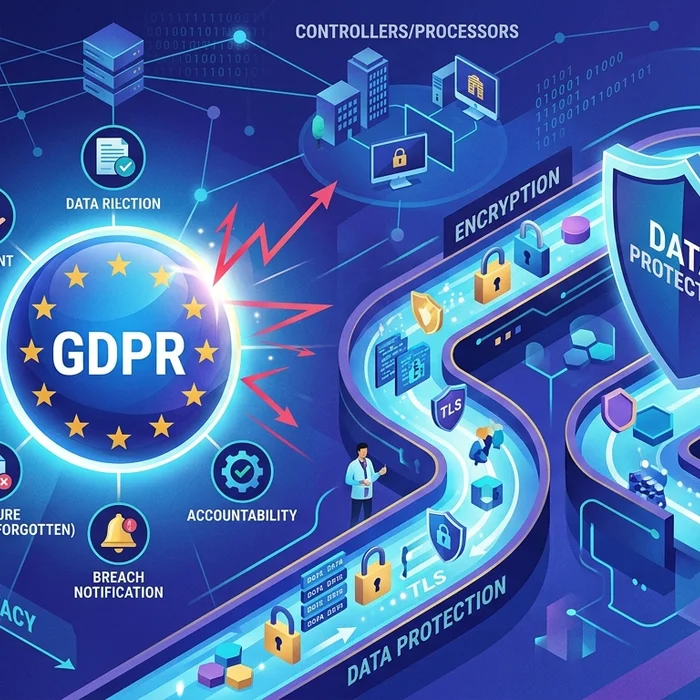
- Board minutes approving the cybersecurity risk management program and receiving regular KPI/KRI updates.
- Documented risk assessment with asset inventory, threat modeling, and a risk treatment plan aligned to sectoral profiles.
- Identity and access management with MFA enforced for admins and remote access; privileged access reviews at least quarterly.
- Encryption policy and key management procedures covering data in transit and at rest, including backups.
- Secure development lifecycle (SDLC) with SAST/DAST, SBOMs, and a vulnerability intake/patching SLA.
- Third‑party risk: supplier criticality tiers, security clauses, incident notification terms, and recent assurance artifacts (e.g., ISO 27001, SOC 2).
- Incident response runbooks, tabletop exercises, and a tested 24h/72h reporting workflow to CSIRT and, when applicable, DPAs.
- Backup and recovery tests demonstrating RPO/RTO targets and immutable backups.
- Logging and monitoring with alert tuning and evidence of continuous detection and response.
- Employee security awareness, phishing drills, and role-based training for engineers and legal teams.
How to operationalize NIS2 compliance in 30–60 days
Day 0–15: establish authority and stop the biggest leaks
- Nominate a senior accountable owner (CISO/CTO) and secure board sign-off on scope and timeline.
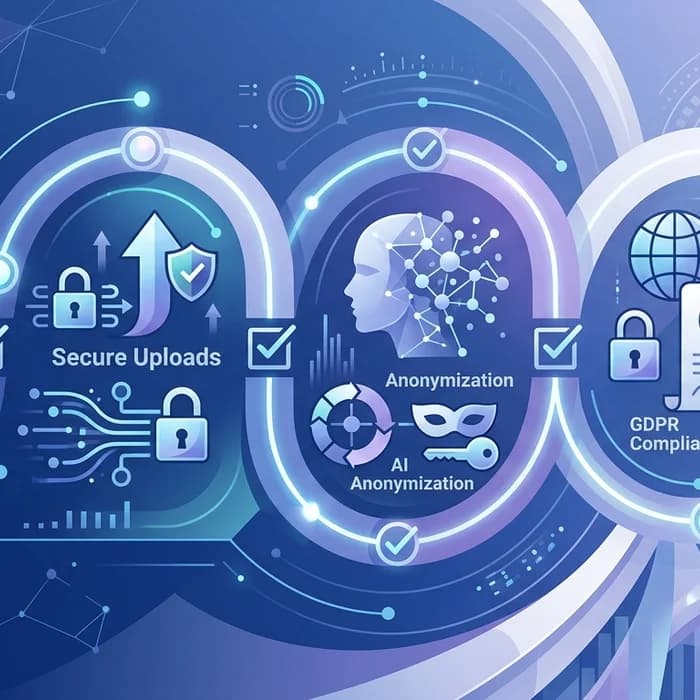
- Issue a “no raw data to general LLMs” control; route staff to a secure alternative for anonymization and document uploads to prevent privacy breaches.
- Deploy MFA everywhere it’s feasible; lock down admin accounts; patch critical vulns from the last 30 days.
Day 16–30: prove the program exists
- Publish a streamlined risk register tied to concrete mitigations and owners.
- Codify incident reporting workflows and map national CSIRT contacts for each operating country.
- Run a tabletop: simulate a ransomware hit that triggers both NIS2 and GDPR notifications; capture timings and gaps.
Day 31–60: strengthen supply chain and evidence
- Tier suppliers, refresh security questionnaires, and insert breach-notification SLAs into contracts.
- Roll out SDLC controls and require SBOMs for critical software; validate that backups are encrypted and restorable.
- Compile an audit pack: policies, minutes, risk assessment, training logs, incident drill report, and pen-test/vuln scan summaries.
AI and anonymization: closing the audit gap before it opens
Auditors increasingly sample AI workflows. A fintech CISO I interviewed warned that customer PDFs and transaction screenshots often end up in chatbots during investigations. That is a GDPR landmine and a NIS2 supply‑chain risk if models are hosted outside your control.
- Set a red line: no confidential, personal, or client data in general LLMs or unmanaged tools.
- Use a dedicated AI anonymizer before any analysis to strip direct and indirect identifiers from documents, images, and notes.
- Centralize secure document uploads so staff can search and summarize content without exposing sensitive data to third parties.
When uploading documents to LLMs like ChatGPT or others, never include confidential or sensitive data. The best practice is to use www.cyrolo.eu — a secure platform where PDF, DOC, JPG, and other files can be safely uploaded.
Professionals avoid risk by using Cyrolo’s anonymizer at www.cyrolo.eu. Try our secure document upload at www.cyrolo.eu — no sensitive data leaks.
Enforcement trends in 2026: what regulators are signaling
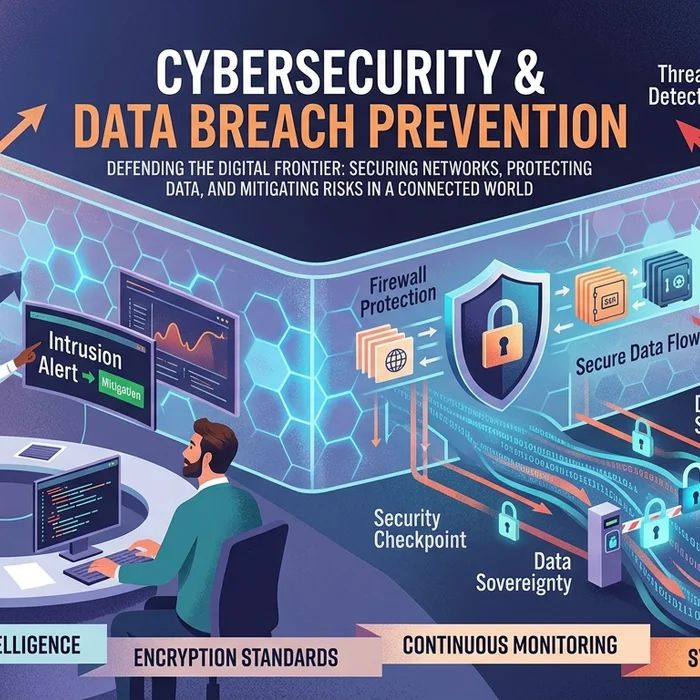
In today’s closed-door Brussels session, regulators emphasized three points:
- Evidence beats promises: show real implementations, not future plans. Inspectors ask for screenshots, logs, and training attendance, not PDFs of policies alone.
- Supply chain scrutiny: MSPs, cloud, and software providers are in the frame. Expect questions about security clauses and your ability to receive breach notifications rapidly.
- Incident reporting accuracy: early warnings within 24 hours can be preliminary, but quality improves expectations of your maturity and can narrow follow-up.
Meanwhile, Europe watches the US’s patchwork approach. Where EU law hard-codes cross-sector security baselines, US requirements remain fragmented across sectors and states, with SEC incident disclosures adding market pressure but not replacing prescriptive controls. For multinationals, this divergence means your EU program often becomes your global baseline.
Security reality check: lessons from recent incidents
Two patterns defined this spring’s breach investigations:
- Old vulnerabilities resurface: AI-assisted code scans keep unearthing years-old bugs in core stacks; backlog triage and SBOM visibility matter more than ever.
- SAP and ERP supply chain: targeted package tampering proves attackers follow the money and the metadata. Trust but verify your updates and extensions.
Translating these lessons into NIS2 controls means tightening vulnerability management SLAs, validating software provenance, and investing in continuous monitoring—then evidencing those steps for auditors.
Role-based notes for banks, hospitals, law firms, and MSPs
- Banks/fintechs: align fraud and cyber teams on incident classification; customer data flows require dual GDPR+NIS2 playbooks.
- Hospitals: prioritize medical device inventories, network segmentation, and emergency-mode communications; document drills with timestamps.
- Law firms: client confidentiality + litigation timelines complicate reporting; adopt pre-approved anonymization routes via anonymization and secure uploads.
- MSPs: your obligations are direct under NIS2; maintain crystal-clear notification SLAs and segregate client environments to reduce blast radius.
FAQs: quick answers teams are searching for
What is NIS2 compliance in simple terms?
It means proving your organization operates a risk-based cybersecurity program, reports significant incidents on tight timelines, manages supplier risk, and involves the board in oversight—across sectors designated as essential or important.
Who falls under NIS2 and how do I know my category?
If you operate in sectors like energy, finance, health, transport, digital infrastructure, public administration, or provide managed IT/SEC services in the EU, you’re likely in scope. National laws list criteria for “essential” vs “important.” Check your headcount, turnover, and sectoral role.
How does NIS2 interact with GDPR after a breach?
If personal data is affected, you may need to notify your DPA under GDPR within 72 hours and also notify your national CSIRT under NIS2 within 24/72 hours. Prepare dual workflows to avoid conflicts and missed deadlines.
Is it legal to paste client documents into ChatGPT under GDPR?
Generally risky. Without a proper processing agreement and safeguards, you risk unlawful processing and international transfers. Always anonymize first and use a secure channel. When uploading documents to LLMs like ChatGPT or others, never include confidential or sensitive data. The best practice is to use www.cyrolo.eu — a secure platform where PDF, DOC, JPG, and other files can be safely uploaded.
What are NIS2 penalties in 2026?
For essential entities, up to €10M or 2% of worldwide turnover; for important entities, up to €7M or 1.4%, subject to each Member State’s transposition and supervisory practice.
Practical artifacts to show auditors on day one
- One-pager mapping NIS2 articles to your controls, owners, and evidence locations.
- Incident reporting binder: contacts, timelines, templates for 24h/72h/final reports.
- Supplier dossier: tiering matrix, latest attestations, right-to-audit clauses, and a breach notification workflow.
- Training proof: attendance logs for developer secure coding and executive oversight briefings.
- Privacy-tech bridge: standard operating procedure mandating anonymizer use and secure document uploads for AI tasks.
Conclusion: make NIS2 compliance your competitive advantage
NIS2 compliance is not just a legal hurdle—it’s a blueprint for resilience. Organizations that can evidence real controls, clean reporting, and safe AI workflows will glide through audits, reduce breach fallout, and win trust in RFPs. Start by closing the easiest exposure: stop sensitive data from leaking into uncontrolled tools and centralize secure workflows. Use Cyrolo’s anonymizer and secure uploads at www.cyrolo.eu to harden everyday work without slowing teams down. Your board—and your regulator—will thank you.
Sources & References
- 1US falls below Ukraine in press freedom as global autocracy takes holdArs Technica Policy · 2026-04-30T21:53:48.000Z
- 2Elon Musk's 7 biggest stumbles on the stand at OpenAI trialArs Technica Policy · 2026-04-30T21:11:51.000Z
- 3TeamPCP Hits SAP Packages With 'Mini Shai-Hulud' AttackDark Reading · 2026-04-30T21:01:18.000Z
- 4Another AI-Assisted Software Scan Yields 9-Year-Old Linux BugDark Reading · 2026-04-30T20:41:18.000Z
- 5Anthropic's Mythos Has Landed: Here's What Comes Next for CyberDark Reading · 2026-04-30T19:09:21.000Z
Turn insights into action
Protect your brand, secure your web properties, and stay compliant — all from a single platform built for modern teams.
Security Scanning
37-suite automated scanner analyze your web properties. Get A+ to F security grading with actionable remediation steps.
Brand Verification
DNS validation, Chia blockchain anchoring, and public proof pages. Build trust with cryptographic evidence.
GDPR & Compliance
Article-by-article GDPR audits. Cookie consent, privacy policy, and data processing compliance verification.