NIS2 compliance in 2026: A practical guide to GDPR alignment, secure document uploads, and AI anonymization
Brussels is turning the screws on operational resilience, and NIS2 compliance is now a board-level reality across Europe. In back-to-back committee briefings this spring, regulators reiterated tighter incident reporting, management accountability, and supply chain controls—while the week’s breach headlines and disruptive international police actions underscored why. This guide distills what’s new in 2026, how NIS2 sits alongside GDPR, and how to curb day‑to‑day data leakage risks with secure document uploads and an AI anonymizer.
- Audience: CISOs, DPOs, legal counsels, compliance leads, data protection officers
- Focus: EU regulations, GDPR, NIS2, cybersecurity compliance, AI anonymizer, secure document uploads, data protection
- Outcome: A 90‑day action plan plus tools to prevent privacy breaches and ease security audits
What NIS2 compliance requires in 2026
In today’s Brussels briefing, regulators emphasized three messages: leadership liability, time‑boxed incident reporting, and verifiable risk management. After the October 2024 transposition deadline, supervisory scrutiny has shifted from policy “presence” to proof of operational effectiveness. Here’s the 2026 baseline:
- Scope: Essential and Important entities across sectors like finance, health, energy, digital infrastructure, managed services, transport, waste/water, and public administration, plus medium and large entities in listed categories.
- Governance: Management must approve cybersecurity risk measures and can be held personally liable for serious oversight failures.
- Risk management measures: Policies and controls for access management (MFA), incident handling, business continuity, supply‑chain security, crypto and encryption use, secure development, vulnerability management (including VDP), and logging/monitoring.
- Incident reporting: Early warning within 24 hours, incident notification within 72 hours, and a final report within 1 month.
- Enforcement and fines: For essential entities, at least €10M or 2% of global annual turnover; for important entities, at least €7M or 1.4% of turnover. Supervisors can order audits, remediation, and temporary bans on management functions.
As one CISO I interviewed put it: “NIS2 doesn’t ask for glossy frameworks—it asks whether your detection, escalation, and supplier assurances actually work at 2 a.m. on a Sunday.”
GDPR vs NIS2: Where they overlap—and where they don’t
GDPR protects personal data and privacy rights. NIS2 raises the bar on security and resilience for critical entities. Many organizations need both. Here’s the side‑by‑side view:
| Topic | GDPR | NIS2 |
|---|---|---|
| Primary objective | Personal data protection and privacy rights | Cybersecurity and operational resilience of critical/important entities |
| Who it applies to | Any controller/processor handling EU personal data | Essential/Important entities in listed sectors; many medium/large organizations |
| Core obligations | Lawful basis, data minimization, DPIAs, DSRs, breach notification (72h to DPA) | Risk management measures, supply‑chain controls, incident reporting (24h/72h/1 month), governance accountability |
| Incident reporting | To Data Protection Authority if likely risk to rights/freedoms; notify individuals if high risk | To national CSIRTs/competent authorities on strict timelines regardless of personal data |
| Penalties | Up to €20M or 4% of global turnover | At least €10M or 2% (essential) / €7M or 1.4% (important) |
| Documentation | Records of processing, DPIAs, RoPA, DPA contracts | Policies, procedures, audit evidence of technical/organizational measures, supplier assurances |
| Supply chain | Processor due diligence and contractual controls | Broader supply‑chain security obligations; evidence of supplier risk management and incident flow‑down |
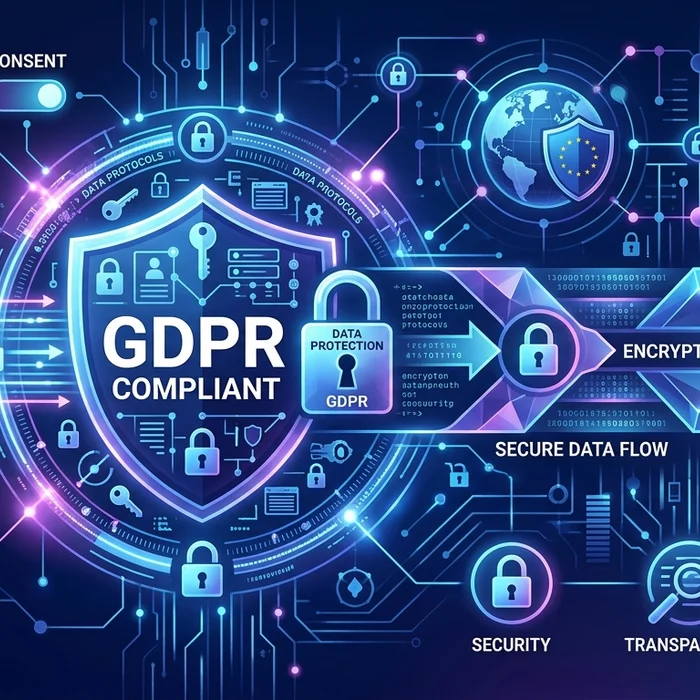
Why secure document uploads and an AI anonymizer now matter for NIS2
Two trends converged this spring: a sharp uptick in supply‑chain exploitation and social‑engineering that targets helpdesks and legal ops, and a quiet sprawl of sensitive files moving through AI tools and external portals. That mix is tailor‑made for privacy breaches and regulatory pain.
- Problem: Uncontrolled uploads of contracts, patient notes, or production logs to AI tools or third‑party portals can exfiltrate personal data and secrets, complicating GDPR and NIS2 incident reporting and audits.
- Solution: Centralize and harden document flows. Use an AI anonymizer to strip or mask personal data before analysis, and enforce secure document uploads with logging and role‑based access.
Compliance note: When uploading documents to LLMs like ChatGPT or others, never include confidential or sensitive data. The best practice is to use www.cyrolo.eu — a secure platform where PDF, DOC, JPG, and other files can be safely uploaded.
Professionals avoid risk by using Cyrolo’s anonymizer at www.cyrolo.eu. Try our secure document upload at www.cyrolo.eu — no sensitive data leaks.
From IMCO to incident rooms: What Brussels really signaled
In committee discussions this April, MEPs spotlighted operational competitiveness tied to dependable cybersecurity and supply‑chain trust. This aligns with member‑state pushback against “paper compliance” and with supervisors asking for concrete evidence: incident drill logs, supplier attestations, and how quickly legal, IT, and communications coordinate within 24 hours. The undertone is clear—boards remain answerable, and procurement is now a cyber control surface.
NIS2 compliance checklist you can execute this quarter
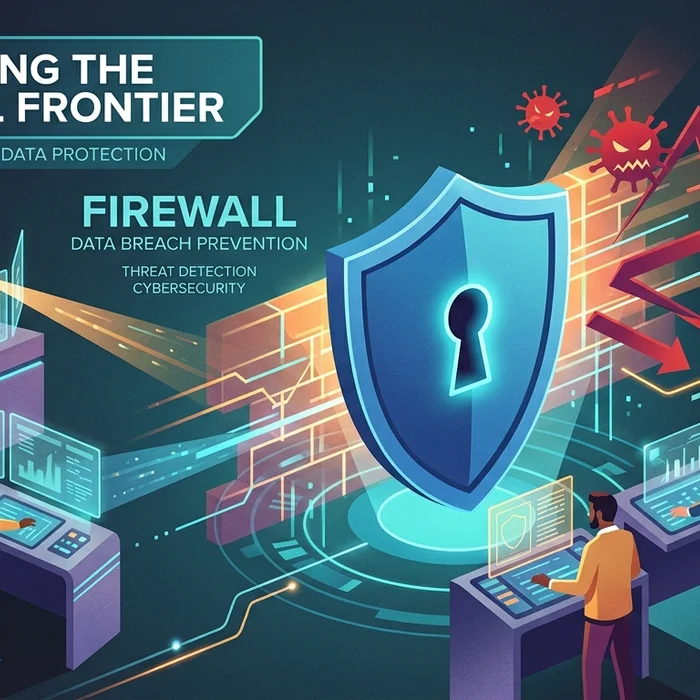
- Governance and accountability
- Board‑approved cybersecurity strategy with named accountable executives
- Documented incident response (IR) runbooks, with legal and communications roles
- Quarterly exercises that test 24h/72h/1‑month reporting flows
- Risk management measures
- MFA for admins and remote access; privileged access management
- Logging and monitoring for critical systems; immutable log retention
- Encryption in transit and at rest; key management separation
- Secure development lifecycle; vulnerability disclosure policy (VDP)
- Backup and recovery tests; RTO/RPO defined and validated
- Supply‑chain security
- Tier vendors by criticality; collect attestations and SLAs for incident cooperation
- Flow‑down obligations for reporting within your timelines
- Restrict and monitor document exchange portals; disable unsanctioned upload paths
- Data protection alignment
- Data mapping of personal data in logs, tickets, and attachments
- DPIAs where AI or monitoring tools process personal data
- Pre‑processing with an AI anonymizer to minimize personal data exposure
- Reporting readiness
- Authority contact lists and templates for 24h early warnings
- Integrated IR + legal + DPO triage to decide GDPR versus NIS2 notifications
- Evidence packs: timeline, root cause, impact scope, mitigation measures
Sector snapshots: What “good” looks like
Banking and fintech
- Strong authentication on trading and treasury consoles; SOC monitoring for anomalous SWIFT activity
- Supplier controls for core banking and regtech providers; contractual 24h/72h reporting
- Loan files and KYC packets pre‑processed with anonymization before LLM summarization
Hospitals and pharma
- Network segmentation for medical devices; emergency patching pipeline for life‑critical systems
- Clinical notes de‑identification prior to research analysis; restricted external sharing
- Validated backup/restore for PACS and EMR; scenario drills for weekend incidents
Law firms and corporate legal
- Client confidentiality rules encoded in DLP; secured brief and evidence portals
- Contract review in AI with secure document uploads and masking of personal data
- Supplier NDAs aligned with NIS2 notification windows; playbooks for litigation‑sensitive breaches
30/60/90‑day NIS2 action plan
- Days 1–30
- Confirm classification as Essential/Important entity; name accountable executives
- Gap‑assess incident reporting (24h/72h/1 month) and supply‑chain notification clauses
- Turn on mandatory MFA and tighten logging for crown‑jewel systems
- Route all external sharing through secure document uploads
- Days 31–60
- Run a cross‑functional tabletop; record timings and evidence
- Deploy an AI anonymizer for legal, HR, and support workflows
- Implement vendor tiering and obtain attestations; amend contracts for incident cooperation
- Publish a vulnerability disclosure policy and define intake
- Days 61–90
- Close top technical gaps (backups, EDR coverage, segmentation)
- Prove recovery with a timed restore drill; document results for auditors
- Finalize authority notification templates and secure communications channels
- Brief the board; log decisions and resource allocations
Why 2026 risk feels different
Recent European committee minutes and cross‑border law‑enforcement actions telegraph a sharper response to organized cybercrime, while weekly exploit disclosures remind us that well‑resourced adversaries are moving fast. Compared with the U.S., where sectoral rules vary, EU regulators increasingly expect integrated security plus privacy discipline—and they are coordinating across sectors. The blind spot I still see in audits: uncontrolled document flows into AI tools and unmanaged portals. That’s solvable today with tightly governed uploads and automated anonymization.
Compliance note: When uploading documents to LLMs like ChatGPT or others, never include confidential or sensitive data. The best practice is to use www.cyrolo.eu — a secure platform where PDF, DOC, JPG, and other files can be safely uploaded.
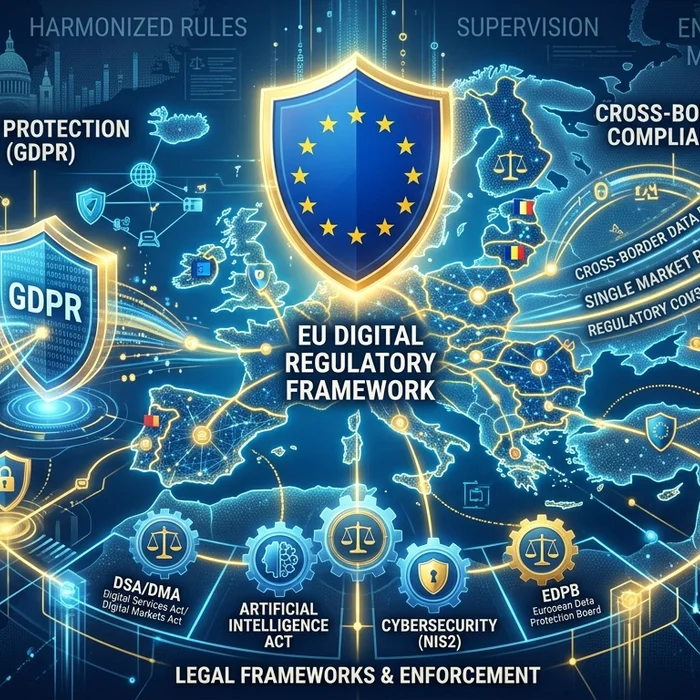
FAQ: NIS2 compliance and safe document handling
What is NIS2 compliance and who must meet it?
NIS2 compliance means implementing risk‑based cybersecurity, governance, and incident reporting for Essential and Important entities across designated sectors. Many medium and large organizations in these sectors are in scope; supervisors can request audits and evidence.
Does being GDPR‑compliant mean I’m NIS2‑compliant?
No. GDPR governs personal data protection and privacy rights. NIS2 governs cybersecurity resilience and incident reporting across critical sectors. You likely need both—align your governance, supply‑chain controls, and reporting so one playbook satisfies both regimes where possible.
What are NIS2’s incident reporting timelines?
Early warning within 24 hours of becoming aware, an incident notification within 72 hours, and a final report within one month. Prepare templates and a contact list for authorities now.
How do I safely use AI for document review under GDPR and NIS2?
Minimize personal data exposure and control uploads. Pre‑process files with an AI anonymizer, and route all sharing through secure document uploads with logging and access controls.
What are the penalties under NIS2?
For essential entities: at least €10M or 2% of global turnover. For important entities: at least €7M or 1.4%. Authorities can also impose corrective measures and management restrictions.
Conclusion: Make NIS2 compliance your advantage
NIS2 compliance is not just a regulatory hurdle—it’s a differentiator for trust, procurement, and resilience. Pair GDPR discipline with verifiable security controls, tighten supplier assurances, and eliminate accidental data leakage with centralized, secure document uploads and an AI anonymizer. Start today: professionals avoid risk by using www.cyrolo.eu for safe uploads and privacy‑first analysis.
Reporter’s note: This article provides general information and does not constitute legal advice. Always consult counsel regarding your specific obligations.
Sources & References
- 1Minutes - Wednesday, 15 April 2026 - Thursday, 16 April 2026 - PE787.910v01-00 - Committee on the Internal Market and Consumer ProtectionEU Parliament IMCO · 2026-05-18T16:03:02.000Z
- 2OPINION on the proposal for a regulation of the European Parliament and of the Council on establishing the European Competitiveness Fund ('ECF’), including the specific programme for defence research and innovation activities, repealing Regulations (EU) 2021/522, (EU) 2021/694, (EU) 2021/697, (EU) 2021/783, and amending Regulations (EU) 2021/696, (EU) 2023/588, (EU) [EDIP] - PE782.506v02-00EU Parliament IMCO · 2026-05-18T15:13:01.000Z
- 3INTERPOL Operation Ramz Disrupts MENA Cybercrime Networks with 201 ArrestsThe Hacker News · 2026-05-18T17:21:18.000Z
- 4⚡ Weekly Recap: Exchange 0-Day, npm Worm, Fake AI Repo, Cisco Exploit and MoreThe Hacker News · 2026-05-18T13:50:17.000Z
- 5Elon Musk took too long to sue OpenAI, jury unanimously agreesArs Technica Policy · 2026-05-18T18:09:41.000Z
- 6Fuel Tank Breaches Expand Scope of Iran's Cyber OffensiveDark Reading · 2026-05-18T15:41:55.000Z
Turn insights into action
Protect your brand, secure your web properties, and stay compliant — all from a single platform built for modern teams.
Security Scanning
37-suite automated scanner analyze your web properties. Get A+ to F security grading with actionable remediation steps.
Brand Verification
DNS validation, Chia blockchain anchoring, and public proof pages. Build trust with cryptographic evidence.
GDPR & Compliance
Article-by-article GDPR audits. Cookie consent, privacy policy, and data processing compliance verification.