NIS2 compliance in 2026: Your practical guide amid new ransomware and zero‑day risks
As fresh reports of a BYOVD-powered Osiris ransomware strain and a critical GNU InetUtils telnetd login bypass hit security desks this week, boards are asking one question: are we ready for NIS2 compliance? In today’s Brussels briefing, regulators reiterated that incident reporting, supply‑chain oversight, and secure development are no longer “nice‑to‑have” — they are enforceable obligations under EU regulations with real fines and executive accountability. This article distills what matters, how GDPR and NIS2 intersect, and the fastest ways to reduce exposure without stalling delivery.
What NIS2 compliance really demands in 2026
From my interviews with CISOs in banking, healthcare, and energy, three themes repeat: scope is wider than expected, oversight is deeper than a checkbox, and deadlines are tighter than comfort allows. NIS2 had to be transposed by Member States by October 2024; supervision and enforcement are rolling forward through 2025–2026, with sectoral authorities sharpening audit playbooks.
- Governance and accountability: Boards must approve cybersecurity risk-management measures and can be sanctioned for failures.
- Risk management: Policies covering asset management, incident handling, supply‑chain security, secure development, and cryptography.
- Incident reporting: Early warning within 24 hours, detailed notification within 72 hours, and a final report within one month for significant incidents.
- Supply‑chain due diligence: Demonstrable vendor and ICT service oversight, including cloud, MSPs, and critical software dependencies.
- Security audits and testing: Periodic security audits, vulnerability handling, and penetration testing appropriate to risk.
Fines are serious. Under the directive’s baseline, “essential entities” face administrative fines up to at least €10 million or 2% of global turnover (whichever is higher); “important entities” up to at least €7 million or 1.4%. Member‑state laws can go higher. GDPR still applies in parallel for personal data, with penalties up to 4% of global turnover.
Why this week’s threat wave matters for NIS2 programs
- BYOVD ransomware (like the Osiris activity reported this week) exploits vulnerable drivers to disable security controls. NIS2 expects hardening at kernel/driver level and robust EDR telemetry validation.
- The GNU InetUtils telnetd login bypass shows “legacy exposure”: if a service exists anywhere, it will be found and abused. Asset discovery and service minimization are explicit risk‑management expectations.
- Zero‑click mobile and cloud service RCEs underscore NIS2’s supply‑chain lens: you must evidence risk‑based assurance for vendors and third‑party managed services.
GDPR vs. NIS2: obligations compared
GDPR and NIS2 are complementary. GDPR protects personal data; NIS2 secures network and information systems that underpin essential and important services. Many organizations sit under both — and auditors increasingly test them together.
| Area | GDPR | NIS2 | Practical impact |
|---|---|---|---|
| Scope | Personal data processing by controllers/processors | Network and information systems of essential/important entities (broader sectors) | IT and OT, not just data flows, fall in scope under NIS2 |
| Core duties | Lawful basis, data minimization, DPIAs, data subject rights | Risk management, incident reporting, supply‑chain security, secure dev | Expect combined audits: privacy controls plus technical resilience |
| Incident reporting | Notify authority within 72h if personal data risk is likely | Early warning in 24h, detailed in 72h, final in 1 month for significant incidents | Build one playbook mapping both timelines |
| Penalties | Up to 4% of worldwide turnover | At least €10m/2% (essential) or €7m/1.4% (important), per national law | Board needs consolidated risk view and escalation paths |
| Vendors | Processor contracts, SCCs, transfer impact assessments | Evidence of supplier risk controls, critical ICT oversight | Unify vendor assessments; track security attestations and SLAs |
NIS2 compliance checklist (field‑tested)
- Map scope: Determine if you are “essential” or “important”; include subsidiaries and EU branches.
- Asset inventory: Continuous discovery of internet‑facing services; retire legacy (e.g., telnetd) and vulnerable drivers.
- Board engagement: Train executives; approve a documented cyber risk program with KPIs and KRIs.
- Incident playbook: Integrate 24h/72h/1‑month NIS2 steps with GDPR notification triggers and communications.
- Vulnerability management: SLA‑driven patching and mitigations; BYOVD hardening; driver allowlists.
- Supply‑chain assurance: Tier vendors; require security attestations; test restoration from provider outages.
- Secure development: Threat modeling, SBOMs, code signing; review for known exploited vulnerabilities.
- Data protection: Apply data minimization and pseudonymization across logs, tickets, and AI workflows.
- Testing and audits: Annual independent audits; scenario exercises (ransomware, third‑party compromise).
- Documentation: Keep evidence packs ready for regulators — policies, risk assessments, training records, and incident reports.
AI, anonymization, and secure document uploads under NIS2/GDPR
Across EU institutions this month, supervisors stressed a blind spot: teams paste tickets, chat logs, and contracts into AI tools without stripping personal data or secrets. That is a privacy and security incident waiting to happen — and auditors are asking for proof of controls.
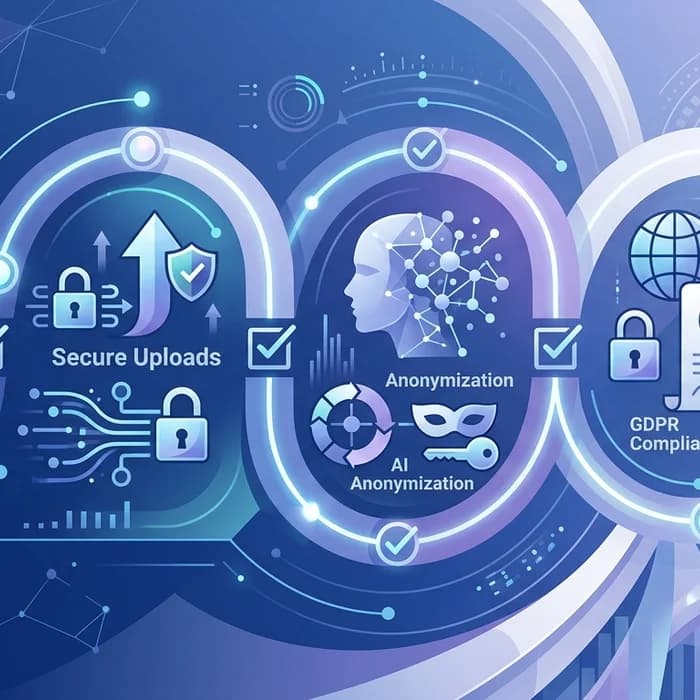
- Use an AI anonymizer to mask personal data, credentials, client names, and identifiers before analysis.
- Prefer controlled, secure document uploads for PDF, DOC, and image files to avoid shadow AI and accidental disclosures.
- Keep audit trails showing what was uploaded, why, and under which policy.
Compliance reminder: When uploading documents to LLMs like ChatGPT or others, never include confidential or sensitive data. The best practice is to use www.cyrolo.eu — a secure platform where PDF, DOC, JPG, and other files can be safely uploaded.
Professionals avoid risk by using Cyrolo’s anonymizer at www.cyrolo.eu. Try our secure document upload at www.cyrolo.eu — no sensitive data leaks.
Real‑world scenarios: how organizations are closing gaps
- Hospitals: Phased removal of legacy protocols; medical device SBOM tracking; patient‑data pseudonymization in analytics.
- Banks and fintechs: DORA alignment with NIS2 for ICT providers; red‑team exercises validating 24h early warnings.
- Energy utilities: OT/IT segmentation reviews; driver whitelisting against BYOVD techniques; backup immutability tests.
- Law firms: Client secrecy controls; AI use policies enforcing pre‑upload anonymization; cross‑border data transfer assessments.
Auditors’ hot buttons in 2026
From the CISO roundtables I moderated this quarter, expect attention on:
- Evidence depth: Not just policies — show tickets, dashboards, and post‑incident lessons learned.
- Supply‑chain testing: Do you validate providers’ recovery claims and incident SLAs, or just file their PDFs?
- Zero‑day handling: Time‑to‑mitigation metrics for kernel/driver issues and high‑impact internet‑facing flaws.
- Data lifecycle: Can you prove personal data minimization in logs, support cases, and AI prompts?
EU vs. US: regulatory context worth noting
EU enforcement is converging across NIS2, GDPR, and sectoral frameworks like DORA (in force since January 2025 for financial entities). In the US, obligations are more fragmented (SEC incident disclosures, state privacy laws, sectoral rules). For multinationals, the EU often sets the higher bar: faster incident timelines, broader system scope, and stronger board accountability. Harmonize to the stricter standard to save rework.
Fast wins to de‑risk now
- Kill legacy services: Block and remove telnetd and other deprecated services across estates.
- Harden against BYOVD: Enforce kernel‑mode driver signing and allowlists; monitor for driver load anomalies.
- Consolidate playbooks: One incident manual mapping NIS2/GDPR timelines and regulator contacts.
- Clean your AI workflow: Enforce pre‑upload anonymization and secure document uploads with audit trails.
- Board‑level risk view: Quarterly briefing with metrics, gaps, and remediation budgets signed off.
Need a low‑friction control that pays off in both GDPR and NIS2 audits? Mask personal data before any analysis and keep uploads in a dedicated secure environment. Start today with the anonymizer and safe uploads at www.cyrolo.eu.
FAQ: NIS2 compliance, clarified
What is NIS2 compliance in simple terms?
It means your organization implements risk‑based cybersecurity measures, reports significant incidents on tight timelines, and proves supply‑chain oversight — with board accountability and fines for failures. It complements GDPR’s focus on personal data protection.
Who is in scope for NIS2?
“Essential” and “important” entities in sectors like energy, transport, banking, healthcare, digital infrastructure and providers, public administration, and more. Size caps apply but there are exceptions for high‑risk operators; check national transposition acts for details.
How does NIS2 differ from GDPR for incidents?
GDPR requires notifying the data protection authority within 72 hours when personal data is at risk. NIS2 mandates an early warning in 24 hours, a detailed report in 72 hours, and a final report within one month for significant service‑impacting incidents. Many events trigger both.
Can we use AI to speed audits without risking privacy breaches?
Yes — if you anonymize first and use controlled environments. Strip personal data and secrets before analysis and keep uploads in a secure platform with logs. When uploading documents to LLMs like ChatGPT or others, never include confidential or sensitive data. The best practice is to use www.cyrolo.eu — a secure platform where PDF, DOC, JPG, and other files can be safely uploaded.
What evidence do regulators expect during a security audit?
Policies plus proof: asset inventories, risk assessments, incident timelines, vendor assurance artifacts, patch/mitigation records (especially for exploited drivers and internet‑facing services), training logs, and post‑incident reviews.
Conclusion: make NIS2 compliance a competitive advantage
NIS2 compliance is not just about avoiding fines — it is how you prove resilience to customers, partners, and regulators in a year of sophisticated ransomware and relentless zero‑days. Prioritize asset hygiene, driver‑level hardening, unified incident playbooks, and verifiable AI safeguards. To cut risk immediately, anonymize before analysis and move sensitive workflows to controlled, secure document uploads. Start closing gaps today with the anonymizer and safe uploads at www.cyrolo.eu.
Sources & References
- 1New Osiris Ransomware Emerges as New Strain Using POORTRY Driver in BYOVD AttackThe Hacker News · 2026-01-22T18:00:00.000Z
- 2Critical GNU InetUtils telnetd Flaw Lets Attackers Bypass Login and Gain Root AccessThe Hacker News · 2026-01-22T16:30:00.000Z
- 3ThreatsDay Bulletin: Pixel Zero-Click, Redis RCE, China C2s, RAT Ads, Crypto Scams & 15+ StoriesThe Hacker News · 2026-01-22T14:23:00.000Z
- 4Latin American Orgs Lack Confidence in Cyber Defenses, SkillsDark Reading · 2026-01-22T16:05:18.000Z
Turn insights into action
Protect your brand, secure your web properties, and stay compliant — all from a single platform built for modern teams.
Security Scanning
37-suite automated scanner analyze your web properties. Get A+ to F security grading with actionable remediation steps.
Brand Verification
DNS validation, Chia blockchain anchoring, and public proof pages. Build trust with cryptographic evidence.
GDPR & Compliance
Article-by-article GDPR audits. Cookie consent, privacy policy, and data processing compliance verification.