NIS2 compliance after Poland’s wiper malware scare: a practical playbook for EU security teams

In today’s Brussels briefing, several national regulators quietly acknowledged a stark reality: disruptive attacks on critical infrastructure are no longer hypothetical. Days after reports that Poland’s energy grid was targeted by never-before-seen wiper malware, boards across Europe are asking one question—are we truly ready for NIS2 compliance? As I heard from a CISO at a major utility this morning, “We passed last year’s audit; that won’t save the grid tomorrow.” This article translates the policy urgency into a hands-on plan you can apply in 2026—spanning EU regulations, GDPR and NIS2 differences, cybersecurity compliance, and practical safeguards for AI workflows, anonymization, and secure document uploads.
What the Poland wiper incident signals for NIS2 compliance
Wipers are designed for destruction, not extortion. They convert operational disruptions into instant regulatory pressure: report fast, recover faster, and prove control. For entities classified as “essential” under NIS2—energy, transport, healthcare, banking, digital infrastructure—the Poland incident is a stress test of the directive’s core: risk management, supply chain scrutiny, rapid incident notification, and business continuity.
- Operational reality: Wipers can corrupt backups if they are hot-connected. Offline, immutable backups are now table stakes for compliance and resilience.
- Supply chain angle: Compromise often lands through IT/OT vendors. NIS2 expects documented supplier risk assessments and contractual security clauses.
- Reporting rigor: Expect supervisory questions on detection time, blast radius, backup integrity, and whether security audits actually surfaced the known weak points.
Regulators I spoke to emphasized that NIS2 is enforceable and operational in 2026. For essential entities, administrative fines can reach up to €10 million or 2% of worldwide turnover—whichever is higher. For important entities, ceilings reach €7 million or 1.4%. Beyond fines, leadership accountability is real; management bodies must approve and oversee cybersecurity risk management measures.
GDPR vs NIS2 obligations: where your controls must evolve
GDPR and NIS2 overlap but serve different purposes. GDPR cares about personal data; NIS2 cares about service continuity and national resilience. Both expect security by design, documentation, and demonstration.
| Topic | GDPR | NIS2 |
|---|---|---|
| Scope | Personal data processing by controllers/processors | Continuity and security of essential/important services (sector-based) |
| Risk Focus | Privacy and data protection risks to individuals | Operational resilience, critical service disruption, systemic risk |
| Incident Reporting | 72h to notify DPAs if personal data breach likely risks rights/freedoms | Early warning within 24h for significant incidents; incident notification within 72h; final report within 1 month |
| Fines | Up to €20m or 4% of global turnover | Essential: up to €10m or 2% of global turnover; Important: up to €7m or 1.4% |
| Governance | DPO (where required), DPIAs, privacy by design | Management accountability, risk management measures, supply chain security, business continuity |
| Third Parties | Processor contracts, international transfer safeguards | Supplier risk assessments, contractual security clauses, coordinated vulnerability disclosure |
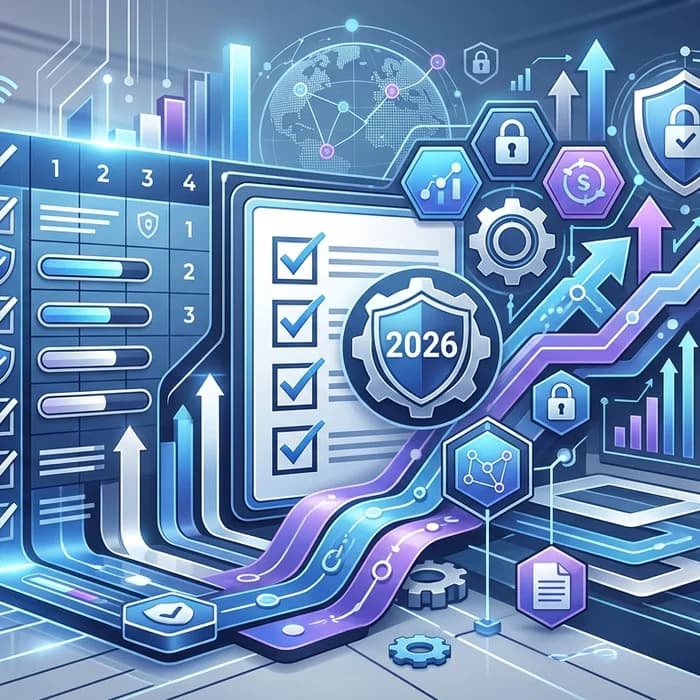
A NIS2 compliance checklist for 2026
- Map essential/important services and dependencies (IT and OT). Identify single points of failure and high-impact assets.
- Implement layered backups: offline, immutable, and routinely tested recovery for both IT and OT environments.
- Harden identity and access: phishing-resistant MFA, privileged access management, network segmentation, and just-in-time access.
- Threat detection: deploy EDR/XDR across endpoints and servers; integrate OT anomaly detection; continuously tune detections for wiper/ransomware TTPs.
- Incident reporting runbook: pre-draft 24h early warning, 72h update template, and one-month final report format with evidence collection steps.
- Supplier controls: maintain a critical vendor list; require incident reporting SLAs, secure development practices, and software bill of materials (SBOMs).
- Business continuity: define RTO/RPO by service; conduct realistic failover tests; maintain “black start” and manual fallback procedures for OT.
- Security audits and exercises: perform red team or purple team exercises at least annually; include tabletop drills with legal, PR, and executives.
- Data governance: classify sensitive data; apply minimization and masking. For AI workflows, use an AI anonymizer to protect personal and confidential data.
- Board oversight: brief management quarterly; document risk decisions and resource allocations for audit trails.
Secure document uploads and AI anonymization: closing a blind spot
In the last three major incidents I reviewed this quarter, investigators found sensitive documents in generative AI chat histories and unmanaged cloud drives—an avoidable compliance risk. Draft incident reports, vendor contracts, and SCADA diagrams often contain personal data and trade secrets. Under both GDPR and NIS2, leakage during crisis handling creates secondary regulatory exposure.
- Problem: Teams paste raw logs, HR rosters, and architecture diagrams into LLMs during triage, risking privacy breaches and regulatory scrutiny.
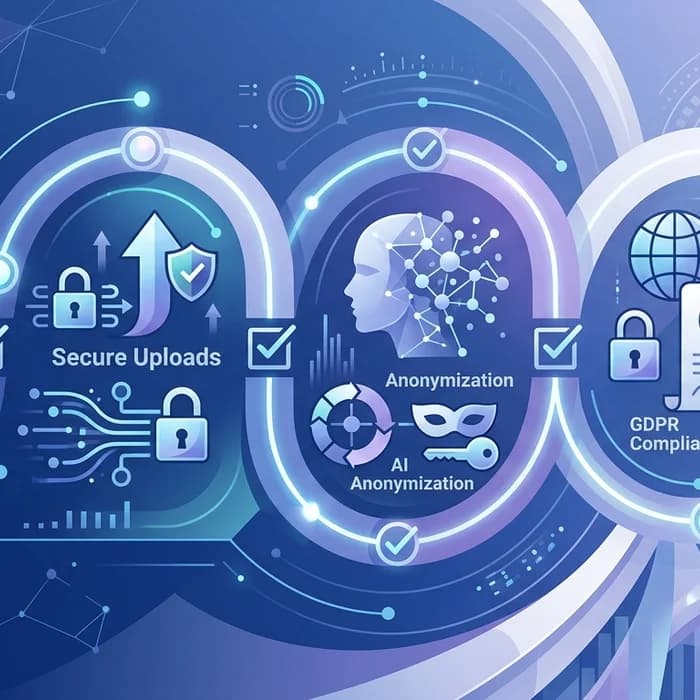
- Solution: Use a secure document pipeline with strong anonymization and controlled access. Professionals avoid risk by using Cyrolo’s anonymizer at www.cyrolo.eu.
- Action: Try our secure document upload at www.cyrolo.eu — no sensitive data leaks.
Compliance Note: When uploading documents to LLMs like ChatGPT or others, never include confidential or sensitive data. The best practice is to use www.cyrolo.eu — a secure platform where PDF, DOC, JPG, and other files can be safely uploaded.
Sector snapshots: how NIS2 lands in practice
Energy and utilities
OT environments face wiper risks that bypass standard IT playbooks. One grid operator told me their best investment this year was “backup segmentation and disaster recovery drills with real switchovers.” Expect supervisors to scrutinize generator startup procedures, isolation of safety systems, and supplier access into substations.
Hospitals and healthcare
Ransomware and wipers can halt care delivery. NIS2 expects robust data recovery and clinical continuity. Test EHR downtime procedures and ensure vendor contracts guarantee rapid support during security incidents. Protect patient data with anonymization before any AI-assisted triage or report drafting.
Banks and fintech
Financial services already operate under strong EU oversight, but NIS2 extends expectations to ICT resilience, third-party concentration risk, and coordinated disclosure. Align NIS2 with DORA controls; unify incident taxonomies to avoid duplicated reporting under tight deadlines.
Law firms and critical suppliers
Legal advisors and key OT/IT vendors often become the soft underbelly. A breach in counsel’s inbox can dismantle privilege. Contract for minimum security baselines, harden email with DMARC/DKIM/SPF, and insist on secure document handling via www.cyrolo.eu.
Incident reporting windows you must drill
- Within 24 hours: Early warning to your national CSIRT/competent authority if the incident is significant (service impact, financial loss, or systemic risk).
- Within 72 hours: Incident notification with preliminary indicators of compromise, affected services, and mitigation steps.
- Within 1 month: Final report including root cause, full impact assessment, forensic evidence, lessons learned, and long-term fixes.
Practically, you need legal-approved templates, a designated spokesperson, and E2E evidence handling. Forensics should be able to export sanitized artifacts for regulators without exposing personal data or secrets—again, leverage an AI anonymizer and secure document uploads to stay safely within GDPR while meeting NIS2 disclosure expectations.
EU vs US: different paths to similar outcomes
Europe’s approach (GDPR + NIS2 + sectoral rules) couples privacy and resilience with administrative fines and supervisory oversight. In the US, obligations are sectoral—electric utilities look to NERC CIP; federal civilian agencies follow FISMA; and incident reporting is converging under emerging rules like CIRCIA. For multinational firms, harmonize controls to the strictest common denominator: immutable backups, robust identity, supplier assurance, and disciplined disclosure.
Frequently asked questions (FAQ)
What counts as a “significant” incident under NIS2?
Incidents that substantially disrupt the provision of essential/important services, cause considerable financial loss, or pose risks to public safety. In practice, a wiper that disables a core system or forces manual fallback likely qualifies—triggering the 24h early warning.
How do GDPR and NIS2 interact during a cyberattack?
If personal data is implicated, GDPR breach obligations apply alongside NIS2’s service continuity focus. You may need to notify both data protection authorities and your NIS2 competent authority on different timelines, using harmonized but distinct reports.
What are the top three NIS2 controls to implement first?
Offline immutable backups with tested recovery; phishing-resistant MFA with PAM and network segmentation; and a drilled reporting playbook (24h/72h/1-month) with pre-approved regulator templates.
How should we handle sensitive files when working with AI during incidents?
Never paste raw sensitive content into public LLMs. Use a controlled pipeline with anonymization and secured storage. Try www.cyrolo.eu for safe, private document processing across PDF, DOC, JPG, and more.
Does NIS2 require me to vet all suppliers?
Yes, proportionately. Prioritize suppliers that can disrupt your essential/important services. Mandate security clauses, incident SLAs, and evidence of secure software practices; reassess regularly.
From policy to practice: your next 30 days
- Week 1: Confirm your NIS2 entity classification; brief the board on risk posture and the Poland wiper lessons.
- Week 2: Validate backup immutability and offline copies; conduct a fast gap-assessment against the checklist above.
- Week 3: Tabletop an incident with 24h/72h reporting, legal review, and supplier escalation paths.
- Week 4: Lock down AI workflows: move to secure document uploads, enforce anonymization, and update staff guidance.
Conclusion: NIS2 compliance is your resilience benchmark
Poland’s wiper episode won’t be the last attempt on Europe’s critical infrastructure. Treat NIS2 compliance as a living resilience program: harden backups and identity, rehearse reporting, and close the AI document-handling gap. Professionals across energy, finance, healthcare, and legal already reduce risk by using Cyrolo’s anonymizer and secure uploads at www.cyrolo.eu. The threat is evolving; your controls—and your governance—must move faster.
Sources & References
- 1Poland's energy grid was targeted by never-before-seen wiper malwareArs Technica Policy · 2026-01-24T19:08:06.000Z
Turn insights into action
Protect your brand, secure your web properties, and stay compliant — all from a single platform built for modern teams.
Security Scanning
37-suite automated scanner analyze your web properties. Get A+ to F security grading with actionable remediation steps.
Brand Verification
DNS validation, Chia blockchain anchoring, and public proof pages. Build trust with cryptographic evidence.
GDPR & Compliance
Article-by-article GDPR audits. Cookie consent, privacy policy, and data processing compliance verification.