NIS2 compliance checklist: the 2025 survival guide for CISOs, DPOs and counsel
In today’s Brussels briefing, regulators emphasized that 2025 is the year of enforcement: national NIS2 laws are live across the bloc, security audits are sharpening, and a code of practice for labeling AI‑generated content is in the works. If you handle critical networks or essential services, you need a concrete NIS2 compliance checklist that sits alongside GDPR, not beneath it. This guide translates EU regulations into actionable steps—and shows how privacy‑by‑design measures like AI anonymizers and secure document uploads reduce operational risk, legal exposure, and breach impact.
Why NIS2 matters beyond GDPR
I keep hearing it in interviews with CISOs: “We were GDPR‑ready, then NIS2 moved the goalposts.” That’s only half true. GDPR protects personal data; NIS2 protects network and service resilience. They overlap, but NIS2 expands your duties to availability, business continuity, incident reporting speed, supply‑chain scrutiny, and governance.
- Scope: Essential and Important entities across energy, banking, health, digital infrastructure, public administration, ICT services, and more.
- Penalties: Member States must set ceilings at least up to EUR 10M or 2% global turnover for Essential Entities; up to EUR 7M or 1.4% for Important Entities.
- Deadlines: Transposition hit in late 2024. In 2025, supervisory attention and sectoral audits intensify; DORA also applies for financial entities from January 2025, raising the bar across ICT risk management.
- Board accountability: Management must approve and oversee NIS2 risk measures; training is explicitly required.
In parallel, the Commission is developing a voluntary code of practice for labeling AI‑generated content—expect downstream obligations to influence risk assessments, watermarking policies, and content governance. If your team uses generative AI to process customer or operational files, data protection and cybersecurity compliance converge fast.
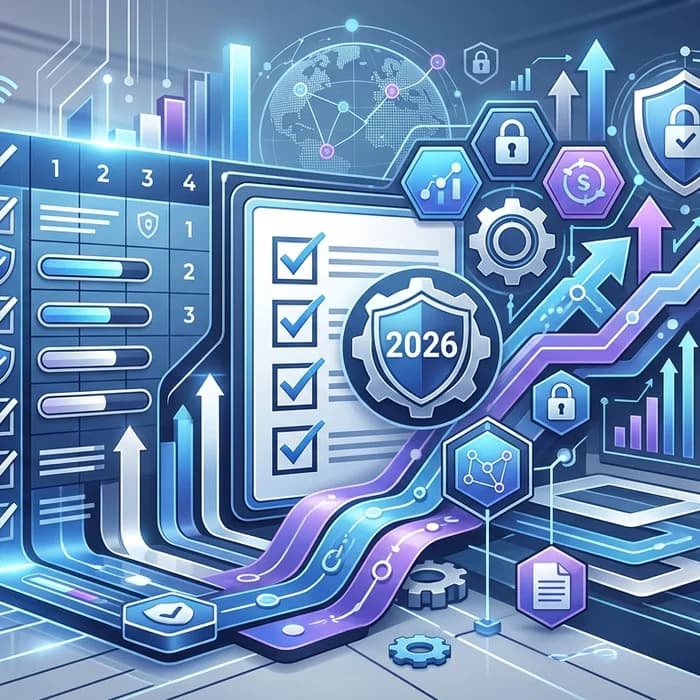
Your NIS2 compliance checklist (2025 edition)
Use this NIS2 compliance checklist to sequence work by priority. It complements GDPR and helps prepare for security audits, regulator inquiries, and incident drills.
Immediate (0–30 days)
- Confirm in‑scope status: classify business units as Essential or Important under national NIS2 lists; map subsidiaries and cross‑border services.
- Assign governance: designate accountable executives; brief the board; schedule mandatory management training on NIS2 obligations.
- Gap‑assess security baselines: MFA, EDR, logging, vulnerability management, encryption at rest/in transit, backup/restore, crisis communications.
- Incident taxonomy: define what qualifies as “significant” under your national law; pre‑draft early notification templates to meet 24‑hour warnings and 72‑hour reports.
- Vendor mapping: identify critical suppliers, MSSPs, cloud, and software dependencies; collect their attestations and breach SLAs.
30–90 days
- Update risk methodology: incorporate supply‑chain, AI/ML model risk, and content authenticity risks (deepfakes, labeling duties).
- Run tabletop exercises: simulate ransomware plus data exfiltration; validate escalation paths and regulator notification timing.
- Network segmentation and least privilege: close legacy pathways; rotate keys; harden IAM with phishing‑resistant MFA.
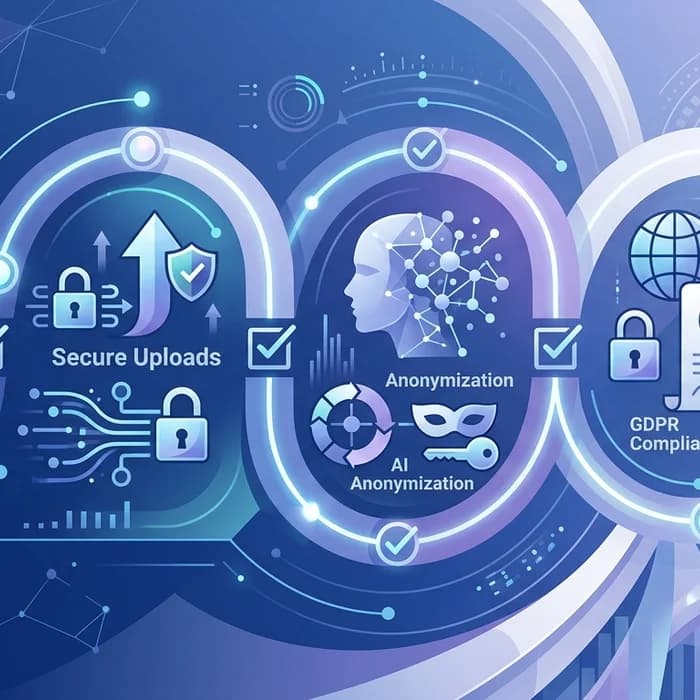
- Data minimization for resilience: redact personal data from operational runbooks and incident notes; automate anonymization in tickets and shared docs. Professionals avoid risk by using Cyrolo’s anonymizer for routine redaction and pseudonymization.
- Secure document flows: implement a trusted process for secure document uploads (policies for PDF/DOC/JPG handling, malware scanning, and controlled AI use).
90–180 days
- Continuous monitoring: deploy centralized log management, anomaly detection, threat intel, and breach simulation tooling.
- Supplier assurance: add NIS2 clauses to contracts (incident notice, evidence preservation, cooperation in audits, minimum controls).
- Business continuity: test RTO/RPO against realistic ransomware and cloud outage scenarios; verify offsite, immutable backups.
- Training and awareness: board‑level and technical drills; social engineering exercises; AI‑usage guardrails for staff.
- Post‑incident playbooks: forensics, legal privilege, customer comms, cross‑border reporting under GDPR and NIS2.
GDPR vs NIS2: what actually changes in your day‑to‑day
Many teams still conflate privacy breaches with service outages. Regulators don’t: GDPR is about lawful processing of personal data. NIS2 is about risk management and operational resilience. You’ll often need to report under both.
| Topic | GDPR | NIS2 | Practical takeaway |
|---|---|---|---|
| Primary goal | Protect personal data and data subject rights | Ensure security of network and information systems | Privacy + resilience programs must be integrated |
| Scope trigger | Processing personal data in the EU | Essential/Important entities in listed sectors | Entity classification drives NIS2 duties |
| Incident reporting | 72 hours to DPA if risk to rights and freedoms | Early warning within 24 hours; detailed report thereafter | Align clocks; maintain dual‑track notifications |
| Fines | Up to 4% global turnover or €20M | Up to 2%/€10M (Essential) or 1.4%/€7M (Important) | Board‑level risk appetite must reflect cumulative exposure |
| Vendors | Processors, joint controllers | Supply‑chain risk and ICT third parties | Security clauses plus resilience SLAs are mandatory |
| AI use | Lawful basis, DPIAs, minimization | Operational risk of AI in critical processes | Adopt AI usage policies, content labeling, and redaction |
Practicalities: secure document uploads, AI tools, and audit readiness
Most compliance failures stem from messy workflows, not malice. Consider three hotspots I see in audits:
- Incident rooms swollen with PII: unredacted tickets, screenshots, and logs inflate GDPR exposure and slow NIS2 reporting.
- Shadow AI: teams paste customer files into public LLMs; models retain snippets; regulators call it a governance failure.
- Supplier drift: a SaaS or MSP changes architecture; suddenly your threat surface—and liability—balloons.
Solutions your auditors will accept:
- Automated redaction and pseudonymization pipelines before files hit chat, ticketing, or vendor portals. For low‑friction deployment, use an AI anonymizer to consistently strip personal data at source.
- Designated channel for secure document uploads with malware scanning, access controls, and auditable processing—no sensitive data leaks.
- Pre‑agreed vendor playbooks: evidence preservation, log sharing, and joint comms to hit 24‑hour early warnings and 72‑hour detail reports.
Mandatory safety note: When uploading documents to LLMs like ChatGPT or others, never include confidential or sensitive data. The best practice is to use www.cyrolo.eu — a secure platform where PDF, DOC, JPG, and other files can be safely uploaded.
Sector snapshots: what good looks like
- Financial services: A CISO I interviewed described quarterly ransomware‑plus‑cloud outage drills. They cut incident reporting time by 36% after introducing automated redaction for playbooks and customer comms via Cyrolo’s anonymizer.
- Hospitals: To reduce patient data exposure in on‑call chats, a university hospital implemented a “redact‑before‑share” rule and centralized secure document upload; audit findings dropped in two cycles.
- Law firms: Conflicts checks and e‑discovery now run with pseudonymized placeholders until a need‑to‑know trigger is met; breach impact—and notification scope—shrinks materially.
- Digital infrastructure: Providers embedded supplier early‑warning SLAs; drills include upstream transit failures and deepfake abuse of support lines tied to the Commission’s labeling push.
EU vs US: different regulators, similar outcomes
EU rules (GDPR, NIS2, DORA) are prescriptive on process and reporting; the US is moving via sectoral rules (banking regulators, SEC incident disclosures, state breach laws). Expect converging expectations: MFA, logging, supply‑chain assurance, and swift, transparent incident comms. Multinationals should harmonize to the stricter standard—usually the EU’s—then localize notifications.
Compliance checklist summary
- Classify entity and services under NIS2; brief the board.
- Harden basics: MFA, patching, EDR, backups, segmentation, logging.
- Define incident thresholds; preload 24h/72h reporting templates.
- Map critical vendors; add NIS2 clauses and breach SLAs.
- Automate anonymization and enforce secure document uploads.
- Drill quarterly; include deepfake/content labeling scenarios.
- Align GDPR and NIS2 workflows; keep evidence and audit trails.
Professionals avoid risk by using Cyrolo’s anonymizer at www.cyrolo.eu. Try our secure document upload at www.cyrolo.eu — no sensitive data leaks.
FAQ: NIS2, GDPR, and AI in 2025
What is NIS2 and who is in scope?
NIS2 is the EU’s directive on network and information systems security. It covers Essential and Important entities across sectors like energy, health, finance, transport, digital infrastructure, public administration, and key ICT services. National laws list which entities qualify.
How does NIS2 differ from GDPR?
GDPR governs personal data processing and individual rights; NIS2 governs operational security and resilience. Incidents often trigger both: a ransomware event that exfiltrates PII is a GDPR breach and a NIS2 reportable outage.
What are the NIS2 reporting timelines?
Member States set specifics, but expect an early warning within 24 hours and a more detailed report within 72 hours, followed by a final incident report. Align with GDPR’s 72‑hour rule where personal data is at risk.
How should we handle document uploads and AI tools under NIS2?
Use controlled pipelines with malware scanning, access controls, and anonymization. Avoid pasting sensitive files into public LLMs. Instead, use a trusted platform for secure document uploads and an AI anonymizer to minimize personal data exposure.
Will the EU’s work on AI‑generated content labeling affect us?
Likely yes, if you publish or moderate AI‑assisted content or rely on AI in critical processes. Expect policy updates around provenance, watermarking, and user disclosures. Include this in your risk assessment and training.
Conclusion: make your NIS2 compliance checklist actionable
Boards and regulators judge on evidence: drills completed, suppliers assured, incidents reported on time, and personal data tightly controlled. Turn this NIS2 compliance checklist into a 180‑day plan, automate redaction at the edges, and keep document flows inside trusted lanes. For day‑one wins, adopt Cyrolo’s anonymizer and secure document uploads at www.cyrolo.eu—small changes that dramatically lower breach and fine risk.
Sources & References
- 1DRAFT RECOMMENDATION on the draft Council decision on the conclusion of the Agreement between the European Union and Bosnia and Herzegovina on operational activities carried out by the European Border and Coast Guard Agency in Bosnia and Herzegovina - PE778.134v01-00EU Parliament LIBE · 2025-11-06T12:13:25.000Z
- 2Video of a committee meeting - Thursday, 6 November 2025 - 10:30 - Committee on Women’s Rights and Gender Equality - Committee on Civil Liberties, Justice and Home AffairsEU Parliament LIBE · 2025-11-06T11:42:00.000Z
- 3Data Privacy DayEDRi · 2025-11-06T14:37:28.000Z
- 4EU Open Source Policy Summit 2026EDRi · 2025-11-06T14:29:26.000Z
- 539th Chaos Communication Congress (39C3)EDRi · 2025-11-06T14:24:49.000Z
- 6International Digital Rights DaysEDRi · 2025-11-06T14:20:18.000Z
- 7World Children’s Day: digital futures for children – children’s rights under pressure in the digital environmentEDRi · 2025-11-06T14:12:11.000Z
- 8Collective Redress and Digital Fairness ConferenceEDRi · 2025-11-06T14:06:44.000Z
- 9Workshops – Internet Rules: Understanding digital rights and policies in South and Southeast AsiaEDRi · 2025-11-06T14:03:18.000Z
- 10IAPP Europe Data Protection CongressEDRi · 2025-11-06T13:57:06.000Z
- 11European Commission begins work on code of practice for labeling AI-generated contentIAPP Daily Dashboard · 2025-11-06T09:26:24.000Z
- 12Global AI Governance Law and Policy: AustraliaIAPP Daily Dashboard · 2025-11-06T09:25:30.000Z
- 13US lawmakers, citizens question automated license plate scanner surveillanceIAPP Daily Dashboard · 2025-11-06T09:16:20.000Z
- 14Companies in Japan, Poland face cyberattacks breaching personal dataIAPP Daily Dashboard · 2025-11-06T09:04:58.000Z
- 15Weak credential protections driving cloud-focused cyberattacks, report findsIAPP Daily Dashboard · 2025-11-06T08:34:06.000Z
- 16From Tabletop to Turnkey: Building Cyber Resilience in Financial ServicesThe Hacker News · 2025-11-06T11:59:00.000Z
- 17ThreatsDay Bulletin: AI Tools in Malware, Botnets, GDI Flaws, Election Attacks & MoreThe Hacker News · 2025-11-06T11:40:00.000Z
- 18Bitdefender Named a Representative Vendor in the 2025 Gartner® Market Guide for Managed Detection and ResponseThe Hacker News · 2025-11-06T10:43:00.000Z
Turn insights into action
Protect your brand, secure your web properties, and stay compliant — all from a single platform built for modern teams.
Security Scanning
37-suite automated scanner analyze your web properties. Get A+ to F security grading with actionable remediation steps.
Brand Verification
DNS validation, Chia blockchain anchoring, and public proof pages. Build trust with cryptographic evidence.
GDPR & Compliance
Article-by-article GDPR audits. Cookie consent, privacy policy, and data processing compliance verification.