NIS2 Compliance Checklist: How to Align Security, Data Protection, and AI Use in 2026
Across the EU, boards are asking for a practical NIS2 compliance checklist they can execute without derailing operations. After a winter of regulator briefings and sector audits, one theme is clear: NIS2 raises the floor on cybersecurity while intersecting with GDPR and day‑to‑day data protection in ways many organisations still underestimate. In today’s Brussels briefing, officials again stressed incident readiness, supply‑chain controls, and documentation that actually withstands an audit.
Why the urgency now? NIS2 has been transposed by Member States and enforcement has moved from “prepare” to “prove.” That means evidence of controls—not slideware. Meanwhile, privacy and AI risks are converging: recent research on malicious browser extensions siphoning ChatGPT sessions and affiliate traffic illustrates how easily data and tokens can leak from workplace browsers. If your teams experiment with generative AI, your NIS2, GDPR, and acceptable use policies must align with reality on the ground.
Why a NIS2 compliance checklist belongs next to your GDPR playbook
- NIS2 expands scope: essential and important entities across energy, health, finance, digital infrastructure, managed services, cloud, and more.
- Management accountability: executives can be held liable for gross negligence; governance and training must be demonstrable.
- Timebound incident reporting: early warning within 24 hours, incident notification within 72 hours, and a final report within one month.
- Supply‑chain security: you must assess and govern risks from providers, including MSPs and software suppliers.
- Proportionate but concrete measures: multi‑factor authentication, encryption, logging, vulnerability management, secure development, and business continuity.
Budget scrutiny and enforcement capacity are front‑of‑mind in Brussels this week as committees review multi‑year program spending. Translation: audits will keep coming, and the bar for “adequate” will rise as guidance matures.
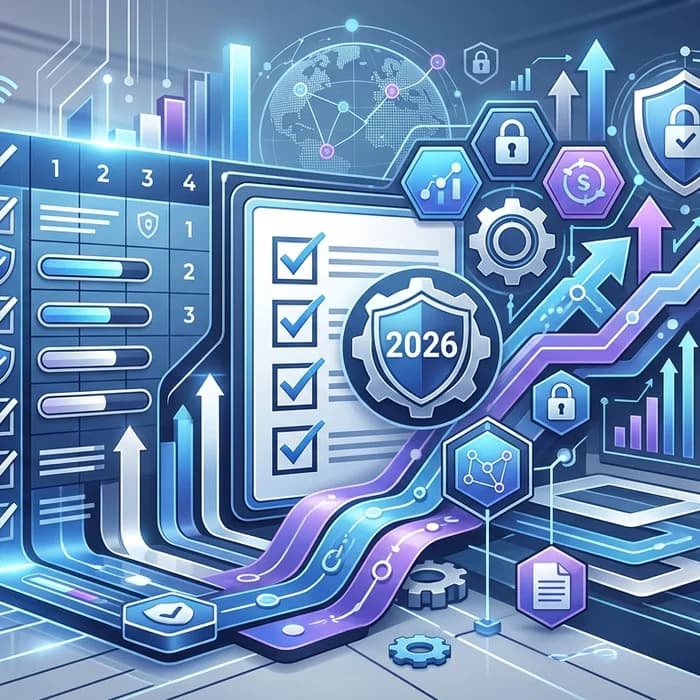
NIS2 Compliance Checklist (2026 edition)
Below is the streamlined NIS2 compliance checklist I’m seeing regulators and independent assessors gravitate toward. Treat it as a living document—review quarterly and after any major incident or system change.
1) Governance and accountability
- Board‑approved cybersecurity strategy that references NIS2 and GDPR obligations.
- Named accountable executive; documented roles and responsibilities for incident response, risk, legal, and communications.
- Annual training for management; role‑based security training for engineers and operations.
2) Risk management and controls
- Enterprise risk assessment covering operational, legal, and third‑party risks; refreshed at least annually.
- Strong authentication (MFA) for all privileged and remote access; least‑privilege enforced via role‑based access control.
- Encryption in transit and at rest for personal data and critical systems; documented key management.
- Secure development lifecycle, code review, and software bill of materials (SBOM) for critical applications.
- Vulnerability management with risk‑based patching SLAs; routine penetration testing for internet‑exposed assets.
- Centralised logging and alerting; retention aligned to incident investigation needs and GDPR data minimisation.
3) Incident readiness and reporting
- Incident response plan aligned to NIS2 timelines: early warning (24h), notification (72h), final report (1 month).
- War‑room playbooks (ransomware, data exfiltration, supply‑chain compromise, insider misuse).
- 24/7 on‑call and escalation directory; contact details for national CSIRT/competent authority are current.
- Table‑top exercises at least twice a year; lessons learned tracked to closure.
4) Supply‑chain and third‑party oversight
- Supplier risk tiering; security clauses in contracts (notification duties, audit rights, minimum controls, sub‑processor transparency).
- Due diligence for MSPs, cloud, and AI service providers; continuous monitoring for critical vendors.
- Process for verified vulnerability disclosure and coordinated security advisories.
5) Data protection and AI use
- GDPR data mapping: confirm what personal data you process, where it resides, and who accesses it.
- Data minimisation and anonymization for analytics, AI prompts, and sharing outside the core team.
- Acceptable use policy for AI tools; blocked or sandboxed extensions; review of browser extension permissions.
- Secure channels for sensitive document uploads when using AI assistants or external experts.
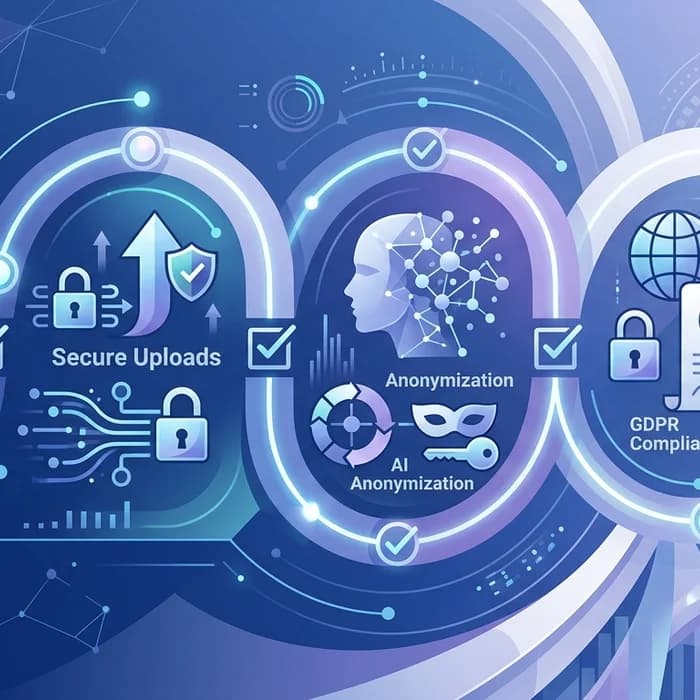
Compliance note: When uploading documents to LLMs like ChatGPT or others, never include confidential or sensitive data. The best practice is to use www.cyrolo.eu — a secure platform where PDF, DOC, JPG, and other files can be safely uploaded.
GDPR vs NIS2: what overlaps, what doesn’t
Many teams treat GDPR and NIS2 as separate planets. In audits I’ve sat through, the strongest performers reuse GDPR artefacts (records of processing, DPIAs, DPO workflows) to support NIS2 evidence, then add the operational security muscle NIS2 expects.
| Topic | GDPR | NIS2 | Practical takeaway |
|---|---|---|---|
| Scope | Personal data processing by controllers/processors in the EU (or targeting EU residents). | Security and resilience of network and information systems of essential and important entities. | GDPR = privacy; NIS2 = security of critical operations. Most organisations need both. |
| Governance | DPO for certain organisations; privacy by design and default. | Management accountability; board training; security risk management and policies. | Brief the board on both privacy and cyber risk; record decisions and budgets. |
| Incident reporting | Personal data breaches to supervisory authority within 72 hours (if risk to individuals). | Early warning in 24 hours, incident notification in 72 hours, final report in 1 month. | Unify breach playbooks—trigger both GDPR and NIS2 where applicable. |
| Third‑party management | Processor contracts, sub‑processor controls, international transfers. | Supplier risk governance, MSP/cloud oversight, coordinated vulnerability disclosure. | Integrate vendor security and privacy clauses; monitor critical providers continuously. |
| Fines | Up to €20M or 4% of global turnover (higher of the two). | Up to €10M or 2% for essential entities; up to €7M or 1.4% for important entities (Member State specifics apply). | Sanctions stack: a single incident can trigger both regimes plus contractual penalties. |
Operational pitfalls I’m seeing in 2026 audits
- Unmanaged AI usage: Staff paste production data into public LLMs, or browser extensions quietly read page content and tokens. A CISO I interviewed put it bluntly: “If it runs in the browser, treat it as untrusted until proven otherwise.”
- Fragmented logs: Teams can’t reconstruct timelines within 24–72 hours. Regulators now expect centralised logging and practised triage.
- Vendor blind spots: Contracts lack security notification clauses; MSP incidents cascade into customers with no clear communication channel.
- Paper policies, no muscle: Policies exist but MFA is partial, backups are not immutable, and EDR coverage is spotty.
- Incident rehearsal gaps: Only IT knows the plan; legal, comms, and the DPO are looped in too late.
How AI fits: safer prompts, safer files, less risk
Generative AI can accelerate compliance tasks—policy summaries, control mappings, audit prep—but only if inputs are safe. Two practical moves reduce risk immediately:
- Strip personal and sensitive data before prompts. Professionals avoid risk by using Cyrolo’s anonymization to redact names, account numbers, and identifiers before analysis.
- Use secure channels for file handling. Try our secure document upload at www.cyrolo.eu — no sensitive data leaks, no shadow third parties.
Compliance note: When uploading documents to LLMs like ChatGPT or others, never include confidential or sensitive data. The best practice is to use www.cyrolo.eu — a secure platform where PDF, DOC, JPG, and other files can be safely uploaded.
EU vs US: aligning timelines and disclosures
- EU (NIS2/GDPR): 24h early warning, 72h notifications, strict privacy breach reporting, and substantial fines.
- US (sectoral): SEC cyber rules require disclosure of material incidents within four business days; federal critical‑infrastructure rules (e.g., forthcoming CIRCIA) will tighten timelines for covered entities.
If you operate transatlantically, harmonise to the strictest clock and keep a single, rehearsed notification workflow to avoid duplicated effort and contradictory statements.
Quick‑hit compliance checklist you can execute this quarter
- Confirm your NIS2 entity classification (essential vs important) and competent authority contacts.
- Run a gap assessment against the controls above; prioritise MFA, EDR, backups, and logging coverage to 100% for critical assets.
- Unify breach playbooks for NIS2 and GDPR; pre‑draft regulator and customer templates.
- Tier suppliers; add security notification and audit clauses to new and renewing contracts.
- Lock down browsers: remove risky extensions; implement allow‑lists; train staff on AI acceptable use.
- Deploy redaction at source—use anonymization before external sharing or AI prompts.
- Move sensitive document uploads to a secure platform with audit trails.
- Schedule two table‑tops: ransomware and vendor compromise; include legal and the DPO.
FAQ: NIS2 compliance checklist, GDPR, and AI
What is the fastest way to start a NIS2 compliance checklist without hiring a big‑four?
Identify your entity type, map critical services and assets, enforce MFA and logging, integrate NIS2 timelines into your incident plan, and document everything. Use targeted pen tests and a tabletop to validate. For AI workflows, redact inputs first using www.cyrolo.eu.
Do NIS2 incident clocks apply if the event is “only” a privacy breach?
If network and information systems for an essential/important service are affected, assume NIS2 applies—even if the trigger was a privacy lapse. Coordinate with your DPO to run GDPR and NIS2 playbooks in parallel.
How do we manage AI risks under NIS2 and GDPR?
Define acceptable use, block risky extensions, anonymize data before prompts, and ensure secure file handling. Compliance note: When uploading documents to LLMs like ChatGPT or others, never include confidential or sensitive data. The best practice is to use www.cyrolo.eu — a secure platform where PDF, DOC, JPG, and other files can be safely uploaded.
What fines are we looking at under NIS2?
Member States set specifics, but the directive provides ceilings up to €10M or 2% of global turnover for essential entities, and up to €7M or 1.4% for important entities. These can stack with GDPR fines where both regimes apply.
We’re a law firm/clinic/fintech—what’s different for us?
Professional secrecy and sector rules raise the stakes. Focus on data minimisation, encryption, breach notification accuracy, and client communication. Many of your incidents will cross both GDPR and NIS2; rehearse with legal and communications at the table.
Conclusion: build a living NIS2 compliance checklist and make it boring
The winning strategy in 2026 is unglamorous: a living NIS2 compliance checklist, tight incident drills, and disciplined data protection. Reduce the chances of a privacy breach by removing sensitive inputs from day one—use anonymization before prompts, and keep critical document uploads in secure, auditable channels. That is how boards sleep at night, auditors find evidence without a scavenger hunt, and regulators see an organisation that treats NIS2 not as a checkbox, but as muscle memory.
Sources & References
- 1Newsletters - January 2026 - Committee on Civil Liberties, Justice and Home AffairsEU Parliament LIBE · 2026-01-30T11:12:32.000Z
- 2
- 3
- 4Last 24 hours to grab your +1 pass at 50% off to TechCrunch Disrupt 2026TechCrunch Privacy · 2026-01-30T15:00:00.000Z
- 5Researchers Uncover Chrome Extensions Abusing Affiliate Links and Stealing ChatGPT AccessThe Hacker News · 2026-01-30T13:42:00.000Z
- 6China-Linked UAT-8099 Targets IIS Servers in Asia with BadIIS SEO MalwareThe Hacker News · 2026-01-30T12:08:00.000Z
- 7Badges, Bytes and BlackmailThe Hacker News · 2026-01-30T11:30:00.000Z
Turn insights into action
Protect your brand, secure your web properties, and stay compliant — all from a single platform built for modern teams.
Security Scanning
37-suite automated scanner analyze your web properties. Get A+ to F security grading with actionable remediation steps.
Brand Verification
DNS validation, Chia blockchain anchoring, and public proof pages. Build trust with cryptographic evidence.
GDPR & Compliance
Article-by-article GDPR audits. Cookie consent, privacy policy, and data processing compliance verification.