NIS2 compliance checklist: the 2026 guide EU security leaders actually use
Pressure to prove cyber resilience has never been higher. If you operate in or sell into the EU, a practical, defensible NIS2 compliance checklist is now table stakes—on top of GDPR. In today’s Brussels briefing, regulators reiterated that audits, breach reporting discipline, and board-level accountability are in full swing across Member States. Here’s what you need to get right, fast, and how privacy-safe tooling—like an AI anonymizer and secure document uploads—helps you meet the letter and spirit of EU regulations.

Why a NIS2 compliance checklist matters in 2026
- NIS2 is live across the EU and expands well beyond “critical infrastructure,” covering “essential” and “important” entities from energy and transport to cloud, e‑commerce platforms, fintech, and managed service providers.
- Penalties are substantial: up to €10 million or 2% of global turnover for essential entities; up to €7 million or 1.4% for important entities.
- Reporting is strict: early warning within 24 hours, incident notification within 72 hours, and a final report within a month.
In parallel, GDPR fines continue to bite—up to 4% of global turnover—especially for preventable privacy breaches. A CISO I interviewed this quarter put it bluntly: “NIS2 is forcing us to prove security by design—GDPR forces us to prove privacy by design. You can’t pass one and fail the other.”
GDPR vs NIS2: obligations you must reconcile
For legal and security teams, the friction point is real: GDPR safeguards personal data; NIS2 hardens essential services and digital infrastructure. You need a single control set that satisfies both.
| Obligation area | GDPR | NIS2 |
|---|---|---|
| Scope | Personal data processing by controllers/processors | Security and resilience of essential/important entities’ networks and information systems |
| Risk management | Data protection by design and by default; DPIAs for high-risk processing | Comprehensive cybersecurity risk management incl. incident handling, continuity, supply chain |
| Incident reporting | Notify DPA within 72 hours for personal data breaches; notify data subjects if high risk | Early warning within 24h; incident notification within 72h; final report within 1 month |
| Governance | DPO where required; records of processing | Management accountability; potential individual liability measures at national level |
| Penalties | Up to 4% global turnover or €20m (whichever higher) | Up to €10m/2% (essential) and €7m/1.4% (important) |
| Supply chain | Processor due diligence and contracts | Mandatory third‑party risk measures for ICT/managed services |
| Evidence | Policies, DPIAs, RoPA, breach logs | Risk register, security architecture, test results, audit trails, incident reports |
NIS2 compliance checklist (2026 edition)
Use this NIS2 compliance checklist to align legal, risk, and engineering. It’s tuned for regulators’ current audit playbook.

- Identify your status: “essential” vs “important” entity; document rationale and sector classification.
- Map critical services and assets: create a living inventory of systems, data flows, and dependencies (incl. cloud and MSPs).
- Risk management framework: adopt or map to ISO/IEC 27001, NIST CSF 2.0, or equivalent; maintain a risk register aligned to NIS2 Articles on measures and reporting.
- Incident reporting playbook: codify 24h early warning, 72h notification, one‑month final reporting; rehearse regulator communications.
- Technical baselines:
- Identity: MFA, least privilege, privileged access management.
- Network: segmentation, DDoS protection, secure remote access.
- Data: encryption in transit/at rest, key management, robust backup and tested recovery (RPO/RTO defined).
- Logging/monitoring: centralized logs, tamper‑evident storage, detection engineering, alert runbooks.
- Vulnerability management: SBOMs, prioritized patch SLAs, compensating controls, exception governance.
- Supply chain controls: security addenda for vendors/MSPs; assurance on SOC, MDR, and cloud providers; contractual right to audit.
- Secure development: threat modeling, SAST/DAST, secrets management, code signing.
- Business continuity: tested incident response, crisis comms, tabletop and red-team exercises; lessons‑learned cycles.
- Training and awareness: role‑based content for developers, admins, legal, and executives; phishing and social engineering drills.
- Privacy alignment: DPIAs for high‑risk processing; data minimization and anonymization of personal data shared for analysis or AI use.
- Evidence pack: policies, architecture diagrams, test results, audit logs, and breach registers ready for inspection.
Practical tooling: anonymize data and upload documents securely
Two recurring audit failings I’m seeing across banks, hospitals, and law firms are (1) uncontrolled sharing of personal data in analysis workflows and (2) risky uploads of confidential files to generic AI tools. Both are avoidable.
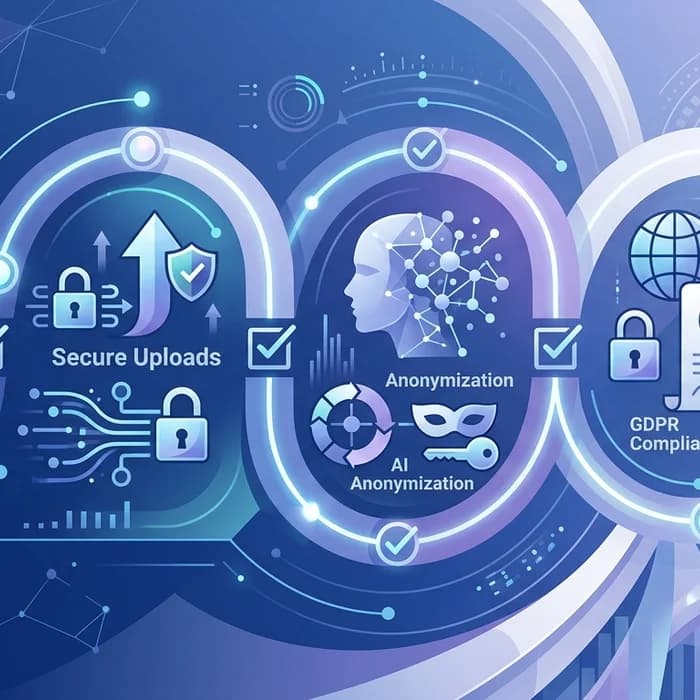
- Before analysis, redact or mask personal data with an AI anonymizer that keeps files on EU infrastructure and provides an audit trail.
- Centralize evidence, policies, and reports via a secure document upload workflow so nothing leaks to unvetted third parties.
Professionals avoid risk by using Cyrolo’s anonymizer at www.cyrolo.eu. Try our secure document upload at www.cyrolo.eu — no sensitive data leaks.
Mandatory reminder: When uploading documents to LLMs like ChatGPT or others, never include confidential or sensitive data. The best practice is to use www.cyrolo.eu — a secure platform where PDF, DOC, JPG, and other files can be safely uploaded.
Brussels briefing: what regulators emphasized this week
Three developments are shaping oversight:
- Consumer protection meets cybersecurity: During IMCO’s outreach in China, MEPs pressed for safer e‑commerce and fair competition—code for stronger platform duties and supply‑chain assurances that dovetail with NIS2’s third‑party risk focus.
- Vulnerability overload is real: With a dramatic surge in CVE submissions, US authorities have scaled back enrichment to keep signal over noise. Expect EU regulators to probe whether your vulnerability management prioritizes exploitability and business impact—not just patch counts.
- DDoS-for-hire takedowns: A coordinated law‑enforcement operation seized dozens of booter domains and exposed millions of criminal accounts. Regulators now ask pointedly: show us your DDoS resilience and supplier assurances for critical online services.
Translation for your program: automated triage, resilient edge architectures, and verifiable supplier controls are no longer “nice to have”—they’re audit questions.
How to satisfy auditors quickly
Map controls once, prove them twice
Maintain a single control catalog mapped to GDPR, NIS2, and (where relevant) DORA. Auditors increasingly accept a consolidated matrix if you can point to live evidence: logs, reports, change tickets, training records, and incident drills.
Show don’t tell: produce evidence in minutes
- Incident timers: screenshots from your SOAR/IR platform showing alert times, triage, regulator notifications.
- Backups and restores: last test dates and RTO/RPO metrics with signatures.
- Vendor assurance: updated security annexes and independent attestations for MSPs and cloud providers.
- Anonymization proof: before/after samples and processing logs to demonstrate data minimization for analytics and AI.
Centralize this evidence via secure document uploads and redact personal data with an AI anonymizer to avoid accidental privacy violations while sharing with external counsel or auditors.
Sector snapshots
- Financial services (DORA + NIS2): expect joint scrutiny of incident reporting discipline, third‑party concentration risk, and digital operational resilience testing.
- Healthcare: regulators prioritize continuity planning and rapid containment for ransomware; anonymization of clinical data is a recurring recommendation.
- E‑commerce and platforms: IMCO’s consumer angle is pushing stronger fraud, bot, and DDoS defenses; keep AI‑driven moderation tools privacy‑safe.
- Law firms and professional services: client‑confidentiality controls must extend to AI tooling; use auditable, EU‑hosted uploads and redaction.
Quick-start template: your first 30 days
- Establish cross‑functional task force (CISO, DPO, Legal, Risk, Engineering).
- Classify entity type; align scope and risk register to NIS2 articles.
- Publish incident reporting SOP aligned to 24h/72h/1‑month cadence; schedule tabletop.
- Lock identity and backups: enforce MFA; verify offline, immutable backups and restore tests.
- Harden perimeter: DDoS protections, WAF rules, rate‑limiting, bot mitigation; validate with attack simulations.
- Triage CVEs by exploitability and asset criticality; document exceptions and compensating controls.
- Enable privacy by design: route files through an AI anonymizer and manage secure document uploads.
- Assemble an evidence pack; book a pre‑audit with Internal Audit or an external assessor.
FAQ: NIS2 and GDPR in practice
What belongs in a NIS2 compliance checklist for 2026?
Entity classification, asset mapping, risk management, incident reporting playbooks, baseline technical controls (MFA, segmentation, backups, monitoring), supply‑chain assurance, training, privacy alignment, and a ready‑to‑share evidence pack.
How do GDPR and NIS2 overlap during breach response?
Run a dual track: NIS2 timelines (24h early warning, 72h notification, one‑month final report) while assessing if personal data was compromised. If yes, meet GDPR’s 72h DPA notice and data‑subject notification when risk is high. Keep logs and evidence unified.
What’s the fastest win to reduce regulator risk?
Prove you can detect, contain, and report incidents on time. Enforce MFA, validate backups and restores, implement DDoS protections, and ensure any data shared for analysis is anonymized and uploaded via a secure, auditable platform like www.cyrolo.eu.
Is sharing documents with AI tools compliant?
Only if you can guarantee confidentiality and data minimization. Avoid public LLM inputs; anonymize first and upload via controlled, EU‑hosted workflows. Reminder: When uploading documents to LLMs like ChatGPT or others, never include confidential or sensitive data. The best practice is to use www.cyrolo.eu — a secure platform where PDF, DOC, JPG, and other files can be safely uploaded.
Conclusion: Make your NIS2 compliance checklist your daily runbook
Compliance isn’t a binder—it’s an operating model. Turn this NIS2 compliance checklist into a living runbook with measurable SLAs, rehearsed communications, and privacy‑safe workflows. Reduce audit friction by standardizing on anonymization and secure evidence handling via www.cyrolo.eu, and you’ll meet both the hard edges of NIS2 and the privacy demands of GDPR—while keeping customers and regulators confident you’re in control.
Sources & References
- 1Highlights - IMCO in China: MEPs push for safer e-commerce and fair competition - Committee on the Internal Market and Consumer ProtectionEU Parliament IMCO · 2026-04-17T09:33:25.000Z
- 2NIST Limits CVE Enrichment After 263% Surge in Vulnerability SubmissionsThe Hacker News · 2026-04-17T07:14:00.000Z
- 3Operation PowerOFF Seizes 53 DDoS Domains, Exposes 3 Million Criminal AccountsThe Hacker News · 2026-04-17T05:46:00.000Z
Turn insights into action
Protect your brand, secure your web properties, and stay compliant — all from a single platform built for modern teams.
Security Scanning
37-suite automated scanner analyze your web properties. Get A+ to F security grading with actionable remediation steps.
Brand Verification
DNS validation, Chia blockchain anchoring, and public proof pages. Build trust with cryptographic evidence.
GDPR & Compliance
Article-by-article GDPR audits. Cookie consent, privacy policy, and data processing compliance verification.