NIS2 compliance checklist: 2026 guide for EU security and legal teams
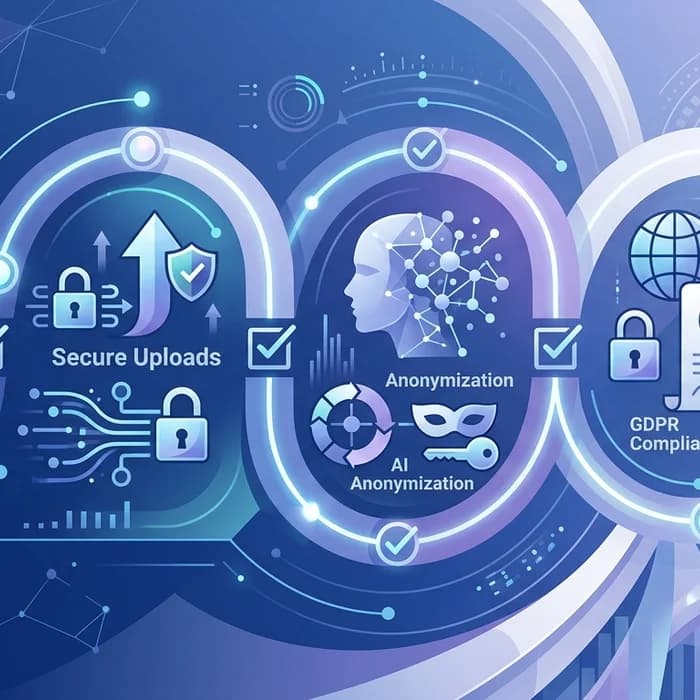
In today’s Brussels briefing, regulators emphasized that the grace period is over: boards will be held liable for NIS2 gaps in 2026. This NIS2 compliance checklist distills what essential and important entities must implement now—across risk management, incident reporting, supply chain security, and secure document handling—so you can pass audits, protect personal data, and avoid fines. After covering the EU context alongside GDPR and cybersecurity compliance, I’ll show how privacy-first workflows—like an AI anonymizer and secure document uploads—close real audit findings in days, not quarters.
Why NIS2 matters now
- Scope expansion: NIS2 covers many more sectors (healthcare, finance, digital infrastructure, managed services, public administration, and more) with proportionate but enforceable measures.
- Board accountability: Executives must approve security policies, oversee implementation, and can be sanctioned for persistent non-compliance.
- Stiffer penalties: Up to €10 million or 2% of global turnover for essential entities, and up to €7 million or 1.4% for important entities—whichever is higher, depending on national law.
- Harmonized measures: From incident reporting timelines to supply-chain risk management, NIS2 codifies what auditors have long expected.
Context from the field: In a case I reviewed this month, ransomware operators physically entered a European law firm’s office to grab data that remote defenses couldn’t reach—reminding us that policies must address both digital and physical vectors. Meanwhile, generative AI adoption is accelerating inside banks, hospitals, and fintechs; regulators are now checking whether uploads are properly controlled, pseudonymized, or anonymized to stop privacy breaches.
NIS2 compliance checklist (practical, 2026-ready)
Use this NIS2 compliance checklist to structure your program and satisfy auditors. Pair it with targeted tech—especially for data protection, AI governance, and secure document flows.
- Board governance and accountability
- Document board-approved cybersecurity strategy aligned to NIS2 risk domains.
- Run annual board training on cyber risk, incident duties, and regulator interactions.
- Risk management and security controls
- Maintain an enterprise risk register that maps threats to safeguards and owners.
- Prove control effectiveness via KPIs/KRIs, red-team exercises, and security audits.
- Asset inventory and classification
- Keep a live CMDB of systems, data stores, and vendors; classify personal data and critical systems.
- Tag datasets used with AI tools; enforce pseudonymization or anonymization before sharing.
- Identity, access, and encryption
- Apply least privilege, MFA, privileged access management, and just-in-time access.
- Encrypt data in transit and at rest; manage keys separately from workloads.
- Logging, monitoring, and detection
- Centralize logs; define retention; monitor anomalies in endpoints, cloud, and SaaS.
- Integrate threat intel and run continuous detection engineering.
- Incident response and reporting
- Define 24/7 incident playbooks with cross-border notification flows.
- Meet NIS2 incident reporting stages (early warning, incident notification, final report) and align with GDPR breach timelines.
- Business continuity and resilience
- Test backups, recovery time objectives (RTOs), and crisis communications.
- Cover physical site risks, including after-hours access and insider threats.
- Supply-chain and third-party risk
- Risk-rate vendors; embed NIS2 clauses (controls, audits, reporting) in contracts.
- Continuously assess MSPs and AI providers; require breach cooperation and SLAs.
- Data protection and privacy engineering
- Apply data minimization, purpose limitation, and retention controls.
- Operationalize de-identification: use an AI anonymizer to reliably strip names, IDs, and health/financial markers before sharing files for analysis.
- Secure document workflows
- Standardize secure document uploads for PDF, DOC, and image files; block email attachments to unknown tools.
- Scan all uploads for malware, PII, and secrets; generate immutable logs for audits.
- AI/LLM governance
- Publish an AI acceptable-use policy; restrict model access and data egress.
- Mandate pseudonymization or anonymization pre-upload; prefer on-prem or EU-hosted processing where possible.
- People and training
- Role-based training for legal, IT, and business teams; phishing and shadow-IT drills.
- Run tabletop exercises with legal/compliance for dual NIS2–GDPR incidents.
Professionals avoid risk by using Cyrolo’s anonymizer at www.cyrolo.eu to protect personal data before analysis. Try our secure document upload at www.cyrolo.eu — no sensitive data leaks.
Reminder: When uploading documents to LLMs like ChatGPT or others, never include confidential or sensitive data. The best practice is to use www.cyrolo.eu — a secure platform where PDF, DOC, JPG, and other files can be safely uploaded.
GDPR vs NIS2: obligations you will be audited on
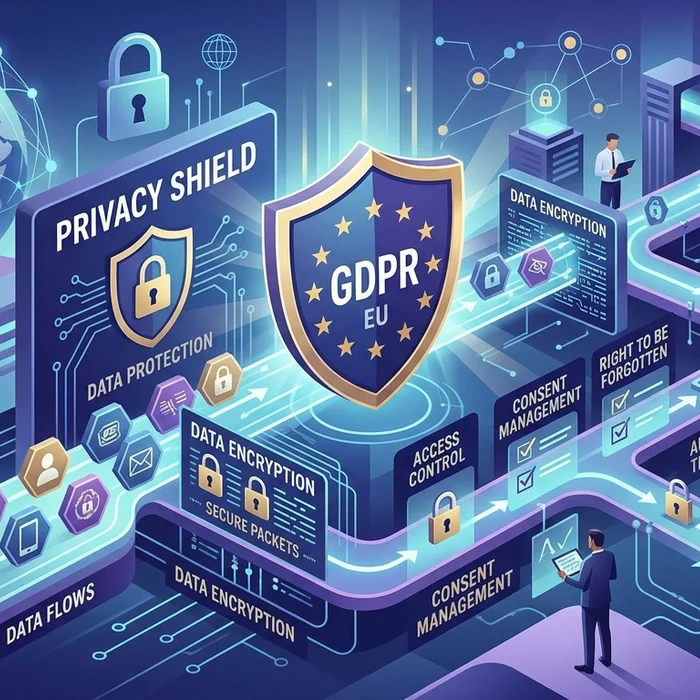
| Area | GDPR | NIS2 | What auditors look for in 2026 |
|---|---|---|---|
| Scope | Processing of personal data by controllers/processors | Security and resilience of essential/important entities and their services | Whether both regimes are mapped to systems, vendors, and data flows |
| Governance | DPO where required; privacy by design/default | Board-level cyber oversight; security policy approval and training | Minutes, training records, and evidence of executive engagement |
| Security measures | Article 32 risk-based safeguards (encryption, resilience) | Baseline measures across risk management, incident handling, and supply chain | Documented controls, testing results, and remediation tracking |
| Incident reporting | Notify SA without undue delay; 72h benchmark | Early warning and staged incident reports to CSIRTs/authorities | Clear runbooks for dual-reporting to DPAs and NIS authorities |
| Penalties | Up to €20M or 4% global turnover | Up to €10M/2% (essential) or €7M/1.4% (important) | Sanctions matrix and budgeted remediation plans |
| Data handling | Minimization, lawful basis, DPIAs, data subject rights | Operational resilience; continuity and recovery | Evidence of pseudonymization/anonymization and resilient backup strategy |
Sector snapshots: where teams are getting caught
Law firms and professional services
After the recent wave of in-person exfiltration at legal practices, auditors are pressing for overnight access controls, sealed print rooms, and encrypted document vaults with monitored secure document uploads. For client confidentiality, pseudonymization is often not enough—true anonymization reduces breach impact and simplifies GDPR risk assessments.
Hospitals and life sciences
Electronic health records, imaging archives, and clinical trial data carry elevated risk. I’ve seen regulators request proof that AI triage/analytics tools receive only de-identified inputs. Running files through an AI anonymizer before any model inference is now a defensible standard.
Banks and fintechs
Generative AI is used for transaction analysis and report drafting. A CISO I interviewed warned that unmanaged copy-paste into LLMs creates shadow datasets that violate retention and cross-border transfer rules. Centralize uploads, log everything, and block high-risk categories by default.

SaaS and managed service providers
NIS2 explicitly heightens supply-chain accountability. Expect customer questionnaires drilling into your incident reporting SLAs, subcontractor oversight, and data-handling controls—particularly how staff move documents between tools and whether uploads are scanned and redacted automatically.
How anonymization and secure uploads accelerate compliance
- Close a common audit gap: Show that personal data is minimized before analytics, AI, or vendor sharing—using a repeatable, logged process.
- Reduce breach blast radius: Anonymized datasets drastically cut privacy breach exposure and speed up incident response scoping.
- Prove policy-to-practice: Link your written policy to automated pipelines—“no file leaves our perimeter unscanned, redacted, and logged.”
Cyrolo’s privacy-first workflow gives teams what regulators ask to see:
- An AI anonymizer that detects PII across PDFs, Office docs, images, and scans—then redacts or masks with audit trails.
- A secure document upload flow that blocks risky file types, scans for malware and secrets, and records immutable evidence for audits.
Result: faster security audits, fewer policy exceptions, and safer collaboration with legal, analytics, and vendor teams.
Audit-ready documentation: what to keep on file
- Risk register entries linking threats to NIS2 controls and owners.
- Incident runbooks with regulator contact points and notification timers.
- Vendor due-diligence reports and contract clauses referencing NIS2 and GDPR.
- Evidence of training, tabletop exercises, and red-team results with remediation tickets.
- Processing records showing pseudonymization/anonymization steps and retention.
- Change logs for security configurations, encryption keys, and access reviews.
Compliance checklist (printable summary)
- Board approved cyber policy; annual training completed
- Comprehensive asset and data inventory; AI dataset tagging
- MFA and PAM enforced; encryption at rest/in transit
- Centralized logging; tested detection and response
- Staged NIS2/GDPR incident reporting playbooks
- Backup and recovery tested; physical security reviewed
- Vendor risk program with NIS2 clauses and audits
- Document workflows use secure uploads and anonymization
- AI acceptable-use policy; blocked high-risk uploads by default
- Training, tabletop, and remediation evidence retained
FAQ: NIS2 and EU cybersecurity compliance
What is the fastest way to start a NIS2 compliance program?
Begin with a gap assessment against NIS2 measures: governance, risk management, incident handling, supply-chain, and resilience. In parallel, fix high-impact data risks—especially document handling—by routing files through an AI anonymizer and secure upload pipeline. This creates immediate, auditable wins.
How do NIS2 reporting timelines compare to GDPR’s 72-hour breach rule?
NIS2 requires early warning and staged incident reports to national CSIRTs/authorities; GDPR expects notification to the supervisory authority without undue delay, generally within 72 hours. Maintain an integrated runbook so legal and security teams can file both reports with consistent facts.
Does pseudonymization satisfy regulators, or is anonymization required?
Pseudonymization reduces risk but is reversible with a key; anonymization removes identifiers so re-identification is not reasonably possible. For analytics, testing, and external sharing, regulators increasingly expect true anonymization where feasible because it lowers breach impact and simplifies DPIAs.
Are US companies serving EU users subject to NIS2?
Yes, if they provide covered services or fall into supply chains of EU essential/important entities. Expect NIS2 clauses in contracts, proof of security measures, incident cooperation, and potentially audits—similar to how GDPR extended extraterritorially.
What penalties apply for NIS2 non-compliance?
Administrative fines can reach up to €10 million or 2% of global turnover for essential entities and up to €7 million or 1.4% for important entities, depending on national implementation. Persistent failures can also trigger supervisory measures and executive training mandates.
Final take: your NIS2 compliance checklist is only as strong as your document pipeline
The headlines—from physical office intrusions to ungoverned AI uploads—show that attackers and auditors both follow the data. Your NIS2 compliance checklist should therefore prioritize how documents and datasets move through your organization: minimize, anonymize, and control uploads with immutable logs. Start today with Cyrolo’s AI anonymizer and secure document upload at www.cyrolo.eu, and turn your biggest source of risk into your fastest compliance win.
Sources & References
- 1California defeats Tesla's attempt to throw out racial discrimination lawsuitArs Technica Policy · 2026-05-27T21:08:51.000Z
- 2Nvidia bets $150B on Taiwan as Trump's plan to make US an AI hub backfiresArs Technica Policy · 2026-05-27T19:59:40.000Z
- 3Ransomware Actors Show Up In Person to Steal Law Firm DataDark Reading · 2026-05-27T20:38:01.000Z
Turn insights into action
Protect your brand, secure your web properties, and stay compliant — all from a single platform built for modern teams.
Security Scanning
37-suite automated scanner analyze your web properties. Get A+ to F security grading with actionable remediation steps.
Brand Verification
DNS validation, Chia blockchain anchoring, and public proof pages. Build trust with cryptographic evidence.
GDPR & Compliance
Article-by-article GDPR audits. Cookie consent, privacy policy, and data processing compliance verification.