NIS2 Compliance Checklist: The 2026 Playbook for EU Security Leaders
Brussels is done waiting. With national transpositions complete across most Member States, enforcement under the EU’s Network and Information Security Directive (NIS2) is intensifying in 2026. This NIS2 compliance checklist synthesizes what regulators are actually asking for, what auditors are testing, and how to operationalize day‑one readiness—without exposing sensitive files to risky tools. In today’s Brussels briefing, regulators emphasized supply chain controls, 24/72-hour incident reporting, and executive accountability—pressure that dovetails with a week of headlines on AI-assisted supply chain attacks, zero-days, and industrialized social engineering.
- Key takeaway: NIS2 raises the bar beyond GDPR’s privacy lens to systemic cybersecurity.
- Risk spotlight: AI-driven phishing and repo tampering are converging with software supply chain risk.
- What to do now: Map obligations, harden vendors, test incident reporting, and use secure tooling for document workflows.
Why the NIS2 compliance checklist matters in 2026
From conversations with CISOs in finance and healthcare, the refrain is consistent: “We thought we were ready for NIS2, until the first audit request arrived.” NIS2 applies to thousands of “essential” and “important” entities across sectors such as banking, energy, transport, health, and digital infrastructure. The Directive introduces:
- Board liability and oversight duties, including security awareness for management.
- Risk management measures spanning incident response, business continuity, and supply chain security.
- Tight incident notification timelines: early warning within 24 hours, more detail within 72 hours, and a final report within one month.
- Sanctions of up to €10 million or 2% of worldwide turnover for essential entities (and up to €7 million or 1.4% for important entities).
Against the backdrop of AI-assisted code poisoning and sophisticated social engineering campaigns against newsrooms and software ecosystems, regulators I spoke with in Brussels are signaling a sharper focus on software supply chain controls, vulnerability management, and verifiable logging—“show us evidence” has become the audit mantra.
GDPR vs NIS2: What changes for CISOs and DPOs
GDPR and NIS2 are complementary: GDPR is about personal data protection and privacy; NIS2 is about the resilience of your networks and services. Many organizations need both.
| Area | GDPR | NIS2 |
|---|---|---|
| Scope | Personal data processing | Network and information systems of essential/important entities |
| Primary Objective | Privacy and data protection | Cybersecurity resilience and service continuity |
| Governance | DPO role, privacy by design | Board accountability, security risk management, policies |
| Incident Reporting | Without undue delay, within 72 hours for personal data breaches | Early warning within 24 hours; incident notification within 72 hours; final report within one month |
| Sanctions | Up to €20M or 4% global turnover | Up to €10M or 2% (essential); up to €7M or 1.4% (important) |
| Supply Chain | Processor contracts and DPIAs | Mandatory supplier risk controls, software supply chain security, coordinated vulnerability disclosure |
| Audits | Supervisory authority investigations; records of processing | Regulatory audits and security inspections; evidence of controls, logs, and testing |
The NIS2 compliance checklist
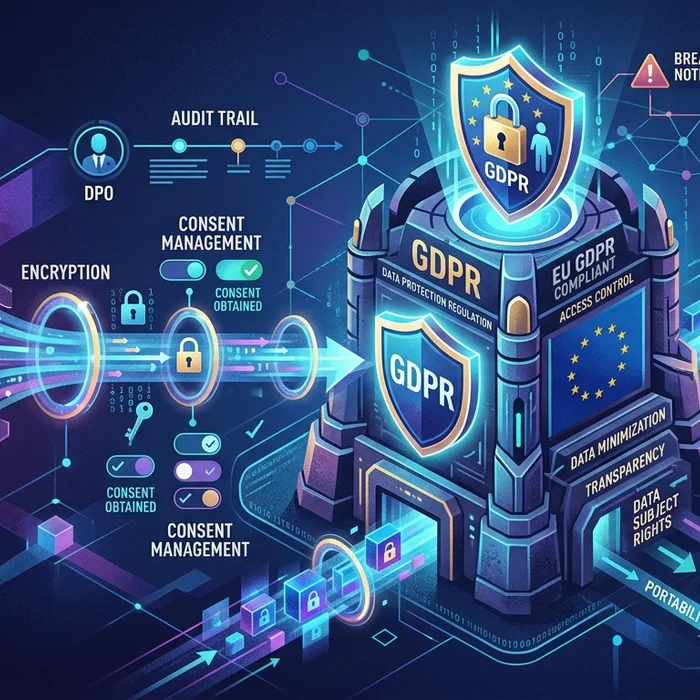
Use this practical NIS2 compliance checklist to guide implementation and internal audits. I’ve validated it with CISOs in banks, fintechs, hospitals, and law firms facing 2026 supervisory reviews.
- Governance and accountability
- Assign ultimate responsibility at board level; brief executives quarterly on cyber risk.
- Document security policy, risk appetite, and roles (CISO, incident commander, supplier owners).
- Asset inventory and criticality
- Maintain live inventory of systems, data flows, and third-party dependencies.
- Classify critical services and map single points of failure.
- Risk management and controls
- Adopt a control framework (ISO 27001/2, NIST CSF 2.0) and map to NIS2 articles.
- Enforce MFA, least privilege, network segmentation, encryption, and backup integrity testing.
- Vulnerability and patch management
- Continuous scanning, SBOM intake, and prioritized patch SLAs for internet-facing assets.
- Zero-day playbooks for endpoint, VPN, and client software—practice with tabletop drills.
- Secure software development and supply chain
- Enforce signed commits, dependency pinning, and provenance checks in CI/CD.
- Require suppliers to disclose vulnerabilities and maintain Coordinated Vulnerability Disclosure (CVD) processes.
- Incident detection, logging, and response
- Centralize logs with immutable retention; prove coverage for critical systems.
- Define detection content for AI‑assisted phishing and repository tampering.
- Incident reporting readiness (24/72/30-day cadence)
- Pre-draft regulator notification templates and contact trees.
- Test clock-start criteria, legal review, and cross-border coordination.
- Business continuity and crisis communications
- Run failover tests for critical services; practice ransomware recovery.
- Prepare stakeholder messaging (regulators, customers, media).
- Training and awareness
- Board-level security training; red-team informed phishing simulations.
- Developer secure coding and dependency hygiene modules.
- Supplier due diligence
- Risk-tier vendors; mandate controls and response SLAs in contracts.
- Collect attestations (ISO 27001, SOC 2) and review high‑risk vendors annually.
- Testing and assurance
- Annual independent audits; quarterly penetration tests for critical apps.
- Control effectiveness metrics reported to the board.
- Documentation and evidence
- Maintain an auditable trail of policies, risk decisions, incident records, and supplier reviews.
Operational fixes for 2026 threats: from supply chain to social engineering
Three operational gaps surfaced in my interviews after recent incidents:
- Repository integrity: Organizations had MFA on Git repositories but lacked signed commits and dependency allowlists—opening the door to AI-assisted package swaps.
- Executive-targeted social engineering: Attackers blend credible media approaches with deepfake voice to escalate privileges. Counter with privileged access workflows that never rely on chat or voice alone.
- Patch agility: Teams needed “hot patch” playbooks for client and VPN software; zero-day Wednesdays are the new Patch Tuesdays.
Work with documents safely: anonymize and control uploads
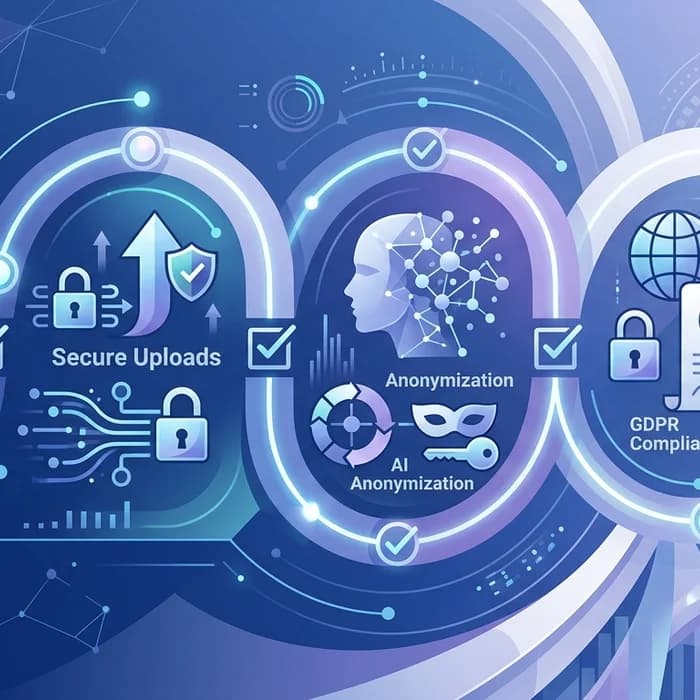
Security teams are increasingly asked to share logs, vendor contracts, and incident drafts with AI tools. That’s a compliance minefield unless you strip personal data and restrict where files go. Professionals avoid risk by using Cyrolo’s anonymizer to remove names, emails, case IDs, and other personal data before analysis. And when you must circulate playbooks or evidence, try our secure document upload at www.cyrolo.eu — no sensitive data leaks.
Compliance reminder: When uploading documents to LLMs like ChatGPT or others, never include confidential or sensitive data. The best practice is to use www.cyrolo.eu — a secure platform where PDF, DOC, JPG, and other files can be safely uploaded.
What this solves, concretely
- GDPR alignment: Reduce exposure of personal data in reviews and security audits.
- NIS2 evidence handling: Share incident timelines and logs without leaking identifiers.
- Third-party assurance: Demonstrate disciplined data protection to regulators and customers.
Sector snapshots: how NIS2 lands on the ground
Banking and fintech
A CISO I interviewed at a pan‑EU bank said regulators are “laser-focused” on supplier controls and SWIFT/RTGS continuity. Expect deep dives into SOC coverage for payment gateways and crisis failover. Map NIS2 to ECB cyber expectations where relevant.
Hospitals and health networks
Hospitals face tight windows to restore patient services. Ensure EHR backup integrity, segmentation between clinical and admin networks, and crisis communication playbooks that respect both GDPR and patient safety imperatives.
Law firms and professional services
High-value targets for social engineering. Enforce strict client-matter isolation, DLP for case files, and use www.cyrolo.eu to anonymize discovery sets before AI-assisted summarization.
Cloud and digital infrastructure
Demonstrate multi-tenant isolation, supply chain attestation (SBOMs, SLSA provenance), and rapid coordinated vulnerability disclosure. Regulators will ask to “show the logs” and the upgrade path for critical components.
90-day action plan to pass a 2026 audit
- Days 1–30: Gap assessment
- Map controls to NIS2; identify red zones (incident reporting, vendor risk, logging).
- Kick off executive training; designate incident reporting owners.
- Days 31–60: Implement and test
- Roll out signed commits, dependency pinning, and CI/CD provenance checks.
- Run a 24/72-hour reporting tabletop with legal and PR; fix friction points.
- Days 61–90: Evidence and hardening
- Consolidate audit artifacts; set up immutable log retention.
- Operationalize file handling: route drafts and logs through www.cyrolo.eu for anonymization and secure document uploads.
FAQ: NIS2 and cybersecurity compliance in practice
What companies fall under NIS2 in 2026?
Essential and important entities across sectors like energy, transport, banking, health, drinking water, digital infrastructure, and certain managed services. Size thresholds and sector definitions come from national transpositions—assume inclusion if you enable critical services or act as a key supplier.
How fast do we need to report incidents under NIS2?
Early warning within 24 hours of becoming aware of a significant incident; an incident notification with initial assessment within 72 hours; final report within one month. Practice the workflow so legal and technical teams can meet the clock.
Does GDPR compliance make us NIS2-compliant?
No. GDPR focuses on personal data; NIS2 targets systemic cybersecurity. There is overlap (e.g., data protection, breach reporting), but NIS2 adds supply chain security, continuity, and executive accountability.
What are typical NIS2 fines?
For essential entities, up to €10 million or 2% of worldwide turnover—whichever is higher. For important entities, up to €7 million or 1.4%. Regulators can also impose corrective measures and management liability.
How do we safely use AI for security workflows?
Never upload sensitive or confidential data to general LLMs. Use redacted datasets and a secure platform. Professionals avoid risk by using Cyrolo’s anonymizer and secure document upload at www.cyrolo.eu.
Conclusion: make the NIS2 compliance checklist your operating system
NIS2 isn’t another binder on a shelf—it is the operating system for resilience. Use this NIS2 compliance checklist to drive board accountability, supply chain hardening, and rapid incident reporting, while protecting privacy under GDPR. And when your team needs to share logs, contracts, or incident drafts, do it safely: anonymize and control files with www.cyrolo.eu. That’s how EU organizations stay secure, pass audits, and keep services online in 2026.
Sources & References
- 1Sports bets on prediction markets ruled to be "swaps," exempt from state lawsArs Technica Policy · 2026-04-06T21:56:36.000Z
- 2“The problem is Sam Altman”: OpenAI Insiders don’t trust CEOArs Technica Policy · 2026-04-06T21:23:36.000Z
- 3AI-Assisted Supply Chain Attack Targets GitHubDark Reading · 2026-04-06T21:38:53.000Z
- 4Axios Attack Shows Social Complex Engineering Is IndustrializedDark Reading · 2026-04-06T20:55:44.000Z
- 5Fortinet Issues Emergency Patch for FortiClient Zero-DayDark Reading · 2026-04-06T20:24:19.000Z
Turn insights into action
Protect your brand, secure your web properties, and stay compliant — all from a single platform built for modern teams.
Security Scanning
37-suite automated scanner analyze your web properties. Get A+ to F security grading with actionable remediation steps.
Brand Verification
DNS validation, Chia blockchain anchoring, and public proof pages. Build trust with cryptographic evidence.
GDPR & Compliance
Article-by-article GDPR audits. Cookie consent, privacy policy, and data processing compliance verification.