NIS2 compliance checklist: 2026 EU guide for security leaders
In today’s Brussels briefing, regulators emphasized that 2026 is the first full year where NIS2 supervision will be routine across the EU. If you’re a CISO, DPO, legal counsel, or IT lead, the question is practical: what belongs on your NIS2 compliance checklist, how does it intersect with GDPR, and how do you operationalize controls without leaking sensitive data? This field report breaks it down with clear steps, a GDPR vs NIS2 comparison, and tooling advice that auditors actually welcome.
Why NIS2 matters now—and what changed
After the October 2024 transposition deadline, EU Member States spent 2025 building supervisory capacity. In 2026, enforcement sharpens: competent authorities are asking for evidence of governance, risk management, and supply-chain security—not just policies on paper.
- Scope widened: “essential” and “important” entities span energy, banking, healthcare, transport, water, digital infrastructure, ICT service management, public administration, and more—including many SaaS and managed service providers.
- Accountability: Senior management must approve cybersecurity measures and can be held liable for serious shortcomings.
- Fines: Up to €10 million or 2% of global annual turnover for NIS2 breaches (whichever is higher)—complementing GDPR’s up to €20 million or 4% for data protection violations.
- Incident timelines: Early warning within 24 hours, incident notification within 72 hours, and a final report within one month to your national CSIRT/competent authority.
Why the urgency? This winter’s wave of supply‑chain compromises, package manager incidents, and source code exposures underlined a familiar truth I keep hearing from CISOs: “We’re only as strong as our dependencies.” NIS2 codifies that reality with explicit supplier due diligence and contractual controls.
NIS2 compliance checklist you can act on this quarter
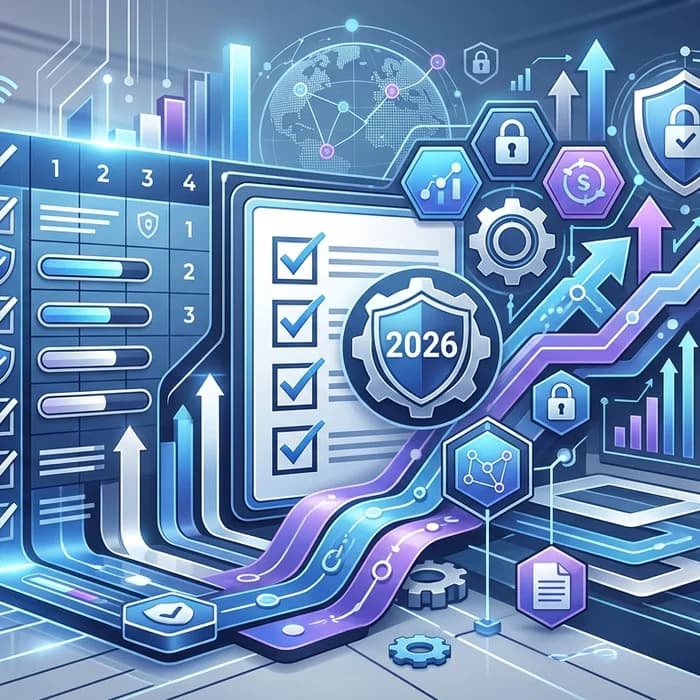
Use this operational NIS2 compliance checklist to drive your next 90 days. I’ve organized it to mirror what regulators and auditors typically request first.
- 1) Executive accountability and policy baseline
- Board-approved cybersecurity policy covering risk management, incident response, continuity, and supply-chain security.
- Named responsible executives; evidence of training for senior management as required by NIS2.
- 2) Asset and service inventory
- Up-to-date inventory of information systems, critical services, and third-party dependencies (including open-source components).
- Classification of systems by business criticality and potential impact on essential/important services.
- 3) Risk management and technical controls
- Documented risk assessment methodology and risk register.
- Baseline controls: MFA, least privilege, network segmentation, patch management SLAs, logging/monitoring, encryption in transit and at rest.
- Secure development lifecycle (threat modeling, code review, SCA/SAST/DAST), and a process for vulnerability disclosure (VDP).
- 4) Supply‑chain security
- Supplier risk tiering and due diligence questionnaires mapped to NIS2 requirements.
- Contractual clauses for incident notification, security standards, SBOM/attestations, and right to audit.
- Dependency monitoring (including package repositories) and rapid revocation/rollback procedures.
- 5) Incident reporting and crisis playbooks
- Documented 24h early warning workflow, 72h notification template, and 1‑month final report checklist.
- CSIRT/authority contact list, on-call roster, and cross-border escalation paths.
- Tabletop exercises with legal, PR, and executive participation.
- 6) Business continuity and disaster recovery
- Tested backups with restore-time objectives; failover plans for critical services.
- Continuity plans that include third-party outages and telecom/hosting disruptions.
- 7) Data protection alignment (GDPR)
- Records of processing activities for personal data in essential services.
- Breach assessment flow that distinguishes GDPR personal data breaches from NIS2 service-impact incidents (sometimes both apply).
- Pseudonymization/anonymization where feasible to reduce privacy risk.
- 8) Training, awareness, and drills
- Annual security training for staff; role-based training for admins and developers.
- Phishing simulations and secure-coding clinics focused on real incidents.
- 9) Evidence and audit readiness
- Control library mapped to NIS2 articles and national implementing law.
- Ticketing and logs that prove control operation over time (not just policy existence).
Practical tip: when you need to share logs, tickets, or contracts with external assessors, first remove personal data. Professionals avoid risk by using an AI anonymizer that automatically redacts names, emails, IBANs, and other identifiers while preserving document meaning for audits.
GDPR vs NIS2: obligations side by side
Teams often conflate data protection (GDPR) with service resilience and cybersecurity (NIS2). You usually need both. Here’s the quick view I use with clients:
| Topic | GDPR | NIS2 |
|---|---|---|
| Primary focus | Personal data protection and data subject rights | Security and resilience of essential/important services |
| Who is in scope | Controllers/processors handling personal data | Essential and important entities across critical sectors, incl. key digital services |
| Core obligations | Lawful basis, minimization, DSRs, DPIAs, DPO (where required), data breach notification | Risk management, incident response, supply‑chain security, reporting to CSIRTs, governance and training |
| Incident reporting | Breach notification to authority within 72h if risk to individuals | Early warning within 24h, detailed notification by 72h, final report by 1 month |
| Fines | Up to €20m or 4% global turnover | Up to €10m or 2% global turnover; management liability possible |
| Third‑party controls | Processor contracts, data transfer safeguards | Supplier due diligence, contractual security and notification duties, SBOM/assurance |
| Technical measures | Pseudonymization/anonymization, encryption, access controls | MFA, segmentation, patching, monitoring, secure SDLC, incident playbooks |
Tooling that satisfies auditors—without leaking data
Two pain points land on my desk weekly: “How do we review evidence with advisors safely?” and “How do we let engineers use AI without exposing customer data?”
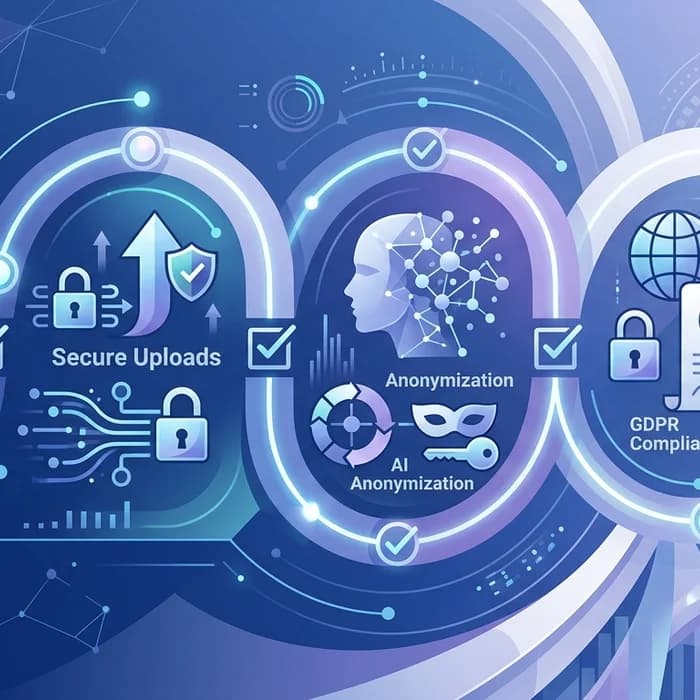
- Safe evidence sharing: Before sending tickets, logs, or contracts to auditors, automatically redact personal data and secrets. Try a purpose-built AI anonymizer to remove names, emails, phone numbers, IBANs, client references, and payment details while keeping context intact.
- Secure document handling: For policies, DPAs, vendor responses, PDFs, screenshots, and images used in audits, use a platform designed for secure processing. Try our secure document upload at www.cyrolo.eu — no sensitive data leaks.
When uploading documents to LLMs like ChatGPT or others, never include confidential or sensitive data. The best practice is to use www.cyrolo.eu — a secure platform where PDF, DOC, JPG, and other files can be safely uploaded.
Sector snapshots: what regulators asked this year
In interviews across finance, health, and SaaS, I heard recurring themes:
- Banks and insurers (EU plus EEA): NIS2 overlaps with DORA (now in effect), so supervisors pressed for ICT third‑party risk registers, scenario testing, and playbooks for telecom or cloud concentration failures. A CISO I interviewed summed it up: “No more implicit trust in vendors; evidence or it didn’t happen.”
- Hospitals and labs: Emphasis on asset inventories (especially medical devices), network segmentation, and rapid containment runbooks that keep life‑critical systems available while reporting within the 24/72‑hour windows.
- Digital/SaaS providers: Questions focused on package management controls, SBOM accuracy, and automated rollback when a compromised dependency is detected—an echo of this year’s package‑ecosystem scares.
EU vs US: different levers, same outcomes
EU regulations (GDPR, NIS2, DORA) set cross‑sector baselines with strong supervisory oversight. In the US, obligations are more sectoral and state-driven (HIPAA, GLBA, state breach laws, SEC rules for listed firms). Multinationals should harmonize on the stricter common denominator: EU‑grade incident timelines, supplier attestations, and privacy‑by‑design. It’s cheaper than retrofitting after a cross‑border breach.
90‑day implementation plan you can defend in an audit
- Days 1–30: Confirm scope (entity classification), appoint accountable execs, publish the cybersecurity policy, and complete a rapid risk assessment. Stand up incident reporting workflows (24/72/1‑month) and a CSIRT contact directory.
- Days 31–60: Build the asset/dependency inventory; deploy MFA and patch SLAs for critical systems; launch supplier tiering and send short due‑diligence questionnaires; introduce secure evidence handling with an AI anonymizer.
- Days 61–90: Tabletop an incident with legal and PR; finalize contractual clauses for high‑risk vendors; implement SBOM monitoring; enable secure policy and log document uploads for external reviewers; collect artifacts into an audit pack.
Common pitfalls and how to avoid them
- Policy without proof: Keep tickets, logs, and screenshots that demonstrate control operation. Redact personal data before sharing.
- Confusing GDPR with NIS2: Run both playbooks. A service outage with personal data exposure may trigger dual reporting (GDPR DPA + NIS2 CSIRT).
- Supplier blind spots: Include open‑source and small subcontractors in risk tiering; require notification SLAs and evidence of security testing.
- AI leakage: Don’t paste customer records into generic LLMs. Route analysis through a secure platform designed for anonymization and controlled processing.
FAQ: your top NIS2 and GDPR questions
What is the fastest way to start NIS2 compliance if we’ve done nothing?
Define scope and accountability, publish a board‑approved security policy, and implement the 24/72/1‑month incident reporting workflow. In parallel, start an asset and supplier inventory; regulators frequently ask for these first.
Do we need both GDPR and NIS2 incident reports for the same event?
Sometimes. If an incident disrupts an essential service (NIS2) and exposes personal data (GDPR), you’ll likely report to your CSIRT/competent authority and your data protection authority. Coordinate legal counsel to keep facts consistent.
How do we secure supply‑chain dependencies like npm or container images?
Enforce provenance checks, pin versions, require SBOMs, monitor advisories, and test rollback procedures. Treat build systems as production—harden, monitor, and restrict secrets.
Can anonymization help us share evidence with auditors safely?
Yes. Automated redaction of personal data and secrets reduces GDPR risk while maintaining context for audits. Use an AI anonymizer before sending logs, tickets, or contracts outside your organization.
Is it safe to upload policy documents to an LLM for analysis?
Only if you use a secure platform. When uploading documents to LLMs like ChatGPT or others, never include confidential or sensitive data. The best practice is to use www.cyrolo.eu — a secure platform where PDF, DOC, JPG, and other files can be safely uploaded.
Bottom line: make your NIS2 compliance checklist work for you
NIS2 isn’t another binder for the shelf—it’s your chance to harden services, evidence resilience, and reduce breach fallout. Use this NIS2 compliance checklist to align executives, prove supply‑chain diligence, and run dual GDPR/NIS2 reporting drills. And when you need to process or share materials, avoid accidental exposure: rely on an AI anonymizer and secure document uploads at www.cyrolo.eu. That’s how leaders turn compliance into a durable security advantage.
Sources & References
- 1EDRi-gram, 1 April 2026EDRi · 2026-04-01T08:59:28.000Z
- 2Predatorgate: Breaking the chain of impunity of the spyware underworldEDRi · 2026-04-01T07:30:41.000Z
- 3New study reveals how young people are influenced by gamification features on SnapchatEDRi · 2026-04-01T07:30:15.000Z
- 4Google Attributes Axios npm Supply Chain Attack to North Korean Group UNC1069The Hacker News · 2026-04-01T07:44:00.000Z
- 5Claude Code Source Leaked via npm Packaging Error, Anthropic ConfirmsThe Hacker News · 2026-04-01T06:12:00.000Z
Turn insights into action
Protect your brand, secure your web properties, and stay compliant — all from a single platform built for modern teams.
Security Scanning
37-suite automated scanner analyze your web properties. Get A+ to F security grading with actionable remediation steps.
Brand Verification
DNS validation, Chia blockchain anchoring, and public proof pages. Build trust with cryptographic evidence.
GDPR & Compliance
Article-by-article GDPR audits. Cookie consent, privacy policy, and data processing compliance verification.