NIS2 compliance checklist: 2026 EU guide to GDPR, identity risk, and safe AI document handling
In this week’s Brussels briefing, regulators doubled down on operational resilience and privacy-by-design, underlining why every security leader needs a living NIS2 compliance checklist. As AI agents reshape identity security budgets and EU rules tighten, organizations in finance, health, energy, cloud, and law cannot afford blind spots. If you’re moving sensitive files into AI workflows, pair GDPR-grade controls with anonymization and secure document uploads to stay audit-ready.


Why the NIS2 compliance checklist matters in 2026
I’ve covered the EU security file long enough to spot a pattern: directives mature, enforcement sharpens, and boards get personally accountable. With NIS2 transposed into national law across Member States since late 2024, 2025–2026 is the period when supervision, incident reporting discipline, and fines become real. During a closed-door roundtable today, one regulator put it bluntly: “We expect you to prove control effectiveness, not just own a policy binder.” A CISO I interviewed warned that unmanaged AI document flows are now the fastest route to privacy breaches and identity fraud.
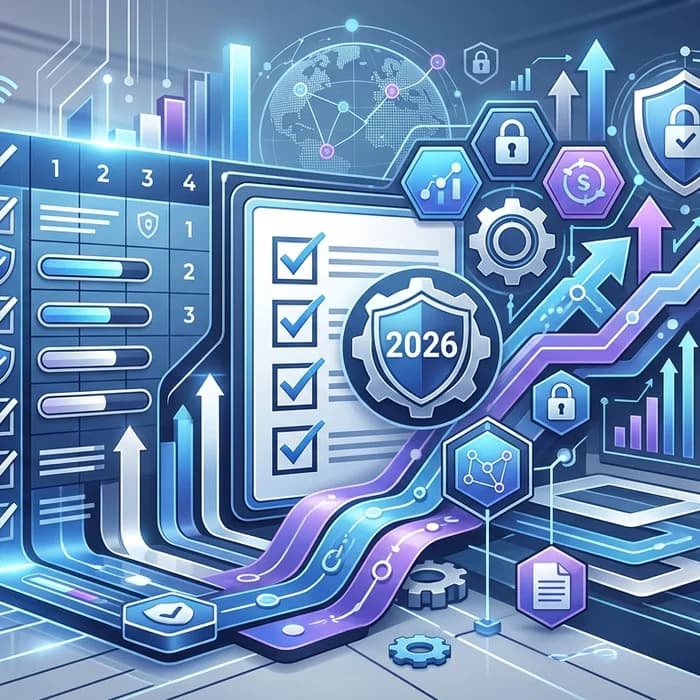
NIS2 compliance checklist: practical steps you can start today
- Map scope and roles
- Confirm whether you’re an Essential or Important Entity under national NIS2 transposition (sector and size thresholds apply).
- Inventory critical services, systems, suppliers, and cross-border dependencies.
- Assign a board-level accountable owner; document oversight cadence and KPIs.
- Risk management and security measures
- Run a documented risk assessment addressing cyber, operational, and third-party risks; update quarterly in 2026.
- Implement baseline controls: MFA, network segmentation, EDR, vulnerability management, logging/monitoring, backup/restore testing.
- Harden identity and access management for both humans and AI agents; enforce least privilege and session recording for high-risk tasks.
- Incident handling and reporting
- Adopt 24-hour early warning to CSIRTs/authorities, 72-hour incident notification, and final incident reports per national rules.
- Maintain an incident register; drill crisis playbooks with legal and communications quarterly.
- Supply chain security
- Impose NIS2-aligned clauses on critical vendors (security controls, audit rights, breach notice SLAs, data location).
- Risk-rate AI and cloud providers processing personal data; require independent assurance.
- Business continuity and resilience
- Define RTO/RPO for essential services; test failover and backup restoration against ransomware scenarios.
- Run tabletop exercises covering cross-border coordination.
- Training and culture
- Annual role-based security training; phishing and identity-aware simulations.
- Specific modules for data minimization, anonymization, and safe AI use.
- Documentation and assurance
- Maintain an auditable trail: policies, risk logs, vendor lists, incident records, test evidence.
- Plan independent audits or certifications where available; brief the board on remediation progress.
GDPR vs NIS2: obligations and overlaps you must get right
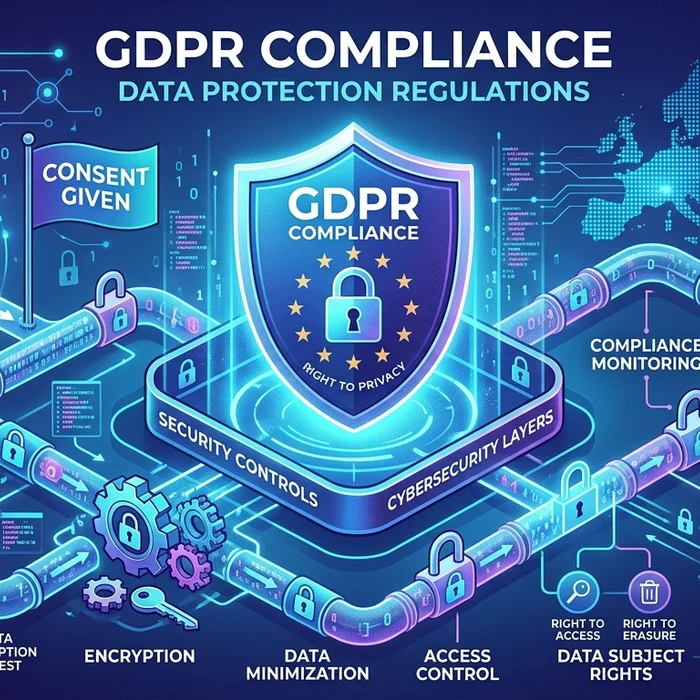
GDPR protects personal data rights; NIS2 secures the continuity and resilience of essential/important services. In practice, you will be judged on how both sets of duties work together—especially in incident response, vendor governance, and identity controls.
| Topic | GDPR (privacy) | NIS2 (resilience & security) |
|---|---|---|
| Scope | Controllers/processors handling personal data of EU residents | Essential/Important Entities across designated sectors and sizes |
| Core duty | Lawful, fair, transparent processing; data minimization; rights | Risk management, technical/organizational security, incident reporting |
| Incident reporting | Report personal data breaches to DPA within 72 hours (if risk) | Early warning (as soon as possible, often within 24 hours), then 72-hour notification and final report |
| Fines | Up to €20M or 4% of global annual turnover | Up to €10M or 2% of global annual turnover (Member State variance) |
| Management liability | Accountability principle; potential civil/administrative sanctions | Explicit management accountability and possible temporary bans from management functions |
| Vendors | Processor due diligence and DPAs; SCCs for transfers | Security obligations across supply chain; auditability and contractual security clauses |
Safe AI workflows: anonymization and secure document uploads
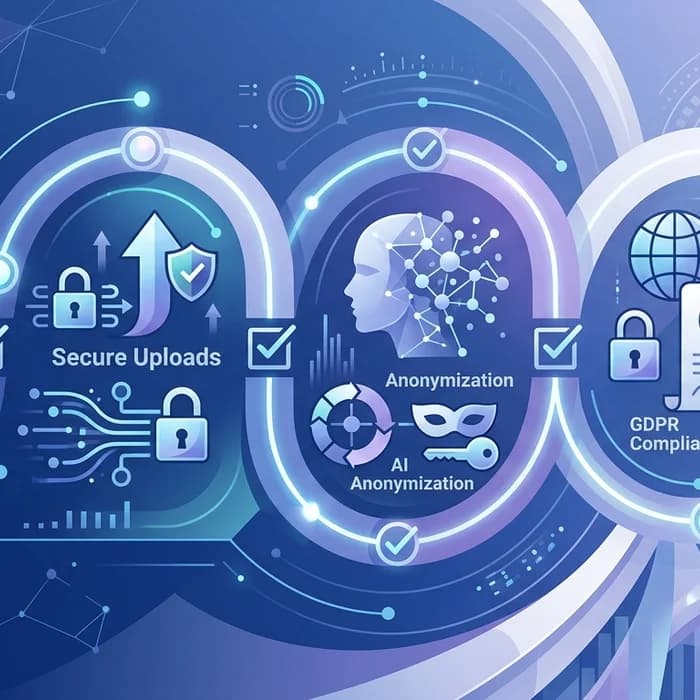
Real-world bottleneck: teams rush to summarize contracts, patient referrals, or incident logs in LLMs. That’s a privacy and trade-secret trap without controls. Best practice in 2026 is to strip personal data and sensitive identifiers before analysis, then keep the processing in a secure, access-controlled environment.
- Use an AI anonymizer to automatically redact names, IDs, addresses, health data, and free-text PII prior to model input.
- Centralize uploads through a governed pipeline—no ad-hoc copy/paste or email forwarding of raw documents.
- Log every document action for audit. Prove data minimization on demand.
Professionals avoid risk by using Cyrolo’s anonymizer at www.cyrolo.eu. Try our secure document upload at www.cyrolo.eu — no sensitive data leaks.
Mandatory privacy note: When uploading documents to LLMs like ChatGPT or others, never include confidential or sensitive data. The best practice is to use www.cyrolo.eu — a secure platform where PDF, DOC, JPG, and other files can be safely uploaded.
Sector snapshots: how this lands in practice
Finance and fintech
- Identity-first security: customer impersonation via AI voice/agent tooling is rising. Enforce step-up auth and monitor high-risk sessions.
- Incident drill: simulate swift reporting to national CSIRT and financial supervisors; rehearse customer notifications.
Hospitals and healthtech
- Zero tolerance for PHI exposure: mandate pre-processing via anonymization for any AI triage or coding support.
- Ransomware resilience: offline backups, segmented clinical networks, EHR continuity plans; rehearse weekend recovery.
Law firms and professional services
- Strict matter confidentiality: route all discovery and client files through governed document uploads with PII redaction.
- Vendor clauses: require NIS2-aligned security attestations from e-discovery and transcription providers.
Budgets, identity security, and AI agents
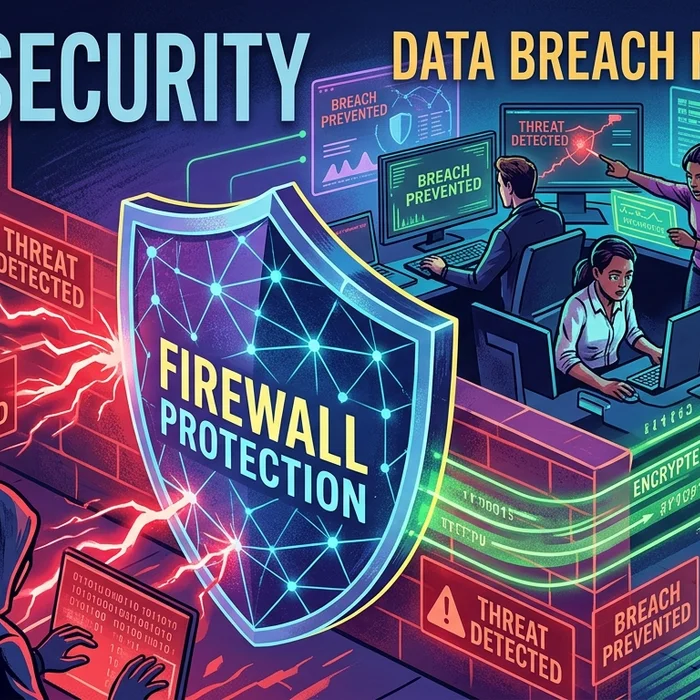
Security spending is pivoting. As AI agents automate ticketing, triage, and even code changes, identity becomes the control plane—and the attack surface. In interviews with EU CISOs this spring, I heard a consistent theme: budgets are moving from perimeter tools to identity threat detection, policy-based access, and AI use governance. Expect auditors to ask for proof that non-human identities (service accounts, agents) follow the same lifecycle as employees—joiner/mover/leaver, secrets rotation, and behavioral analytics.
Penalties, audits, and what “good” looks like
- Fines and sanctions: GDPR up to €20M/4% global turnover; NIS2 up to €10M/2% with management accountability. Insurers increasingly condition cyber coverage on control maturity.
- Audit readiness: keep a single source of truth—asset inventory, vendor register, risk log, training records, incident reports, recovery evidence, and AI usage logs.
- Proportional security: examiners will accept phased remediation if you demonstrate risk-based prioritization and operational testing.
EU vs US: harmonization and gaps
While the EU leans on directives (NIS2) and directly applicable regulations (GDPR), the US remains sectoral and state-driven. Convergence is emerging in incident reporting timelines and critical infrastructure oversight, but EU expectations for board accountability and supply-chain assurance are stricter. Multinationals should map a global control baseline to the toughest regime—usually EU—then tailor for US federal/state specifics.
Compliance checklist (printable summary)
- Confirm NIS2 entity classification; appoint accountable executive
- Complete risk assessment; document control gaps and timelines
- Implement identity-first controls (MFA, least privilege, PAM, agent governance)
- Stand up early-warning and 72-hour incident reporting workflows
- Contractually bind critical vendors to NIS2/GDPR-aligned security
- Test backup/restore, failover, and ransomware playbooks
- Run role-based security and privacy training with AI safety modules
- Pre-process files with anonymization; route all document uploads through a governed platform
- Maintain audit evidence; schedule independent assurance
FAQ: real-world queries from EU teams
What is the NIS2 compliance checklist and who needs it?
It’s a structured set of controls and proofs that Essential and Important Entities must implement to meet NIS2 obligations—risk management, incident reporting, supply-chain security, and resilience. If you’re in health, finance, energy, digital infrastructure, cloud, or similar sectors in the EU, you likely need it.
How do GDPR and NIS2 interact during a breach?
If personal data is affected, you may need to notify your data protection authority under GDPR and your national CSIRT/supervisor under NIS2 with an early warning and 72-hour update. Maintain a unified incident log so legal, privacy, and security can file consistent reports.
Can I upload client or patient files to LLMs?
Not without strong safeguards. Remove or anonymize personal and sensitive data, restrict access, and log all activity. The safest route is to use www.cyrolo.eu for governed uploads and automated redaction before any AI processing.
What are typical NIS2 fines and how are they decided?
Member States set ranges up to €10M or 2% of global turnover. Authorities consider severity, duration, negligence, prior violations, and cooperation. Strong documentation and prompt mitigation reduce exposure.
How do I prove control effectiveness to auditors?
Move beyond policies: produce test evidence (e.g., MFA enforcement metrics, restore-time results), incident drill records, vendor audit responses, and logs showing anonymization and governed uploads for AI workflows.
Conclusion: your NIS2 compliance checklist for resilient, private AI operations
The organizations that will thrive in 2026 are implementing a living NIS2 compliance checklist, aligning GDPR privacy with identity-first security, and eliminating risky AI data sprawl. Start by anonymizing files and centralizing secure document uploads; prove what you do with clean audit trails. When uploading documents to LLMs like ChatGPT or others, never include confidential or sensitive data. The best practice is to use www.cyrolo.eu — a secure platform where PDF, DOC, JPG, and other files can be safely uploaded.
As always from Brussels, the signal is clear: regulators expect resilience by design, not on paper. Tighten identity, govern AI, and let Cyrolo do the heavy lifting at www.cyrolo.eu.
Sources & References
- 1Zillow loses thousands of listings in fight over “hidden” homesArs Technica Policy · 2026-05-21T18:35:38.000Z
- 2AI Agents Are Shifting Identity Security Budget DynamicsDark Reading · 2026-05-21T15:43:37.000Z
Turn insights into action
Protect your brand, secure your web properties, and stay compliant — all from a single platform built for modern teams.
Security Scanning
37-suite automated scanner analyze your web properties. Get A+ to F security grading with actionable remediation steps.
Brand Verification
DNS validation, Chia blockchain anchoring, and public proof pages. Build trust with cryptographic evidence.
GDPR & Compliance
Article-by-article GDPR audits. Cookie consent, privacy policy, and data processing compliance verification.