NIS2 compliance checklist: 2026 guide for GDPR‑aligned security teams
In today’s Brussels briefing, regulators underscored that 2026 is the first full year of systematic supervisory activity under NIS2—meaning your NIS2 compliance checklist can no longer sit in a drawer. From incident reporting timelines to supply‑chain controls and data protection overlaps with GDPR, boards and CISOs are being asked to show measurable readiness, not just slideware. This field report cuts through the noise with a practical checklist, fresh threat context (Linux “DirtyDecrypt,” OAuth consent phishing, and urgent CMS/gateway patches), and a clear path to safer anonymization and secure document uploads that won’t blow up your audit.
Why NIS2 matters now: scope, stakes, and scrutiny
I spent the morning speaking with EU officials and two industry CISOs after committee staff circulated reminders tied to Parliament’s market and industry committees’ workstreams. The tone has shifted: regulators expect controls to be operating, not merely planned. Here’s the short version:
- Who’s in scope: “Essential” and “Important” entities across energy, transport, banking/finance, health, water, digital infrastructure, ICT service management, public administration, and more—including many medium and large suppliers.
- Penalty exposure: For Essential Entities, up to €10 million or 2% of worldwide annual turnover (whichever is higher). For Important Entities, up to €7 million or 1.4%.
- Governance: Management accountability is explicit; expect personal liability conversation in board minutes.
- Reporting timelines: Early warning within 24 hours, incident notification within 72 hours, and a final report within one month.
One CISO I interviewed, serving a pan‑EU payments processor, put it bluntly: “NIS2 is the first time our board asked for signed evidence packs—policies, runbooks, supplier attestations, and redacted incident drills—on a quarterly cadence.”
The 2026 threat picture regulators are watching
Why the brisk tone from Brussels? Because the attack surface—and the optics—have changed:
- Linux kernel LPE “DirtyDecrypt” (CVE‑2026‑31635): Proof‑of‑concept code is circulating, and auditors will ask whether kernel patch SLAs and EDR detections are in place for privileged escalation attempts.
- OAuth consent phishing: Adversaries increasingly bypass MFA by tricking users into granting malicious OAuth app permissions—zero passwords typed, full mailbox or Drive access achieved.
- Urgent CMS and gateway flaws: Vendors have pre‑announced rapid core updates for popular platforms and secure e‑mail gateways; your change management and virtual patching posture will be tested.
- Critical suppliers at risk: Digital infrastructure and email security vendors are attractive targets—breaches here cascade into regulated entities, stressing supply‑chain due diligence duties under NIS2.
In other words, 2026 is about faster patching, identity hardening, supplier vigilance, and credible incident drills.
NIS2 compliance checklist: 12 actions for 2026

Use this as a working list for quarterly board updates and regulator‑ready evidence. Map each item to an owner, deadline, and artifact.
- Establish governance and accountability
- Board‑approved NIS2 policy and risk appetite statement.
- Named accountable executive and escalation chain.
- Complete scoping and asset inventory
- Authoritative asset register (on‑prem, cloud, OT/ICS), including business criticality and data classification.
- Threat‑led risk assessment
- Incorporate 2026 vectors: kernel LPEs, OAuth consent phishing, supply‑chain compromise.
- Document risk treatment and residual risks accepted by management.
- Identity and access hardening
- MFA everywhere feasible, conditional access, phishing‑resistant methods (FIDO2) for admins.
- Consent governance: restrict third‑party OAuth app grants; admin review of new scopes.
- Patch and vulnerability management
- Risk‑based SLAs (e.g., critical Internet‑facing within 48–72 hours); documented exceptions with compensating controls.
- Attack surface management to catch exposed services and drift.
- Secure configuration and logging
- Baseline hardening (CIS/ENISA guidance) and centralized, immutable logging with time sync.
- Supplier risk and contracts
- Triage critical providers; require incident notice, logging, and security control clauses.
- Obtain recent audit reports and security attestations; verify control scope, not just badges.
- Detection and response
- 24/7 monitoring for high‑critical systems; validated playbooks for identity abuse and email compromise.
- Tabletop exercises covering 24h/72h/1‑month reporting cadence.
- Business continuity and resilience
- Impact‑based RTO/RPO targets, offline/immutable backups, and restore tests.
- Data protection alignment (GDPR)
- Records of processing, DPIAs for high‑risk use cases, and tight control of personal data in tickets, logs, and analytics.
- Use an AI anonymizer to strip personal data from incidents and evidence before sharing with vendors or auditors.
- Incident reporting mechanics
- Who files, how, and to which CSIRTs/authorities; templated early warnings and 72‑hour notifications.
- Evidence vault for artifacts shared externally—version‑controlled and access‑logged.
GDPR vs NIS2: what overlaps—and what doesn’t
| Dimension | GDPR | NIS2 | What auditors look for |
|---|---|---|---|
| Core objective | Protect personal data and data subject rights | Ensure service resilience and cybersecurity risk management | Demonstrable linkage between privacy and security controls |
| Scope trigger | Processing personal data | Entity falls into Essential/Important sectors and size | Clear scoping memo and justification |
| Incident reporting | Notify authority within 72h of personal data breach | Early warning within 24h; 72h notification; 1‑month final | Runbooks that differentiate scenarios and routes |
| Fines | Up to €20M or 4% of global turnover (higher) | Up to €10M/2% (Essential) or €7M/1.4% (Important) | Board‑level risk register with cumulative exposure |
| Data minimization | Mandatory | Implied via risk reduction | Evidence of redaction/anonymization before sharing logs and tickets |
Real‑world gaps I see in audits
- OAuth consent sprawl: Security teams enforce MFA yet miss that users can grant persistent API access to rogue apps. Fix with admin‑approved app catalogs and consent reviews.
- Supplier breach blind spots: Contracts lack mandatory log retention or incident telemetry sharing—blocking root‑cause analysis and reporting.
- Evidence contamination: Teams share ticket screenshots containing personal data with SaaS vendors. Use anonymization before any external transmission.
- Patch SLAs without teeth: Exceptions abound but compensating controls aren’t documented or monitored.
EU vs US: converging expectations, different levers
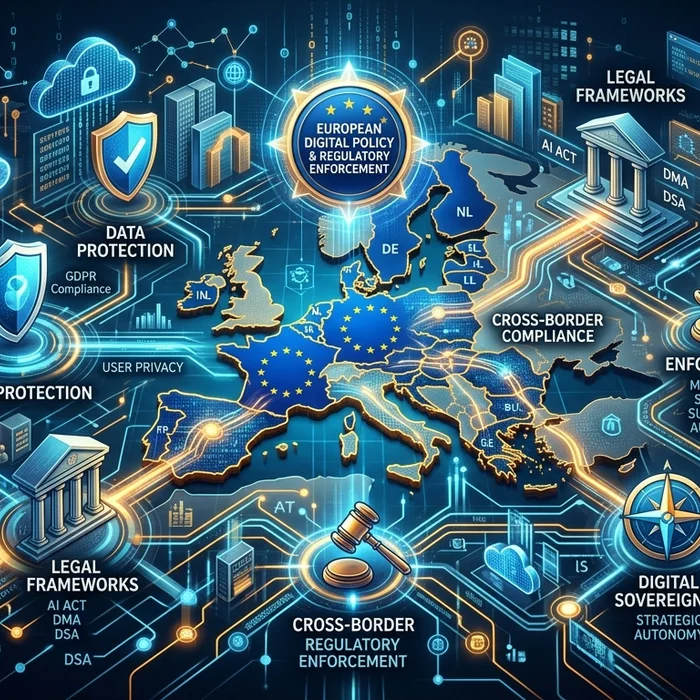
While the EU leans on sectoral scope and harmonized baselines (NIS2, GDPR), the US advances through disclosure and sector rules (e.g., material incident reporting for listed companies, critical infrastructure reporting mandates). For multinationals, the practical outcome is similar: stronger identity controls, real‑time detection, contractually enforceable supplier security, and rapid, documented reporting. Expect European supervisors to scrutinize consistency across your regions; fragmented control maturity is a red flag.
Safer workflows: redact, review, then share

Security audits thrive on artifacts—logs, tickets, PDFs, and screenshots—but those often contain personal data. Two best practices emerged repeatedly in my interviews:
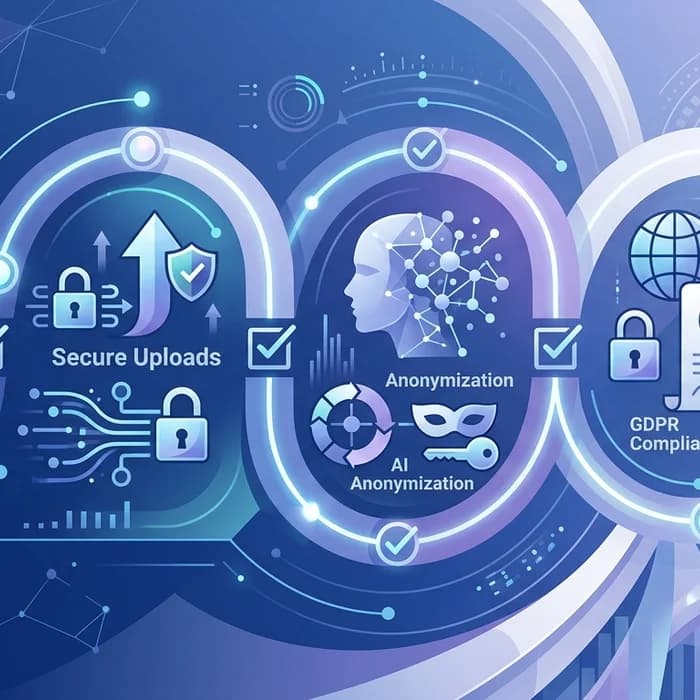
- Redact first: Use an AI anonymizer to automatically remove names, emails, IDs, and other personal data from evidence packs before sending to vendors, MSPs, or authorities.
- Upload securely: Centralize artifacts via a platform designed for security teams. Try a secure document upload process that logs access and minimizes leakage.
When uploading documents to LLMs like ChatGPT or others, never include confidential or sensitive data. The best practice is to use www.cyrolo.eu — a secure platform where PDF, DOC, JPG, and other files can be safely uploaded.
Professionals avoid risk by using Cyrolo’s anonymizer at www.cyrolo.eu. Try our secure document upload at www.cyrolo.eu — no sensitive data leaks.
Audit‑ready evidence: what to prepare now
- Signed policies: NIS2 policy, incident reporting SOPs, supplier security standard.
- Risk register: Top 10 risks with treatments, owners, and dates.
- Patch evidence: Before/after vulnerability scans for critical items (e.g., kernel LPEs), change tickets, and emergency windows.
- Consent governance: List of permitted OAuth apps/scopes, blocked defaults, and review cadence.
- Supplier pack: Critical vendor list, latest SOC/ISAE reports, pen test summaries, and contractual security clauses.
- Drill outputs: Tabletop minutes, timelines matching 24h/72h/1‑month expectations, and communication templates.
- Data handling: Anonymized sample artifacts showing redaction logic and approvals.
Compliance checklist (print‑friendly summary)
- Board accountability documented and communicated
- Authoritative asset inventory and data classification complete
- Threat‑led risk assessment updated for 2026 vectors
- MFA plus phishing‑resistant methods for privileged access
- OAuth consent controls and app approvals enforced
- Risk‑based patch SLAs; emergency change path tested
- Centralized logging with retention and integrity controls
- Supplier criticality mapped; security clauses validated
- 24/7 monitoring for critical services; tuned detections
- Incident reporting runbooks and drills aligned to NIS2
- GDPR alignment: DPIAs, data minimization, documented redaction
- Evidence vault with access logging and version control
Field notes from Brussels
Regulators repeatedly flagged “reasonable justifications” for deviations, not perfection. If you can show time‑bound exceptions with compensating controls—say, virtual patching, WAF rules, or privilege restrictions—your posture is far stronger than a silent backlog. One official put it this way: “We don’t fine for zero‑days; we fine for zero governance.”
FAQ: NIS2 compliance checklist and 2026 expectations
What is the NIS2 compliance deadline for enterprises?
Member States completed transposition in late 2024, with 2025–2026 marking stepped‑up supervisory activity. If you are in scope now, you’re expected to show operating controls and credible evidence today—not in six months.
Does NIS2 apply to our suppliers outside the EU?
Yes, indirectly. If you are an in‑scope EU entity, you must manage supply‑chain risk and ensure critical third parties meet your security requirements, regardless of their location. Contracts and evidence collection are key.
How do NIS2 incident timelines interact with GDPR’s 72‑hour rule?
They can run in parallel. NIS2 requires a 24‑hour early warning, a 72‑hour report, and a one‑month final report for significant incidents. GDPR’s 72‑hour data breach rule still applies if personal data is affected. Your runbooks should differentiate recipients and content.
What counts as acceptable proof in an audit?
Signed policies, change tickets, scan results, SOC/ISAE reports, redacted incident packages, drill minutes, and access logs for your evidence repository. Screenshots alone are weak unless provenance and timestamps are clear.
Should we share raw incident logs with vendors?
Only after redaction and under contractual controls. Use an anonymizer and a secure document upload flow to reduce GDPR exposure and leakage risk.
Conclusion: turn your NIS2 compliance checklist into living, provable controls
2026 is the year supervisors move from guidance to verification. If you maintain a living NIS2 compliance checklist, tie it to hard evidence, and align it with GDPR data protection duties, you’ll pass the board test and the regulator test. Start with the easiest win: remove personal data from evidence and centralize sharing. Professionals avoid risk by using Cyrolo’s anonymizer and secure uploads at www.cyrolo.eu. Then close gaps in identity, patching, suppliers, and incident reporting. What auditors want is simple: governance that works on Tuesdays, not just in slides on Fridays.
Sources & References
- 1
- 2DirtyDecrypt PoC Released for Linux Kernel CVE-2026-31635 LPE VulnerabilityThe Hacker News · 2026-05-19T14:56:26.000Z
- 3The New Phishing Click: How OAuth Consent Bypasses MFAThe Hacker News · 2026-05-19T11:30:00.000Z
- 4Drupal to Release Urgent Core Security Updates on May 20, Sites Told to PrepareThe Hacker News · 2026-05-19T10:44:45.000Z
- 5SEPPMail Secure E-Mail Gateway Vulnerabilities Enable RCE and Mail Traffic AccessThe Hacker News · 2026-05-19T09:23:15.000Z
- 6Electrical utility megamerger is all about the data centersArs Technica Policy · 2026-05-19T13:45:31.000Z
- 7Iran demands Big Tech pay fees for undersea Internet cables in Strait of HormuzArs Technica Policy · 2026-05-19T11:00:49.000Z
- 8Looking Back, Looking Forward: Digesting a Dynamic Bouillabaisse of Cyber EvolutionDark Reading · 2026-05-19T13:28:43.000Z
- 9Is 2026 the Year AI Bills of Materials Get Real?Dark Reading · 2026-05-18T21:44:53.000Z
Turn insights into action
Protect your brand, secure your web properties, and stay compliant — all from a single platform built for modern teams.
Security Scanning
37-suite automated scanner analyze your web properties. Get A+ to F security grading with actionable remediation steps.
Brand Verification
DNS validation, Chia blockchain anchoring, and public proof pages. Build trust with cryptographic evidence.
GDPR & Compliance
Article-by-article GDPR audits. Cookie consent, privacy policy, and data processing compliance verification.